
ABOUT PREMIUMVIN
Summary: PremiumVIN is a vehicle data aggregation and reporting service. It combines available VIN, title, sales, auction, theft, lien, recall, mileage, and service records, plus factory window sticker and license-plate-based lookups, into consolidated reports and tools for buyers, sellers, owners, and dealers, covering cars, classic vehicles, motorcycles, RVs, trucks, and trailers. It is not a government agency, an insurer, a manufacturer archive, or a law-enforcement database. |
Every year, people making a vehicle decision like buying, selling, or simply trying to understand a car they already own, start with the same question: what do we actually know about this vehicle, and where did that information come from? PremiumVIN exists to answer that question as directly and honestly as the available evidence allows.
This page explains what PremiumVIN is, what it does, and just as importantly what it does not claim to be. Understanding this distinction is the foundation for interpreting every report, sticker, and check the service produces.
What PremiumVIN Is
PremiumVIN is a vehicle data aggregation and reporting service. It does not manufacture vehicle data. It collects available records from a range of sources, including title and registration databases, auction and sales listings, insurance-industry data, recall databases, and decoded VIN structure and organizes them into a format a buyer, seller, or owner can actually use.
PremiumVIN offers several distinct tools built on this same underlying approach:
- VIN Decoder — interprets the information encoded directly in a Vehicle Identification Number.
- Window Sticker — retrieves or reconstructs the factory MSRP and options document for a specific VIN.
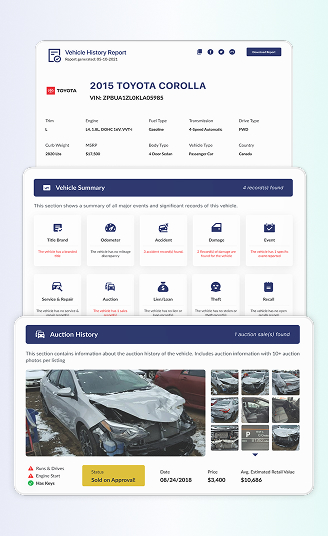
- Vehicle History Report — aggregates available title, accident, ownership, sales, auction, mileage, service, and recall records.
- License Plate Lookup — resolves a license plate and state to a VIN and associated records.
- Specialty checks — theft/stolen status, salvage or rebuilt title brands, liens, flood damage, odometer discrepancies, and open recalls, each checked individually.
- Market Value Estimate — an estimated value range based on available comparable data.
What PremiumVIN Is Not
Because PremiumVIN organizes evidence rather than generating it, there are specific things it is not, regardless of how complete a given report looks:
- Not a government agency, state DMV, or NMVTIS operator.
- Not an insurer, and not a source of insurance eligibility or claims determinations.
- Not a vehicle manufacturer, and not an official manufacturer archive — window sticker data is retrieved or reconstructed, not manufacturer-issued unless specifically documented as such.
- Not a law-enforcement agency — theft and recovery data reflects what has been reported to the sources PremiumVIN checks, not a live law-enforcement database query.
- Not a physical inspector, appraiser, or title company — a report is a research tool, not a substitute for professional verification.
This distinction matters because it defines what any PremiumVIN output can responsibly claim. A report can tell you what the available evidence shows. It cannot certify what current law, insurance, or physical inspection would determine.
How a Report or Check Gets Built
Every PremiumVIN output whether a full Vehicle History Report or a single theft check follows the same underlying process:
1. Identify the vehicle
The process starts with a VIN or license plate. PremiumVIN decodes the VIN structure to establish basic identity (make, model, model year, and where the format allows factory-assigned attributes like engine and trim).
2. Query available data sources
PremiumVIN checks the relevant data sources for the requested product for example, title and registration databases for a title check, or auction and sales platforms for a history report. Coverage varies by data source, vehicle age, state, and country; see Coverage, Supported Vehicles, and Data Availability for the current scope.
3. Assemble and label the result
Results are organized by field and, wherever possible, labeled by evidence type — manufacturer-sourced, decoded from VIN structure, aggregated from a third-party provider, or user-supplied. See Report Methodology and Data-Source Classes for the full explanation of these categories.
4. Flag gaps rather than filling them
Where no source data exists for a field, PremiumVIN reports that gap rather than estimating a value and presenting it as fact. A blank field means no record was found in the sources checked not that the underlying event never happened. See Why Vehicle Data May Be Missing or Incorrect for a full explanation.
When Something Looks Wrong or Incomplete
Automated aggregation is not perfect. If a report or sticker looks incorrect, incomplete, or inconsistent with other evidence you have, support can review the specific fields in question and determine whether the issue reflects a genuine data gap, a technical fault, or an input error. See Report and Check Corrections, Support, and Refund Process for how that review works.