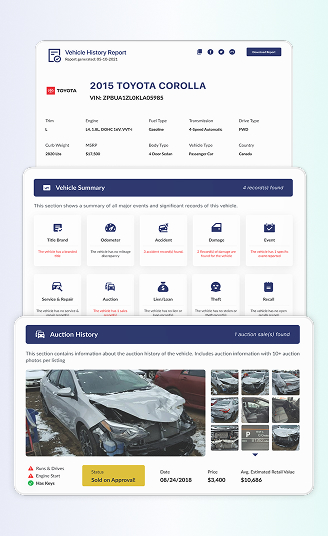

VIN Check - Unlock Vehicle History Records Before You Buy
Buying a used vehicle comes with uncertainty. You’re looking at photos, reading seller descriptions, and wondering what’s not said. Check any vehicle history in seconds. Access accident records, title status, mileage, ownership history, and more using your VIN.
What Does a VIN Check Show?
Run a VIN check to instantly access key vehicle history details that may not be visible during inspection.
Vehicle Specifications
This is the decoder part, the basics you need to confirm that the car you’re looking at is, in fact, the car the seller claims it is.
Year, Make, Model
Simple, but necessary. We verify the manufacturer and the correct manufacturing year. This section helps you, making sure the fundamental data matches up perfectly.
Trim
The details matter. We verify the specific trim level, engine type, and safety features. This isn’t just nice to know; it impacts the market value and, frankly, what you should be paying.
Body & Physical Configuration
This section covers the vehicle’s size, structure, and usability, including doors, dimensions, ground clearance, weight class, and cargo capacity. These details help assess interior space, practicality, and suitability for driving or hauling needs.
Safety & Regulatory Configuration
This section confirms factory safety and compliance information, such as restraint systems, safety classifications, and regulatory standards. It helps ensure the vehicle is safe, insurable, and legally approved for use
Title Check
This is where things get serious. A “clean” title is what every buyer wants, but titles can be laundered. Our report digs deep to find the underlying truth, flagging issues that could turn your dream car into a headache.
- Verify if the car has ever been registered as a salvage title, which means the insurance company wrote it off.
- Check for flood damage; that faint, musty whiff from flood-damaged upholstery is a huge red flag. We check the title records for water-damage notations.
- Look for fire damage, hail damage, or other structural issues that lead to a “total loss” claim.
Ownership History
Ownership data provides insight into how a vehicle was used and maintained. See how many owners the vehicle had, how long each kept it, and in which states or regions it was registered. This section shows:
Number of previous owners
Personal/commercial/fleet use flags
Ownership timeline and registration locations
Mileage History
This section helps you identify odometer rollbacks, reporting gaps, and mileage inconsistencies that can significantly impact a vehicle’s value and reliability. A VIN check compiles mileage records from registrations, inspections, service events, and sales listings to identify patterns that don’t align with normal usage.
Recorded mileage over time
Date and mileage at each event
Odometer inconsistency or rollback alerts
Lien and Loan Check
Buying a vehicle with an active lien means the lender may still legally own part of the car, even after you pay the seller. If the loan isn’t cleared, the vehicle can be repossessed, leaving you without the car or your money. This section checks for:
Active or past lien/loan records
Financial institution details (where available)
Warnings if the car may still be used as collateral
Accident Records
Accident history tells more than whether damage occurred. It shows severity and risk. Available data may include:
Number of accidents reported
Dates and locations
Severity indicators (minor/moderate/severe)
Airbag deployment and possible structural damage flags
Damage History
Not every damage event is recorded as an “accident.” Here you’ll see:
Flood, fire, hail, and storm damage reports
Salvage auction or total-loss event
Frame/structural damage notes
Recalls Check
Unresolved recalls should be addressed before purchase. Safety recalls can affect drivability and compliance. This section shows:
Open and closed recalls
What caused the recall
Whether the fix was reported as completed
Theft Records
Do you know if a vehicle has stolen records? This is the part when you know if the car was stolen or not
Theft reports from national databases
Date and location of the theft
Whether the vehicle was later recovered
Warranty Status
For the younger used cars, you can see:
- Remaining factory warranty (where data is available)
- Powertrain / basic coverage status
- Provide the available in-service date and potential coverage end date
This part of the vehicle history helps you avoid cars that are hard to insure, hard to register, or just not worth the risk.
Why Run a VIN Check?
A VIN check is the single most important step in protecting yourself when buying a used vehicle. Photos, seller descriptions, and even clean titles don’t always indicate the car’s true condition. Our vehicle’s history tells you what the seller can’t or won’t.
By checking the VIN, you uncover hidden risks, verify the car’s identity, and ensure you’re paying a fair price based on its real past, not the story being told. Below is how buyers, sellers, and dealers each benefit from checking a VIN.
A VIN check helps buyers avoid fraud, hidden damage, and bad deals.
To Avoid Buying a Stolen Car
VIN checks cross-reference theft databases to confirm whether a car was ever reported stolen, recovered, or still flagged.
To Avoid Buying a Flood-Damaged Car
A VIN check can show flood titles, insurance claims, and auction records linked to water damage.
To Avoid Buying a Used Car With Hidden Issues
A VIN check shows accidents, title problems, mileage rollbacks, and insurance claims that sellers may not disclose.
A VIN check helps sellers replace buyer skepticism with verified facts, speeding up trust and negotiations.
Prove Your Title Status Is Clean and Legitimate
A VIN check lets sellers confirm clean title status or clearly disclose salvage or rebuilt branding.
Disclose Accident History Transparently
Transparent accident disclosure through a VIN check builds buyer trust and confidence.
Differentiate Your Listing From Similar Vehicles
Including a VIN check helps listings stand out by offering verified facts, not just photos.
For dealers, exporters, importers, flippers, and automotive professionals, a VIN check helps screen inventory, reduce legal risk, price accurately, and build buyer trust.
Support Compliance and Professional Disclosure Standards
A VIN check helps document title, accident, and mileage data for compliance and dispute protection.
Increase Buyer Confidence and Conversion Rates
Sharing a VIN check builds trust, shortens decision time, and increases buyer commitment.
Avoid Vehicles With Branded or Washed Titles
A VIN check reveals hidden title brands across jurisdictions, including salvage or total-loss records.
Real Story: Sample Reports with Red Flags
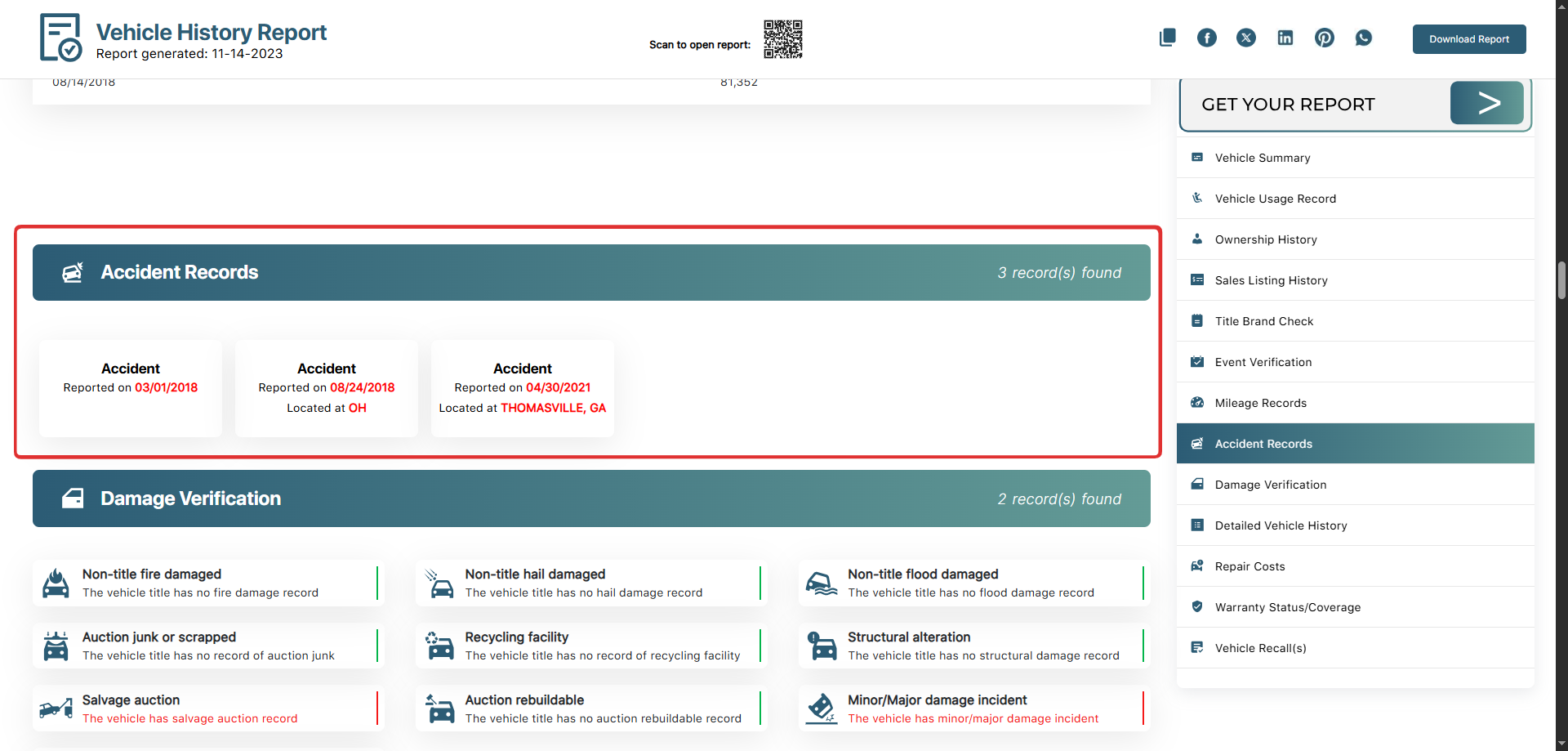
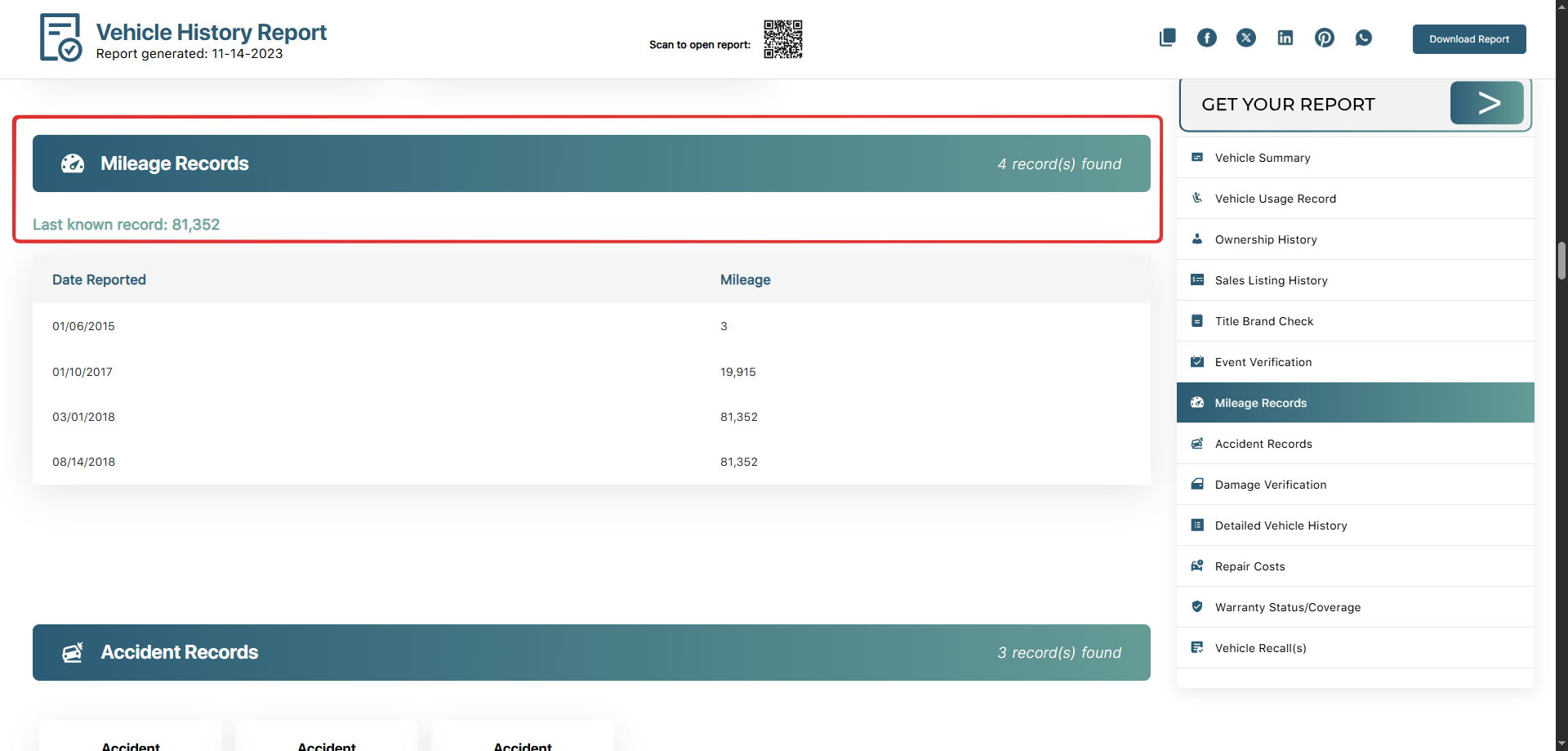
If you’re in the market for a used car, it is essential to identify any red flags that may indicate potential issues with the vehicle with the VIN Check. Imagine clicking on a listing that looks perfect in photos, but the VIN check report says:
The vehicle is branded as salvage
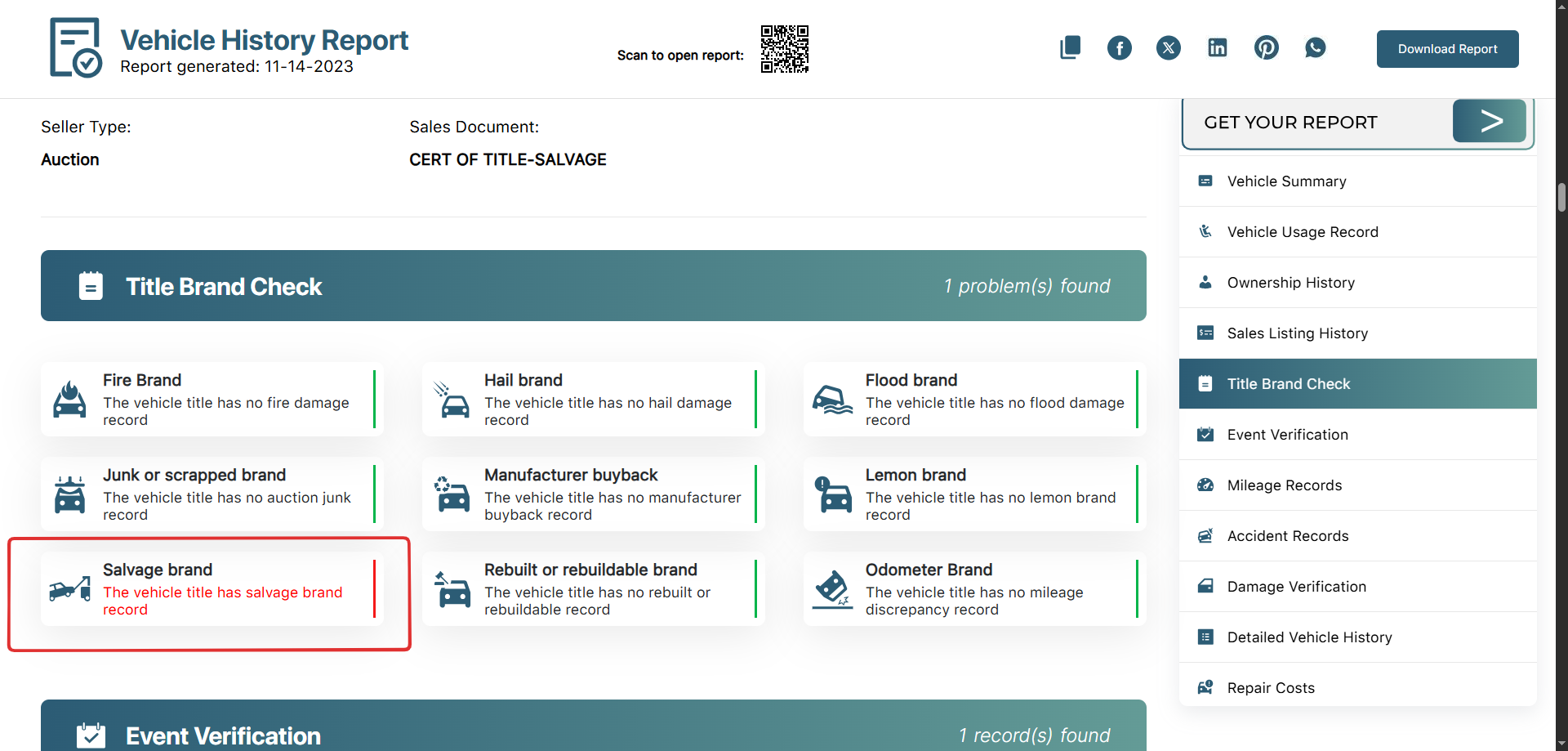
The vehicle has recorded accident
The vehicle has a mileage discrepancy record
The vehicle was once sold at auction and was in a bad condition
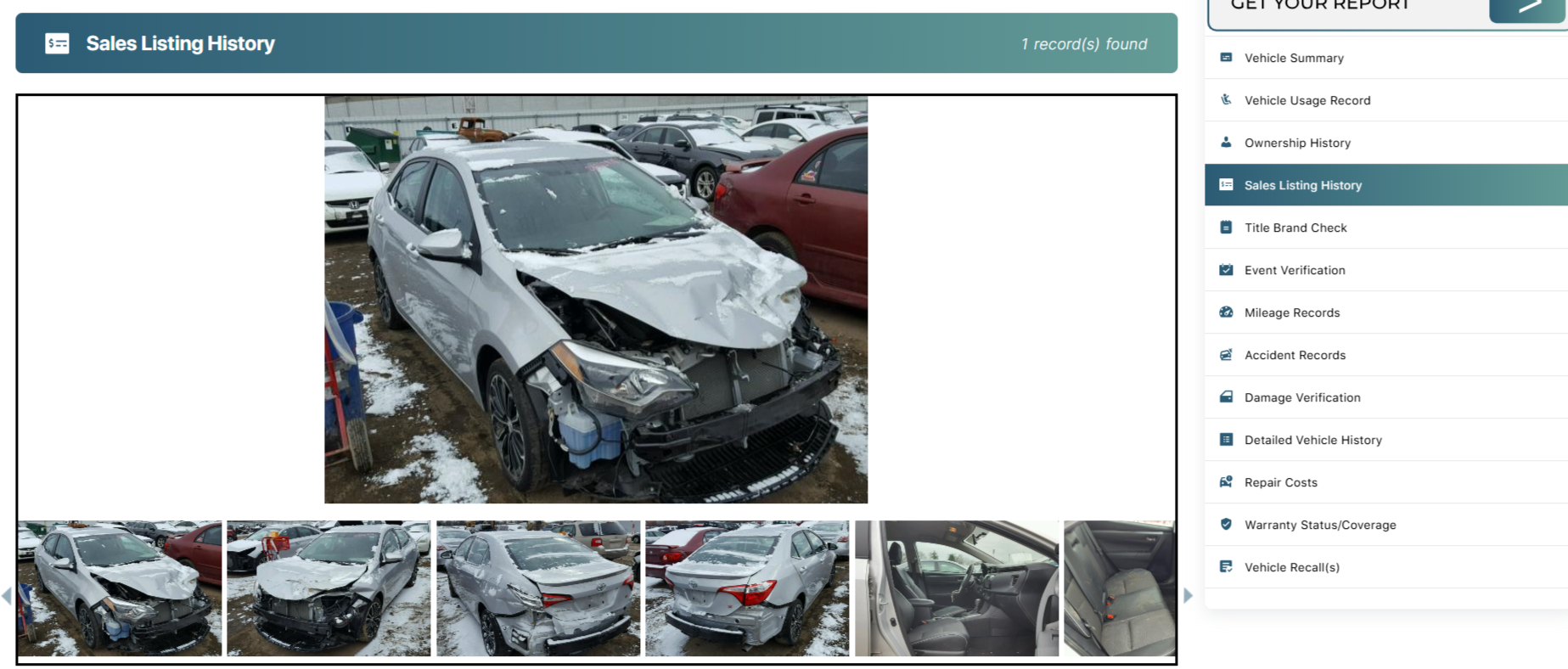
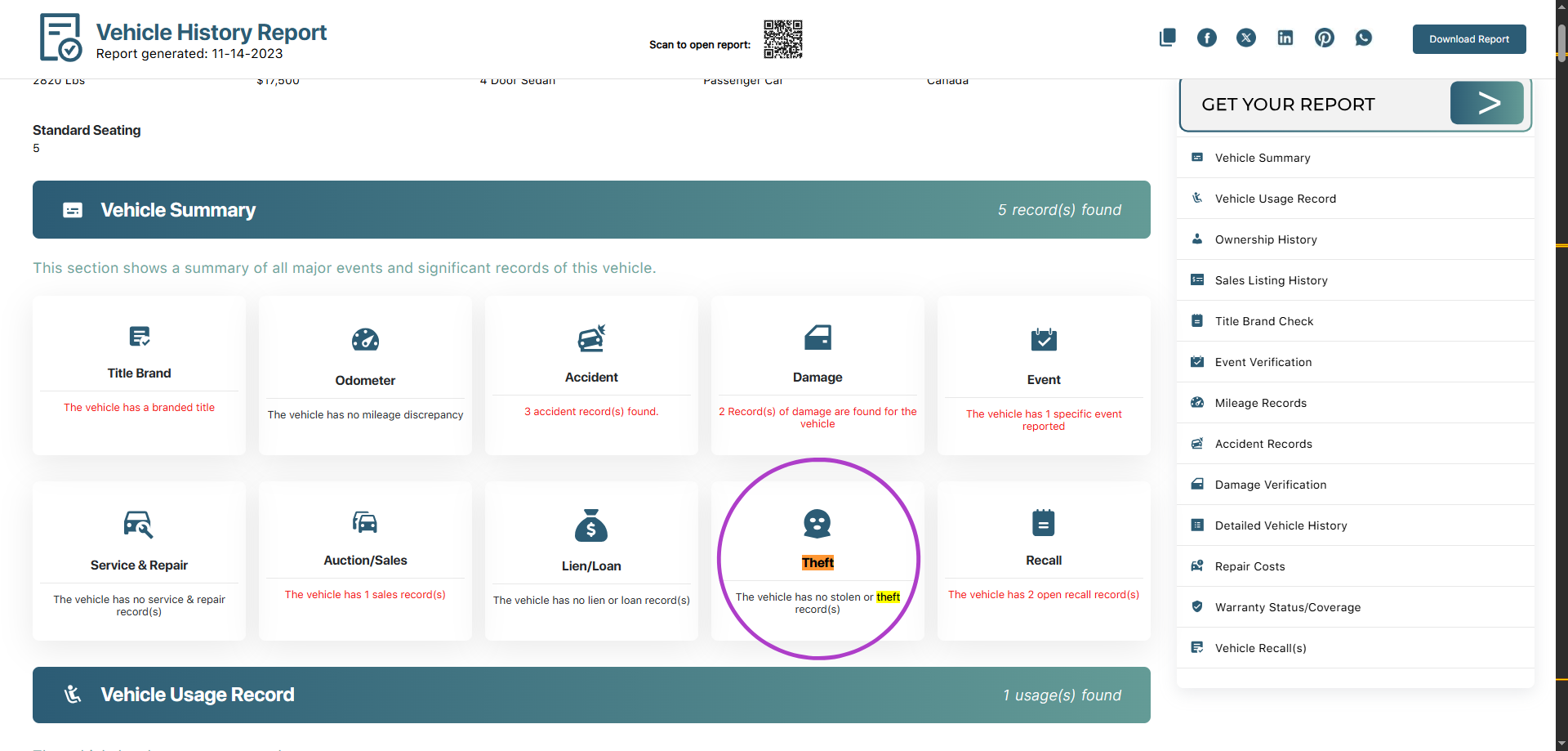
The vehicle was recorded as a stolen vehicle
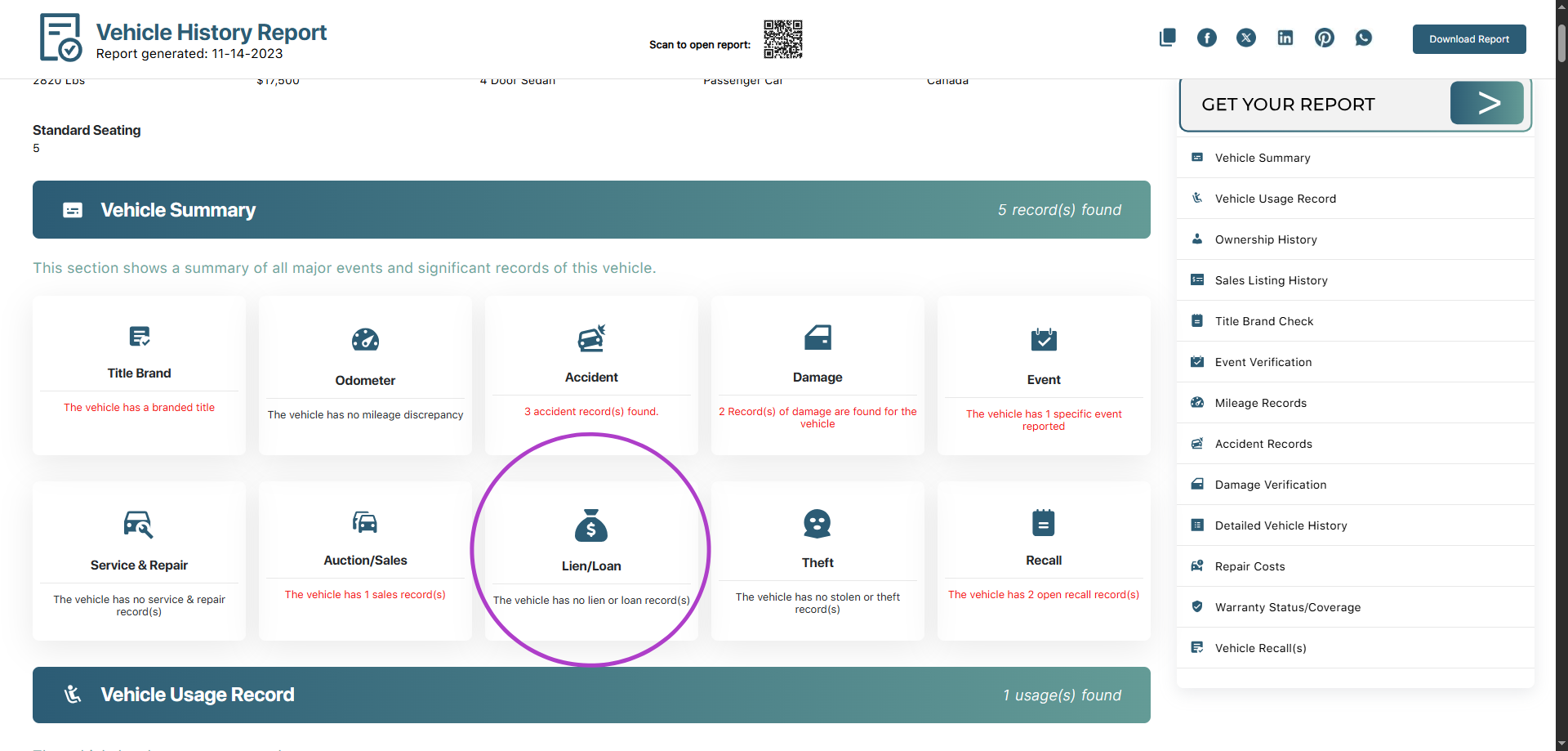
The vehicle have any records of a lien/loan
Free VIN Check vs Full Vehicle History Report
Begin with a free VIN check to instantly verify the year, make, model, and basic vehicle specs. This quick preview helps you filter out mismatched or suspicious vehicles, without any credit card or payment required.
When you need full details, like accidents, title brands, mileage history, auction photos, previous usage, theft checks, and more, upgrade to a complete vehicle history report for the full picture.
| Feature / Data Point | Free VIN Check (Basic) | Premium Vehicle History Report (Paid) | |
|---|---|---|---|
| Free VIN decoding for all vehicle types | ✔ Included | ✔ Included | |
| Year, make, model | ✔ Included | ✔ Included | |
| Basic VIN decoder (body, engine, trim) | ✔ Included | ✔ Included (more detailed) | |
| Title brand check (salvage, rebuilt, etc.) | Limited preview (status hint) | ✔ Full title history | |
| Accident history | Not included | ✔ Detailed accident records (dates, locations, severity when available) | |
| Odometer/mileage records | Limited preview | ✔ Multiple odometer readings and rollback indicators | |
| Auction history & photos | Limited preview (status hint) | ✔ Auction history + photos (when available) | |
| Sales listings records & photos | Limited preview (status hint) | ✔ Recorded sale listings on classifieds, dealer sites, and more + photos (when available) | |
| Market value (VIN decoder with market value) | ✔ Included | ✔ Market value estimates & price ranges | |
| Theft / stolen vehicle check | Limited | ✔ Detailed theft records (if reported) | |
| Recalls & warranty status | Limited | ✔ Recall history + open recall status, basic warranty info | |
| Owner records | ✖ | ✔ Included | |
| Lien and loan records | ✖ | ✔ Included | |
| Vehicle usage | ✖ | ✔ Included | |
| Service & maintenance history | ✖ | ✔ Included | |
| Downloadable PDF report | ✖ | ✔ Included | |
| Ideal use case | Quick VIN lookup to filter cars | ✔ Included |
VIN Check vs. VIN Decoder
A VIN check and a VIN decoder provide different types of information. Understanding the difference helps you use both tools effectively.
What a VIN Decoder Provides
Vehicle Identity
- Model year
- Make and manufacturer
- Model and series
- Trim level (when available)
- Country of manufacture
Body & Chassis Details
- Body type
- Number of doors
- Exterior and interior dimensions
- Ground clearance
- Cargo dimensions (where applicable)
- Weight class (GVWR category)
Safety & Equipment (Factory-Level)
- Airbag system configuration
- Seat belt type
- Tire size and pressure specifications
- Wheel specifications
Efficiency & Classification
- EPA vehicle class
- Emissions classification
- Tire size and pressure specifications
- Wheel specifications
Powertrain & Mechanical Specifications
- Engine size and displacement
- Engine configuration and description
- Engine model or code (when available)
- Valve train design
- Fuel type
- Transmission type
- Drive type (FWD, RWD, AWD, 4WD)
What a VIN Check Provides
For those moments when you can’t get the VIN right away, or if you’re just checking a car you saw driving by, our license plate lookup is a great secondary option.
View reported collisions, severity of damage, airbag deployment, frame or structural issues, and accident dates.
Instantly see if the vehicle has a branded title: salvage, rebuilt, lemon, flood, junk, lemon, or buyback.
Check the vehicle’s accurate mileage from when it was first registered to the last known record.
Verify whether the vehicle had been stolen in the past, the date it was stolen, and its current status.
Check for active liens/loans. If any, you can find the date the lien was taken and the location.
Check patterns such as frequent resales, long-term ownership, or unusual transfers that may affect value and reliability.
What Vehicles Can You Check by VIN?
A VIN check can be used to verify history records for many vehicle types, helping buyers across different categories.
Why Vehicle History Matters More Than Appearance
A vehicle may appear clean and well-maintained but still have hidden issues that reduce its value or create future risks. A VIN check can uncover:
Undisclosed Accidents
A car with perfect bodywork may have been in a serious crash. Frame damage compromises safety, even if repairs look professional.
Insurance Total Losses
Some vehicles declared total loss by insurance companies are repaired and resold. A VIN check reveals total loss history.
Salvage or Rebuilt Titles
Vehicles with salvage or rebuilt titles are worth 40-60% less than clean-title equivalents. Many insurers refuse to cover them.
Mileage Inconsistencies
Odometer rollback fraud is common. A VIN check compares mileage records to detect inconsistencies.
Theft Records
Buying a stolen vehicle can lead to seizure by authorities. A VIN check confirms theft status.
How to Use PremiumVIN’s VIN Check
To use PremiumVIN’s VIN lookup to check the vehicle’s information and get the vehicle history report, you can use it to see the vehicle’s records. Follow these simple steps to get it done in less than a minute.
The VIN acts like a fingerprint for the vehicle, so it will never change and identifies the vehicle. When you’re serious about a vehicle, this 17-digit number (or shorter on classic vehicles) is the only identifier that gives you the complete, verified truth.

Step 1: Find the VIN
Check the driver’s side door jamb, engine bay, windshield, or the vehicle’s paperwork, like insurance, title, or the bill of sale.

Step 2: Enter the Details
Click the button and enter the VIN. No VIN? Use the license plate number. Once the details are entered, click the button to submit the form.

Step 3: Get the Report
See the preview page where you can see its factory specifications, MSRP, and market value. Then, proceed to payment to get the full vehicle history report.
Why Choose PremiumVIN for VIN Checks
Everybody says they’re “the best.” Let’s just calmly compare
| What you get from a report | Carfax | PremiumVIN | Autocheck |
|---|---|---|---|
| Price | $44.99 | $25.00 | $29.99 |
| Report Type | Single Report | Single Report | Single Report |
| Used-car listings and photos are shown right in the report | ❌ | ✔️ | ❌ |
| Auction lane history (often with pictures) | ❌ | ✔️ | ❌ |
| VIN-based pricing/market value guidance | ✔️ | ✔️ | ✔️ |
| How deep are the factory specs from the VIN? | Limited | Full | Limited |
| Coverage for older / classic vehicles | ✔️ | ✔️ | ❌ |
| Simple maintenance suggestions based on history | ✔️ | ✔️ | ✔️ |
| Title story (branded, rebuilt, lemon, etc.) | ✔️ | ✔️ | ✔️ |
| Salvage title check | ✔️ | ✔️ | ✔️ |
| Accident and damage timeline | ✔️ | ✔️ | ✔️ |
| Ownership timeline (number of owners, when, where) | ✔️ | ✔️ | ✔️ |
| Easy map view of where the car has lived | ❌ | ✔️ | ❌ |
| Recall lookup by VIN | ✔️ | ✔️ | ✔️ |
| Support for heavy-duty trucks, ATVs, trailers, and motorcycles | ❌ | ✔️ | ❌ |
Our Comprehensive VIN Check Tools
Explore our wide range of tools designed to give you every detail of a vehicle’s past. From ownership history to accident records, our solutions are designed to give you a complete picture of any vehicle’s past:
Our Commitment to Data Accuracy & Freshness
We know many of our users are detail-oriented: retirees who read the news daily, collectors who know every bolt, and careful families. So we take the data side seriously.
Most comprehensive database coverage
We pull data from multiple sources: government records, auctions, insurance databases, market listings, and more. The goal is simple: give you a VIN check that actually feels complete.
No hidden fees or subscriptions
No surprise monthly charges. No “trial” that auto-renews. You see the price before you buy the report; that’s it.
Daily data updates
Vehicle data changes all the time. New accidents, new registrations, new recalls. That’s why our system is updated daily, so your auto check is based on fresh information, not last year’s snapshot.
24/7 customer support
Questions about your VIN lookup? Need help reading a report? Our support team is available around the clock.
100% data accuracy rate
Our systems are designed to reach very high accuracy levels, cross-checking multiple sources whenever possible.
Live Chat with VIN Expert
Stuck on something? You can chat with a real person who understands vehicle history reports, not just a bot.
Unlimited free checks
You can run as many free VIN checks as you want to filter cars at the start. Only pay when you decide you need the full vehicle history report.
Downloadable PDF
Every paid report comes with a downloadable PDF. Save it, print it, email it to your mechanic, or keep it with your vehicle records.
We Offer International VIN Coverage!
Cars travel too, honestly. A vehicle can start life in the US/Canada/UK and later show up overseas through import or resale. PremiumVIN helps you run an international VIN check for many regions, including:
Run VIN Check in any USA state
Select any U.S. state below to quickly run a VIN check and access premium vehicle history information specific to that location
Start Your VIN Check Now
Enter the VIN to access accident history, title records, mileage data, theft records, and more. Run a VIN check now to verify the vehicle’s history and buy with confidence.
Enter your VIN above to get your complete vehicle history report instantly.
FAQs About VIN Check
Is your basic VIN check really free?
Yes. Our free VIN check is free to run. You enter the VIN, and we show you basic decoded specs and a quick preview. If you want the full vehicle history report, that’s a paid upgrade.
What specific information is in your premium reports?
A paid Premium VIN vehicle history report can include:
- Full specs from our VIN decoder
- Title history records (e.g., salvage, rebuilt, lemon)
- Accident and damage records
- Odometer/mileage history
- Auction & Sales history with available photos (up to 10 photos)
- Theft records
- Recalls and basic warranty info
- Market value and pricing insights
Usage type (e.g., personal, fleet, rental)
Can I check Canadian, European, or Asian vehicles?
Yes, in many cases. Our international VIN coverage includes countries like Canada, Germany, France, Japan, the UK, Australia, and more. Data depth can differ by region, but you can still run a VIN lookup to see the available data records of the vehicle.
How do you compare to Carfax and AutoCheck?
Carfax and AutoCheck are big, well-known brands, especially in North America. These are Premium VIN focus that makes it different from both brands:
- Clear pricing and no subscription trap
- Strong auction photo & history coverage (when available)
- Many free VIN check lookups before you pay
- Support for some imported vehicles
- Support for classic, vintage, and older vehicles
- Broader vehicle coverage (e.g., motorcycles, trucks, and other vehicle types where data is available)
- Data sourced from multiple databases (Combining from multiple sources to provide a more complete vehicle history for you)
- Additional tools, like a window sticker lookup
How can I check a VIN number for free?
To check a VIN number for free, follow these simple steps:
- Go to PremiumVIN.com
- Enter the 17-digit VIN in the VIN check box
- Click the search button
You’ll get a free VIN check preview with basic decoded information. For a full VIN history report, upgrade to the paid report to see the vehicle’s detailed history.
How do I find the history of a car by VIN number?
Use a VIN lookup:
- Get the VIN from the car or documents
- Run it through Premium VIN
- Buy the full vehicle history report
The report will show accidents, title brands, mileage, recalls, theft records, and the available auction/ sales history & photos.
Can I check if a car is stolen by VIN for free?
Our free VIN check shows the car’s limited preview status, but for a proper stolen-vehicle check with date and source, you should view the full paid report. That way, you can see if the VIN has any theft records in the databases we search.
What information does a free VIN check provide?
The free VIN check gives you:
- Year, make, model
- Basic body and engine info
- Country of origin
- A limited preview of the title or problem flags
It’s designed as a quick filter, so you don’t waste time on cars that clearly don’t match their story.
How accurate are free VIN checks?
The data itself comes from the same core sources, but the free VIN check only shows part of it. It’s accurate for what it displays, but it doesn’t show everything. For a serious purchase, rely on a full vehicle history report, not just a free preview.
What does a VIN tell you about a car?
A VIN tells you:
- Who built the car and where
- The year, body style, and engine type
- The serial number of that specific vehicle
When you run a VIN check through an online service tool like Premium VIN, you also get the recorded history tied to that VIN, for example, accidents, titles, mileage, and more.
Can I check a VIN on my phone?
Yes, of course. Premium VIN is mobile-friendly. You can stand next to the car, type the VIN on your phone, run a VIN number check, and see the report on the spot.
How do I check for accidents by VIN?
Use a VIN number check for accidents tied to the vehicle. Follow these simple steps:
- Get the VIN from the vehicle
- Run a VIN check on Premium VIN
- Open the full report and scroll to the accident/damage section. You will see if the vehicle has been in an accident and other information, including the date, locations, and available severity notes.
Can a VIN check tell you the owner?
For privacy reasons, VIN checks do not show names or exact addresses of previous owners. But, in the report, you can see:
- How many owners own the vehicle
- Which regions or states was it registered in
- How long did each ownership period last
How do I check a VIN for recalls?
When you run a vehicle history report, scroll to the Recalls section. You’ll see:
- Recall campaigns that match the VIN
- The issue (e.g., airbags, brakes, fuel system)
- Dates and status (open or fixed)
Can you check a VIN with a license plate?
Yes, in many regions, you can check a VIN using a license plate. However, license plate lookup is available for U.S. vehicles only. If the car is not from the United States, you can still check it by entering the VIN directly to run a full VIN check and access the vehicle history report.
Can I check a VIN from another country?
In many cases, yes. Our system can handle many foreign VINs, especially for vehicles from North America and Europe. Just enter the VIN as usual and see what data is available. If we can’t decode it, we’ll tell you.
How to verify a VIN is real?
To verify the VIN is real, make sure to check this:
- Make sure it’s 17 characters (for modern vehicles)
- Avoid letters I, O, and Q (these are not used in VINs)
- Check that the VIN on the car matches the VIN on the documents
- Run a VIN check; if the system can’t decode it at all, it might be invalid or altered