
Free VIN Lookup Tool – Decode Any VIN Instantly
Use our free VIN lookup tool to instantly check important vehicle details such as year, make, model, engine specifications, trim level, and body style. Enter any valid VIN number to look up the vehicle’s factory information before buying, selling, or verifying its specifications.
What Is a VIN Lookup?
A VIN lookup is a tool that uses a vehicle’s 17-digit Vehicle Identification Number (VIN) to retrieve important details about the vehicle. Every VIN contains encoded information that identifies the vehicle’s manufacturer, model, engine type, trim level, production year, and other factory specifications.
Running a VIN number lookup helps buyers and owners verify that the vehicle matches its listed specifications and confirms important factory details before making a purchase.
What Information Can You Get From a VIN Lookup?
A vehicle VIN lookup can reveal key information about the vehicle’s original factory build and specifications. With our free VIN lookup, you can check:
Year, make, and model
The VIN’s 10th character reveals the exact model year, while the first three characters identify the manufacturer and country of origin. Together, these confirm the vehicle’s core identity. This is your first line of defense against sellers who misrepresent a vehicle’s age.
Engine specifications
The VIN reveals critical engine details including displacement (e.g., 2.0L, 3.5L, 5.7L), cylinder count (4, 6, 8), fuel type (gasoline, diesel, hybrid, electric), and often horsepower ratings. This helps you verify whether that truck actually has the V8 the seller advertised, or if it’s the smaller V6 dressed up to look like the premium model.
Trim level
The VIN identifies the original trim level, such as LX, EX, Limited, Platinum, or Z71. Trim level determines which features came standard from the factory leather seats, premium audio, navigation, advanced safety systems. Two identical-looking vehicles can have vastly different values based solely on trim level, and the VIN prevents sellers from passing off a base model as a higher trim.
Body style
The VIN encodes information about the vehicle’s physical configuration whether it’s a sedan, coupe, convertible, hatchback, SUV, or pickup truck. For trucks, this may also indicate cab style (regular, extended, or crew cab). This matters because two vehicles with the same model name can have completely different body styles.
Transmission details
The VIN identifies the factory-installed transmission type and often includes information about the number of gears (e.g., 6-speed, 8-speed, 10-speed). Transmission type significantly affects driving experience, fuel economy, and repair costs. A manual transmission sports car commands a different price than its automatic counterpart, and the VIN confirms which one you’re getting.
Manufacturer information
The VIN reveals where the vehicle was assembled, including the specific production plant (e.g., Detroit, Michigan; Louisville, Kentucky; Smyrna, Tennessee). For some buyers, the assembly plant matters for quality perception, resale value, or verifying that an imported vehicle matches its documentation.
How to Look Up a VIN Number
Our VIN decoder tool is easy to use and only requires a VIN. Follow these simple steps to successfully check the VIN and get the vehicle history report:
Find the VIN
Locate the 17-character Vehicle Identification Number. You can usually find it on your vehicle's title, insurance card, or the driver’s side dashboard.
Fill in the Form
Enter the VIN into the search field above. Double-check the characters (O and I are rarely used) and click the decode button.
Get Your Report
Review the initial vehicle data for free. Proceed to download the comprehensive history report including accidents, title brands, and more.
What is a Vehicle Identification Number?
A Vehicle Identification Number (VIN) is a 17-digit code assigned to every vehicle as an identifier. No two vehicles have the same VIN even though they have the same year, make, model, and trim. The VIN helps to identify the vehicle’s origin, engine specifications, and its serial number. It is used worldwide for registration and insurance, and to get a vehicle history report.
How was the VIN Standardized?
The VIN’s length and formatting were not always the same. In the early automotive industry, every manufacturer had its own format, which made those vehicles hard to track.
To solve this problem, a new VIN standard was developed in 1981, resulting in the 17-digit alphanumeric that is used nowadays. This change made it easier to identify vehicles, prevent fraud, and keep accurate records across different countries.
Decoding Each VIN Segment
A VIN is classified into three categories: WMI, VDS, and VIS. Each of these categories conveys different information about the vehicle. Here’s the explanation:
WMI
The World Manufacturer Identifier (WMI) is found in the first three digits of the VIN. The WMI section shows the country of origin and the type of vehicle. For example, if the VIN starts with the number “1”, the vehicle was manufactured in the United States.
VDS
The Vehicle Descriptor Section (VDS) comes after the WMI. This section is placed at the 4th to 9th digits of the VIN. The VDS describes the vehicle’s details like body type, engine, and model. Manufacturers use this part to distinguish each version of the vehicle’s model.
VIS
VIS stands for Vehicle Identification Section and is positioned on the 10th to 17th digits of a VIN. It describes the vehicle’s model year, factory location, and its serial number. This is the part that separates one vehicle from another, even if their model and trim are the same.
Why is Checking the VIN Important?
As a buyer and seller, running a VIN check before any transaction happens is crucial. It helps both parties understand the vehicle’s real condition and avoid future disputes.
Buyers
Buyers should check the vehicle thoroughly to ensure it fits their budget, needs, safety, and legality. Here’s why you need to look up a VIN number as a buyer:
Check Hidden Problems
A car VIN lookup service helps you see if the car has hidden problems. You can see if the car was damaged by fire, flood, or an accident with a vehicle report.
Confirm Vehicle Specifications
Before you decide to purchase the vehicle, ensure you’ve checked the specifications to see if it matches your needs and budget. Our free online VIN decoder tool can help you get the detailed specifications.
Seller
If you are a seller, having a legitimate vehicle history report is crucial. This step should be done to earn the buyer’s trust and to accelerate your selling process.
Earn Buyers’ Trust
As a seller, having a legit report on the vehicle is important. It shows that you are trustworthy and transparent about the vehicle’s real condition.
Speed Up the Sales
Decoding the VIN can help you get a trusted vehicle history report. Clear history reduces questions, so buyers are more ready to move forward.
Need More Than Specs? Get a Full Vehicle History Report
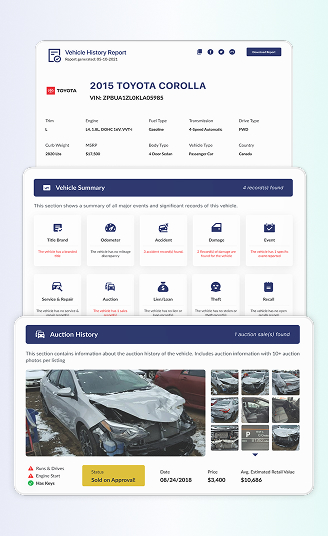
While a VIN lookup helps reveal factory specifications, it does not show the vehicle’s accident or title history. To access deeper records, upgrade to a full vehicle history report by VIN, which may include:
Vehicle Specifications
With a vehicle history report, you can review the vehicle’s original specifications like engine type, drive type, standard seating, fuel type, and MSRP. These details help you confirm the seller’s claims and decide whether the vehicle fits your needs and your budget.
Accident Records
This section shows whether the vehicle was involved in any accidents. Covering the dates, locations, and number of reported incidents. If accidents appear in the record, check for possible mechanical, structural, and electrical damage.
Stolen Vehicle Records
You can check if a vehicle has ever been reported as stolen. Buying a stolen car can lead to it being seized, with no refund. The report includes the theft date, location, and whether it was recorded in another country.
Auction History
A VIN check can show if the vehicle was sold at auction due to damage or insurance claims. It lists the sale price, auction date and location, current status, and may include up to ten auction photos.
Service and Maintenance Records
Check how the vehicle was taken care of by its previous owners. You can see what work was done, when it was completed, and where and when the service took place. Also, you will see if there’s a missing or upcoming maintenance schedule.
Title Check
A title check confirms the vehicle’s legal status and helps prevent title washing. It shows whether the title is clean or marked as salvage, rebuilt, or lemon. Make sure to check the title section to ensure the vehicle is 100% safe and legal.
Mileage History
Mileage records track the vehicle’s odometer. This section includes dated readings and the latest recorded mileage. The mileage report helps you examine whether the vehicle’s odometer was rolled back and to match the seller’s claim.
Lien or Loan Check
If a vehicle still has an active loan or lien, it may carry unpaid debt. By decoding the VIN, you’ll be informed if the vehicle has financial claims, so you can ask the seller to provide proof that everything has been cleared.
Ownership Records
This part shows the vehicle’s ownership history from its original country. It includes years of ownership, locations, and purchase periods, while keeping private details such as names and addresses hidden.
Recall Information
A recall is issued when a manufacturer identifies a serious defect. A VIN check shows recall dates, the reason for the recall, what action was taken, and the final status of the recalls (open/closed).
Look Up ANY VIN from Different Vehicles
Our VIN number lookup tool is not only made for cars but also for other vehicles like motorcycles and RVs. Use our auto VIN decoder service for these vehicles and get the report!
Look Up VIN for All Makes
Before you decide to buy that vehicle, it is important to understand the factory specifications to match your driving style and needs! We cover a wide variety of makes and models; check which one is yours.
FAQ About VIN Lookup
How do I look up a VIN number for free?
You can check a VIN for free through PremiumVIN. Our service offers simple, free checks that will get you information like specs, last mileage, and market value of the vehicle you want to sell or purchase.
Can I look up my car specs by VIN number?
Yes, you can view detailed vehicle specifications using the 17-digit VIN with our free online decoder. Enter the VIN from your dashboard, door frame, or paperwork into the form above to see model, year, engine, trim, drivetrain, and factory details.
Is Carfax VIN lookup free?
No, CARFAX reports are not free. You must pay to access their full vehicle history. With PremiumVIN, you can get a free check that includes the vehicle’s specifications and market value to help you review the car before buying.
What is a good mileage for a used car?
A typical used car averages about 12,000 to 15,000 miles per year, so a five-year-old vehicle with 60,000 to 75,000 miles is considered normal, depending on how it was driven and maintained.
What are the signs of a well-maintained car?
A well-maintained car usually has clear service records, clean fluids, smooth engine performance, even tire wear, strong brakes, and a tidy interior, which shows the owner took care of the vehicle and fixed issues on time.