
Ohio VIN Check: How to Investigate a Vehicle's History Before You Buy
If you are considering a used vehicle in Ohio, whether from a private seller in Columbus, a dealership in Cleveland, or an auction listing near Cincinnati, a VIN check is one of the first practical steps you can take. It will not tell you everything about a car. But it can surface available records about title brands, reported accidents, mileage history, and liens that a visual inspection cannot reveal.
This page explains what a VIN check can and cannot do in the Ohio context, what Ohio-specific title rules mean for your research, and how to use PremiumVIN’s tools as part of a broader due-diligence process.
What a VIN Check Actually Reveals (and What It Misses)
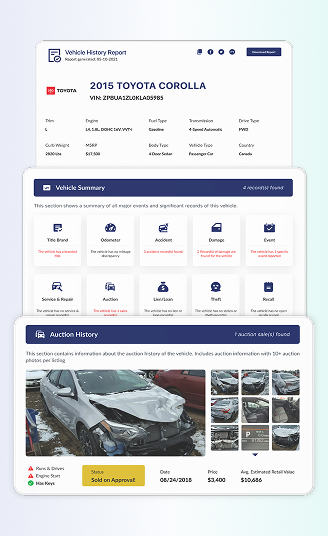
A Vehicle History Report compiles data from multiple sources: state title records, insurance companies, auctions, and available government-related datasets. When you run a VIN through PremiumVIN, the report may include:
Title brand history : salvage, rebuilt, flood, junk, or other designations recorded in state title systems
Reported accident and damage records : incidents that were reported to insurance companies or entered into available databases
Odometer readings : mileage entries recorded during title transfers, registrations, or inspections
Theft and lien records : whether the vehicle has been reported stolen or carries an outstanding loan
Auction and sales history : including photos where available
Vehicle specifications : decoded from the VIN structure
These categories are confirmed product features. Their availability for any specific VIN depends on what records exist in the sources PremiumVIN searches.
The critical limitation: A clean report does not mean a vehicle has no problems. Vehicle history reports capture reported information. Unreported accidents, DIY repairs, flood damage that was never claimed through insurance, and recent events that have not yet propagated through data providers will not appear.
A missing record means the searched sources did not return a match. It does not prove the event never occurred.
Ohio-Specific Rules That Affect Your Research
Ohio Title Brands and NMVTIS
Ohio’s administrative code ties title notations directly to the National Motor Vehicle Title Information System (NMVTIS). Under Ohio Administrative Code 4501:1-13-05, when NMVTIS shows a disposition of “salvage,” “sold,” or a blank/empty field for a vehicle, Ohio issues a salvage certificate of title rather than a clean title. Dispositions of “scrap,” “crush,” or “junk” result in no title being issued at all.
This matters because NMVTIS is a federal database that states, insurance companies, and salvage yards report to. If a vehicle was branded as salvage in another state and then moved to Ohio, the NMVTIS record should carry that brand forward. A VIN check that draws on title data can help you see whether such a brand exists.
Salvage and Rebuilt Titles in Ohio
Ohio distinguishes between a salvage title and a rebuilt salvage title:
Salvage title: Issued when a vehicle is wrecked or declared a total loss. The vehicle is not road-worthy and cannot be driven on public roads until inspected.
- Rebuilt salvage title: Issued after the vehicle passes an inspection by the Ohio State Highway Patrol. Only then can the vehicle be registered and driven.
If your VIN check shows a salvage or rebuilt brand, you are looking at a vehicle with a documented total-loss history. It may be a legitimate purchase, but it requires far more scrutiny than a clean-title vehicle.
Ohio's Official Title Search Tool
Ohio offers a Vehicle/Watercraft Title Search through the BMV’s online services. This tool allows you to view titles issued in the state of Ohio . It is an official government record, not a commercial report. If you are buying a vehicle that has spent its life in Ohio, this can supplement a commercial VIN check.
PremiumVIN is not the Ohio BMV. Our reports compile available data from multiple sources. They are not official government records, and they do not replace a title search with the state.
Flood-Damaged Vehicles: An Ohio Concern
Ohio has experienced flooding events that introduce water-damaged vehicles into the used market. The Ohio BMV publishes guidance warning buyers about hurricane and flood vehicles, recommending that buyers “run a vehicle history report” as one research step alongside sensory inspection and a mechanic’s check.
What the BMV suggests you look for physically:
Musty odors that may be masked by air fresheners
Wet or damp carpet under seats, floor mats, or in the trunk
Mud or silt in areas not normally exposed to the elements under the carpet, in the spare tire cavity, around the engine.
A VIN check can help if the flood damage was severe enough to trigger a title brand (flood, salvage) or an insurance claim that was reported. It will not detect a vehicle that was dried out and sold without any insurance involvement. That is why the BMV’s guidance pairs a history report with physical inspection, not as a substitute for it.
How to Read a VIN (Including Older and Non-Standard VINs)
Most vehicles manufactured for the 1981 model year and later have a standardized 17-character VIN. The structure breaks down roughly as:
Characters 1–3: World Manufacturer Identifier (country of origin and manufacturer)
Characters 4–8: Vehicle attributes (model, engine, body style)
Character 9: Check digit
Character 10: Model year
Character 11: Plant code
Characters 12–17: Sequential serial number
But not every vehicle PremiumVIN supports has a 17-character VIN. Classic vehicles, motorcycles, trailers, and some specialty vehicles may have shorter identifiers. PremiumVIN’s decoder supports VIN lengths from 5 to 17 digits, so a pre-1981 classic or a non-standard vehicle can still be processed.
For Ohio buyers specifically: if you are looking at an older vehicle, do not assume the absence of a 17-character VIN means the vehicle is suspect. VIN formats varied by manufacturer and era. What matters is whether the identifier you have can be decoded and whether the available records match the vehicle in front of you.
What to Do If Your Report Is Sparse or Appears Incorrect
A short report can happen for several reasons:
The vehicle was registered in a jurisdiction with limited data sharing
The event was recent and has not yet been reported
The vehicle is a classic or specialty type with sparse historical coverage
The records simply do not exist in the sources searched
If you believe a report contains an error or that a technical issue prevented it from generating correctly, PremiumVIN’s support team can review the situation. Refund and correction eligibility depends on the specific circumstances whether the issue was a source-data unavailability, a provider failure, a generation fault, or a customer input error. The published refund policy governs these cases, and it distinguishes between situations that may be eligible for resolution and those that are not.
What PremiumVIN cannot do is create a record that does not exist in any source. If the data was never reported, no correction process can generate it.
Free VIN Decoder vs. Full Vehicle History Report
You can start with PremiumVIN’s Free VIN Decoder to confirm basic vehicle identity: year, make, model, trim, engine, and other decoded specifications. This is useful for verifying that the vehicle the seller describes matches the VIN.
If the decoded information checks out and you are serious about the vehicle, a full Vehicle History Report adds the record-based categories: title brands, reported accidents, odometer entries, liens, theft flags, and auction history where available.
Neither tool replaces a pre-purchase inspection by a qualified mechanic. They are research tools that help you ask better questions and negotiate with more information.
FAQs about Ohio VIN check
Is there a free VIN check for Ohio vehicles?
PremiumVIN offers a Free VIN Decoder that provides basic vehicle specifications. A full Vehicle History Report, which compiles available title, accident, mileage, and lien records, is a paid product.
Can I look up an Ohio vehicle by license plate instead of VIN?
PremiumVIN offers License Plate Lookup for supported jurisdictions. You can use a plate identifier to begin a lookup if you do not have the VIN immediately available. Coverage varies by jurisdiction.
Does a clean Ohio VIN report guarantee the car has no accident history?
No. A clean report means the searched sources returned no negative records for that VIN. It does not prove that no accident, damage, or repair ever occurred. Unreported events will not appear in any commercial history report.
What does a "salvage" title mean in Ohio?
A salvage title indicates the vehicle was declared a total loss by an insurance company or otherwise rendered unfit for operation. In Ohio, a salvage vehicle cannot be driven on public roads until it passes an Ohio State Highway Patrol inspection and receives a rebuilt salvage title.
Does PremiumVIN check Ohio BMV records directly?
PremiumVIN compiles available data from multiple sources, including title and insurance data. It is not the Ohio BMV and does not have a direct live connection to state government systems. For official Ohio title records, use the BMV’s Vehicle/Watercraft Title Search.
The report I received seems incomplete. What should I do?
Contact PremiumVIN support. A short report may reflect source-data limitations rather than a generation error. Support can review whether the issue falls under correction or refund eligibility according to the published policy.
Related tools and guides:
Free VIN Decoder — confirm vehicle specifications
License Plate Lookup — start with a plate identifier
Understanding Title Brands — what salvage, rebuilt, and flood titles mean
Vehicle History Report — see what records are available for a specific VIN