
Title Check by VIN - Avoid Salvage and Rebuilt Vehicles
Have you ever thought of purchasing a used vehicle, but it carries a rebuilt or even a salvage title? That is why it is crucial to check the vehicle’s title to make sure it is free from any bad records. Click on the form and get the report now!
What a Vehicle Title Check Reveals
A vehicle title check helps to see critical records tied to a vehicle’s legal ownership and condition history. It shows whether the title is clean or branded due to events such as major damage, insurance write-offs, manufacturer buybacks, or theft recovery.
These records are important because title brands remain attached to a vehicle’s history and can affect its safety, resale value, financing eligibility, and insurance coverage. Be sure to review the title history to avoid getting a vehicle that was marked as salvage.
Check for Salvage, Rebuilt, and Other Title Brands
A title brand is a designation applied by state agencies when a vehicle experiences major events such as severe damage, insurance total loss, or manufacturer buyback. A branded title check helps determine whether the vehicle has ever been marked with these titles.
Some title brands you can check with a title brand lookup are:
Salvage Brand
A salvage brand is assigned when an insurance company declares the vehicle a total loss after severe damage. If the vehicle was marked as “salvage”, it means that it sustained significant damage that is impossible to repair.
Rebuilt or Rebuildable Brand
A rebuilt or rebuildable brand indicates that a previously salvaged vehicle was repaired and inspected before returning to the road. Be aware that this title might be dangerous, as some aspects may not be fixed properly.
Flood Brand
Flood brands appear when a vehicle has been significantly damaged by water from storms or flooding. A title check by VIN confirms the vehicle has no flood damage record, meaning it has not been officially reported as a flood vehicle.
Fire Brand
This brand indicates whether the vehicle has ever been reported with fire-related damage. If no record is found, the vehicle title has no fire damage history, suggesting it has not been declared damaged due to fire incidents.
Hail Brand
A hail brand is used when a vehicle has sustained major hail damage that affected its body or structural components. If the report shows no brand, the vehicle title has no hail damage record in its official history.
Junk or Scrapped Brand
A “junk” or “scrapped” brand means the vehicle was declared unusable and designated for parts or scrap. If the record shows none, the vehicle title has no junk or auction-scrapped history, indicating it has not been permanently removed from road use.
Manufacturer Buyback
This brand appears when a manufacturer repurchases a vehicle due to recurring defects or warranty disputes. However, if the vehicle has no manufacturer buyback records, it won’t be shown on the report.
Lemon Brand
A lemon brand indicates the vehicle was repurchased under lemon law due to repeated unresolved defects.
Odometer Brand
An odometer brand is applied when mileage discrepancies or tampering is reported. If the vehicle has an odometer brand, it means that the vehicle’s odometer has been rolled back by the other parties.
Vehicles Move. Their Records Should Too
Vehicles often move between states throughout their lifetime. A vehicle title check compiles records from different jurisdictions to show where the car has been titled and registered over time.
Reviewing multi-state records helps buyers check vehicle titles before buying used, especially when verifying whether a vehicle’s history has been altered or incomplete information exists in a single state database.
Title Washing Detection
Title washing occurs when a branded title is transferred to another state in an attempt to remove or hide the brand. A title washing detection process compares title records across multiple states to identify discrepancies and expose potential attempts to hide prior damage.
Registration History
Registration history shows where and when the vehicle has been registered throughout its life. These records can reveal ownership transfers, state-to-state movements, and gaps that may indicate hidden title issues or periods when the vehicle was off the road.
Odometer Readings
Odometer records track mileage reported during title transfers, inspections, and registration updates. Reviewing these readings helps identify inconsistencies and supports a prior salvage check by showing whether mileage records align with the vehicle’s documented history.
Why Checking a Vehicle’s Title Matters
Running a vehicle title check before purchasing a used car is crucial. By reviewing the title history linked to the VIN, buyers can identify branded titles, prior damage, and ownership issues that may affect safety, resale value, or financing options.
Buyers
A title check helps buyers spot risks before committing. It reveals issues that may not appear during a quick inspection, helping you avoid costly mistakes and unexpected problems later.
Check if it carries a Salvage Title
Vehicles with salvage titles were declared a total loss by insurers. Even after repairs, their market value stays lower, and the record remains part of the vehicle’s history.
Hidden Risks and Damage
Past accidents or major damage may not always be visible. A title check helps confirm whether the vehicle has a history that could affect safety or long-term reliability.
Sellers
A title check is also valuable for vehicle owners preparing to sell their cars. Providing verified title information can increase buyer confidence and make the transaction smoother.
Prove Clean Title
Sellers can use a vehicle title history report to confirm the car has a clean title and no hidden brands. This documentation helps build trust with potential buyers.
Disclose Honestly
If the vehicle has a branded title, sharing this information upfront helps avoid disputes and ensures the sale follows disclosure requirements.
Collectors & Enthusiasts
For collectors and enthusiasts, title history is an important part of verifying a vehicle’s background and long-term value.
Authenticity Matters
Classic and specialty vehicles often gain value from documented ownership history and verified records. A title check helps confirm the vehicle’s identity and past registrations.
Documentation Value
Well-documented title records can add credibility to a collectible vehicle. Buyers and collectors often look for complete history records to support authenticity and maintain resale value.
Insurance
Insurance companies rely on title information to assess risk. A vehicle’s title status can directly affect coverage options, premiums, and whether the car can be insured at all.
Coverage Limitations
Some insurers may limit coverage for vehicles with branded titles, especially salvage or rebuilt ones, which can reduce your protection compared to a clean title vehicle.
Higher Premiums
Branded title vehicles are often seen as higher risk, which can lead to increased insurance costs depending on the provider and the vehicle’s history.
Real Story: How a Title Check Revealed Hidden Salvage History
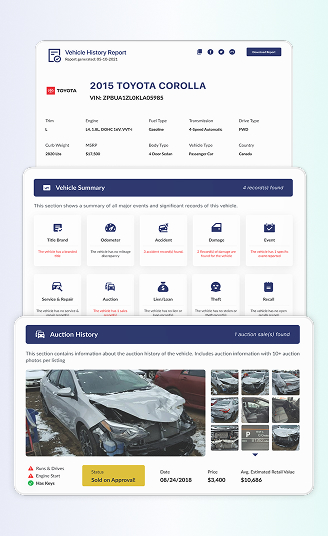
Ruma wanted to purchase a used 2017 FORD FUSION from a private seller in Texas. Before he decided to purchase the car, he decided to run a Ford title check by VIN and get the vehicle history report.
Sample VIN: 3FA6P0RU9HR306143
What the Title Check Revealed?
In the report, Ruma found some red flags on the vehicle. Here’s what he saw on the report.
Title Brands
On the report, the car is clearly marked as salvage.
Accident History
The car has one accident history that happened on 07/15/2022 in California.
Damage Records
The car has two damage history caused by a salvage title and major/minor damage caused by an accident.
Auction/Sales
The vehicle was sold at an auction.
Lien/Loan Records
The report shows that the car has two lien/loan records.
The Outcome
Ruma decided not to purchase the vehicle because it has too many red flags, which could be dangerous.
Check Vehicle Title by States
Select any U.S. state below to quickly run a title check and access vehicle history information specific to that location
How to Check the Title by VIN
To check the title status by VIN, you can just use our service and get it done within seconds. Follow these simple steps to decode the VIN and receive the report where you can examine a vehicle’s actual title.

Step 1: Find the VIN
Check on the driver’s side doorjamb or on the vehicle’s paperwork, like the bill of sale, to get the VIN. Can’t find the VIN? Ask the seller instead.

Step 2: Fill Out the Form.
Once you have the VIN, click the form and enter the VIN. After that, click on the button to submit the form

Step 3: Get the Report
Check on the preview page to see its complete specifications and a snippet of the title. Then, proceed to payment to get the full vehicle history report.
Where to Find the VIN Number on a Vehicle
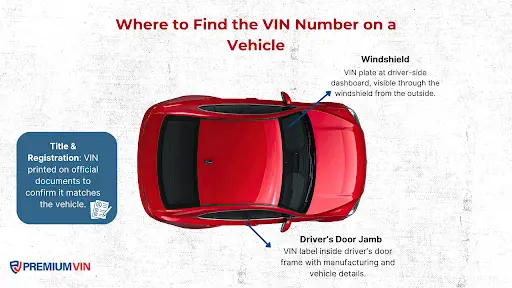
The Vehicle Identification Number (VIN) is placed in several locations so it can be easily verified when performing a vehicle title check or reviewing ownership documents. You can usually find the VIN in the following places.
Dashboard
The VIN is commonly displayed on a metal plate at the base of the windshield on the driver’s side dashboard. It can be seen from outside the vehicle by looking through the windshield.
Driver's Door Jamb
Many vehicles also display the VIN on a label or sticker inside the driver’s door jamb. This label is usually located on the door frame and may include other information such as manufacturing details and weight ratings.
Vehicle Title & Registration
The VIN is also printed on official documents such as the vehicle title and registration papers. Checking these documents helps confirm that the VIN matches the number displayed on the vehicle.
Why Choose PremiumVIN
With access to reliable records and fast VIN searches, users can quickly check for branded titles, ownership records, and potential title issues that may affect a vehicle’s value or safety. These are the reasons why PremiumVIN stands out compared to other service providers.
Multi-State Search
Vehicles often move between states during their lifetime. PremiumVIN checks records across multiple state databases to help identify title transfers, ownership changes, and potential title-washing attempts.
Complete Brand History
PremiumVIN provides a detailed look at title brands associated with a vehicle. This includes records such as salvage, rebuilt, flood, manufacturer buyback, and other branded title indicators.
Fast Results
Simply enter the VIN and receive results within seconds. The system quickly compiles title records and related information, so users can review the vehicle’s title status without delays.
Affordable Report
PremiumVIN offers an accessible way to check vehicle title records before making an important purchase. Verifying title history early can help buyers avoid costly surprises and make more informed decisions.
Verify Complete Vehicle Information With Our Tools
Quickly verify important vehicle details before buying. Use our tools to access records and avoid unexpected issues.
Check factory-installed options using the VIN to confirm features, verify equipment, and make sure you are not overpaying.
View fuel efficiency ratings for different models to compare consumption and estimate long-term running and fuel costs.
Confirm the exact trim level using the VIN and ensure it matches the seller’s description and asking price.
Review official safety ratings to check crash performance and make sure the vehicle meets expected safety standards.
Don’t End Up With a Salvage Vehicle
Don’t fall for a vehicle that is marked as salvage or even a lemon buyback. Always check the vehicle’s title by VIN and get the full vehicle history report to see the title, specs, and records like accidents, auctions, warranties, and even odometer history.
FAQs About Title Check by VIN
How Do I Check If a Car Has a Clean Title?
To check if a car has a clean title, start by locating the 17-digit Vehicle Identification Number (VIN). Enter the VIN into a trusted service such as PremiumVIN’s title check by VIN to review the vehicle’s title history. A clean title means the vehicle has no branded records like salvage, flood, or lemon status.
What’s the Difference Between a Salvage and Rebuilt Title?
A salvage title means the vehicle was declared a total loss by an insurance company because repair costs exceeded a large portion of its value. A rebuilt title indicates that the same vehicle was repaired and inspected by state authorities and approved for road use. While salvage vehicles are usually unsuitable for driving, rebuilt vehicles can legally return to the road.
Can a Salvage Title Be Cleaned?
A salvage title cannot be restored to a clean title once the brand is assigned. The salvage record becomes a permanent part of the vehicle’s history. However, the title can be changed to rebuilt or reconstructed after the vehicle is repaired and passes a state inspection.
What Is Title Washing?
Title washing is a fraudulent practice where sellers try to hide negative title records, such as salvage or flood damage, to make the vehicle appear clean. This often involves transferring the vehicle to another state with different title regulations to remove or obscure the brand.
Will a Title Check Show Flood Damage?
Yes, a title check can often reveal flood damage if the incident was reported to an insurance company or recorded by the state DMV. The title may include brands such as flood, salvage, or water damage. However, if the damage was never reported or the title was washed, the record may not always appear.
How Do I Check the Title on a Used Car Before Buying?
Before buying a used car, ask the seller to show the physical title and confirm that the VIN on the document matches the VIN on the vehicle. Check for any brands or outstanding liens. Running a VIN search through PremiumVIN can also help verify the vehicle’s title status and ownership history.
Is It Safe to Buy a Rebuilt Title Car?
Buying a rebuilt title car can be safe in some cases, but it comes with a higher risk compared to a clean-title vehicle. These cars were previously declared a total loss and may have hidden damage. Arrange a thorough inspection and examine the insurance coverage before proceeding to purchase a used vehicle.