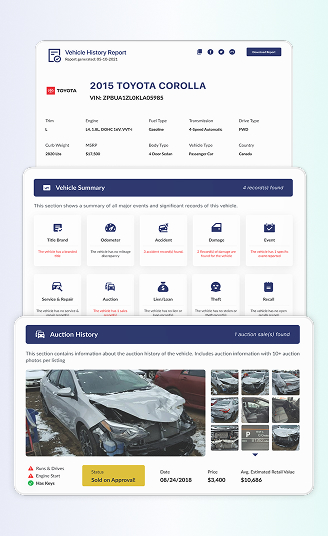

Check the Vehicle’s Auction History With a VIN
Plan to purchase a used vehicle? Check the VIN and get the vehicle history report to make sure that the vehicle was never sold at an auction. Click on the form below and write down the VIN to examine the car’s auction history.
What is an Auction History Check
A vehicle auction history report shows whether a vehicle has been sold through an auction and highlights details about its past. This can include previous conditions, ownership transitions, and the reasons it may have been listed, such as damage, repossession, or resale.
By running a car auction history by VIN, you can view important sales records like auction dates, listing status, and its photos. This makes it easier to check if a car was at auction and understand its background before making a purchase.
What Each Auction Record Shows
Auction records break down the vehicle’s information during the auction. These include pricing at the time of sale, whether the vehicle was sold, date, location, and photos. Here’s the information you’ll get on the report.
Auction Date
Shows when the vehicle appeared at auction. This helps users place the sale within the vehicle’s timeline and compare it with title, damage, or ownership records.
Auction Location
Identifies where the vehicle was listed or sold. The location can help users understand geographic movement and may provide added context about weather exposure, regional use, or relocation.
Sale Price
Displays the recorded auction sale price when available. This information can help users compare past selling values and better understand the vehicle’s pricing history.
Condition Photos
Some auction records include photos taken at the time of listing. These images can help users review the vehicle’s visible condition before repairs, resale, or later ownership changes.
Damage Descriptions
Auction listings may include notes about visible or reported damage. These details can help users identify issues that may not appear in a standard inspection or seller description.
Odometer Reading
Shows the mileage or recorded odometer reading listed at the time of auction. Comparing this with other records can help users spot unusual changes or inconsistencies.
Get More Than Auction Records With a VIN Check
Auction data gives useful insight about the vehicle’s auction records, but it does not tell the whole story. A complete vehicle report adds more context, helping you verify details, uncover risks, and understand the car beyond its auction history.
Vehicle Specifications
View details such as origin, MSRP, engine size, fuel type, and drivetrain to confirm the vehicle matches its listing and fits your expectations.
Theft Records
Check if the vehicle was ever reported stolen, including dates and locations, helping you avoid legal issues and potential ownership complications.
Title Brand Records
Identify title brands like “salvage,” “rebuilt,” “flood,” or “lemon,” which may indicate past events that affect the vehicle’s condition, safety, and value.
Lien and Loan Records
See if any financial interest is tied to the vehicle, helping you detect outstanding loans that could delay or prevent ownership transfer.
Odometer Reading
Review mileage records over time, including past readings with dates, to spot inconsistencies and better understand the vehicle’s usage and wear.
Accident History
Check accident records, including frequency, dates, and locations, to understand the vehicle’s past condition and any repairs that may affect performance.
Auction History
Access auction details such as sale dates, locations, final prices, and photos, giving you a clearer picture of the vehicle’s condition at the time.
Sales Listing History
Track previous listings with pricing, dates, locations, and images, helping you see how the vehicle has been marketed and priced over time.
Damage Verification
Uncover reported damage from accidents, fire, or other incidents, including issues that may not be obvious during a physical inspection.
Warranty Records
Check remaining warranty coverage, including type, duration, and mileage limits, to understand any protection still linked to the vehicle.
What Repeated Auction Sales Could Mean
A single auction record can be useful, but multiple records often reveal bigger trends. Looking at auction patterns helps users understand how often the vehicle was resold and whether its history raises concerns.
Multiple Auction Sales
If a vehicle appears at auction more than once, it may suggest repeated resale activity, unresolved problems, or difficulty finding a long-term owner.
Geographic Movement
Vehicles that move between different states or regions may have a more complex history. This pattern can sometimes point to title changes, market transfers, or attempts to resell the vehicle in another area.
Time Between Sales
The time between auction sales can provide useful context. Frequent resales within a short period may indicate issues that caused the vehicle to move quickly from one seller to another.
Why Auction History Matters Before You Buy
Auction history can reveal details that are not always obvious in a listing, inspection, or basic title search. Reviewing these records helps buyers understand how the vehicle was marketed, priced, and described before it reached the current seller.
Red Flags You Can’t See Anywhere Else
Some of the most important details in a vehicle’s background may appear in auction records. These records can highlight issues that are easy to miss when relying only on photos or seller claims.
Hidden Damage
Auction listings may mention damage that was visible at the time of sale but later repaired or left out of a resale listing. This can help buyers spot prior issues that are no longer obvious.
Salvage History Confirmation
Auction records can support salvage history findings by showing when a damaged vehicle was listed through an insurance or salvage auction. This adds context to title brands and past loss events.
Wholesale vs. Retail
Auction history can show whether the vehicle moved through wholesale channels before reaching a retail buyer. This may help explain pricing differences and how the vehicle entered the market.
Valuation Insights
Auction sales history can be useful when estimating a vehicle’s past market value. It gives buyers and sellers more context than a single asking price alone.
Previous Sale Prices
Past auction prices can help users compare earlier sale values with the current asking price. This can be useful when deciding whether the vehicle is reasonably priced.
Depreciation Evidence
Comparing sale prices over time may show how the vehicle’s value changed. This can reflect age, condition, damage history, or shifting market demand.
Sellers
Auction history is not only useful for buyers. Sellers can also use these records to present the vehicle more clearly and support their asking price.
Transparency Builds Trust
Sharing auction history can show that the seller is being open about the vehicle’s background. This can improve buyer confidence and reduce hesitation during the sale process.
Price Justification
Past auction prices, condition notes, and market movement can help support the seller’s asking price. This gives buyers more context and helps explain the vehicle’s current value.
Collectors
Auction history can be especially valuable for collectible, rare, or enthusiast vehicles. It may provide added background that supports authenticity and long-term value.
Provenance Documentation
For collector vehicles, auction records may help document where and when the vehicle was sold. This can add useful detail to the ownership and sales timeline.
Market Value Tracking
Repeated auction appearances and sale prices can help collectors follow value trends over time. This information may support buying, selling, or an insurance-related program.
Real Story: How Auction Photos Revealed Hidden Damage
Dwayne plans to purchase a used 2018 DODGE CHARGER from a private seller in Manhattan. The car was sold at a very low price, and he decided to decode the VIN and get the vehicle history report to find the answer.
What Was In the Vehicle Report
Once he received the report, he found out that the car had been sold at an auction in terrible condition. Here’s the full explanation:
Auction Details
The car was sold at an auction in 2021, priced at $8000. The auction house is located in Texas, and the car has damage mainly on its front side.
Auction Photos
On our vehicle history report, you can get up to ten pictures that show the vehicle’s condition when it was auctioned. Here’s a snapshot of the car auction.


Types of Auctions Explained
Vehicles can appear in different kinds of auctions depending on their condition, ownership status, or reason for sale. Understanding these auction types helps to understand auction records clearly.
| Auction Type | What It Means | Typical Vehicles | Risk Level |
|---|---|---|---|
| Copart / IAAI | Insurance auctions for total loss vehicles | Damaged, flooded, or recovered stolen vehicles | High |
| Manheim / ADESA | Wholesale dealer-only auctions | Trade-ins, lease returns, and fleet vehicles | Medium |
| Public Auctions | Auctions held by government agencies, police, or lenders | Repossessed, seized, or abandoned vehicles | Medium to High |
| Classic Car Auctions | Auctions focused on collectible vehicles | Vintage, rare, and enthusiast models | Low, when documentation is strong |
| Online Auctions | Vehicles sold through online auction platforms | Condition and vehicle type can vary | Varies |
How to Check Auction History by VIN
To check a vehicle auction history, use our service and get the vehicle history report to examine the full vehicle information. Follow these simple steps to get it done within seconds.

Step 1: Find the VIN
Check on the driver’s side doorjamb or on the vehicle’s documentation. If you can’t get them, ask the seller instead. If the VIN is not available, use its license plate number.

Step 2: Fill Out the Form
Click on the form above, then enter the VIN on it. After that, click on the button to submit the form.

Step 3: Get the Report
Check on the preview page to get a snippet of the vehicle’s auction history and market value for free. Then, proceed to payment to get the full vehicle history report.
Where Can I Find the VIN
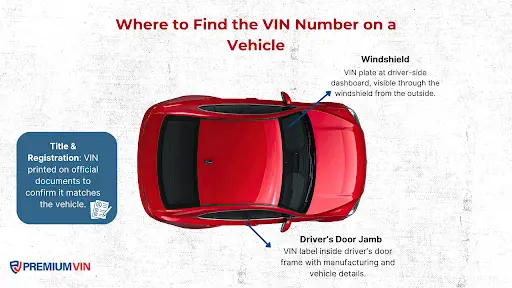
Finding a VIN on a vehicle is fairly easy if you know where to get it. On all vehicles, the VIN is usually placed on the dashboard and driver’s side doorjamb. Aside from that, the VIN can also be found on the vehicle’s paperwork.
Dashboard
The VIN is often located on the driver’s side of the dashboard near the windshield. It can usually be seen from outside the vehicle by looking through the glass.
Driver's Door Jamb
Open the driver’s side door and check the door jamb area. The VIN is commonly printed on a sticker or label attached to the frame.
Vehicle Title & Registration
The VIN is also listed on official vehicle documents such as the title and registration. Checking these records can help confirm that the VIN matches the vehicle.
Why Choose PremiumVIN
Unlike the other vehicle report providers, we have plenty of additional information that can’t be found anywhere else! You can get the real auction photos, a report that has no expiration date, and many more.
Auction Photos
PremiumVIN may provide access to auction photos when available. These images can help users review the vehicle’s past condition and spot visible damage from previous listings.
Multiple Auction Sources
Our report gathers data from multiple auction sources to provide broader auction coverage. This helps users access more complete vehicle auction records in one place.
Quick Results
Enter the VIN and get your report in seconds. This allows users to review important auction history quickly without waiting through a long process.
Affordable Report
PremiumVIN offers detailed vehicle auction history at a competitive price, only $25. Users can access valuable records without paying more than necessary for the information they need.
Examine More Vehicle Details
Want a clearer picture before you decide? Use these tools to verify key information, compare details, and make sure everything lines up with the listing.
Options Check by VIN
Enter the VIN to see the exact factory-installed features and equipment, helping you confirm what the vehicle actually includes.
Fuel Economy
Compare fuel efficiency across models to understand real-world usage and estimate ongoing fuel costs.
Trim Package
Check the exact trim level using the VIN and make sure it matches the features and price listed by the seller.
Safety Ratings
Check official safety ratings to understand crash performance and overall protection levels, helping you choose a vehicle with strong, reliable safety performance.
Don’t Buy Without Checking Auction Records!
Always verify the vehicle’s details with its actual information from a trusted source. Be a smart buyer and check if the vehicle was ever sold at an auction! Get a VIN check now!
FAQs About Auction Check by VIN
How to check if a car has been in an auction?
To check whether a car was previously sold at auction, enter the VIN into a vehicle history report service like PremiumVIN. The report may show auction dates, sale status, and the photos when the vehicle was auctioned.
Is it a red flag if a car was sold at auction?
To check whether a car was previously sold at auction, enter the VIN into a vehicle history report service like PremiumVIN. The report may show auction dates, sale status, and other available auction details.
How to identify a failed auction?
A car being sold at auction is not always a warning sign. Many vehicles go through auctions as part of normal dealer turnover, lease returns, or fleet sales. The concern is usually greater when the vehicle has a branded title, poor maintenance history, or possible hidden problems.
How risky is buying a car at auction?
Buying a car at auction can be risky because many vehicles are sold as-is, with no warranty or return option. Buyers often have limited time to inspect the vehicle, which makes hidden mechanical or title issues easier to miss.
Do car auctions tell you what's wrong with the car?
Car auctions may provide basic listing details, photos, or condition notes, but they do not always disclose every problem. Since many vehicles are sold as-is, buyers should not assume the listing reflects the full condition of the car. Check the vehicle history report by VIN to run a self-background check.
Can I drive a car I just bought from an auction?
In some cases, a car can be driven home after an auction, but only if it is roadworthy, properly registered, and covered by insurance. Buyers may also need temporary tags or other documents before legally driving it on public roads.