
Classic Car VIN Lookup - Pre-1981 VIN Decoder
Plan to purchase a classic car, but not sure if it’s original? Use our classic car VIN lookup and get the classic car history report. Check the car’s specifications, ownership history, mechanical information, and more!
What Is a Classic Car VIN?
A classic car VIN refers to a vehicle identification number used before VIN standardization in 1981.
Unlike modern VINs, classic VINs:
- Are shorter (often 5–13 characters)
- Follow manufacturer-specific formats
- May encode limited or inconsistent information
- Vary significantly by brand and year
Because of this, decoding a classic VIN requires understanding the specific format used by the manufacturer at the time.
Why Classic Cars Need a Special Kind of VIN Check
Unlike the modern 17-digit VIN, classic car VINs consist of 5 to 14 digits, and unfortunately, not all VIN decoder services can decipher classic VINs. In addition, many manufacturers use different VIN formats, which makes them harder to decode than modern VINs.
Pre-1981 VINs: The Short VIN Problem
There was no universal 17-character VIN standard, so many classic cars used shorter or non-standard VIN formats until 1981. These short VINs often vary by manufacturer and production year, which is why it is harder to decode using modern VIN tools.
Hidden Restoration & Modification History
Many classic cars have gone through decades of restoration, engine swaps, repainting, or structural repairs. While some restorations improve the vehicle, others may hide serious damage or non-original components.
Title Washing & Classic Car Scams
Classic vehicles are sometimes targeted in title washing schemes where previous damage, salvage status, or ownership issues are hidden by registering the car in another state or country. That is why verifying the classic VIN is crucial to see any inconsistencies and reduce fraud.
Classic VIN Formats by Year and Manufacturer
Classic vehicles use different VIN structures depending on the era and manufacturer. The table below shows common VIN formats used by popular brands before standardization.
| Year Range | Manufacturer | Typical VIN Length | Example Format | Notes |
|---|---|---|---|---|
| 1950–1959 | Ford | 5–7 digits | A12345 | Serial-based, limited data |
| 1960–1969 | Chevrolet | 8–12 digits | 1234567A89 | Engine and body identifiers |
| 1965–1970 | Ford Mustang | 11 digits | 5F08A100001 | Model, engine, plant encoded |
| 1970–1980 | Dodge | 10–13 digits | XS29L0G123456 | More structured VIN system |
| 1975–1980 | Toyota | 10–12 digits | TE27-123456 | Partial standardization |
| 1981+ | All manufacturers | 17 digits | 1HGCM82633A123456 | Standard VIN system |
How to Look Up a Classic VIN Number
No need to go up to 10 steps just to get the classic car history report. You can do it in just three simple steps with our service.
Find the VIN
To begin, you’ll need to find the VIN of the antique car you are checking. Check on the driver’s side doorjamb or on vehicle documentation.
Fill Out the Form
Click on the form above, then write down the VIN. After that, click on the button to submit the form.
Get Your Report
Examine the preview page to see the full specifications and then proceed to payment to get the full vehicle history report.
What Information Can a Classic VIN Lookup Reveal?
Depending on the manufacturer and year, a classic VIN lookup can uncover important factory details about your vintage vehicle. However, older VINs may not include as much detail as modern 17-character VINs.
Basic Vehicle Identity
Model Year
Identifies the production year of the vehicle, though exact dating may require additional research for pre-1960s models.
Manufacturer
Confirms which company built the vehicle (Ford, Chevrolet, Dodge, etc.).
Model or Series
Identifies the specific model line such as Mustang, Camaro, or Bel Air.
Factory Specifications
Engine Type
May reveal original engine displacement, cylinder count, and configuration.
Assembly Plant
Identifies which factory assembled the vehicle.
Production Sequence
The unique serial number that distinguishes this vehicle from others.
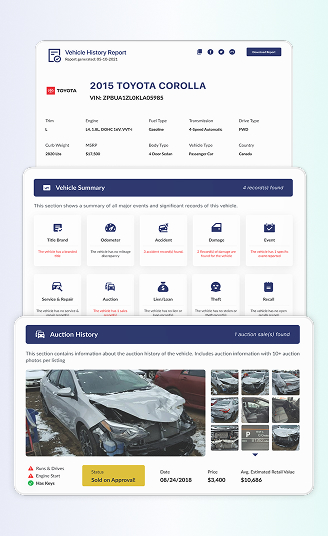
What You’ll Find on the Classic Car History Report
A classic VIN lookup focuses on identifying factory specifications and vehicle identity. Our classic car VIN decoder can help you decode classic car VINs and shows its records through a vehicle history report.
Vehicle Specifications
Check the complete vehicle specifications, such as the VIN, VIN description, engine, car dimensions, and many more. This section helps you to understand the vehicle’s specifications easily.
Vehicle’s Body
Check the car’s body, like the body maker, number of doors, dimensions like wheel-base, length, height, and width.
Other System Specifications
Highlight the other system specifications, such as the exhaust system, ignition system, battery, cooling system, and radiator.
Ownership Records
Check the vehicle’s ownership history, like how the vehicle was used and its past ownership roadmap.
Past Usage
Check how the vintage vehicle was used in the past. It helps you examine if the car was a personal vehicle, rental, lease, taxi, or even a government vehicle.
Ownership History
A list of how many people have owned the vehicle. It shows the ownership duration, year of purchase, and when the vehicle was registered. Please note that names and addresses are now shown.
Auction History
See the complete information of the car if it was ever sold at an auction. Get a clear picture of the cars in the past to ensure the quality.
Auction Information
View details from the vehicle’s auction records. This section shows important information such as the auction date, sale price, auction status, and the assigned lot number.
Auction Photos
Get up to ten pictures that show the vehicle’s condition when it was auctioned.
Title Check
See if the title is marked clean or even carries bad titles like “salvage” or “rebuild.” Make sure to check the car’s title before taking it home.
Salvage Brand
A salvage brand check shows whether a vehicle has been declared a total loss by an insurance company due to severe damage, theft, or flooding.
Manufacturer Buyback
A manufacturer buyback, also known as a lemon law buyback, refers to a vehicle that the automaker repurchased after repeated defects could not be resolved or to address customer complaints.
Mileage Records
In the used car market, odometer rollback is one of the most common crimes. That is why it is crucial to check the recorded mileage before any transaction happens.
Last Recorded Mileage
Check the last recorded mileage record of the vehicle to ensure it matches the seller’s claim.
Recorded Mileage History
Check the recorded mileage of the car and spot odometer tapering right away. In our report, you’ll find both the date and recorded mileage.
Accident and Damage History
If the vehicle was involved in an accident, it could affect its safety and structural issues. Check the car’s accident history by searching a classic car’s VIN.
Accident Details
Check the date of when the accident happened, and the location of the accident is also shown on the report.
Damage Check
See if the car was damaged from an accident, like structural integration, auction junk, or scrapped, non-title hail damage, dents, scratches, and more.
Theft Records
A vintage car is sometimes a target to steal due to its uniqueness and value. With a vintage car history report, you can see if the car has ever been stolen.
Theft Date and Location
Check the recorded date and location of when the vehicle was stolen.
Recovery Status
Check if the vehicle was later recovered and returned to the rightful owner.
Lien/Loan Records
Accidentally purchasing a car with a lien or loan attached is dangerous. Decode the classic car’s VIN and get the report to see the lien/loan records.
Active Lien
Find out if the vehicle carries an active lien that needs to be resolved. Make sure the lien is cleared before purchasing or selling the vehicle.
Lien Resolution History
Shows recorded timelines for when a lien was satisfied or released, helping verify that the vehicle has a clear ownership status and no outstanding financial claims.
Why Decoding a Classic VIN Matters
A classic VIN decoder helps identify details about an older vehicle. It can support buyers, sellers, insurers, and restorers by making it easier to check identity, specs, and important vehicle information.
Buyers
A classic VIN decoder helps buyers verify key vehicle details before purchase, especially for older cars with missing records or unclear specifications.
Check if the Car Matches the Listing
The VIN can help confirm details such as the model year, engine type, and body style listed by the seller.
Catch Issues Before You Buy
Decoded VIN details may highlight inconsistencies that suggest incorrect information, replaced components, or details that do not match the vehicle.
Sellers
A classic VIN decoder helps sellers present clearer and more accurate vehicle details. It adds transparency to the listing and gives buyers more confidence when reviewing an older car for sale.
Show Verified Vehicle Details
Decoded VIN information helps support details about the model, engine, and other identifying features buyers often check first.
Build More Buyer Confidence
When sellers share verified VIN details, buyers may feel more comfortable trusting the information in the listing.
Restoration and Parts Checks
A classic VIN decoder is useful during restoration and repair work. Some benefits are:
Check the Original Configuration
Decoded VIN details can help identify how the vehicle was built, which is useful when choosing matching parts.
Support Better Restoration Decisions
Knowing the car’s original details can help guide repair plans and support more accurate restoration work.
Where to Find a VIN Number on a Classic Car
On a classic car, the VIN is located on its body and paperwork, like the bill of sale or registration card. Check these locations to find a classic VIN easily.

Driver’s Side Dashboard: A metal plate visible through the windshield.
Driver’s Side Door Jamb/Post: A stamped metal plate or sticker located on the door pillar.
Firewall / Engine Bay: Stamped directly into the metal or attached to a riveted tag on the panel separating the engine from the cabin.
Frame Rail: Stamped into the frame, often near the driver’s side front wheel or sometimes on the passenger side.
Engine Block: A number stamped on the engine block itself, often used to confirm original engine configuration.
Other locations: Inner driver’s side fender, steering column, or under the rear seat, depending on the model.
Real Story: How a Classic Car VIN Check Revealed an Odometer Rollback
A buyer once found a classic car that looked well-maintained and had low mileage but decided to look up the classic VIN and vehicle history before purchasing.
The report later showed that the odometer had been rolled back in the past, meaning the car had been driven more than the seller claimed. By reviewing the vehicle history report, the buyer was able to spot the issue and avoid paying a higher price for a vehicle with hidden wear.
Critical Finding on the Report
Once the buyer has received the classic history report, he begins to examine the sections one by one. Later, he found a marking sign on the “Mileage History” section, and after a thorough check, he found that the car’s odometer was rolled back.
Rolled Odometer History

The mileage first dropped from 108,000 miles (06/16/1999) to 11,688 miles (10/27/2000). Another rollback is recorded when the mileage changed from 120,000 miles (02/28/2003) to 14,778 miles (09/10/2019).
Why Choose PremiumVIN for Classic Car VIN Lookup
Our classic car VIN decoder service helps you quickly find important information about vintage vehicles. Here’s why many classic car buyers and owners rely on our tool:
Detailed Vehicle Information
Our Classic VIN Decoder provides key specifications and available records linked to vintage vehicles, helping buyers and collectors review important build and history details.
Easy-to-Use VIN Search Tool
Simply enter the classic VIN into the search field to quickly retrieve specifications and available records without complicated steps.
Trusted Data Sources
The system gathers vehicle data from reliable automotive databases to provide accurate specifications and available records related to classic vehicles.
Fast Results
Vehicle specifications and available history details appear within seconds, allowing users to review important information without long waiting times.
Cost-Effective Service
Our classic car VIN decoder service provides useful vehicle details at a competitive price compared to many other VIN lookup services.
Secure and Private Searches
All VIN searches remain private and protected, ensuring that user data and lookup activities are not shared with outside parties.
Check Classic Car VIN From All Brands
Check classic car VINs from all brands in one place. Enter any VIN to instantly access accurate specs, build details, and available history for any classic vehicle. Some popular brands we cover are:
Decode Any Vehicle's VIN
If you do not have a plan to purchase a classic car and want to check another vehicle, no worries! Our VIN decoder tool can be used to decode VINs such as motorcycles, cars, and more.
RV VIN Lookup : Check the RV specs and records by using the VIN.
Motorcycle VIN Lookup : Examine the motorcycle’s original specs and market value by VIN
ATV : Check the ATV VIN and get the report to see its past information.
Truck : Our service can be used to decode a truck’s VIN to unreveal the records.
Trailer : Be sure to look up a trailer’s VIN to check its real condition.
Start Your Classic VIN Lookup Now
Use our classic car VIN decoder service to check the complete information of any classic car before you decide to buy. Check the complete specifications and records, like auction, accident, and more!
FAQs About Classic Car VIN Decoder
Can your service research vehicles manufactured before 1981?
Yes, our classic VIN decoder supports vehicles manufactured before 1981. Because these cars were produced before the standardized 17-character VIN system was introduced, the decoding process is different from that of modern vehicles. Our pre-1980 VIN number search helps interpret older identification formats and allows users to decode any classic car VIN.
Will your report reveal if the vehicle has been restored?
Yes, a detailed classic car VIN history report can often indicate whether a vehicle has undergone restoration, especially if the work followed a major incident that resulted in a new or branded title. Running an antique car VIN search can help uncover historical records that explain major changes in a vehicle’s condition.
Which international classic cars does your database cover?
The database covers a wide range of international classic and collector vehicles produced mainly before 1981. It includes extensive data on European, American, and Asian marques.
How is your classic car report different from standard VIN checks?
Our Classic VIN Decoder is built for vehicles made before 1981, when VIN numbers were not yet standardized. Many classic cars use shorter or manufacturer-specific identification numbers, which standard VIN check tools often cannot decode. Unlike most services that only support the modern 17-digit VIN format, our tool can interpret older VIN patterns and provide useful build details and historical information for classic and vintage vehicles.
Yes, you can look up MSRP by VIN with a window sticker lookup tool.
How to research classic car history?
Researching a classic car’s history usually starts with checking the VIN using a classic VIN decoder. Buyers may also review old documents, join owner clubs, consult specialists, and search online records to trace the vehicle’s origin and past ownership.
How many digits were in a VIN before 1981?
Before 1981, VIN numbers were not standardized and often ranged from 11 to 14 characters. Some manufacturers used even shorter numbers, sometimes between 5 and 9 characters, before the 17-digit VIN system was introduced in 1981.
How many digits is a 1968 VIN?
A 1968 VIN does not follow a single format because standards did not exist at the time. Many US cars used 13 characters, while some models, such as the 1968 Ford Mustang, used an 11-character VIN.