

Buying a used car can save you thousands of dollars compared to a new one, but it also comes with serious risks. According to the Federal Trade Commission, millions of used car buyers unknowingly purchase vehicles with hidden damage, mileage fraud, or unresolved title issues every year.
The good news? Most of these problems are avoidable if you know what to look for and take the right precautions before handing over your money.
In this guide, we’ll walk you through the most common problems when buying a used car, show you exactly how to spot each one, and provide a complete checklist to protect yourself.
Why Buying a Used Car Can Be Risky
Unlike new vehicles, used cars come with a history you can’t immediately see. That clean exterior might hide frame damage from a previous accident. Those “low miles” could be the result of odometer fraud. The seller’s “clean title” might actually be a salvage vehicle that was “washed” in another state.
Lack of Transparency in Vehicle History
Accident damage, flood exposure, rust, and structural issues that compromise safety
Mileage rollback, title washing, stolen vehicles, and forged documents
Poor maintenance, engine wear, transmission problems, and electrical gremlins
Understanding these risks is the first step to avoiding them. Let’s dive into the most common problems and how to spot each one.
Top 15 Common Problems When Buying a Used Car
Buying a used car can save money, but it also comes with risks that are not always obvious at first glance. Understanding the most common issues helps buyers avoid costly mistakes and make more informed decisions.
1. Hidden Accident Damage
Some sellers don’t disclose past accidents. Even if the car looks fine, structural damage can affect safety and performance.
Check Panel Gaps
Walk around the vehicle and inspect the gaps between body panels. Uneven spacing between doors, hood, and trunk suggests repairs.
Look for Paint Mismatch
Under different lighting, repainted panels often appear in slightly different shades from the rest of the car.
Inspect Welds and Seams
Open the hood and trunk. Factory welds are smooth and even. Repairs often show rough, uneven welding or overspray.
Check for Frame Damage
If you can, look underneath for bent frame rails, kinks, or fresh paint on structural components.
- Run a vehicle history report to uncover accident records from insurance claims.
- Get a pre-purchase inspection from a trusted mechanic.
- Test drive to feel for alignment issues or unusual vibrations.
2. Mileage Rollback (Odometer Fraud)
Odometer fraud is one of the oldest and most common scams in used car sales. A vehicle that actually has 150,000 miles is rolled back to show 60,000, which allows the seller to charge thousands more than it’s worth. The National Highway Traffic Safety Administration estimates that over 450,000 vehicles are sold with odometer fraud annually, costing buyers over $1 billion.
Inspect Wear Patterns
A car claiming 60,000 miles shouldn’t have a worn-through driver’s seat, a faded steering wheel, or heavily worn pedals.
Compare Mileage Records
Look for inconsistencies between the odometer reading and service records, inspection stickers, or previous title transfers.
Check the Odometer Display
On digital odometers, misaligned numbers or inconsistent brightness can indicate tampering.
- Run a mileage history report that shows every recorded odometer reading.
- Ask for service records that document mileage over time.
- Walk away if the mileage seems inconsistent with the vehicle’s condition.
3. Engine Problems
Engine repairs are among the most expensive often costing $4,000-$8,000 or more. Sellers may mask issues with additives, heavy oil, or by warming up the car before you arrive.
Listen to Cold Start
Ask the seller to let you start the car when it’s cold. Knocking, ticking, or rattling sounds are red flags.
Check for Smoke
Blue smoke indicates burning oil. White smoke (especially thick) can mean a blown head gasket. Black smoke suggests fuel system problems.
Look for Leaks
Check under the hood and under the car for oil, coolant, or other fluid leaks.
Smell for Burning
Burnt oil or coolant smells during the test drive suggest internal problems.
- Get a compression test from a mechanic.
- Check the vehicle history for major engine repairs.
- Test drive extensively, including highway speeds and stop-and-go traffic.
4. Transmission Issues
Transmission failure can cost $3,000-$6,000 to repair or replace. Problems often don’t appear until the vehicle is thoroughly driven.
Check for Rough Shifting
Does the transmission hesitate, slam into gear, or slip between gears? All are warning signs.
Listen for Whining or Clunking
Unusual noises during gear changes suggest internal damage.
Smell for Burning
A burnt fluid smell indicates overheating and potential failure.
- Test drive for at least 20 minutes: problems often appear as the transmission warms up.
- Check the transmission fluid (if accessible): it should be bright red, not brown or burnt-smelling.
- Verify service history for transmission fluid changes.
5. Poor Maintenance History
A vehicle without documented maintenance is a gamble. Neglected oil changes, skipped services, and ignored repairs lead to premature failure.
Ask for the record
Request service records from the seller. If they can’t provide any, proceed with extreme caution.
Check Wear Items
Worn tires, old brake pads, and dirty fluids suggest the owner didn’t invest in upkeep.
Look for Dashboard Warning Lights
Check that all lights illuminate briefly when starting, then turn off. Persistent check engine lights are red flags.
- Prioritize vehicles with service records.
- Run a service history report to see dealer-maintained records.
- Avoid vehicles with large gaps in documented maintenance.
6. Flood Damage
After every major hurricane, thousands of flood-damaged vehicles are cleaned up and shipped to other states to be sold to unsuspecting buyers. Flood cars develop endless electrical problems, mold, and corrosion that appear months after purchase.
Check for Musty Odors
A persistent musty smell, especially under carpets or in the trunk, is a dead giveaway.
Look for Rust in Unusual Places
Check under the dashboard, inside door panels, and under seats for rust where it shouldn’t be.
Inspect Electrical Components
Test everything: lights, windows, locks, radio, air conditioning. Flood cars often have intermittent electrical issues.
Check Carpet and Upholstery
Replaced carpet, mismatched interiors, or water stains suggest previous submersion.
- Run a flood history check to see insurance flood claims.
- Check auction records flood cars often appear on Copart or IAAI.
- Be especially cautious with vehicles from hurricane-prone states.
7. Salvage or Rebuilt Title
A salvage title means an insurance company declared the vehicle a total loss, usually from an accident, flood, or theft. A rebuilt title means it was repaired and inspected. Both carry permanent stigma and typically reduce value by 40-60%.
Ask to See the Title
Always request to see the actual title document before purchasing.
Check for Title Washing
Some sellers move vehicles to states with looser laws to “wash” the salvage brand. A clean-looking title may still hide salvage history.
- Always run a title check by VIN before buying.
- Be skeptical of prices that seem too low.
- Walk away from salvage vehicles unless you’re an experienced rebuilder.
8. Outstanding Finance or Loans
If the seller still owes money on the vehicle, the lender has a legal claim. If you buy it without paying off the loan, the lender can repossess it from you even if you had no idea.
Ask Directly
“Is there any outstanding loan or lien on this vehicle?” Sellers who hesitate or avoid answering are red flags.
Check the Title
If the seller has the physical title, check for lienholder information printed on it.
- Run a lien check by VIN to see active loans.
- Ensure the seller provides a lien release if any loan existed.
- Never buy without verifying the title is clear.
9. Theft Records
Thousands of stolen vehicles are resold each year with forged titles or altered VINs. If you unknowingly buy a stolen car, the police will seize it, and you’ll lose every dollar you paid.
Check VIN Locations
The VIN should match on the dashboard, door jamb, and title. Grind marks, mismatched rivets, or missing plates indicate tampering.
Ask for the Title
Sellers who can’t produce the title or offer excuses are major red flags.
- Run a stolen vehicle check before purchase.
- Verify the VIN is consistent across all locations.
- Walk away if anything about the VIN seems suspicious.
10. Excessive Wear and Tear
A vehicle that looks beaten inside and out was likely neglected. While not a safety issue alone, excessive wear often correlates with poor maintenance.
Inspect the Driver’s Seat
Worn bolsters, tears, or collapsed foam suggest high miles or hard use.
Check the Steering Wheel
Shiny, worn leather or rubber indicates extensive use.
Look at Pedal Pad
Worn-through rubber or metal showing through means this car has been driven a lot.
- Compare the condition with the mileage: a car with 60,000 miles shouldn’t look like it has 150,000.
- Check the tires: uneven wear suggests alignment or suspension issues
11. Fake or Forged Documents
Some sellers provide forged titles, fake service records, or altered inspection stickers to hide a vehicle’s true history.
Check Title Authenticity
Look for watermarks, consistent printing, and official state seals. Inconsistent fonts or colors are red flags.
Verify VIN Across Documents
The VIN on the title must match the VIN on the vehicle and all other documents.
- Cross-check all documents for consistency.
- Run your own vehicle history report: don’t rely on what the seller provides.
12. Electrical Issues
Modern cars rely heavily on electronics. Electrical problems are notoriously difficult and expensive to diagnose and repair.
Test Everything
Lights, windows, door locks, mirrors, radio, navigation, heated seats, backup camera test every electronic feature.
Check for Warning Lights
Make sure all dashboard lights illuminate briefly at startup, then turn off. Persistent check engine, airbag, or ABS lights are serious.
Look for Aftermarket Wiring
Spliced wires, aftermarket alarms, or poorly installed accessories often cause electrical gremlins.
- Spend time testing every electronic feature.
- Check for previous electrical repairs in the service history.
- Be especially cautious with vehicles known for electrical issues.
13. Rust and Corrosion
Rust can compromise a vehicle’s structural integrity. Surface rust is cosmetic; structural rust is dangerous.
Inspect the Undercarriage
Look for flaking metal, holes, or weak spots on the frame rails and suspension mounts.
Check Wheel Wells and Door Bottoms
These are common rust areas. Bubbling paint means rust is spreading underneath.
Look Under Carpets
If possible, lift the carpet in the trunk or footwells to check for floor pan rust.
- Inspect vehicles from northern states carefully: road salt accelerates rust.
- Consider vehicles from southern or southwestern states where rust is less common.
- Walk away if structural rust is present.
14. Modified or Tuned Vehicles
Modifications can reduce reliability, make the vehicle harder to insure, and indicate hard use. Heavily modified cars often have hidden problems.
Ask About Modifications
Sellers should disclose any modifications. Hidden modifications are red flags.
Look for Aftermarket Parts
Non-factory exhaust, suspension, wheels, or engine tuning suggest the vehicle was used hard.
Check for Tuning
Modified engines often run less reliably and may have warranty issues.
- Avoid heavily modified vehicles unless you’re an enthusiast and know what you’re buying.
- Get a pre-purchase inspection from a mechanic familiar with modified cars.
- Verify insurance coverage: Some insurers won’t cover modified vehicles.
15. Overpriced Vehicles
Some sellers inflate prices based on false claims about options, condition, or rarity. Paying too much is still a bad deal even if the vehicle is otherwise fine.
Compare Listings
Check what similar vehicles (year, make, model, mileage) are actually selling for in your area.
Verify Claims
If a seller claims “rare options” or “premium packages,” verify with the window sticker.
- Run a market value report to see what your specific vehicle is worth.
- Verify trim level and packages before paying a premium.
- Don’t fall for “urgency” tactics: if it’s overpriced, there will be other options.
Used Car Buying Checklist
Before you buy any used car, use this checklist to protect yourself:
Before You See the Car
- Run a vehicle history report (title, accidents, mileage, recalls).
- Check the market value for the specific vehicle.
- Research common problems for that year/make/model.
During the Inspection
- Inspect panel gaps and paint for accident damage.
- Check all VIN locations for consistency.
- Look for rust on the undercarriage, wheel wells, and door bottoms.
- Check tires for uneven wear and adequate tread.
- Inspect the interior for excessive wear.
- Test every electronic feature.
During the Test Drive
- Cold start: listen for unusual noises.
- Check for smoke from the exhaust.
- Test acceleration and braking.
- Feel for rough shifting or transmission slipping.
- Listen for suspension noises over bumps.
- Check alignment: does it pull to one side?
Before Finalizing
- Verify title is clean and matches the seller’s ID.
- Check for outstanding liens or loans.
- Review all service records.
- Get a professional pre-purchase inspection.
- Verify insurance is available (especially for rebuilt or salvage titles).
Red Flags to Watch Out For
Be extremely cautious if you encounter any of these warning signs:
| Red Flag | Why It Matters |
|---|---|
| Price too good to be true | Usually means hidden problems, title issues, or fraud |
| Seller avoids questions | Honest sellers answer questions directly |
| Missing or “lost” title | Legitimate sellers have the title in hand |
| Inconsistent VIN numbers | Suggests tampering, theft, or fraud |
| Rushed sale pressure | “Buy now or someone else will”—classic scam tactic |
| Won’t allow inspection | A seller with nothing to hide welcomes inspection |
| Out-of-state title | Could indicate title washing |
How to Avoid Buying a Bad Used Car
The best way to protect yourself from the 15 problems outlined above is to follow a disciplined, step-by-step approach. Here’s a simple framework that works for any used car purchase:
Do Your Research Before You Even Look
Before you schedule a test drive, you should already know:
- The fair market value for the specific year, make, model, and trim.
- Common problems for that vehicle (every model has its quirks).
- What a clean title looks like in your state.
- The seller’s reputation (if buying from a dealer, check reviews).
Inspect in Person: Don't Skip This Step
No amount of online research replaces seeing the vehicle yourself. Take your time. Use the checklist above to guide your inspection. If you’re not mechanically inclined, bring someone who is or plan to take the car to a professional.
Verify All Records Before You Pay
This is where most buyers make mistakes. Before you hand over any money:
- Run a vehicle history report to confirm title, accidents, mileage, and recalls.
- Check for outstanding liens: never buy a car with an active loan
- Verify that the seller’s identity matches the title owner.
- Get all documents: title, bill of sale, service records.
Make Decisions Based on Facts, Not Emotion
It’s easy to fall in love with a car especially when it looks great, and the seller tells a compelling story. But used car purchases should be based on facts, not feelings. If something doesn’t check out, walk away. There will always be another car.
Know When to Walk Away
Walk away if you encounter:
- A seller who won’t allow a pre-purchase inspection.
- Title issues or inconsistencies.
- A price that’s “too good to be true” (it usually is).
- Pressure to buy quickly before “someone else does.”
- Missing or forged documents.
Why Checking Vehicle History Is Important
A vehicle history report is one of the most powerful tools you have as a used car buyer. Here’s why it’s essential and not optional.
It Reveals What Sellers Won't Tell You
Even honest sellers may not know everything about a vehicle’s past. They might have bought it without knowing about a prior accident, flood damage, or mileage rollback. A vehicle history report uncovers:
- Accident records from insurance claims.
- Title brands like salvage, rebuilt, flood, or lemon law.
- Mileage history to spot rollback fraud.
- Ownership history to identify rapid flips or fleet use.
- Recall status for unrepaired safety defects.
It Protects Your Financial Investment
A used car is a major purchase often $10,000-$30,000 or more. A vehicle history report costs less than $20 at PremiumVIN. That’s a small price to avoid:
- Overpaying for a car with hidden accident damage.
- Buying a flooded vehicle with endless electrical problems.
- Inheriting someone else’s loan or lien.
- Losing the car entirely if it’s stolen.
It Gives You Negotiation Power
When you know a vehicle’s true history, you know its true value. A history report can help you:
- Negotiate a lower price if the car has an accident history.
- Verify that “rare packages” actually exist.
- Confirm that low mileage claims are accurate.
- Walk away confidently when the facts don’t match the story.
It Provides Legal Protection
In many states, sellers are required to disclose certain problems like salvage titles or flood damage. If you discover after purchase that the seller hid these issues, a vehicle history report provides documentation to support your case.
One Report, Everything You Need
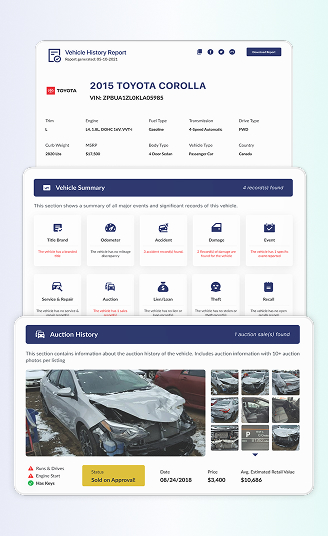
With PremiumVIN, a single VIN lookup gives you access to:
- Title history and current status.
- Accident and damage records.
- Odometer readings and rollback detection.
- Flood and fire damage indicators.
- Theft records.
- Lien and loan information.
- Manufacturer recalls.
- Service history (where available).
- Auction records with photos.
- Market value estimates.
Frequently Asked Questions About Buying a Used Car
What are the most common problems when buying a used car?
The most common problems include hidden accident damage, odometer rollback (mileage fraud), undisclosed flood damage, salvage or rebuilt titles, outstanding liens, engine and transmission issues, poor maintenance history, and electrical problems.
Is it safe to buy a used car without checking its history?
No. Skipping a vehicle history check is one of the biggest mistakes used car buyers make. A history report reveals accidents, title brands, odometer readings, and recall status—information sellers often don’t disclose.
How do I know if a used car is reliable?
Start with a vehicle history report. Then, get a professional pre-purchase inspection from a trusted mechanic. Finally, test drive thoroughly and check all service records. Reliable vehicles typically have documented maintenance and clean histories.
What is the biggest risk when buying a used car?
The biggest risk is hidden damage or fraud that sellers don’t disclose. This includes salvage titles that have been “washed,” odometer rollbacks, flood damage, and outstanding liens that can get the car repossessed after you buy it.
Should I get a pre-purchase inspection?
Absolutely. A pre-purchase inspection from an independent mechanic is the best money you can spend when buying a used car. It costs $100-$200 but can save you thousands in hidden repairs.
How do I check if a car has a salvage title?
Run a title check by VIN. A salvage title means an insurance company declared the vehicle a total loss—usually from accident, flood, or theft. These vehicles are worth 40-60% less and can be difficult to insure.
Can I trust a seller’s word about the car’s condition?
Be skeptical. Even honest sellers may not know the full history of the vehicle. Always verify with a vehicle history report and professional inspection.
What documents should I get from the seller?
You should receive a signed title (with no liens), a bill of sale, and any service records. In some states, a smog certificate or safety inspection may also be required.
Buying a used car doesn’t have to be risky. By understanding the most common problems—and knowing exactly how to spot them—you can make a confident, informed purchase.
The key steps are simple:
- Verify the history with a VIN-powered report.
- Inspect thoroughly using the checklist above.
- Test drive in real-world conditions.
- Get a professional inspection before you buy.
At PremiumVIN, we make the verification step easy. With just a VIN, you can access complete vehicle history reports that reveal accident records, title brands, mileage consistency, flood damage, and more.