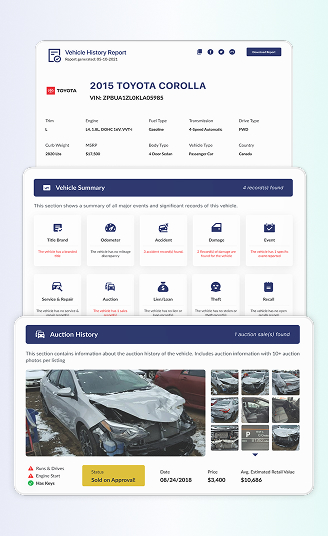

Detect Mileage Fraud with Odometer Rollback Check by VIN
Odometer rollback is a common practice in the used vehicle market to make a car seem less used. Use the odometer rollback check by VIN to examine the complete recorded odometer history and records.
What an Odometer Rollback Check Reveals
An odometer rollback check helps uncover whether a vehicle’s mileage history is accurate or potentially manipulated. Reviewing recorded mileage over time can reveal hidden fraud, suspicious inconsistencies, and signs that the vehicle may have more wear than advertised.
Complete Mileage Timeline
A complete mileage timeline shows how the odometer readings changed throughout the vehicle’s history. This helps buyers confirm whether the mileage progression appears consistent and believable.
Every Recorded Reading
Access historical mileage records reported during inspections, registrations, service visits, and ownership changes.
Chronological Order
View odometer readings in date order to track how the vehicle’s mileage increased over time.
Expected vs. Actual Pattern
Compare expected mileage growth with actual recorded readings to spot unusual patterns or inconsistencies.
Red Flags & Inconsistencies
Mileage fraud often leaves behind warning signs in the vehicle’s records. This section highlights suspicious activity that may indicate tampering or inaccurate reporting.
Decreasing Mileage
Identify situations where a newer record shows lower mileage than an earlier one, which is a major fraud indicator.
Impossible Drops
Detect unrealistic mileage reductions that could not happen through normal vehicle use.
Gaps in History
Large missing periods without recorded mileage may indicate incomplete records or attempts to hide usage history.
Out-of-Pattern Jumps
Spot sudden spikes or irregular changes in mileage that do not match normal driving patterns.
Fraud Probability Assessment
Mileage inconsistencies do not always confirm fraud, but they can significantly increase risk. This section helps buyers better understand the likelihood of odometer manipulation.
Risk Level Indicator
Receive a general assessment of the vehicle’s rollback risk based on the available mileage history and detected inconsistencies.
Specific Anomalies
Review detailed explanations of suspicious mileage records and potential warning signs linked to odometer fraud.
Why Odometer Rollback Detection Matters
Odometer fraud can make a vehicle appear newer, less used, and more valuable than it actually is. Detecting odometer rollback helps buyers and sellers avoid overpaying for vehicles with hidden wear, repair costs, and incomplete maintenance history.
The True Cost of Fraud
Mileage manipulation can have serious financial and safety consequences. A vehicle with rolled-back mileage may look appealing at first, but the hidden problems often become expensive later.
Financial Loss
Buyers may pay thousands more for a vehicle that is actually worth far less due to its real condition and mileage.
Hidden Wear
Critical components such as the engine, suspension, transmission, and brakes may have significantly more wear than expected.
Maintenance Deferred
Important maintenance intervals may have already passed, increasing the risk of breakdowns and costly repairs.
Mechanical Reality
Mileage directly affects the lifespan and reliability of a vehicle. Understanding the true mileage helps buyers make more accurate ownership and maintenance decisions.
Component Life Expectancy
Higher mileage reduces the remaining lifespan of many mechanical and electrical components.
Future Repair Costs
Vehicles with hidden mileage often require expensive repairs sooner than expected due to advanced wear and aging.
Legal Implications
Odometer rollback is not just unethical; it is illegal in many regions and can carry serious legal penalties.
Fraud is a Crime
Tampering with or misrepresenting mileage records is considered fraud and may result in fines or legal action.
Disclosure Requirements
In many states, sellers are legally required to disclose known mileage discrepancies or odometer issues.
Real Story: How a Report Helps Uncover Odometer Rollback
Jean wanted to purchase a used 2007 GMC YUKON from a private seller in Ohio. Before he decided to purchase the vehicle, he ran a quick check because the price was way lower than that of the other seller.
What the Report Revealed
The report revealed that the car has many red flags, including odometer rollback. If he doesn’t check the full report, it will be a big problem in the future.
Odometer Rollback
The report shows one odometer rollback history recorded on 12/22/2022. The previously recorded odometer was 210,064 on 11/29/2022; then it was rolled back to 209,845.
Accident History
The car was in an accident on 02/06/2023, located in VA.
Damage Records
One damage record caused by a major/minor incident.
Event Verifications
There are four recorded event verifications:
- Insurance loss record
- Titled to an insurance company record
- Corrected title record
- Loan/Lien record
Auction History
The vehicle was sold at an auction on 04/13/2023.
Service and Repairs
The vehicle was sold at an auction on 04/13/2023.
The Outcome
Jean decided to find another car because it has too many problems that require further repair.
Types of Odometer Fraud
Odometer fraud can happen in several ways, from physical tampering, digital manipulation, and false paperwork. These practices are used to make a vehicle appear less used than it actually is, to increase its resale value while hiding excessive wear and potential mechanical problems.
| Fraud Type | How It Works | How We Catch It |
|---|---|---|
| Mechanical Rollback | Physically turning back the analog odometer | Inconsistent readings, service records |
| Digital Rollback | Reprogramming the digital odometer | Inconsistent readings, module data |
| Meter Replacement | Replacing with a lower-mileage unit | Inconsistent with history |
| Title Washing | Out-of-state titles hide true mileage | Multi-state record comparison |
| No Disclosure | Simply lying about mileage | Verified against recorded history |
How to Check for Odometer Rollback by VIN
An odometer rollback might not be visible through manual checking. Use the odometer rollback check by VIN to examine complete information about the odometer reading and history.
Three Simple Steps
With just three simple steps, you can access complete information through a vehicle history report. Follow these steps to get the report.

Step 1: Enter Your VIN
Enter the VIN into the form above, then click on the button to submit the form.

Step 2: View Basic Info Free
Once it's processed, you’ll get the complete vehicle’s specifications information and market value. Then, proceed to payment to get the full vehicle history report.

Step 3: Unlock Full Rollback Report
Don’t forget to download the full vehicle history report to check the full vehicle odometer reading and spot other history such as accidents, auction, recall, and more.
Why Choose PremiumVIN
PremiumVIN helps buyers and sellers make informed decisions with fast, reliable, and easy-to-understand vehicle history reports. Our service can help you uncover odometer rollback, auction history, and more!
Comprehensive Sources
Our reports combine data from multiple trusted databases, including title records, insurance data, auctions, inspections, and registration history.
Fraud Detection
Identify warning signs such as odometer rollback, title washing, salvage history, and suspicious record inconsistencies before buying a vehicle.
Quick Results
Get your complete report in less than a minute after entering the VIN—no waiting, delays, or complicated process.
Affordable
Access detailed vehicle history information at a competitive price without paying expensive dealership or inspection fees.
24/7 Customer Support
Need help with your report? Our support team is available around the clock to assist with questions, orders, and report-related concerns.
Always Check the Odometer Reading
Check the VIN now and secure the vehicle history report to examine the complete information on odometer history, last recorded mileage, and other information to ensure the vehicle is 100% safe and legal.
Frequently Asked Questions About Odometer Rollback
How do I check if an odometer has been rolled back?
To check for a possible odometer rollback, compare the current mileage with service, inspection, and vehicle history records. Signs such as excessive interior wear, mismatched service stickers, or inconsistent mileage records may indicate tampering.
Is odometer rollback still a problem?
Yes, odometer rollback remains a growing issue. Despite modern digital odometers, mileage fraud still affects millions of vehicles each year, with scammers using electronic tools to alter mileage and inflate resale value.
How can I tell if the mileage is accurate without a report?
To estimate mileage accuracy without a full vehicle history report, compare the odometer reading with the vehicle’s physical condition. Worn pedals, steering wheels, seats, or outdated service stickers may reveal inconsistencies with the displayed mileage.
What's the average miles per year?
Drivers in the United States typically travel around 13,000 to 14,000 miles per year on average. This figure is commonly used when evaluating vehicle wear, maintenance schedules, and market value.
Can digital odometers be rolled back?
Yes, digital odometers can still be manipulated using specialized electronic equipment. Although more advanced than mechanical systems, digital mileage readings are not completely protected from tampering.
What are the legal penalties for odometer fraud?
Odometer fraud is considered a serious crime in the United States. Tampering with mileage records can lead to substantial fines, legal penalties, and possible imprisonment, especially when multiple vehicles are involved.