
EV VIN Lookup – Check Battery Capacity and Range
Buying a used EV is dangerous if you do not check everything thoroughly. Run a quick EV VIN Lookup to check the detailed specifications, MSRP, and market value. Click the form below to begin!
What is an EV VIN Lookup?
An EV VIN lookup is a service that uses the vehicle’s 17-digit Vehicle Identification Number (VIN) to identify the vehicle’s identity and its available specifications. Just enter the EV VIN into the form above, and you will retrieve information about the vehicle’s model year, make, model, trim, drivetrain, and other factory specifications at no cost.
8 YEARS / 100,000 MILES
Many EV manufacturers offer battery warranties lasting around 8 years or 100,000 miles. |
300+ MILES
Some modern EVs can deliver more than 300 miles of EPA-rated range on a full charge. |
200+ kW
Some EVs support DC fast-charging rates above 200 kW. |
What Information Can You Get From an EV VIN Lookup?
An EV VIN lookup can provide details about an electric vehicle and its factory configuration. Take a look at the section below to see what information you’ll get from our EV VIN Lookup.
Year, Make, and Model
Identify the vehicle’s model year, manufacturer, and specific model. These details help confirm that the EV matches the seller’s description or listing.
Electric Motor Specifications
The lookup may provide details about the electric motor or propulsion system installed in the vehicle. This can help identify the original powertrain configuration associated with the VIN.
Battery Specifications
Depending on the vehicle, a VIN lookup reveals available battery information or configuration details. This can help distinguish between EV versions with different battery setups.
Trim Level and Configuration
Check the vehicle’s trim level and factory configuration associated with an EV. Even if a vehicle has the same model but a different trim, it will have different prices, options, and features.
Drivetrain and Drive Type
The VIN can help identify the vehicle’s drivetrain configuration, such as front-wheel drive (FWD), rear-wheel drive (RWD), or all-wheel drive (AWD). This is especially useful when different drivetrain options exist for the same EV model.
Body Style
The lookup can identify the vehicle’s body style, such as a sedan, SUV, hatchback, or pickup. This provides another way to verify the vehicle’s basic specifications.
Power and Performance Specifications
Available VIN data includes power-related specifications for the electric powertrain. Depending on the manufacturer, this can help identify differences between performance versions or other EV configurations.
Manufacturer Information
Check where the vehicle was manufactured and produced. Examine the details to determine where and how the vehicle was identified by its manufacturer.
How to Look Up an EV VIN
To look up an EV VIN with our service, you can follow these simple steps and get it done in seconds.
Find the VIN
Check the dashboard, the driver’s side door jamb, or paperwork like insurance cards or title records.
Enter the VIN
Enter the VIN into the form above, then click the button to submit the VIN.
Get the Report
Examine the preview page where you can see the vehicle’s engine type, transmission, MSRP, and market value. Then, proceed to payment to get the full vehicle history report.
Why is Checking an EV VIN Important?
Checking an EV VIN can help verify the vehicle’s identity, specifications, and factory configuration. For buyers and sellers alike, checking the vehicle’s build details is important before any transaction happens.
EV Buyers
Run a quick EV VIN lookup to help you verify the crucial information before deciding to purchase the vehicle. As a buyer, it is important to learn the differences between the actual specifications and the initial configuration.
Verify the Vehicle Specifications
An EV VIN lookup can confirm the vehicle’s year, make, model, trim, body style, and other available specifications. This helps buyers compare the VIN with the seller’s listing and vehicle documents.
Check the Battery and Motor Configuration
Different versions of the same EV can have different battery, motor, and drivetrain configurations. Checking the VIN can help verify which factory configuration is associated with the vehicle.
Confirm the Original Factory Configuration
A VIN lookup can show available information about how the EV was originally configured. This helps buyers identify differences between the advertised vehicle and its original specifications.
EV Sellers
An EV VIN lookup can help sellers verify vehicle details before creating a listing. Providing accurate VIN-based information can also make it easier for potential buyers to evaluate the electric vehicle.
Provide Accurate Vehicle Details
Sellers can use an EV VIN lookup to verify specifications before creating a listing. Accurate details help potential buyers understand exactly which EV model, trim, and configuration is being offered.
Build Buyer Trust
Providing VIN-based vehicle information gives buyers a way to verify important details independently. This can make the listing more transparent and credible.
Speed Up the Sales Process
Accurate specifications can reduce questions about the EV’s trim, drivetrain, battery configuration, and other features. This could help buyers make better and faster decisions, so you can close the sales process promptly.
What Should You Know Before Getting a Used EV
Before you buy a used Electric Vehicle requires more than just checking the mileage and vehicle specifications. You should check the battery configuration, driving range, and charging capability.
Battery Condition Matters
The battery is one of the most important components you ned to check when you purchase a used Electric Vehicle. Check the battery specifications and capacity, as it can also affect driving range, charging needs, and the vehicle’s value.
Range Can Vary Between Models and Configurations
An EV’s driving range is different for each model year, trim, battery configuration, and drivetrain options. Check the vehicle’s specifications to make sure the advertised version matches the actual vehicle. Real-world range can also change based on temperature, driving habits, terrain, and battery condition.
Check the Charging Setup
Charging capability can be different between EV models. You should examine the car’s charging specifications and connector type when this information is available. Make sure the car is compatible with the charging equipment available at home, work, or public charging stations.
Verify the Configuration
The same EV models can have multiple trims, motor setups, battery options, and drivetrain configurations. You can use the VIN to check the vehicle’s configuration and compare it to the seller’s listing description to avoid scams and overpaying.
Need More Than EV Specs? Get a Full EV History Report
An EV car VIN lookup can help identify the vehicle and verify its available specifications. A full vehicle history report goes further by showing records that can reveal how the vehicle has been used, maintained, and titled over time.
Accident and Damage Records
Accident history is especially important for EV buyers because major damage can affect expensive components such as the battery pack, electrical systems, and charging components. Reviewing reported damage records can help identify potential concerns before purchase.
Battery-Related Information
The battery is one of the most important components of an electric vehicle. Available battery-related records, service information, or vehicle history details can help buyers understand the EV’s background and identify possible concerns.
Stolen Vehicle Records
A vehicle history report can check available records for theft-related information. In this section, you can get the date and the location where the vehicle was stolen. This can help buyers see whether an EV has been reported stolen or involved in a theft-related record.
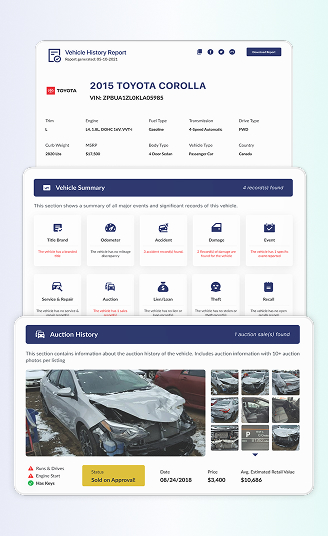
Auction History
Auction records can provide details about previous vehicle listings and sales at automotive auctions. You’ll get auction information like date, location, title, final price, and up to ten pictures that show its condition when it was auctioned.
Service and Maintenance Records
Service records can show reported maintenance and repair activity throughout the vehicle’s history. In this section, you may examine the car’s service and maintenance history, such as what parts were fixed, the location, and the date.
Title Check
A title check shows reported title brands, such as salvage, rebuilt, or other title-related records. This helps buyers identify vehicles with significant previous damage or title issues.
Mileage History
Track the complete history of the car’s mileage records with the vehicle records. In this section, you’ll see the logged mileage with the date and the last recorded mileage before it was put on sale.
Ownership Records
Check past ownership details, such as the year of purchase, where the vehicle was registered, how long it was owned, and how many people owned it before it was sold.
Recall Information
Check the vehicle’s recall information, such as the causes of recalls, dates, and recall status. You can examine whether the vehicle has any active recalls that haven’t been fixed, as it could be dangerous and might be expensive to repair.
Lien or Loan Check
Available lien or loan records can indicate whether a vehicle has outstanding financing associated with it. Checking this information can help buyers identify potential ownership or financial issues before completing a purchase.
Check These EV VINs
We cover a wide range of EV brands; you can look up the VIN and get the vehicle information in seconds.
Thinking About Buying an EV?
Check available specifications, battery and motor information, trim configuration, drivetrain, market value, and more. It only takes a VIN to start exploring what makes that particular EV different from other vehicles of the same model.
FAQs on EV VIN Lookup
How do I look up an EV VIN for free?
You can look up an electric vehicle (EV) VIN for free through official government databases and manufacturer-specific VIN lookup tools.
Can I check an electric car's specs by VIN?
Yes, you can use an electric car’s 17-character Vehicle Identification Number (VIN) to check its available specifications.
Can a VIN tell me what battery an EV has?
Yes, a VIN may reveal an EV’s battery type, capacity, or chemistry, but the level of detail depends on the manufacturer and available VIN data.
Can I check an EV's trim level by VIN?
Yes, you can use an electric vehicle’s 17-character VIN to identify its trim level and factory configuration when the information is available.
Can a VIN tell me if a vehicle is electric?
Yes, a VIN can identify whether a vehicle is electric based on its encoded vehicle information and associated data.
Can I check an EV's history by VIN?
Yes, you can use an electric vehicle’s 17-character VIN to check available history records, including accidents, title events, auctions, and other reported records.