

- Odometer rollback is a common crime committed by dishonest sellers to conceal the actual mileage.
- The aim of rolling back an odometer is to make the vehicle seem less used.
- If a vehicle has a low odometer reading, the selling price is higher
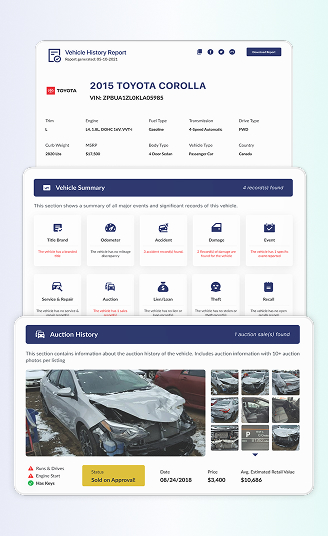
- Get a vehicle history report to see the complete odometer record
Odometer fraud is the act of altering a vehicle’s recorded mileage to make it appear lower than it actually is. Sellers do it to charge more. Buyers pay the difference sometimes upfront, sometimes in repair costs a few months later.
The average buyer who unknowingly purchases a car with a rolled-back odometer loses around $3,300 in vehicle value before the repair bills start. A rolled-back odometer doesn’t just mean you overpaid. It means the car is further into its service life than you were told, and the maintenance items you thought were years away may already be overdue.
What is Odometer Fraud and Why Does It Still Happen?
An odometer measures cumulative distance, every mile or kilometer the vehicle has traveled since leaving the factory. The higher-mileage car is further along in its maintenance cycle and closer to expensive wear items. Buyers use mileage to judge value and reliability. Sellers who know this have a financial reason to lie about it.
Consider two identical 2017 Honda Accords
One shows 42,000 miles; the other 91,000. On the 91,000-mile car, brake pads may be on their second replacement, spark plugs could be overdue, and shock absorbers have taken considerably more stress.
Now imagine that 91,000-mile car with its odometer showing 42,000. The buyer pays for a low-mileage vehicle and drives away with a high-mileage one.
How Rollback is Done Today
On older mechanical odometers, tampering meant physically winding back the gear-driven drums, labor-intensive, but common for decades. Modern digital clusters haven’t solved the problem. Cheap OBD-II programming tools, available online, can overwrite the stored mileage on many vehicles in under thirty minutes.
Some fraudsters swap the entire cluster with a lower-reading unit pulled from a salvage vehicle of the same model. The dashboard looks factory-standard because it is not from that car.
The assumption that a digital odometer is tamper-proof is exactly what makes this fraud so effective.
How Common is Odometer Fraud?
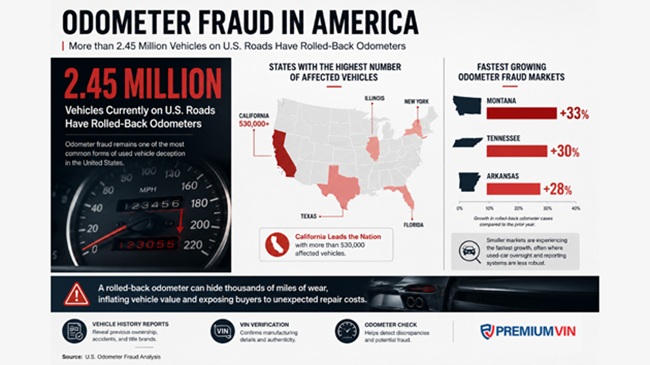
Based on research, more than 2.45 million vehicles currently on US roads have rolled-back odometers. California leads with over 530,000 affected vehicles, followed by Texas, Florida, New York, and Illinois. The fastest growth is in smaller markets: Montana up 33%, Tennessee up 30%, and Arkansas up 28%.
In the UK and EU, the problem is compounded by fragmented records. A vehicle registered in Germany, sold in Hungary, and then imported to the UK has its history spread across three national databases that don’t automatically share information.
How to Check Odometer History by VIN
Our VIN Check tool can help you to see the complete information about the vehicle’s recorded odometer. Follow these simple tips:
Step 1: Find the VIN
Check the vehicle’s parts, such as the driver’s side doorjamb, engine bay, and windshield, and the vehicle’s paperwork like the bill of sale, registration, and title records.
Step 2: Fill in the Form
Once you have the VIN, click the form and input the VIN. Then, click on the button to submit the form.
Step 3: Get the Report
Wait for a few seconds for the report to generate. Then, proceed to payment to get the full vehicle history report to see the odometer history and other records.
What’s Inside the Odometer Report?
A complete odometer check through a VIN check service included thorough information on the recoded odometer history, with other crucial information. Here’s what you’ll be able to see from the vehicle history report.
Recorded Odometer
The report shows a complete vehicle’s odometer from the first time it was recorded when it was driven. Each entry shows the date and the odometer reading at that point, up to the most recent record before the car was listed for sale. This makes it easy to identify unusual drops or jumps in mileage that could indicate tampering.
Another Vehicle Information
Not only do you get complete information on the vehicle’s odometer history, but you will also get complete information on the vehicle’s records, such as:
- Accident history
- Damage history
- Maintenance and Service Records
- Title Records
- Auction History
- Recall check
Why is Checking an Odometer History Important?
A car with the same make and model can have a huge price gap due to mileage differences. Take a look at the example below to see how running an odometer check by VIN is important before taking a vehicle home.
Actual Case
Julian from Tennessee wanted to purchase a used 2008 FORD F-250 from a private seller in New York. Before he decided to purchase the car, he decided to run a quick VIN check to see what’s up.
What Julian Saw on the Report
On the report, the vehicle has plenty of problems, including the odometer rollback problem.
- 2 accident records
- 2 auction records
- 4 lien or loan records
- The vehicle title has a flood damage record
- The vehicle title has a rebuilt or rebuildable record
- The vehicle title has a salvage brand record
What is the Odometer Problem?
Here’s the detailed breakdown of the odometer rollback history.
| Date of Records | Mileage Records |
|---|---|
| 01/04/2013 | 77,883 |
| 01/07/2013 | 77,888 † |
| 02/04/2013 | 7,883 |
For some people, it might be hard to notice, but a scam is still a scam.
Can You Check Odometer History for Free?
Partially. NHTSA covers recalls and safety complaints; no mileage data. NICB’s VINCheck flags theft and total loss records; also, there is no mileage history. Some state DMV portals show the mileage recorded at the most recent title transfer, which is one data point, not a timeline. If the rollback happened after the last title transfer, that single entry won’t catch it.
Free tools give fragments. A full chronological mileage history requires access to multiple aggregated sources that no single government database provides.
Other Ways to Spot Odometer Fraud
Wear tells the truth when paperwork doesn’t. On a genuine 40,000-mile vehicle, brake pedal rubber should show light wear, the steering wheel shouldn’t be shiny or cracked, and the driver’s seat bolsters should still have their shape. Heavily worn pedals, a polished steering wheel, and collapsed seat edges on a supposed low-mileage car are inconsistent with the numbers.
Check the tires. A car showing 32,000 miles on original tires should have plenty of tread left. If they’re near the wear indicators, either the mileage is wrong or they’ve been driven severely underinflated, neither of which is reassuring.
Look for service stickers on the door jamb or windshield. These survive even when sellers remove paperwork. A sticker reading “Oil change at 74,000 miles” on a car currently showing 49,000 is a documented discrepancy right there.
Paperwork Red Flags
Missing service history entirely isn’t proof of fraud, but it removes one of the main verification layers. Don’t forget to compare the mileage on paperwork like title, registration, inspection records, and maintenance documents. If the mileage is inconsistent, be aware because it can be a clear sign of odometer rollback.
Pre-Purchase Inspection
A mechanic with an OBD-II scanner can pull data from the ECU, transmission control module, and ABS module, all of which store their own operational records independently from the dashboard cluster. If the cluster has been swapped or reprogrammed, these modules may still hold a higher figure. When module data doesn’t match the dashboard, that’s a technical flag a mechanic can document before you buy.
Physical Tampering
Inspect the odometer and the surrounding area of the dashboard for scratches, loose screws, damaged panels, or mismatched trims on the vehicle’s description or claim. These signs might be signs of someone tried to remove or access the vehicle’s odometer box.
Excessive Wear and Tear
You can compare the vehicle’s overall wear and tear with its reported mileage records. Heavy wear on the vehicle’s steering wheel, pedals, floor mats, and interior controls can be an early sign that the vehicle has been driven too often.
Check the Pedals and Seats
During the vehicle inspection, don’t forget to examine the pedals and the seats, or other areas that are frequently touched and used by the previous owner. If the vehicle is used too often, it can be a warning sign when a vehicle shows signs of unusually low mileage records.
What to Do If You Accidentally Purchase an Odometer Rolled-Back Car?
In the US, federal odometer law (49 U.S.C. § 32705) makes it illegal to sell a vehicle with a knowingly inaccurate odometer reading. Buyers who can prove fraud may be entitled to three times their actual damages plus legal fees.
In the UK, the Consumer Rights Act 2015 gives buyers recourse for misrepresented vehicles, potentially a full or partial refund depending on when the fraud is discovered. Trading Standards handles criminal enforcement.
In the EU, consumer protection laws vary by member state, but most provide recourse against fraudulent misrepresentation in both private and commercial sales.
Where to Report?
US buyers should file with the FTC at reportfraud.ftc.gov and the state Attorney General’s office. UK buyers report to Action Fraud and local Trading Standards. Before doing anything, collect the original listing with the stated mileage, the vehicle history report showing the discrepancy, any inspection records, and all written communication with the seller. Without documentation, a complaint goes nowhere.
Check the VIN Before Buying
Verifying mileage history before a purchase takes a few minutes. Disputing fraud can take months, sometimes lawyers, and often ends without full recovery.
Anyone who has spent time around used car transactions has seen buyers skip the VIN check to save a small fee, then face an unexpected gearbox service a few weeks later because the car had 50,000 more miles on it than they were told.
A mileage timeline won’t catch every case; a recent rollback with no prior recorded entries can slip through, but it catches the ones where the evidence was sitting there the whole time, waiting for someone to look.
Frequently Asked Questions About Odometer Fraud by VIN
Can a VIN check detect odometer fraud?
Yes, you can check for odometer fraud by VIN. If multiple mileage readings have been recorded against the VIN over time, a VIN check can identify inconsistencies. It won’t catch every case (especially recent tampering with no prior records), but it’s the most reliable digital tool available.
What does "not actual mileage" mean on a title?
“Not actual mileage on title” means a previous owner or the DMV flagged the odometer reading as unreliable. This can happen when a rollback was detected, when a cluster was replaced, or when the reading was otherwise unverifiable. It permanently brands the title.
How many miles are typically rolled back?
Typical rolledback mileage varies. A car showing 40,000 miles may have 80,000–100,000 actual miles. Rolling back only a few thousand miles is less common because the financial payoff doesn’t justify the legal risk.
Does digital odometer fraud leave traces in the car?
Sometimes odometer fraud does leave traces in the car. Modules like the ECU, ABS controller, and transmission control unit store their own mileage logs. If those don’t match the dashboard cluster, it’s a strong indicator of tampering.