
VIN Decoder - Unlock Vehicle Specifications by VIN
Decode any VIN instantly to get accurate vehicle details. Our free VIN decoder provides information such as make, model, year, engine, trim, and factory specifications, with access to available vehicle history records. Enter a VIN to get started.
What is the VIN Number?
A Vehicle Identification Number (VIN) is a unique code assigned to every motor vehicle. It was introduced to help manufacturers and authorities identify vehicles based on how they were built. In 1981, the National Highway Traffic Safety Administration (NHTSA) standardized the VIN format for modern vehicles.
When decoded, a VIN provides important vehicle specifications such as the make, model, engine type, drivetrain, and production details. This information helps users confirm a vehicle’s identity and understand its original factory configuration. To avoid misreading characters, VINs never contain the letters I, O, or Q.
What Information Does The VIN Decoder Provide?
When decoded, a VIN provides manufacturer specifications and configuration data that help identify the vehicle’s exact model and setup.
Using our VIN decoder, you can access available vehicle specifications such as:
Vehicle Identity
- Model year
- Make and manufacturer
- Model and series
- Trim level (when available)
- Country of manufacture
Body & Chassis Details
- Body type
- Number of doors
- Exterior and interior dimensions
- Ground clearance
- Cargo dimensions (where applicable)
- Weight class (GVWR category)
Powertrain & Mechanical Specifications
- Engine size and displacement
- Engine configuration and description
- Engine model or code (when available)
- Valve train design
- Fuel type
- Transmission type
- Drive type (FWD, RWD, AWD, 4WD)
Safety & Equipment (Factory-Level)
- Airbag system configuration
- Seat belt type
- Tire size and pressure specifications
- Wheel specifications
Efficiency & Classification
- EPA vehicle class
- Emissions classification
- Tire size and pressure specifications
- Wheel specifications
Why Do You Need a VIN Decoder?
A VIN number lookup involves searching the 17-digit VIN code in databases rather than guessing. For many, it can mean the difference between a wise purchase and a costly mistake. If you’re spending thousands on a vehicle, using a free VIN decoder tool is a simple check to perform.
Buying a vehicle is a financial commitment, and a VIN number lookup helps buyers make informed decisions by uncovering critical details that may not be immediately visible.
To Avoid Buying a Flood-Damaged Car
Flood-damaged vehicles often look clean after cosmetic repairs, but their electrical systems and components can be compromised. A VIN decode combined with a history check can reveal flood branding, salvage titles, and past claims.
To Avoid Buying a Used Car With Hidden Issues
Many problems may not be evident during a quick inspection or test drive. VIN decoding and a history check reveal hidden issues like past repairs, accident damage, mileage inconsistencies, and ownership patterns. This insight helps you avoid cars that could lead to costly headaches.
To Confirm the Vehicle’s True Specifications
A VIN decoder shows you the exact factory build, including engine size, drivetrain, transmission, safety systems, and original equipment. This ensures you pay the right price and prevents you from buying a lower-trim vehicle disguised as a premium model.
Private sellers benefit from a VIN number lookup by increasing transparency, trust, and confidence during the selling process.
Confirm Vehicle Details Before Listing
Running a VIN decoder before creating your listing ensures that details such as model year, trim level, engine type, and factory equipment are correct. This helps prevent errors that could confuse buyers or undermine your credibility later in the sale.
Prepare for Buyer Questions
Buyers often ask detailed questions about history, specifications, and equipment. A VIN report equips sellers with accurate answers, allowing them to respond confidently and consistently, which builds trust and keeps serious buyers engaged.
Speed Up the Sale Process
Vehicles with verified VIN details tend to sell faster because buyers feel more confident moving forward. Transparency reduces hesitation, shortens decision cycles, and helps convert interested shoppers into committed buyers.
Dealers rely on VIN number lookup tools to manage inventory, reduce risk, and ensure regulatory compliance.
Verify Inventory Accuracy
VIN decoding ensures every vehicle in inventory is correctly identified, categorized, and labeled. Accurate VIN data helps dealers avoid listing errors, misclassified trims, or incorrect specifications across sales platforms and internal systems.
Prevent Acquiring High-Risk Vehicles
A VIN history check helps dealers identify flood-damaged, stolen, or heavily branded vehicles before acquisition. This reduces financial risk, protects dealership reputation, and prevents costly inventory mistakes
Scale Operations Efficiently
For dealers managing large inventories, VIN lookup tools enable fast, consistent processing across locations. This scalability improves operational efficiency and supports growth without sacrificing accuracy or compliance.
How a VIN Decoder Reads Your VIN
Since 1981, the automotive industry has used a standardized 17-character format. It looks like a jumble of letters and numbers, but it is actually a precise code. Every VIN is a 17-character identifier that contains factory details about the vehicle. A VIN decoder reads the VIN to identify key information such as the manufacturer, model year, engine type, trim level, and production details. Here is how we read it.
World Manufacturer Identifier (WMI)
The first three characters of a VIN number indicate the WMI, which uniquely identifies the country of origin, vehicle manufacturer, and vehicle type.
Position 1: Country of origin
The first character tells us where the car was born. A “1,” “4,” or “5” means the USA. A “J” means Japan. If you are buying a “German” car but the VIN starts with a “1,” it was built in the States.
Position 2: Manufacturer Code – Specific manufacturer
The second digit narrows it down to the brand. Each brand has its own codes and sub-codes.
For example: “G” for General Motors, “F” for Ford, “T” for Toyota.
Position 3: Vehicle Type/Division – Brand division
This digit often indicates the vehicle type (passenger car, truck) or the specific division within a manufacturer, like Pontiac within GM.
Vehicle Descriptor Section (VDS)
VDS stands for Vehicle Descriptor Section, which usually includes characters 4 through 9 (or 4-8, depending on the standard) that describe the vehicle’s specific features. Below is a detailed explanation of the digits in the VDS.
Position 4-8: Model, body, engine
Here, the VIN decoder goes deeper. This character tells you about:
- Body style (e.g., sedan, coupe, hatch, wagon, SUV, pickup)
- Restraint system (e.g., airbag configurations, belts)
- Engine size and type (e.g., displacement, cylinders, fuel)
- Series or trim for some brands
This is where the Premium VIN decoder really matters because each manufacturer uses its own pattern.
Position 9: Check Digit – Mathematical validation
This one is all about security. With this digit, you will know about:
- A weighted formula is used with the other VIN positions
- The result must match position 9
- If it doesn’t, the VIN is likely typed wrong or tampered with
Vehicle Identifier Section (VIS)
In a VIN, the VIS refers to the Vehicle Identifier Section, which includes the last 8 or 9 characters (positions 10-17). This unique segment identifies a specific vehicle, including details like the model year, manufacturing plant, and a sequential production number.
Position 10: Model Year – Year codes
This position is the model year code.
Notes
- Letters I, O, Q, U, Z are skipped (VIN standard).
- Codes repeat every 30 years.
Position 11: Assembly Plant – Specific factory
Position 11 in the VIN is the plant code.
- Each manufacturer assigns letters or numbers to its factories
- Knowing the plant can matter for recalls, quality patterns, and collector interest
Position 12-17: Production Sequence – Serial number
The last six characters are the car’s serial number.
- Unique to that vehicle within its plant and model year
- Often used by clubs and collectors to see how early or late the car was built
How to Decode a VIN Number
Using a VIN number lookup, you can quickly verify vehicle specifications, confirm authenticity, and avoid costly surprises. This guide will walk you through the process step by step.

Step 1: Find the VIN
Check the dashboard (driver’s side), driver’s door jamb, registration, or insurance card.

Step 2: Type the 17-digit VIN carefully
Fill in the details with the VIN. Avoid mixing 0 (zero) and O, and 1 (one) and I. Our VIN validity check will warn you if it looks wrong.

Step 3: Get the report
In seconds, you will see the preview page. Confirm specs and the basic title info. If the car looks interesting (or suspicious), upgrade to see the full history. Keep it as proof for negotiations, insurance, or your own records.
Why Users Trust Our VIN Decoder Service
We have been in this game a long time. We know that data accuracy isn’t just a metric; it is your safety.
Most comprehensive database coverage
We combine data from multiple trusted sources (government, industry, and market) to give you more than just “VIN decoder output”. You get a complete story, not just the cover.
No hidden fees or subscriptions
The price you see for a full report is the price you pay. No recurring monthly charges that are impossible to cancel.
Daily data updates
Our systems refresh constantly, so yesterday’s recall or title change doesn’t stay hidden for months. For many people, that timing really matters.
24/7 customer support
Got a confusing report? Strange record? Something feels off? You can reach out any time and talk to a real person, not just a bot.
100% data accuracy rate
We will give you the accurate available records data tied to the VIN, Helps you to make better decisions.
Live Chat with VIN Expert
Our live chat lets you talk with someone who reads VIN reports all day and can translate the data for you, making it easy to understand.
Unlimited free checks
You can use the VIN search lookup to decode the basic specs as many times as you want. We don’t cap you.
Downloadable PDF
Need a file to send to your mechanic, buyer, or insurance company? Save the report, print it out, and take it to the dealership. Use it as a bargaining chip.
Manufacturer-Specific VIN Decoding Database
We don’t guess. We have specific decoding logic for every major manufacturer. We have the keys to the code, even for the classic ones.
Need More Than a VIN Decoder? Get Complete Vehicle History Report?
A VIN isn’t just a serial number. It’s the vehicle’s factory blueprint. Encoding how it was built before it ever hit the road with PremiumVIN. A VIN decoder provides factory specifications, but it does not show accident records, title history, or ownership details.
To uncover the full vehicle background, you may also want to check:
Vehicle Specifications
Before reviewing ownership records or historical events, a VIN check first verifies that the vehicle’s identity matches what is being advertised. This step ensures the car’s core specifications align with manufacturer data and helps confirm that the vehicle is accurately represented.
Year, Make, Model
Your VIN number decoder pulls factory data so you can confirm:
- Model year and model line
- Make (brand) and sub-brand, where applicable
- Body type (e.g., sedan, SUV, coupe, truck, van)
- Engine size and fuel type
So when someone says, “It’s a 2018 V6,” you can check if the VIN search lookup agrees with that statement
Trim
Trim is where price and value really change. Our vehicle VIN decoder shows:
- Factory trim level (e.g., EX, LT, Limited, Sport)
- Original equipment groups and option codes (great if you want a VIN decoder with original equipment details)
- Transmission type and drive type (e.g., FWD, RWD, AWD, 4WD)
- Exterior and interior colour codes
So you can spot “base trim wearing premium badges” pretty fast.
Body & Physical Configuration
These define the vehicle’s physical form and capability.
- Number of doors
- Wheelbase
- Ground clearance
- Curb weight / GVWR
- Cargo capacity
- Tire & wheel specifications
Safety & Regulatory Configuration
Often standardized but can vary by trim or market.
- Airbag configuration
- Seat belt type
- ADAS features (factory-level)
- Crash/emissions classification
- EPA vehicle class
Title Check
The title check tells you if the paperwork is clean or if the car has a past you should know about.
- Clean, salvage, rebuilt, junk, lemon, buyback, and other title brands
- Multiple title transfers across states or provinces
- Title changes that line up with accidents or damage events
- Basic VIN lookup for government database records (where legally available)
Ownership History
Curious how many hands the car has been through? See the available records of:
- Number of previous owners (counts, not names)
- Approximate length of each ownership period
- Regions and states where the vehicle was registered
- Patterns that may suggest heavy usage or “quick flip” behaviour
- Personal, lease, rental, fleet, taxi, police, or commercial use flags
Mileage History
Odometer rollbacks still happen, sadly. Your VIN number lookup can show:
- Recorded odometer readings over time
- Date and source (inspection, registration, auction, etc.)
- Sudden drops or jumps that suggest tampering
- Last known mileage before listing or auction
Lien / Loan Check
For a clean transfer, your VIN check lookup should say the loan story is finished or no loan records at all, not still running. In this section, you will see:
- Records of open liens or loans tied to the VIN
- Lender or financial institution data (where available)
- Payoff/closure status when reported
Accident Records
Not every vehicle that looks fine today didn’t have an accident before. The accident section shows:
- Number of recorded accidents
- Dates and locations
- Severity indicators were available
- Airbag deployment records
- Tow or total-loss indicators
Damage History
Not every damage event comes from a crash. In this, you can see:
- Flood, fire, hail, and storm damage reports
- Structural or frame damage flags
- Salvage auction damage types
- “Underbody” or “corrosion” notes in some records (if available)
Recalls Check
Recalls are about safety, not just annoyance. It’s a small thing that can turn into a big thing if you ignore it. Our reports include:
- Active safety recalls for the VIN
- Recall descriptions and affected components
- Open vs. fixed status (when reported)
- Technical Service Bulletins (TSBs) in some cases
Theft Records
You really don’t want to be the person who buys a stolen car by accident. The Premium VIN report will show you the available data of:
- Stolen vehicle reports from official and insurance sources
- Recovery status when available
- Date, region, and type of theft record
Service & Maintenance Records
A car with recorded regular maintenance often beats a flashy one with a patchy history. When available, you’ll see:
- Service and maintenance dates
- Types of work performed (oil, brakes, tires, major repairs)
- Proof of regular care vs. long gaps
Dealership and independent shop entries
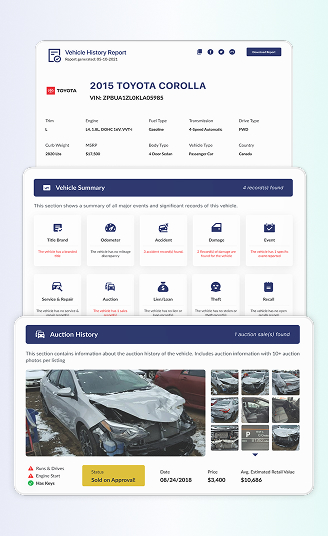
Auction History
If the vehicle were ever crossing the auction block, your report will show the recorded data of:
- Auction dates and locations
- Sale status (sold/offered/if-no-sale)
- Announced conditions (e.g., structural damage, mechanical issues)
The available photos from the auction stage
Sales History
If the vehicle were ever crossing the auction block, your report will show the recorded data of:
- Auction dates and locations
- Sale status (sold/offered/if-no-sale)
- Announced conditions (e.g., structural damage, mechanical issues)
The available photos from the auction stage
Free VIN Decoder vs Vehicle History Report
Drop in any VIN (17 digits for modern vehicles or shorter for classics), and our free VIN decoder quickly shows key specs. You can upgrade the free online VIN lookup to a full report and see the history records of vehicles, including accident records, damages, title brand records, theft records, and more by run a VIN check.
| Feature / Data Point | Free VIN Check (Basic) | Premium Vehicle History Report (Paid) | |
|---|---|---|---|
| Free VIN decoding for all vehicle types | ✔ Included | ✔ Included | |
| Year, make, model | ✔ Included | ✔ Included | |
| Basic VIN decoder (body, engine, trim) | ✔ Included | ✔ Included (more detailed) | |
| Title brand check (salvage, rebuilt, etc.) | Limited preview (status hint) | ✔ Full title history | |
| Accident history | Not included | ✔ Detailed accident records (dates, locations, severity when available) | |
| Odometer/mileage records | Limited preview | ✔ Multiple odometer readings and rollback indicators | |
| Auction history & photos | Limited preview (status hint) | ✔ Auction history + photos (when available) | |
| Sales listings records & photos | Limited preview (status hint) | ✔ Recorded sale listings on classifieds, dealer sites, and more + photos (when available) | |
| Market value (VIN decoder with market value) | ✔ Included | ✔ Market value estimates & price ranges | |
| Theft / stolen vehicle check | Limited | ✔ Detailed theft records (if reported) | |
| Recalls & warranty status | Limited | ✔ Recall history + open recall status, basic warranty info | |
| Owner records | ✖ | ✔ Included | |
| Lien and loan records | ✖ | ✔ Included | |
| Vehicle usage | ✖ | ✔ Included | |
| Service & maintenance history | ✖ | ✔ Included | |
| Downloadable PDF report | ✖ | ✔ Included | |
| Ideal use case | Quick VIN lookup to filter cars | ✔ Serious buyers, sellers, collectors, and careful auto check |
Get the Original Window Sticker by VIN
If you want to verify original MSRP and installed options, use the VIN to retrieve the vehicle’s original window sticker.
What a Window Sticker Includes
Original MSRP: The manufacturer’s suggested retail price when the vehicle was new.
Standard Equipment: Features included with the base trim level at no additional cost.
Optional Packages: Factory-installed upgrades such as premium audio, navigation, sunroof, or leather seats.
Fuel Economy Ratings: EPA-estimated city and highway MPG.
Safety Features: NHTSA crash test ratings and safety equipment.
Interior and Exterior Options: Factory paint codes, wheel designs, and upholstery details.
This helps buyers confirm the original value and factory options of the vehicle.
Start Your VIN Lookup Now
The free VIN decoder is like peeking through the keyhole. The full vehicle history report is opening the door. Go beyond year, make, and model to see title records, damage history, ownership details, and more. If you’re considering a high-value, imported, or collectible vehicle, this context can make all the difference.
Common VIN Decoding Questions Answered
How to decode a VIN number?
You can decode any VIN number, both classic and modern, by using PremiumVIN’s VIN decoder. Simply enter the VIN into our VIN number decoder to instantly access verified vehicle specifications, trim details, powertrain data, and factory equipment through a fast and accurate vehicle VIN lookup.
How to decode a 13-digit VIN number?
To decode a 13-digit VIN, use PremiumVIN’s specialized VIN decoder for classic vehicles. Enter the VIN into our VIN lookup decoder, and the system will analyze available manufacturer data to provide the most accurate historical and technical information possible.
How do you decode a 17-digit VIN number?
You can decode a VIN or a 17-digit VIN number using PremiumVIN’s free VIN decoder. By entering the VIN, our vehicle VIN decoder will gather official information such as the model year, trim, engine type, drivetrain, and original factory specifications.
How to decode a motorcycle VIN number?
To decode a motorcycle VIN number cau can use PremiumVIN’s motorcycle VIN decoder. Our system performs a targeted VIN number lookup for motorcycle and powersports vehicles, revealing chassis details, engine information, production year, and manufacturer-specific data.
What does each digit in a VIN mean?
In the standard 17-digit VIN format, the VIN means:
- 1–3: World Manufacturer Identifier (country + manufacturer).
- 4–8: Vehicle Descriptor Section (model, body style, engine, restraints – exact meaning varies by brand).
- 9: Check digit used to verify the VIN is valid.
- 10: Model year code.
- 11: Assembly plant.
- 12–17: Sequential production number.
So every character has a job; Our VIN number decoder simply translates that code into plain language for you.
What do the first 3 digits of a VIN mean?
The first three characters are the World Manufacturer Identifier (WMI).
- The first digit is the region or country (for example, 1, 4, 5 = USA; 2 = Canada; 3 = Mexico; J = Japan; W = Germany).
- The second and third digits identify the specific manufacturer or division (for example, WBA = BMW Germany).
How do I find the exact specs of my car?
The easiest way is to run a VIN number lookup in a VIN decoder that pulls from manufacturer and government data. That usually gives you year, make, model, body style, engine, transmission, drive type, and sometimes option codes and paint/trim codes.
Is a VIN decoder free to use?
Yes, basic VIN decoding from Premium VIN is free, and you can see the core specs without paying or creating an account. If you want a full history report that includes accidents, title brands, and mileage records, you can upgrade to the paid report.
Is Carfax VIN lookup free?
No, a full Carfax vehicle history report isn’t free. Carfax operates mainly on a paid model. A single Carfax report for consumers is typically around $44.99, with bundles that lower the price per report. Use Premium VIN if you want to run a free VIN lookup, and upgrade to see deeper records.
What are common VIN lookup mistakes?
The common VIN lookup mistakes are:
- Typing the VIN wrong (mixing 0 with O, 1 with I, or using the wrong length).
- Reading a part number or sticker instead of the actual VIN plate.
- Assuming “no record found” means “nothing ever happened” to the car.
- Forgetting to cross-check mileage and title records for odometer fraud.
What is a good mileage for a used car?
Most US and many EU sources cite average car usage at 10,000–12,000 miles per year (16,000–19,000 km), while UK sources often report 5,000–8,000 miles. A 5-year-old car with 50,000–60,000 miles is generally considered “normal.”
However, maintenance and condition are more important than mileage alone; a well-serviced high-mileage car can outperform a neglected low-mileage one.