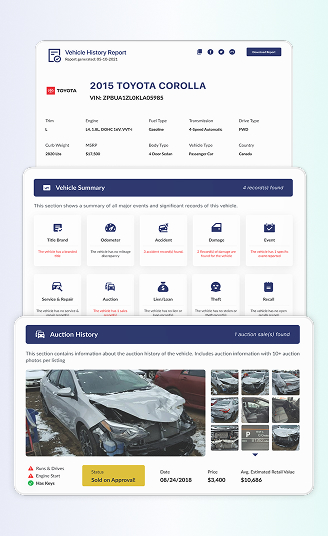

Ford VIN Decoder - Check Vehicle Details Instantly
Check any Ford, with the Ford VIN decoder, whether it’s a 17-digit or classic vintage Ford with a 5 to 14-digit, quickly and for free! Verify year, model, trim, and engine details. Upgrade for a full history report, and see the recorded details about accidents, auction & sales records, recall check, and more.
What is the Ford VIN Decoder?
A Ford VIN (Vehicle Identification Number) is basically the car’s ID code. On most vehicles built for the modern system, it’s a 17-character mix of letters and numbers, and it sticks with the vehicle for life. Before the standardized system took over, manufacturers used their own formats, so older Ford VINs can look shorter or different.
Here’s where a Ford VIN number decoder helps: you don’t need to memorize what each character means. Just enter the VIN to a online VIN decoder tool like PremiumVIN and let our decoder tool do the sorting. You can also run the classic VIN (often 5–14 digits) and get available record history data.
Use our free Ford VIN decoder to instantly check important vehicle details such as engine specifications, trim level, transmission, drivetrain, model year, and factory information. Enter any valid Ford VIN number to decode the vehicle’s original specifications before buying, selling, or verifying its factory configuration.
What Information Can You Get From a Ford VIN Number?
A Ford VIN decoder helps reveal important factory details about the vehicle using the 17-digit VIN number. Each VIN contains information that identifies the vehicle’s manufacturer, model, engine type, trim level, production year, and factory build details.
By decoding a Ford VIN, you can access information such as:
Manufacturer and Model Information
Manufacturer Details
Verify that the VIN belongs to Ford and confirm manufacturer information.
Model Information
Identify the exact Ford model, such as F-150, Escape, Explorer, Mustang, Bronco, or Super Duty.
Engine and Transmission Specifications
Engine Specifications
View engine type, displacement, horsepower, and fuel type.
Transmission Details
Verify the original transmission configuration (automatic, manual, or 10-speed automatic).
Drivetrain and Body Style
Drivetrain
Check whether the vehicle is FWD, RWD, AWD, or 4WD.
Body Style
Confirm cab style (Regular, SuperCab, SuperCrew) or body configuration.
Production Details
Model Year
Verify the production year encoded in the VIN.
Assembly Plant
See where the vehicle was manufactured (e.g., Dearborn, Michigan; Kansas City, Missouri; Louisville, Kentucky).
Factory Specifications
Review original manufacturer build details.
How to Decode a Ford VIN Number
Decoding your Ford VIN is simple and takes less than a minute.

Step 1: Find Your VIN
Find the 17-digit VIN number on the vehicle dashboard, driver-side door jamb, or registration documents.

Step 2: Enter the VIN
Type or paste the full Ford VIN into the decoder tool above.

Step 3: Access Factory Specifications
Instantly view the vehicle's factory specifications, including engine, trim, transmission, and model year.
How to Read a Ford VIN Number
Most modern Fords use a 17-character VIN. In the standardized system, the VIN is generally split into three parts: WMI (1st–3rd), VDS (4th–9th), and VIS (10th–17th). This structure helps identify the maker, describe the vehicle type, and show production identifiers like model year and plant code.
WMI (World Manufacturer Identifier)
The WMI is the first three characters of the VIN. It tells you the manufacturer and the country/region group behind the vehicle. For Ford, the WMI can vary depending on where the vehicle was built and what category it falls under, such as passenger car, truck, MPV, and so on.
WMI Character Meaning
- 1 = Country/region code group (United States)
- F = Manufacturer identifier (Ford)
- T = Vehicle type/category identifier used by Ford for certain trucks
Other common Ford WMIs you may see include:
- 1FA (Ford passenger cars, USA),
- 1FM (Ford MPVs, USA),
- 2FA (Ford Canada passenger cars),
3FA/3FT (Ford Mexico), and more.
VDS (Vehicle Descriptor Section)
The VIS is characters 10 through 17. This section usually includes the model year code, the assembly plant code, and a production sequence number. It’s the part that makes the VIN unique to a specific vehicle.
VIS Character Meaning
- 10th character = Model year code
- 11th character = Assembly plant code
- 12th–17th characters = Production sequence (serial-style identifier)
VIS (Vehicle Identifier Section)
The VIS (Vehicle Identifier Section) is the last part, usually consisting of the positions 10–17. This section is more about when and which exact unit. Such as the model year code, assembly plant code, and the truck’s unique production sequence number.
VIS Character Meaning (Example: JG169946)
- Position 10 (J) = Model year code (2018)
- Position 11 (G) = Assembly plant code (manufacturer-defined; it points to the factory)
- Positions 12–17 (169946) = Production sequence number (basically the truck’s serial within that plant/year)
Where to Find the Ford Vehicle Identification Number?
Most Ford vehicles place the VIN in a few standard spots, plus paperwork. Here are some common places you can check the VIN:
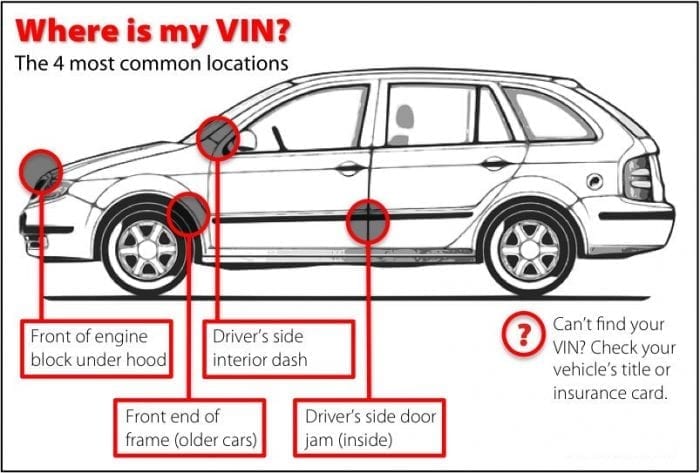
Dashboard
Check the driver-side dashboard near the windshield. It’s often visible from outside the vehicle.
Driver-side door jamb
Open the driver’s door and look for the label on the door frame area. This is common on modern vehicles.
Vehicle Registration
Your registration paperwork usually lists the VIN clearly, which is useful if you’re not near the vehicle.
Insurance documents
Insurance cards or policy documents often include the VIN, especially for active coverage.
Title paperwork
Titles typically show the VIN and owner details. For classic purchases, this is an important cross-check.
Ford 17-character VIN pattern
The pattern is intended as a VIN-format example, not a claim that the complete VIN is assigned to an actual vehicle.
| Ford Model | Year Range | Sample Year | Example 17-Digit VIN Pattern |
|---|---|---|---|
| F-150 | 1981–2026 | 2018 | 1FTEW1EPXJFAxxxxx |
| Explorer | 1991–2026 | 2002 | 1FMZU73KX2UAxxxxx |
| Mustang | 1981–2026 | 2015 | 1FA6P8THXF5Axxxxx |
| Escort | 1981–2003 | 1999 | 1FAFP13PXXWAxxxxx |
| Focus | 2000–2025 | 2012 | 1FAHP3F2XCLAXXXXX |
| Fiesta | 1981–2023 | 2019 | 3FADP4TJXKMxxxxx |
| Taurus | 1986–2019 | 2000 | 1FAFP53UXYAxxxxx |
| E-Series / Econoline | 1981–2026 | 2008 | 1FTNE24LX8DAxxxxx |
| Ranger | 1983–2011; 2019–2026 | 2001 | 1FTYR10DX1PAxxxxx |
| Transit | 2015–2026 | 2020 | 1FTBW3XGX LKAxxxxx |
| Fusion | 2006–2020 | 2017 | 3FA6P0HDXHRAxxxxx |
| Escape | 2001–2026 | 2018 | 1FMCU9GDXJUAxxxxx |
| Expedition | 1997–2026 | 2003 | 1FMFU18LX3LAxxxxx |
| Crown Victoria | 1992–2011 | 2008 | 2FAHP71VX8XAxxxxx |
| Bronco | 1981–1996; 2021–2026 | 2021 | 1FMEE5DPXMLAxxxxx |
| Edge | 2007–2024 | 2017 | 2FMPK4APXHBAxxxxx |
| Windstar | 1995–2003 | 2000 | 2FMZA514XYBAxxxxx |
| Aerostar | 1986–1997 | 1994 | 1FMDA31XXRZAxxxxx |
| Maverick | 2022–2026 | 2025 | 3FTTW8E3XPRAxxxxx |
| Bronco Sport | 2021–2026 | 2025 | 3FMCR9B6XSRAxxxxx |
Supported Ford Models
Below are a few popular Ford models people search for. Even if your model isn’t listed, PremiumVIN can decode Ford VINs across many trims, years, and variants, including classic-length VINs when records exist.
Contour
Crown Victoria
Escort
Expedition
Explorer
E 150
E 250
E 350 Super Duty
F 150
F 250
F 350
Mustang
Ranger
Taurus
Windstar
Excursion
Focus
Escape
Explorer Sport
Explorer Sport Trac
F 150 Supercrew
Thunderbird
ZX2
Freestar
F 150 Heritage
Five Hundred
Freestyle
GT
Escape Hybrid
Fusion
Edge
Expedition EL
F 450
Taurus X
Flex
Fusion Hybrid
Transit Connect
Fiesta
Focus Electric
C MAX Energi
C MAX Hybrid
Focus ST
Fusion Energi
Sedan Police Interceptor
Utility Police Interceptor
Transit 150
Transit 250
Transit 350
Focus RS
Shelby Gt350
Ecosport
Expedition MAX
Fusion Taxi
Escape Phev
Shelby Gt500
Transit 150 Cargo
Transit 150 Crew
Transit 150 Passenger
Transit 250 Cargo
Transit 250 Crew
Transit 350 Cargo
Transit 350 Crew
Transit 350 Passenger
Bronco
Bronco Sport
F 150 Police Responder
Mustang Mach E
F 150 Lightning
Maverick
Who Should Use the Ford VIN Lookup Tool?
If you’re buying, selling, restoring, or even importing a Ford, a Ford VIN decoder helps you confirm what the vehicle claims to be, before you waste time or money.
Buying used can feel simple until it isn’t. A quick Ford VIN decoder helps you screen a vehicle early, then the PremiumVIN report fills in the “what happened before you” part. It’s especially useful when the listing sounds perfect, but the paperwork is vague.
Identify hidden damages before purchase
Photos can hide a lot. A Ford VIN check can point you to reported damage signals, so you know where to inspect more closely before you commit.
Spot risky title brands early
Title brands like salvage or rebuilt can change value fast. Checking early keeps negotiations realistic and avoids surprises at signing.
Check if the Ford has accident entries on record
Not every accident is a deal-breaker. Still, knowing what’s reported helps you ask sharper questions and inspect the right areas.
Sellers and dealers need clean answers, not long arguments. A Ford VIN lookup tool helps you describe the vehicle accurately, and a full report helps back up your pricing with something solid. It’s also handy when buyers ask the same tough questions again and again.
Reduce back-and-forth with serious buyers
Buyers trust details more than opinions. A report helps answer questions before they become problems.
Protect your reputation
One bad surprise can turn into ten bad reviews. Checking first helps you avoid selling trouble by accident.
Speed up financing and paperwork conversations
When details are organized, paperwork moves faster. The vehicle history report helps you keep deals from stalling.
Collectors are different. You care about the story, the originality, and the small details people ignore. A Ford VIN decoder for collectors helps you check identifiers, confirm what’s likely factory-correct, and keep your documentation neat for the next owner.
Verify Ford VIN authenticity before restoration
Before you spend on paint and parts, confirm the VIN matches the vehicle’s claimed identity and era.
Assist with classic Ford VIN formats
Older Ford VINs can be shorter than 17 characters. PremiumVIN supports many classic-length VIN lookups when records exist.
Prepare documents for shows and meets
Bringing a clean summary to an event is useful. People ask questions, and you’ll want answers ready.
Why Users Trust Our Ford VIN Decoder
Trust matters when you’re dealing with a car market, including Ford, especially if money, safety, or long-term value is involved. Many users come to our Ford VIN decoder tool because they want clear answers, not sales talk.
Most comprehensive database coverage
People trust a tool when it works across real-world situations. Our Ford VIN decoder is built to support modern 17-character VINs and many classic-length Ford VIN formats. That matters because Ford has a long history and a wide lineup.
24/7 customer support
Truck deals don’t follow office hours. Sometimes you’re meeting a seller at night, or you’re trying to decide before another buyer shows up. That’s why support matters. If you have questions about anything. Our help is available when you need it.
High accuracy, cross-checked results
The premium report shows you the details across various records and minimizes contradictions. We focus on providing Ford buyers and owners with clear, actionable reports instead of just data.
No hidden fees or subscriptions
VIN decoding can be tricky, especially with older Ford formats or incomplete listings. That’s why we offer 24/7 support. If you’re unsure about a Ford report, feel free to ask for a clear explanation.
Unlimited free checks
A free Ford VIN lookup should be easy to use, especially for early screening. People often check more than one vehicle, or they compare two similar listings. We keep the free check open so you can run multiple VINs without feeling pressured.
Downloadable PDF
People don’t run a Ford VIN check just for fun. They want to keep it. A downloadable PDF helps you save the report, share it with a mechanic, or keep it as part of your ownership file.
Need More Than Specs? Get a Ford Vehicle History Report
The free VIN decoder tool provides basic information, but a history report is crucial for informed decisions. This is particularly important for trucks and SUVs, which often change hands and may cross borders.
A PremiumVIN report through VIN check supports smarter choices when buying, selling, or collecting. Even if you’re already in love with the car, having proper records is essential.
Vehicle Specifications
This section focuses on what the Ford is supposed to be based on identifiers and recorded details. It’s the part collectors read slowly, and buyers read twice, because it helps catch mismatched listings and “creative” descriptions.
Year, Make, Model
You’ll see the Ford’s recorded year, make, and model details when available. This helps confirm you’re looking at the right vehicle, especially when listings mix trims, mid-year changes, or imported naming differences.
Trim
Trim matters more than people admit. This part can help separate a base Ford model from a higher package that may look similar in photos but isn’t priced the same in real life.
Engine and Fuel Type
When reported, the report may include engine and fuel details tied to the Ford VIN. This helps you verify what the seller claims, especially if the badge and the drivetrain story don’t match.
Transmission and Drivetrain
You will see the transmission and drivetrain details that help confirm whether a Ford is having 2WD or 4WD/AWD, and whether the configuration makes sense for the model and year being sold.
Title Check
A title check is about legality and risk. People get emotional about vehicles, but title brands don’t care about feelings. This section supports a cleaner purchase and fewer surprises later.
Rebuilt
A rebuilt (or reconstructed) title typically indicates a salvage vehicle was repaired and approved for road use again. Some are repaired well, others not so much. This section helps you confirm what you’re dealing with.
Salvage
A salvage brand usually means the vehicle was declared a total loss by an insurer at some point. The report helps you spot that status so you can price the Ford accordingly and inspect it with sharper eyes.
Lemon
A lemon brand can indicate the vehicle was repurchased or branded due to repeated issues under certain legal rules. If you’re buying a used Ford, this is the kind of thing you want to know before negotiation.
Junk or Non-Repairable
When reported, a junk/non-repairable brand can signal the vehicle is not intended for road use. If someone is selling it like a normal Ford daily driver, that mismatch is a serious warning.
Ownership History
Ownership history is the “people trail.” It doesn’t prove how a Ford was treated, but it often hints at it. Fewer surprises usually happen when you understand who likely used the vehicle and where.
Owner Count
This shows the number of recorded owners when sources report it. It can help you compare a “one-owner Ford” claim to what’s actually documented in available records.
Ownership Timeline
A timeline helps you see how long each owner kept the Ford. Short ownership periods can be normal, but they can also raise questions that you can verify when you’re buying a used Ford.
Vehicle Use Type
If the Ford was listed as personal, fleet, rental, or commercial use (when reported), that context helps buyers set expectations on wear, service frequency, and pricing.
Registration Locations
Registration locations help you understand where the Ford spent time. This can matter for climate exposure, regional road conditions, and even resale market behavior.
Auction History
The auction history section in the report can explain pricing, condition notes, and where the Ford has been. It’s especially useful when you see a vehicle flipping quickly through the market.
Auction date and location
If auction entries exist, you can see the timing and place. That helps you understand whether the Ford moved through a major auction region or a smaller local lane.
Sale price
Price history at auction can help you judge whether today’s asking price makes sense and gives you a reality check.
Condition notes
When condition notes are available, they will describe primary and secondary damage observations from the auction side, which helps guide inspection priorities.
Whether the vehicle started or ran
Some auctions track run-and-drive style notes. If those appear, they can add context to the Ford’s condition at the time it was sold.
Number of photos taken at the auction
Photo counts can sound minor, but they often hint at how well-documented the Ford was at the lane. More photos can mean more transparency for buyers.
Sales History
Sales history is about how often the Ford was listed and how its story changed between listings. If you’ve ever seen the same vehicle online with different “facts,” you already get why this matters.
Number of times listed
Multiple listings over a short period can indicate a quick flip or an unresolved issue. This section helps you see whether the Ford has been bouncing around.
Condition at each listing
When listing condition notes or categories appeare how the vehicle was described over time, and whether the story stayed consistent.
Photos from past listings
When past listing photos are available, they can help you verify condition changes and compare damage claims. It’s a simple tool, but it’s surprisingly effective.
Pricing movement
If listing prices change across time, it can help you understand whether the seller is testing the market, discounting for issues, or just adjusting expectations.
Theft Records
No one likes thinking about theft, but it happens. This section helps you reduce the risk of buying a vehicle with a theft record attached.
Stolen Status Check
This check helps show whether the Ford appears as stolen in available records. If it does, that’s a stop-and-verify moment, not a “maybe it’s fine” moment.
Recorded Theft Incidents
When incidents are recorded, details may include reported timing and other context. That can help you understand whether the vehicle was recovered and how the record was updated.
Accident Records
Accidents can range from minor bumps to major events that change a vehicle’s future. This section helps you see what’s recorded, instead of relying on “it drives straight.”
Number of Accidents Reported
When accident entries exist, this summary helps you see how many incidents were recorded for the Ford, so you can decide what level of inspection makes sense.
Date of Reported Accidents
Dates help you place an accident in context. A recent accident can affect the current condition, while an older one may be less concerning if repairs were done properly.
Reported Accident Location
Location details, when present, can help confirm an incident was tied to the right vehicle record and may hint at the reporting agency or jurisdiction involved.
Severity Notes
Some accident entries include notes on impact type or severity. If those details appear, you will see the details that help you focus an inspection on likely weak points.
Damage History
Damage doesn’t only come from accidents. Flood, fire, hail, and even repeated minor body hits can change a Ford’s value fast. This section helps you look for those signals.
Dent and Scratch damage
Small damage adds up. Records or condition notes about dents and scratches can help you judge how the Ford was treated and whether cosmetic repairs were repeated.
Flood Damage
Flood history matters because water can reach places you can’t easily check. A Ford may run fine today and still develop electrical problems later if flood exposure occurred.
Fire Damage
Fire damage can affect wiring, electronics, interior materials, and structural integrity. If fire-related records appear, they’re worth serious attention and careful inspection.
Hail Damage
Hail often shows up as widespread body and glass impacts. If hail entries exist, they help explain unusual paintwork, panel replacement, or mismatched reflections in photos.
Recalls Check
Recalls are common in the industry, but ignoring them is unwise. This section is designed to check for safety-related actions associated with the vehicle.
Open Recall Information
If open recalls are listed, you can see what still needs attention. This is one of the simplest “do it before you buy” checks, especially for family vehicles.
Completed Recall Events
Completed recalls help show that repairs were addressed when reported. It’s not a full-service record, but it can still support buyer confidence.
Manufacturer and Safety Agency Notices
Recall details often come from manufacturers and safety agencies. When notices appear, they help you understand what the issue was and what fix was expected.
Service & maintenance Records
Service records are the “care trail.” When they exist, they’re gold. This section gives you a better sense of upkeep beyond appearances.
Scheduled maintenance
When scheduled services appear in records, it can suggest the Ford was maintained at routine intervals, which often reduces unpleasant surprises after purchase.
Part replacements
Part replacement records help you see what was changed over time. This can include wear items and sometimes larger components.
Major or minor repairs
Repairs can be normal. The difference is frequency and pattern. This section helps you see whether the Ford had isolated fixes or repeated issues.
Real Story: How a Ford VIN Check Helped Ivy Avoid a Costly Surprise
A Ford VIN can look like a random string at first glance, but in real situations, it often becomes the most reliable way to slow things down and think clearly. That was exactly the case for Ivy, who was considering a 2022 Ford Bronco Base and decided to run a Ford VIN decoder report before moving forward.
Sample Report: 1FMEE5DP7NLB29110
Initial Impression
- At first, the Bronco looked like a solid find. The listing showed a modern Ford SUV with low mileage, clean styling, and no obvious red flags. With claims of it running and driving well, Ivy was interested but not fully convinced.
Critical Findings
- The Ford Bronco has a salvage title, which lowers its value and affects resale.
- Storm damage was listed as the primary damage type.
- The report showed two recorded damage events.
- The vehicle was sold at an insurance auction on November 1, 2023.
- Auction sale price: $14,950.
- Auction status shows runs and drives, engine starts, and keys present.
- The report listed two open safety recalls, meaning repairs may still be required through an authorized Ford dealer.
Outcome
- Instead of hurrying to purchase, Ivy paused to ask specific questions about the salvage title, storm damage, and auction details. She requested repair documentation and a focused inspection, shifting the conversation's pace and direction.
Lessons Learned
- For Ivy, using the Ford VIN report was about gathering facts rather than making assumptions. A seemingly clean vehicle can have significant issues, highlighting the importance of early VIN decoding to help buyers stay informed and make better decisions.
Free Ford VIN Decoder vs Paid Vehicle History Report
Some people want a fast check, and that’s it. Others want to sleep well after the purchase. The free VIN decoder gives you a snapshot, but the Ford premium history report gives you the fuller story when records are available.
| What You Can Check | Free Ford VIN Decoder (Quick Check) | Premium Ford Vehicle History Report (Full Report) |
|---|---|---|
| Ford year, model, and make | ✓ Confirms basic identity | ✓ Fully confirmed with production details |
| Basic Ford specs (engine, body, trim) | ✓ General specifications | ✓ Complete factory specifications |
| Title status (e.g., salvage, rebuilt, lemon) | Basic status hint only | ✓ Full title brand history |
| Accident history check | Not available | ✓ Detailed accident records when reported |
| Mileage and odometer records | Not available | ✓ Multiple recorded mileage entries |
| Odometer rollback/mileage inconsistency checks | Not available | ✓ Rollback flags and inconsistency alerts |
| Auction history and photos | Not available | ✓ Auction listings and images when available |
| Online listings and advertised sales | ✓ Current listing snapshot (when available) | ✓ Listings and advertised sales records |
| Timeline of previous listings and sales | Not available | ✓ Timeline of past listings and sale activity |
| Sales listings records & photos | Not available | ✓ Listing records and photos (when available) |
| Ford market value estimate | Not available | ✓ Value estimates and pricing ranges |
| Number of previous owners | Not available | ✓ Owner count (when available) |
| Past vehicle use (private, rental, fleet, commercial) | Not available | ✓ Use-type indicators when reported |
| Outstanding loans or lien records | Not available | ✓ Lien/loan flags when reported |
| Stolen vehicle check | Limited check | ✓ Detailed theft records if reported |
| Flood, fire, or hail damage indicators | Not available | ✓ Damage-event indicators when reported |
| Reported service or repair history | Not available | ✓ Service/repair records (when available) |
| Recall and warranty information | Limited overview | ✓ Recall history and basic warranty status |
| Downloadable PDF report | X Not included | ✓ Yes, easy-to-save PDF |
| Best suited for | Quick Ford VIN lookup and early screening | Buyers, sellers, collectors, and serious checks |
How to Get a Ford Vehicle History Report by VIN Number Lookup
Getting a Ford vehicle history is pretty straightforward. You’re not filling out a long form or doing anything fancy. Just follow the steps and let the system do the heavy lifting.
Step 1: Enter Your VIN
Type the Ford VIN into the form above exactly as shown on the vehicle or paperwork.
Step 2: Review the Preview
In seconds, you will see the free Vin decoding of your Ford. Make sure the basics match the Ford you’re looking at.
Step 3: Get the Report
If you want the full picture, continue to generate the PremiumVIN report and save it for your records.
Explore Other Ford VIN Search Tools
If you’re working on a Ford, it’s normal to need more than one tool. See the other Ford tools below and use what fits your situation.
A Ford window sticker is like the vehicle’s “born-with” summary for many newer models. It can help you understand factory equipment, packages, and standard features without relying only on a seller’s memory.
A recall check focuses on safety-related actions tied to a specific Ford VIN. It’s especially useful before a long trip, before you buy, or when you’re helping a family member shop for a used vehicle.
A license plate lookup can be helpful when you don’t have the VIN right away, like when you’re browsing listings or checking a vehicle parked nearby.
A title check helps you verify whether a Ford may have branding like salvage, rebuilt, or lemon. This matters for value, insurance, and resale. If you’re buying a used truck or SUV, title details can change the whole deal.
Ford at a Glance: History, Identity, and Legacy
Ford has a reputation that’s bigger than any single model. Trucks, muscle cars, work vans, family SUVs, classics in barns, classics in museums, it’s all Ford territory. And honestly, that’s why checking the Ford VIN matters. The brand spans so many decades and styles that details can get confusing fast.
The Brief History of Ford
Ford Motor Company was founded in 1903 and became one of the most influential automakers in the world, especially for mass production and mainstream vehicle ownership. Over time, Ford built its identity around durable trucks, widely recognized cars, and a huge global footprint.
- Ford is closely tied to American pickup culture, with long-running truck nameplates that shaped the market.
- The Mustang became a famous performance icon and stayed relevant across many generations.
- Ford also has a luxury division, Lincoln, which shares corporate roots but targets a different buyer.
Get Your Ford Vehicle Details Instantly
Use our Ford VIN decoder to instantly verify factory specifications, including engine details, trim, drivetrain, transmission, and model year. For deeper insights, upgrade to access a full Ford vehicle history report and make informed decisions before buying or selling. Enter your Ford VIN above to decode your vehicle now.
Frequently Asked Ford VIN Questions
Where can I find the Ford VIN?
You can usually find the Ford VIN on the driver-side dashboard near the windshield, on the driver-side door label, and on official documents like the title or registration. Once you have it, you can use our Ford VIN decoder for a quick check or a full history report.
Which character shows the model year on a Ford VIN?
On modern Ford vehicles, the 10th character of the VIN represents the model year. This character follows an industry-standard cycle. Our Ford VIN lookup reads this character for you and shows the correct model year instantly.
Can a Ford VIN tell me the engine and trim?
Yes, a Ford VIN can confirm core details like engine type and trim family. However, many factory options and packages are recorded outside the VIN, which is why buyers often pair VIN decoding with window sticker data.
Can I decode a pre-1981 Ford VIN?
Yes, you can decode a pre-1981 Ford VIN. Although some Ford vehicles built before 1981 often use shorter VIN formats. PremiumVIN is designed to decode modern 17-character VINs and many classic Ford VINs between 5 and 14 characters, when records exist.
Why does my Ford VIN come up as invalid?
The Ford VIN comes up as invalid can happen due to a character being typed incorrectly or if the VIN uses an older or non-standard format. Classic Ford VINs often confuse generic tools. If this happens, double-check the VIN and try again.
To prevent this, use a VIN decoder that can also decode classic VINs, like PremiumVIN, which supports many older Ford VIN structures.
Can I decode a Ford VIN for free?
Yes. You can use our free Ford VIN decoder to check basic vehicle identity details. If you need full history records such as accidents, mileage, title brands, or liens, you can upgrade to the Premium report.
How accurate is your Ford VIN decoder compared to Ford’s own system?
Our Ford VIN decoder uses standardized VIN rules and multiple record sources to provide accurate results for public vehicle data. While manufacturer systems may hold internal-only data, our reports are designed for buyers, sellers, and collectors who need practical, real-world information.