
Harley Davidson VIN Decoder – Check Motorcycle Details
Identify your Harley-Davidson motorcycle using its Vehicle Identification Number (VIN). A VIN contains manufacturer-defined codes that can help identify the motorcycle’s manufacturer, model year, vehicle type and other specifications, depending on its production period and VIN format.
PremiumVIN’s Harley-Davidson VIN Decoder interprets supported VIN information to help you understand your motorcycle’s identifying details without manually researching individual code positions.
Enter your Harley-Davidson VIN to check the vehicle information available for decoding.
What Can You Find with a Harley-Davidson VIN Decoder?
A Harley-Davidson VIN provides a structured way to identify a motorcycle. Its coded information can help distinguish the manufacturer, model-year designation and other vehicle attributes.
The information available from a VIN depends on the motorcycle’s production year and the manufacturer-specific coding used for that model.
Depending on the VIN and available decoding data, the result may include:
- Manufacturer identification: The manufacturer information represented by the VIN.
- Model year: The model-year designation encoded in a supported VIN format.
- Motorcycle type: Manufacturer-defined vehicle or motorcycle classification.
- Model information: Model-related identification where the applicable coding supports it.
- Engine information: Engine or configuration-related details where represented in the VIN data.
- Manufacturing information: Assembly-plant or production-identification details where supported.
A VIN decoder interprets identification and specification information. It does not independently establish the motorcycle’s current mechanical condition, accident history, ownership, or originality.
Understanding Harley-Davidson VIN Formats
Harley-Davidson VIN interpretation depends on the motorcycle’s production period. Modern motorcycles use a standardized 17-character VIN, while older motorcycles may have shorter identifiers that require historical, model-specific interpretation.
Modern Harley-Davidson VINs: 17 Characters
Harley-Davidson introduced the 17-character VIN system for its 1981 model-year motorcycles.
The standardized format organizes vehicle identification into designated sections. These sections can represent manufacturer information, motorcycle and model designations, a check digit, model year, assembly plant and production sequence.
A modern Harley-Davidson VIN should be interpreted as a complete identifier. Individual characters have specific meanings within the applicable coding structure, so a decoding chart for one model year should not automatically be applied to another.
Older Harley-Davidson VINs: Pre-1981
Harley-Davidson motorcycles manufactured before the 1981 model year may have shorter identification formats that differ from modern 17-character VINs.
These older identifiers need to be interpreted using historical manufacturer documentation. Their structure and character meanings can vary by production period and motorcycle model.
If you are identifying an older Harley-Davidson, do not assume that its identifier is invalid simply because it contains fewer than 17 characters. Equally, do not apply a modern VIN chart to an older motorcycle without confirming that the format is appropriate.
How to Read Harley-Davidson VIN Codes
Harley-Davidson uses manufacturer-defined identification codes. Understanding the main VIN sections can help explain what information is represented and why model-year-specific documentation matters.
World Manufacturer Identifier (WMI)
The World Manufacturer Identifier is the manufacturer-identification section at the beginning of a modern VIN.
Harley-Davidson documentation includes examples such as:
| WMI | Identification context |
|---|---|
| 1HD | Harley-Davidson manufacturer identifier used in US-market VIN applications |
| 5HD | Used in documentation for motorcycles originally manufactured in the United States for sale outside the United States |
| MEG | Used in documentation for motorcycles originally manufactured in India |
These identifiers provide manufacturer-related information within the VIN system. They do not independently establish the motorcycle’s complete model, engine specification or current configuration.
Motorcycle and Model Identification
Manufacturer-defined VIN sections can distinguish motorcycle types and model designations.
Harley-Davidson has used different model and type codes across production periods. A code must therefore be interpreted using the applicable manufacturer’s documentation rather than a universal model-code list.
A model designation should also not automatically be treated as a retail trim name. Different configurations may share a broader model family while having different specifications.
Engine and Configuration Codes
Some Harley-Davidson VIN structures include engine-related or configuration-related identification.
These codes can help distinguish the applicable motorcycle configuration when the manufacturer documentation supports that interpretation.
However, a VIN does not function as a complete engine parts record. It cannot prove that the engine currently installed on the motorcycle is the original engine associated with the frame.
Model-Year Code
Modern VIN systems include a designated model-year character.
Its meaning should be interpreted using the relevant VIN standard and production period. Historical Harley-Davidson formats may use different arrangements, so a single position rule should not be applied to every generation.
Assembly Plant and Production Sequence
Other VIN sections may identify the assembly plant and a sequential production number.
These elements help distinguish the individual motorcycle within the manufacturer’s identification system. They do not independently prove production rarity, originality or the motorcycle’s ownership history.
Harley-Davidson VIN Decoder by Model Year
Model-year identification is important when researching Harley-Davidson motorcycles because manufacturer coding has changed over time.
A character or code used in one generation may have a different meaning in another. This is particularly relevant when interpreting older motorcycles or comparing VIN information across different Harley-Davidson model families.
Before interpreting a VIN, establish:
- Whether the motorcycle uses a modern 17-character VIN or an older identifier.
- The applicable model year or production period.
- The relevant Harley-Davidson manufacturer coding documentation.
- Whether the identifier is the full frame VIN or a separate engine number.
- Whether the decoded information agrees with the motorcycle’s documentation.
For older motorcycles, historical manufacturer records are particularly important. A modern VIN decoding chart cannot replace period-specific identification information.
Where to Find the VIN on a Harley-Davidson Motorcycle
On many modern Harley-Davidson motorcycles, the full frame VIN is stamped around the steering-head or steering-neck area.
The exact location and identification markings can vary by model and production year. Consult the relevant owner’s manual or service documentation when locating an older motorcycle’s identifier.
Some Harley-Davidson motorcycles also have an abbreviated identification number on the engine. This should not automatically be confused with the full frame VIN.
When checking a motorcycle:
- Locate the frame identification number.
- Record the complete identifier carefully.
- Distinguish the frame VIN from any engine number or abbreviated marking.
- Compare the identifier with the motorcycle’s registration and other available documents.
If the numbers do not agree, do not assume that a VIN decoder can establish why. Further documentation or professional inspection may be necessary.
How to Decode a Harley-Davidson VIN with PremiumVIN
PremiumVIN provides a VIN lookup process for checking available vehicle-identification information.

Step 1: Find Your VIN
Find the 17-digit VIN number on the vehicle dashboard, driver-side door jamb, or registration documents.

Step 2: Enter the VIN
Type or paste the full Harley-Davidson VIN into the decoder tool above.

Step 3: Access Factory Specifications
Instantly view the vehicle's factory specifications, including engine, trim, transmission, and model year.
The information returned depends on the VIN format and available decoding data. An unsuccessful lookup does not, by itself, establish that a motorcycle or identifier is invalid.
For general vehicle identification, you can also use the PremiumVIN VIN Decoder.
Harley-Davidson VIN Decoder vs. Vehicle History Report
A VIN Decoder and a Vehicle History Report serve different purposes.
A decoder interprets identifying and specification information represented by the VIN. A history report investigates available recorded events associated with the vehicle.
| Information | Harley-Davidson VIN Decoder | Vehicle History Report |
|---|---|---|
| Manufacturer identification | Where supported | May be included as vehicle identification |
| Model-year identification | Where supported | May be included as vehicle identification |
| Model and engine coding | Where supported | May be included where available |
| Accident records | Not a decoding function | May include available records |
| Title brands | Not a decoding function | May include available records |
| Mileage records | Not encoded as a complete history in the VIN | May include available recorded readings |
| Theft records | Not established by decoding | May include available records |
| Auction and sales history | Not established by decoding | May include available records |
If you are evaluating a used Harley-Davidson before purchasing it, decoded specifications alone are not enough to investigate its recorded history.
You can use the PremiumVIN Vehicle History Report to check available historical records separately.
What a Harley-Davidson VIN Decoder Cannot Verify
A VIN decoder interprets coded identification information. It does not physically inspect the motorcycle or authenticate its components.
A decoded result cannot independently:
- Verify that the engine currently installed is the original engine.
- Establish matching numbers between the frame and engine.
- Authenticate original paint or factory originality.
- Confirm that the motorcycle has never been modified.
- Establish the current mechanical condition.
- Confirm that every factory-installed option is present.
- Establish the complete ownership chain.
- Prove that the motorcycle has never been involved in an accident.
If you are assessing a motorcycle’s originality, condition or identity, compare the VIN with manufacturer documentation, registration records and a physical inspection by a qualified professional.
Real Story: How a Harley-Davidson VIN Check Saved a Buyer
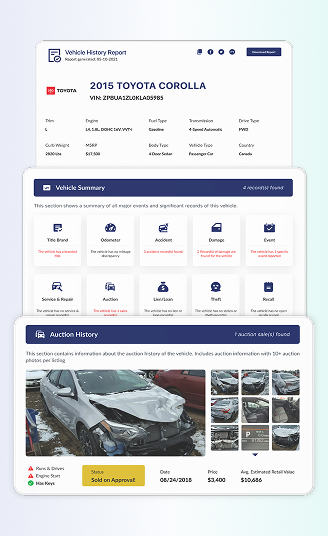
A Harley-Davidson VIN check helps turn a listing into verified facts. For a buyer, that matters. It shows whether the motorcycle’s identity, title history, mileage, accident record, and financial status support the seller’s story or raise risks that need closer review. In this case, the report on the 2017 Harley-Davidson Street identified multiple material concerns.
Sample Report: 1HD1KRC10HB628632
Initial Impression
Celine found a 2017 Harley-Davidson Street that appeared attractive at first glance. It presented as a legitimate touring motorcycle with a 1.8L gasoline engine, personal-use history, and no open recall or theft record shown in the report. On the surface, it looked like a bike worth considering.
Critical Findings
- The report shows a branded title.
- The vehicle has a recorded mileage discrepancy and an odometer brand of Not Actual Miles.
- There is 1 accident record, reported on 09/09/2017 in IN.
- The report shows 1 damage record and a minor/major damage incident.
- Insurance-related events are serious: the bike is reported as an insurance loss, the vehicle is sold by the insurer, and the vehicle is reported as a total loss.
- A sales history entry dated 05/29/2019 shows the motorcycle sold at auction for $7,800, with primary damage: all over, secondary damage: side, and a salvage certificate.
- The report lists 2 lien or loan records, which means ownership transfer should not be assumed clean without supporting documents.
- The detailed history also shows the bike was titled/registered to an insurance company and later had a corrected title.
Outcome
For Celine, the VIN report changes the transaction from a simple purchase to a high-risk review.
Before moving forward, she would need verified lien release documents, title paperwork, repair records, and a thorough physical inspection. Without that proof, the risks outweigh the appearance of the listing.
Lessons Learned
A Harley-Davidson VIN decoder is not only for identifying the bike. It is also for identifying hidden risk. In Celine’s case, the VIN report exposed title issues, mileage concerns, accident and damage history, insurance loss records, and financial encumbrances that were too important to ignore.
Explore Other Harley Davidson VIN Search Tools
If you need more details beyond decoding the VIN, several additional tools can help.
A Harley window sticker lookup shows the original factory information for the motorcycle. It may include engine specs, trim details, and manufacturer options.
Recall checks show whether the motorcycle was involved in any manufacturer safety recalls. This tool helps owners confirm if repairs were completed or if a recall issue still needs attention.
Motorcycles come with unique risks that may not always be obvious during a visual inspection. Running a motorcycle VIN check helps uncover important records such as theft reports, accident history, and title status.
A title check reviews official title records connected to the VIN. It helps detect salvage titles, rebuilt status, or other title brands that might affect value or registration.
Harley-Davidson VIN Decoder FAQs
How many characters are in a Harley-Davidson VIN?
Harley-Davidson introduced the 17-character VIN system for its 1981 model-year motorcycles. Older motorcycles may have shorter identification formats that require historical, model-specific interpretation.
When did Harley-Davidson start using 17-digit VINs?
The 17-character VIN system was introduced for Harley-Davidson’s 1981 model-year motorcycles. The complete frame VIN should be distinguished from any abbreviated engine identification number.
What does 1HD mean on a Harley-Davidson VIN?
1HD is a Harley-Davidson World Manufacturer Identifier used in US-market VIN applications. It identifies the manufacturer within the VIN system, rather than providing the motorcycle’s complete model or specification information.
How to tell the year of a motorcycle by the VIN number?
On modern 17-character VINs, the 10th character is the model-year code under the standard VIN system. Our Harley-Davidson VIN decoder reads that for you, so you do not have to decode it manually.
What info does a Harley VIN reveal?
A Harley-Davidson VIN can reveal core identity details such as manufacturer, model year, and production-related coding. With PremiumVIN, the full report can also add accident, title, mileage, lien, theft, and listing history when reported.
Is a Harley VIN decoder free?
Yes. PremiumVIN offers a free Harley-Davidson VIN decoder for quick checks and basic identity details. The deeper premium report is for users who need the fuller history.
Can I run a VIN to see if a motorcycle is stolen?
Yes. Our premium Harley-Davidson VIN check includes a stolen-vehicle check when theft-related records are reported, which helps reduce the risk of buying a motorcycle with legal issues.
How many digits is a Harley VIN number?
For modern Harley-Davidson motorcycles, it is typically 17 characters. Older motorcycles can use shorter VIN or serial-style formats from before the full modern standard became common.
What happens if my VIN number doesn’t have 17 digits?
That does not always mean something is wrong. Older Harley-Davidson motorcycles, especially pre-1981 bikes, can use shorter VIN formats. PremiumVIN also supports many classic Harley-Davidson VINs from 5 to 14 characters.
What do the first 3 digits of a VIN mean?
They are called the WMI, or World Manufacturer Identifier. This part identifies the maker and region. For Harley-Davidson, 1HD is a common WMI seen in NHTSA-linked records.
Where is the Harley-Davidson VIN?
On modern Harley-Davidson motorcycles, official Harley service information says the full 17-digit VIN is stamped on the right side of the frame near the steering head. In some destinations, there is also a printed VIN label on the front downtube.
How do pre-1981 Harley VIN formats differ from modern 17-digit VINs?
Pre-1981 Harley-Davidson VIN formats can be shorter and less standardized. The modern 17-character VIN structure is the standard system used for modern decoding, while older bikes may use other serial-style formats.
How do I know if my VIN is valid and real?
A valid modern VIN follows the 17-character standard and includes a check digit system under standard VIN rules. PremiumVIN helps by reading the VIN structure first and flagging obvious problems before you rely on the result.
What information does your free VIN decoder provide?
Our free Harley-Davidson VIN decoder focuses on basic identity details such as make, model, year, and core specifications when available. The premium report goes further into history-related records.
Do you cover classic or older vehicles?
Yes. PremiumVIN supports modern Harley-Davidson VINs and many classic Harley-Davidson formats with fewer than 17 characters.