
Decode Any Honda VIN & Check Vehicle Details Instantly
The Free Honda VIN Decoder by PremiumVIN is built for all the people who need quick answers, but also for the careful folks (collectors, older owners, overseas buyers) who want to examine the vehicle’s details, year, make, model, and much more.
What is the Honda VIN Number?
A Honda VIN number (Vehicle Identification Number) is basically your Honda’s ID card. For most Hondas made around 1981 and newer, it’s a 17-character mix of letters and numbers, and it stays with the vehicle for life.
If you’re looking at an older Honda (or some bikes/ATVs), the VIN can be shorter and a bit messy, because older formats weren’t as standardized.
A Honda VIN decoder helps you confirm the basics like the year, model, trim, and engine. And if you’re buying used, a Honda VIN lookup can also help you spot bigger stuff like title brands, accident records, mileage patterns, liens, and recall notes. Honestly, it’s way easier to decode a Honda VIN with PremiumVIN than to try to read every character by hand.
Key Specifications Revealed by Our Honda VIN Decoder
Using our Honda VIN number decoder gives you immediate access to the vehicle’s core factory build data. Here is the essential information you can uncover.
Year, Make & Model
This confirms the recorded model year and model identity tied to the VIN. It’s useful when you want to verify the exact Honda classification that databases recognize.
Body Type
Understand the fundamental layout, confirming whether it’s a sedan, SUV, truck, or coupe.
Engine and Drivetrain
The report will show you the engine type details tied to the VIN and related drivetrain setup.
Transmission
This section may list the recorded transmission type linked with the VIN. It’s handy if you’re verifying a swap claim or checking if the vehicle matches factory expectations.
Trim
Trim matters more than people admit. This part can show the recorded trim line or configuration level, helping you separate a base model from a higher package.
Fuel Type
Check the factory-specified fuel type, a fundamental operational detail for these vehicles.
Number of Doors
Confirm the number of doors the car was built with, which is a key identifier for different body styles.
Estimated Market Value
View an estimated market value based on condition (outstanding, clean, average, rough), providing a useful benchmark for pricing and negotiation.
Who Should Use the Honda VIN Lookup Tool?
A Honda VIN lookup tool isn’t just for “used car people.” It’s for anyone who wants fewer surprises. If you’re buying, selling, collecting, importing, or even just checking a Honda VIN number you found on paperwork, our Honda VIN decoder helps you see what the car claims to be on record.
If you’re shopping for a used Civic, Accord, CR-V, or even a Honda motorcycle, the VIN is your shortcut to the truth. Our Honda VIN number decoder can help you confirm the basics, then dig into the stuff sellers sometimes “forget” to mention. It’s a calmer way to buy.
Identify hidden damages before purchase
A report can point out accident or damage signals tied to the VIN, so you know what to inspect closely. It won’t replace a mechanic, but it stops you from walking in blind.
Confirm the exact trim and configuration
Two “same year” Hondas can be totally different in features and value. Our VIN lookup tools can help confirm trim and key specs tied to that specific vehicle.
Spot mileage inconsistencies early
If the mileage jumps around or looks off compared to past records, you’ll see it sooner. That matters a lot for high-demand Hondas that sell fast.
With a Honda VIN lookup tool, you can keep the listing clean and avoid arguments later. It’s also a practical way to back up your price with facts and save time.
Confirm exact specs for accurate listings
Wrong trim info leads to refunds, complaints, and bad reviews. A Honda VIN number decoder helps you list the right year, model, and configuration.
Reduce post-sale disputes
Clear documentation helps protect you from the classic “this wasn’t disclosed” argument after the sale is done.
Support trade-ins and appraisals
A VIN report gives you a quicker starting point for assessing a Honda’s market position, especially when you’re handling multiple vehicles.
Collectors and enthusiasts aren’t always buying today. Sometimes they’re just verifying, documenting, or settling a debate in the garage. A Honda VIN decoder is useful for confirming identity, specs, and history, especially when the car is older or the paperwork is incomplete.
Confirm year and model for restorations
Restoration projects go smoother when you start with the correct model-year identity. The VIN helps you avoid buying the wrong parts or badges.
Check the mileage story for collector value
Mileage affects collector pricing, especially on special trims and clean survivors. A VIN report can show mileage patterns from recorded sources.
Reduce risk on classic Hondas with shorter VINs
Older Hondas may use non-17-digit formats. PremiumVIN supports classic VINs, too, so you can still check what’s available.
Honda VIN Structure Explained
A 17-character Honda VIN is usually split into three parts: WMI, VDS, and VIS. Sounds technical, but it’s just a way to group the characters so they’re easier to understand. But you don’t have to memorize that. A Honda VIN decoder can just read it for you.
WMI (World Manufacturer Identifier)
The WMI is the first 3 characters of the Honda VIN. This part tells you the “who and where” basics, like the country/region and which Honda manufacturing group it’s tied to. For Hondas, WMIs can vary because Honda builds vehicles in different places, including trucks, SUVs, and more.
WMI Character Meaning (Example: 5FP)
- 5 (Position 1) = Built in the United States
- F (Position 2) = Manufacturer group code used within Honda’s WMI set
- P (Position 3) = Together with 5F, this WMI (5FP) is used for Honda Manufacturing of Alabama, LLC, and it’s also tied to Honda trucks
VDS (Vehicle Descriptor Section)
The VDS is the middle chunk (Position 4th to 9th), and it’s where things get more “Honda-specific.” This section is mainly used to describe the vehicle’s configuration, like series, body style, engine family, restraint system, and other internal identifiers.
VDS Character Meaning (Example: YK3F84)
- YK3F8 (Position 4-8) = Describe the vehicle’s configuration, but the exact meaning can vary by model and year. Our Honda VIN decoder reads those patterns for you, so you don’t have to guess.
- 4 (Position 9) = Often used as the check digit (this one is special: it’s used to validate the VIN math-wise)
VIS (Vehicle Identifier Section)
The VIS is the last 8 characters. This part usually tells you the model year, the assembly plant code, and the vehicle’s production sequence number. For buyers, this is also where you can quickly sanity-check the year and whether the VIN looks normal.
VIS Character Meaning (Example: LB006358)
- L (Position 10) = Model year code (for this VIN, L points to 2020)
- B (Position 11) = Assembly plant code
- 0 0 6 3 5 8 (Position 12) = The vehicle’s production sequence/serial number (unique to this unit)
Why Users Trust Our Honda VIN Decoder
People don’t run a Honda VIN check because they’re bored. They do it because they want fewer surprises and clearer decisions. PremiumVIN is built to keep the process simple, while still giVIN g you the deeper history when you actually need it.
Most comprehensive database coverage
Honda records can show up in different places, and not every source captures the same thing. Our goal is to pull together broad coverage so your Honda VIN lookup isn’t based on a single narrow data stream.
24/7 customer support
VIN questions pop up at random times. HaVIN g support available around the clock helps when you need help reading a report section, checking a VIN format, or understanding what to do next.
High accuracy, cross-checked results
A VIN report is only useful if it’s consistent. PremiumVIN emphasizes verifying details across various record types, ensuring that fundamental aspects like year, model, and trim are accurate and reliable.
Daily data updates
A vehicle can be listed, sold, re-listed, or moved across locations, sometimes fast. That’s why frequent updates matter. With daily update cycles, your Honda VIN decoder results are less likely to feel stale, especially when you’re shopping actively and comparing multiple Hondas in a short time.
Unlimited free checks
Sometimes you’re not ready to buy yet. You’re browsing, making a shortlist, or just confirming a VIN from a listing. Unlimited free checks mean you can run quick Honda VIN lookups as much as you want without feeling pressured.
Downloadable PDF
When buying a used Honda, it’s helpful to have proof for family, a mechanic, or for your records. A downloadable PDF allows you to save, print, or attach it when documenting a purchase or selling later.
Supported Honda Models
Below are some popular Honda models that people run through our Honda VIN decoder. Don’t see yours? PremiumVIN can decode Honda models across trims, years, and even classic VIN formats.
Honda Accord
Honda Accord Crosstour
Honda Accord Hybrid
Honda Accord Plug-In Hybrid
Honda Civic
Honda Civic Hybrid
Honda Civic Si
Honda Civic Type R
Honda Clarity Electric
Honda Clarity Fuel Cell
Honda Clarity Plug-In Hybrid
Honda CR-V
Honda CR-V Hybrid
Honda CR-Z
Honda Crosstour
Honda del Sol
Honda Element
Honda Fit
Honda Fit EV
Honda HR-V
Honda Insight
Honda Odyssey
Honda Passport
Honda Pilot
Honda Prelude
Honda Ridgeline
Honda S2000
Need More Than Specs? Get Honda Premium History Report?
The Honda Premium History Report organizes what’s been recorded about that specific VIN, so you can spot red flags early and avoid the classic seller trap.
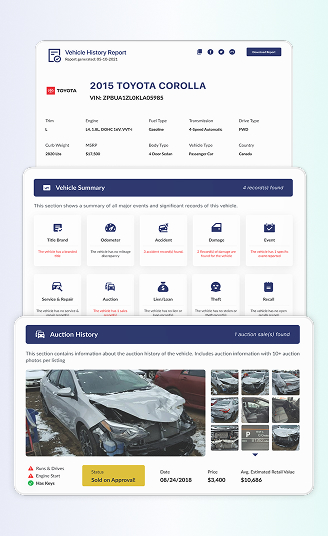
In the VIN check report, you’ll see specs, title and branding signals, ownership and mileage patterns, lien/loan risk, accident and damage records, recall status, theft checks, warranty hints, service history, and even auction and sales activity when available.
Auction History
Auction data can be surprisingly useful because auctions often document condition, photos, and damage notes more bluntly than regular listings do. When it exists, it’s worth reading.
Auction date and location
This shows when and where the Honda appeared at auction, when that information is recorded. It helps connect the dots if a car is suddenly “private sale” right after the auction.
Sale price (When Available)
Prices at auction can provide context, especially when a current seller is asking far above what it last moved for. It won’t set value alone, but it’s a clue.
Condition notes, such as primary and secondary damage
Auction condition notes can include short, blunt descriptions like primary and secondary damage areas. These notes can help you inspect the right panels, corners, and mechanical areas.
Whether the vehicle started or ran (When Reported)
Some auctions include operational notes like “starts,” “runs,” or other status labels. It’s not a full mechanical inspection, but it helps you understand how it was presented.
Number of photos taken at auction (When Available)
Photo count sounds small, but it can matter. More photos often mean more visibility into the condition, and fewer photos can mean less clarity about what was really going on.
Sales History
Sales listings can show patterns: repeated listings, shifting descriptions, and photo reuse. This section helps you see that activity when records exist.
Number of times listed (When Available)
Repeated listings can indicate a difficult sale, pricing issues, or unresolved problems. It can also be normal, but it’s worth noticing before you commit.
Condition at each listing (When Reported)
Sometimes, listing records include basic condition notes. Comparing them over time can highlight changes, like a vehicle that suddenly becomes “mint” after being “needs work” last month.
Photos from past listings (When Available)
Past listing photos can help you spot repairs, repainting, or missing parts over time. It’s also a simple way to check consistency if the current seller is vague.
Vehicle Specifications
This is the “what exactly is this Honda?” section. It helps you confirm the basics match what you’re standing in front of, especially if badges or listings feel a little off.
Year, Make, Model
This confirms the recorded model year and model identity tied to the VIN. It’s useful when you want to verify the exact Honda classification that databases recognize.
Trim
Trim matters more than people admit. This part can show the recorded trim line or configuration level, helping you separate a base model from a higher package that just has nicer wheels.
Engine and Drivetrain
The report will show you the engine type details tied to the VIN and related drivetrain setup.
Transmission
This section may list the recorded transmission type linked with the VIN. It’s handy if you’re verifying a swap claim or checking if the vehicle matches factory expectations.
Mileage History
The mileage section helps you compare mileage records over time and spot patterns that don’t make sense.
Rollback Detection and Alerts
If mileage appears to move backward or jump strangely, the report may highlight that inconsistency. It’s not a court verdict, but it’s a strong reason to verify with documents.
Annual Usage Patterns
This can help you see if the Honda was driven steadily each year or if usage changed sharply. That’s useful when sellers claim the Honda was “barely driven” without proof.
Lien/Loan check
A lien problem can turn into a painful surprise, because a vehicle can sometimes be tied to a financial claim even after it’s sold. This section helps you spot those risks.
Lien Record Identification
When lien records are found, this can indicate that the Honda may have an outstanding financial interest tied to it. It helps buyers avoid messy situations during transfer or resale.
Dates and Locations (When Available)
When available, you may see when and where a lien record was filed or noted. That context can help you verify whether it should have been cleared already.
Verified Sources (When Available)
Lien/loan signals are only useful if the source is credible. This area focuses on recorded sources tied to lien indicators, so you’re not relying on rumors or seller talk.
Accident Records
Accident history is not always the end of the world, but hidden accidents are. This section summarizes reported incidents tied to the VIN when they appear in records.
Number of Accidents Reported
This gives a count of accident-related entries found in the available record set. It’s a quick snapshot that helps you decide whether a deeper inspection is needed.
Date of Reported Accidents
Dates help you place an accident in context. A ten-year-old minor event is different from a recent incident, especially if the vehicle was quickly sold afterward.
Reported Accident Location
Location data can help validate whether an accident record matches the vehicle’s known travel or registration history. It can also help confirm the record isn’t a mistaken match.
Severity or Event Notes (When Available)
Some records include brief severity hints or event notes. They’re not always detailed, but even a small clue can help you ask smarter questions and inspect the right areas.
Damage History
Damage isn’t only crashes. Weather events, water exposure, and structural issues can matter just as much. This section focuses on damage signals that can affect long-term reliability.
Fire Damage
Fire exposure can affect wiring, plastics, and structural components, even when repairs look neat. This section highlights fire-related signals when they appear in recorded history.
Flood Damage
Flood risk is serious because water can hide in places you don’t see. Flood-related signals can matter for electronics, corrosion, and future reliability, even if the interior looks clean.
Hail Damage
Hail claims can show up as widespread body impacts. Even if repaired, it’s useful to know whether the Honda went through a hail event because it can affect paint, panels, and value.
Recalls Check
The recalls can be open or completed, and checking them is a smart move before you buy or even before a long road trip.
Open Recall Information
This highlights recalls that appear as incomplete or open in available recall data. If an open recall is listed, it’s usually something you can address through proper repair channels.
Completed Recall Events
Some records show the history of the recall actions. That’s useful because it helps you see whether the vehicle has already had the recall remedy performed, instead of guessing.
Title Check
Title branding is one of those things that doesn’t care how nice the car looks today. This section looks for signals that the vehicle has been officially labeled in ways that affect value, insurance, and resale.
Lemon
A lemon label can show up when a vehicle had serious repeated issues that triggered consumer protection or manufacturer repurchase actions.
Salvage
A salvage brand generally means the vehicle was declared a total loss at some point by an insurer or authority. This is a big deal for safety, value, and future registration rules.
Rebuilt
A rebuilt brand can mean that a previously salvaged vehicle was repaired and approved for road use under certain rules. It’s not automatically bad, but it deserves closer inspection and paperwork review.
Service & maintenance Records
This section collects recorded maintenance signals, which can help you estimate how the vehicle was cared for.
Scheduled maintenance
When available, the report will show the maintenance-type entries tied to regular intervals. Consistent scheduled maintenance is usually a good sign, especially for long-term Honda ownership reliability.
Part replacements
Replacement records can indicate wear items and repairs over time. They also help confirm if certain common replacements were completed before you buy.
Why Justin’s Honda VIN Report Changed the Whole Decision
Justin thought he only needed a quick Honda VIN check to confirm the model. Once he started a Honda VIN lookup on PremiumVIN, he realized the VIN isn’t just “what car is this?” It’s also “what happened to it before I showed up?” That’s the part that can save you money, time, and a lot of regret.
Sample Report: 5FPYK3F84LB006358
Initial Impression
- Justin found what looked like a sharp deal on a 2020 Honda Ridgeline Black Edition. Black paint, nice trim, and the listing sounded confident. You know the vibe: “drives great, ready to go.”
- Before he got emotionally attached, he ran a Honda VIN decoder by PremiumVIN.
Critical Findings
- The branded title was flagged, and the title brand check showed salvage and rebuilt/rebuildable records.
- 2 accident records were listed (reported 04/29/2021 and 06/09/2021).
- Auction history popped up: sold on 06/09/2021 in North Hollywood, CA, with a salvage certificate and front-end as the primary damage. It also noted the vehicle does not run & drive, but the engine starts, and it has keys.
- 3 lien/loan records showed up, which is the kind of thing you really want cleared before money changes hands.
- The report also listed 2 open recall entries
Outcome
- Justin didn’t automatically walk away, but he changed his approach. Instead of trusting the listing talk, he treated it like a rebuilt-title Ridgeline with a known accident with auction past.
- That means tougher questions, proof of repairs, paperwork checks, and a serious inspection. If the seller couldn’t back it up, Justin was ready to move on.
Lessons Learned
- A Honda VIN number decoder isn’t just trivia. It’s risk control.
- “Looks clean” doesn’t cancel out salvage/rebuilt history.
- Auction notes like front-end damage and “does not run & drive” are giant clues, not small details.
- Our Honda VIN lookup helps you negotiate smarter, or walk away faster, before you waste a weekend.
Free Honda VIN Decoder vs Paid Vehicle History Report
If you only need the basics, the free Honda VIN number decoder gets you started. But if you need proof, timelines, and details you can point to during a negotiation, the Premium report is the one that usually answers the questions and doubts about the vehicles.
| What You Can Check | Free Honda VIN Decoder (Quick Check) | Premium Honda Vehicle History Report (Full Report) |
|---|---|---|
| Honda year, model, and make | ✓ Confirms basic identity | ✓ Fully confirmed with production details |
| Basic Honda specs (engine, body, trim) | ✓ General specifications | ✓ Complete factory specifications |
| Title status (e.g., salvage, rebuilt, lemon) | Basic status hint only | ✓ Full title brand history |
| Accident history check | Not available | ✓ Detailed accident records when reported |
| Mileage and odometer records | Not available | ✓ Multiple recorded mileage entries |
| Odometer rollback/mileage inconsistency checks | Not available | ✓ Rollback flags and inconsistency alerts |
| Auction history and photos | Not available | ✓ Auction listings and images when available |
| Online listings and advertised sales | ✓ Current listing snapshot (when available) | ✓ Listings and advertised sales records |
| Timeline of previous listings and sales | Not available | ✓ Timeline of past listings and sale activity |
| Sales listings records & photos | Not available | ✓ Listing records and photos (when available) |
| Honda market value estimate | Not available | ✓ Value estimates and pricing ranges |
| Number of previous owners | Not available | ✓ Owner count (when available) |
| Past vehicle use (private, rental, fleet, commercial) | Not available | ✓ Use-type indicators when reported |
| Outstanding loans or lien records | Not available | ✓ Lien/loan flags when reported |
| Stolen vehicle check | Limited check | ✓ Detailed theft records if reported |
| Flood, fire, or hail damage indicators | Not available | ✓ Damage-event indicators when reported |
| Reported service or repair history | Not available | ✓ Service/repair records (when available) |
| Recall and warranty information | Limited overview | ✓ Recall history and basic warranty status |
| Downloadable PDF report | X Not included | ✓ Yes, easy-to-save PDF |
| Best suited for | Quick RAM VIN lookup and early screening | Buyers, sellers, collectors, and serious checks |
How to Get a Honda Vehicle History Report by VIN Number Lookup
Getting a report is pretty simple; you don’t need special tools or car knowledge. Just the VIN, and about a minute of attention.

Step 1: Enter Your VIN
Type the 17-character VIN into the form above. If it’s a classic Honda with a shorter VIN, you can enter that too.

Step 2: Review the Preview
You’ll see a free preview. It helps confirm that you typed the VIN correctly and gives you a sense of what’s available.

Step 3: Get the Report
If you want the full details, choose the Premium report. That’s where you’ll see deeper history like title brands, accident records, mileage patterns, and more (when reported).
Where to Find the Honda Vehicle Identification Number?
Your Honda VIN is usually easy to find once you know where to look. If one spot is dirty or missing, don’t panic. Try another one.
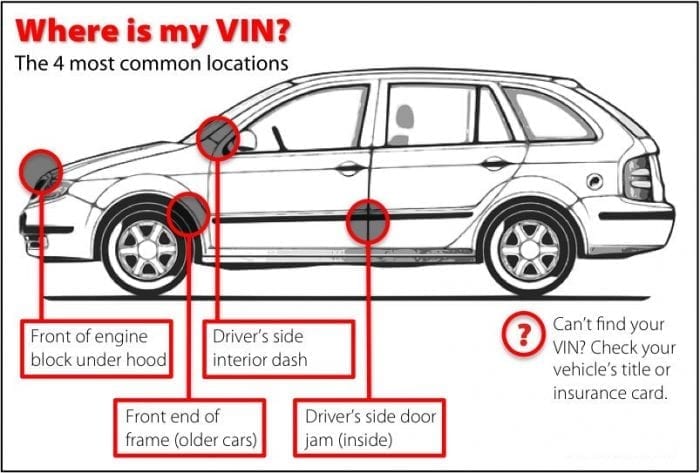
Dashboard (windshield area)
Look at the lower corner of the windshield on the driver’s side. Many Hondas show the VIN here so you can read it from outside the car.
Driver-side door jamb
Open the driver’s door and check the sticker/label on the door frame. This label often lists the VIN along with weight and tire info.
Registration and insurance documents
If the car is already registered, the VIN is usually printed on the registration card and insurance paperwork. It’s a clean way to copy it without squinting.
Vehicle title
If you’re buying used, ask to see the title and compare the VIN on paper to the VIN on the car to verify the car didn’t have “hidden problems.”
Engine bay label or stamped area
Some Hondas have VIN-related labels or stamped identifiers under the hood that can help as a secondary check.
Honda motorcycles and ATVs (frame)
On many Honda bikes and ATVs, the VIN is stamped on the frame (often near the steering head area).
Explore Other Honda VIN Search Tools
If you’re already doing a Honda VIN check, you might as well use the tools that make it easier. These are quick add-ons that help you verify details without turning the process into a weekend project.
A Honda window sticker is the “factory-style snapshot” of what the vehicle was equipped with when new. It can help you confirm trim-level features, packages, and basic specs, so you’re not trusting badges or seller descriptions alone.
A Honda recall check by VIN helps you see if there are open safety recalls connected to that vehicle. It’s a simple step that can matter a lot, especially if you’re buying used for family use or long commutes. Even if a recall is “free to fix,” you still want to know it exists.
Sometimes you don’t have the VIN handy. A Honda license plate lookup can help you start the search using the plate number instead (where supported). It’s useful for quick screening when you’re browsing listings, checking a parked car, or verifying a seller who “forgot” to include the VIN.
A Honda title check is where you look for big labels like salvage, rebuilt, or lemon branding. These things don’t always show up in a casual listing description, and they can affect value, insurance, and resale. If you’re trying to verify Honda VIN authenticity, title history is one of the first places to look.
Honda at a Glance: Facts and Brand Traits
Honda is one of those brands people don’t just drive, they stick with. Part of it is reliability, sure, but part of it is history. Honda has been building engines for a long time, and it shows in how loyal the fan base can get.
The Brief History of Honda
Honda Motor Co., Ltd. was founded in 1948 in Hamamatsu, Japan, and it grew quickly through motorcycles before becoming a major global automaker. If you’re decoding a Honda VIN, you’re basically reading a tiny piece of that long production story.
- Honda started making motorcycles early, and it became a major part of the brand’s identity worldwide.
- Honda showed early car ambition in the early 1960s, including models like the T360 mini truck and sports prototypes.
- Acura is Honda’s luxury division in North America, launched in 1986, so Acura VIN questions often connect back to Honda ownership.
- Honda builds more than just cars. It has a long engine-focused culture that shows up across products and markets.
Decode Your Honda VIN Now
Don’t guess the trim and the story behind it. Do a Honda VIN lookup and let the records speak for themselves.
Frequently Asked Honda VIN Questions
How do I decode my Honda VIN number?
To decode the Honda VIN number, start by grabbing the full VIN (usually 17 characters on most modern Hondas). Then run it through a Honda VIN decoder like PremiumVIN. The tool reads the VIN format and returns the basics, like year, model, and core specs, without you doing manual work.
If your Honda is older (classic) or certain off-road types, the VIN can be shorter. PremiumVIN can still decode many classic Honda VINs (5–14 digits) when available.
Is a Honda VIN decoder free?
Yes, our Honda VIN decoder free tool can give you a quick identity check. That usually means the basics like year, make, model, and some general specs.
If you need deeper details (accidents, title brands, mileage records, liens, auction history, and so on), that’s usually part of a paid Honda vehicle history report because it pulls from more record sources and goes beyond the VIN pattern itself.
Can I lookup my vehicle specs with VIN?
Yes. PremiumVIN Honda VIN lookup can show the vehicle identity and many core specs tied to the VIN, like model, body style, and other configuration details. While a VIN is useful for understanding what a vehicle is intended to be, the specifics regarding equipment and options may vary depending on the available data for that particular vehicle.
How to read a Honda serial number?
To read a Honda serial number, look for the VIN, because that’s what sellers and owners usually mean. A modern Honda VIN is 17 characters long and includes both letters and numbers. It’s shown on the vehicle and also printed on documents like the title, registration, and insurance.
What info does a Honda VIN reveal?
A Honda VIN mainly reveals the vehicle’s identity and build-related information. With the VIN, you can know the information about what vehicle it is, where it came from, and how it’s classified in standardized systems.
It can also be used to check recall information and to connect to vehicle-history style records, depending on what’s been reported for that VIN.