
Kenworth VIN Decoder - Check Truck Details & Specs
Use our free Kenworth VIN decoder to instantly confirm your truck’s year, model, engine, and factory specifications. Enter the VIN to verify the vehicle’s true identity and original build details. Upgrade to access the full Kenworth vehicle history report, including title brands, accident records, and ownership timeline.
What is the Kenworth VIN Decoder?
A Kenworth VIN decoder is a free online tool that translates your truck’s unique identification code into clear, readable factory specifications. This 17-character sequence (for modern models) acts as the vehicle’s official identity, detailing its build from the factory.
For older trucks, the VIN format can be shorter because the 17-digit standard became widely required after 1981. Our Kenworth VIN lookup tool supports both modern 17-digit VINs and many classic shorter formats (5-14 digits). Just enter the number, and the decoder will show the available factory details, from engine type to model year.
Key Specifications Revealed by Our Kenworth VIN Decoder
Using our Kenworth VIN number decoder gives you immediate access to the vehicle’s core factory build data. Here is the essential information you can uncover.
Year, Make & Model
Instantly confirm the exact production year, the Kenworth brand, and the specific model (e.g., T680, W900, T800). This foundational check helps ensure the truck’s identity matches its paperwork, which is crucial for commercial vehicle transactions.
Body Type
Understand the fundamental layout, confirming whether it’s a day cab, sleeper cab, or other configuration.
Engine Type & Capacity
The VIN data can reveal engine families used in the truck, including popular PACCAR or Cummins engine setups. This information is important for maintenance planning and resale value.
Transmission
Confirm the transmission type, which is crucial for understanding the truck’s driving characteristics and ensuring compatibility for repairs.
Trim
Some Kenworth trucks have different trims or configuration packages depending on fleet orders or factory setups. The report identifies these trim variations so buyers know the correct configuration.
Fuel Type
Check the factory-specified fuel type, a fundamental operational detail for these heavy-duty vehicles.
Number of Doors
Confirm the number of doors the truck was built with, which is a key identifier for different cab configurations.
Estimated Market Value
View an estimated market value based on condition (outstanding, clean, average, rough), providing a useful benchmark for pricing and negotiation.
Kenworth VIN Breakdown: What Each VIN Character Means
A modern VIN usually has 17 characters, and NHTSA explains that this standard VIN format is used to encode specific vehicle information. In simple terms, the VIN is split into three parts: WMI, VDS, and VIS. That is the basic frame behind most VIN decoding tools, including a Kenworth VIN decoder.
WMI (World Manufacturer Identifier)
The WMI means World Manufacturer Identifier. It is the first three characters of the VIN, and it identifies the manufacturer and the country or region linked to the vehicle’s origin.
For Kenworth trucks, this part matters because many users want to know right away whether the VIN belongs to a real Kenworth unit before they go deeper into a full Kenworth VIN number decoder search.
Let’s break down this VIN: 1XKYDP9X8LJ341097
WMI Character Meaning (Example WMI: 1XK)
- 1st character: 1 = Country/region code used for the manufacturer identifier in the VIN system
- 2nd character: X = Manufacturer grouping used inside the WMI structure
- 3rd character: K = Brand identifier tied to Kenworth in this example VIN
VDS (Vehicle Descriptor Section)
The VDS means Vehicle Descriptor Section. It usually covers characters 4 to 9. This part describes the vehicle in more detail, such as model series, body type, engine-related coding, and the VIN check digit.
VDS Character Meaning (Example VDS: YDP9X8)
- 4th character: Y = part of the vehicle descriptor code
- 5th character: D = part of model/configuration coding
- 6th character: P = part of body or equipment coding
- 7th character: 9 = part of engine/model series coding
- 8th character: X = part of configuration coding
- 9th character: 8 = check digit used to help validate the VIN
VIS (Vehicle Identifier Section)
The VIS means Vehicle Identifier Section. It usually covers characters 10 to 17. This section commonly includes the model year, assembly plant code, and the truck’s serial number. A Kenworth VIN lookup makes it much easier to read. The VIN includes details such as information specific to the particular vehicle, and the last part helps identify that exact unit.
VIS Character Meaning (Example VIS: LJ341097)
- 10th character: L = model year code
- 11th character: J = assembly plant code
- 12th–17th characters: 341097 = unique production serial number for that truck
How to Use Our Kenworth VIN Decoder?
Getting your Kenworth VIN lookup results is a straightforward process, taking only a few seconds. Follow these simple steps.

Step 1: Enter the VIN
Enter the Kenworth's VIN into the form at the top of the page. Our tool supports both modern 17-character VINs and many classic shorter formats. You can also search using your license plate number instead.

Step 2: Decode Kenworth VIN Number
Click submit to instantly view the year, make, model, engine, trim, transmission, and more factory details. This basic VIN check is completely free.

Step 3: Upgrade to VIN Report
Buying a used Kenworth? Upgrade your search to get the full vehicle history report and reveal any hidden issues like accidents, title brands, and ownership records.
Where to Find Kenworth Vehicle Identification Number?
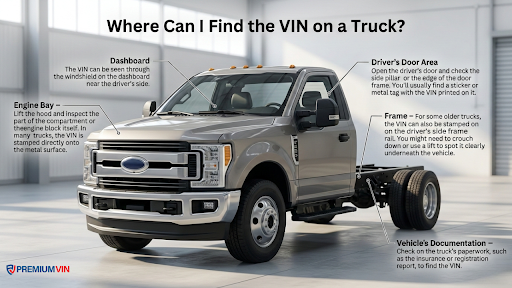
The VIN is usually placed in a few common areas. On heavy trucks, placement can vary a bit by model and year, so it is smart to check more than one spot if needed.
Dashboard
Look through the windshield at the lower driver-side dashboard area. This is one of the most common VIN locations.
Driver-side door area
Many trucks place the VIN on a certification label or plate inside the driver-side door or door jamb.
Door frame or pillar
Some Kenworth trucks show the VIN on the frame area around the driver-side entry point.
Registration and insurance papers
You can also check official vehicle documents if the truck itself is hard to inspect in person.
Title or ownership paperwork
The VIN on the paperwork should match the physical VIN on the truck exactly.
Chassis or frame marking
On some trucks, the VIN or identifying number can also appear on the frame or related manufacturer plate.
Benefits of Using a Kenworth VIN Decoder
A Kenworth VIN decoder is a practical first step for anyone dealing with these heavy-duty trucks. From buyers and sellers to fleet managers and mechanics, accurate factory specifications provide a solid foundation for any transaction or maintenance.
If you are shopping for a used Kenworth, the VIN is where the truth usually starts. A seller can say many things, but the Kenworth VIN decoder helps you check whether the truck’s story matches the records.
Confirm the Kenworth Model and Trim
A quick Kenworth VIN number decoder confirms the basic identity, so you do not rely on badges or seller claims. It helps you verify the exact year, make, and model.
Verify the Engine
The VIN reveals the original engine configuration as built at the factory. This helps you spot mismatches between the seller’s claims and the truck’s true specifications.
Understand the Truck's Original Configuration
Knowing the factory build, including body type and optional equipment helps you assess the truck’s authenticity and compare it accurately to other vehicles.
For sellers and dealerships, transparency builds trust. A Kenworth VIN lookup helps present clear documentation about the truck’s factory background.
Build Buyer Confidence
Displaying verified factory specifications in your listing shows transparency. This credibility often shortens negotiation time and can lead to a faster sale.
Set an Accurate Asking Price
Knowing the exact engine, transmission, and trim lets you justify your price with data, moving beyond rough market estimates.
Create Detailed, Accurate Listings
Using factory specifications allows you to write precise listings that attract serious buyers and reduce repetitive questions.
Accurate vehicle specifications are essential for insurance companies to price policies accurately and handle claims efficiently for these commercial assets.
Calculate Accurate Premiums
A VIN lookup confirms safety features, engine specs, and trim level—key factors that influence insurance premium calculations.
Reduce Fraud Risk
Verifying VIN details helps insurers catch mismatched or falsified vehicle information before a fraudulent policy is issued.
Streamline Claims Processing
An accurate factory data check reduces manual verification, speeding up new policy issuance and claims processing.
Knowing the exact factory specification is crucial for getting the right parts for a Kenworth. A VIN check removes all the guesswork.
Source the Exact Right Parts
The VIN identifies the specific engine, transmission, and chassis configuration, ensuring parts suppliers provide the correct components.
Eliminate Costly Return Mistakes
Ordering the wrong parts wastes time and money. Checking the VIN before ordering dramatically reduces mismatched components.
Speed Up Repair Estimates
Mechanics can instantly access factory specs to build repair estimates without spending extra time manually researching each Kenworth’s exact configuration.
Easily Decode ALL Popular Kenworth Models
Below are some popular Kenworth models people search for most often. Still, PremiumVIN can decode far more than these, including older years and classic Kenworth VIN formats.
548CH
C500
C5 Series
K100
K100E
K125
K260
K270
K270/K370
K300
K3 Series
K360
L770
T2 Series
T2000
T280
T300
T3 Series
T380
T4 Series
T400
T450
T480
T6 Series
T600
T680
T7 Series
T8 Series
T800
T880
W800
W900
W900A
W900B
W900L
W9 Series
W990
Why Users Trust Our Kenworth VIN Decoder
A Kenworth VIN number decoder should do more than return a few surface-level specs. People trust a tool when it feels clear, useful, and worth coming back to.
Most comprehensive database coverage
Our Kenworth VIN lookup is built to pull together useful identity and history data points so users can move beyond guesswork and do a more serious review.
High accuracy, cross-checked results
We focus on clearer decoding and cross-checked report structure so users can review Kenworth records with more confidence and less confusion.
No hidden fees or subscriptions
Straightforward access matters. People prefer simple tools, simple pricing, and fewer surprises when checking a vehicle.
Unlimited free checks
Users can run a free Kenworth VIN lookup to verify basic vehicle details before deciding whether to upgrade to a premium report.
24/7 customer support
Truck buying and selling do not always happen during neat office hours. Support should be available when users actually need help.
Daily data updates
Fresh data matters. Vehicle history is not very helpful if it feels frozen in time, so frequent updates support better decision-making.
Need Truck Past Records? Get Kenworth History Report
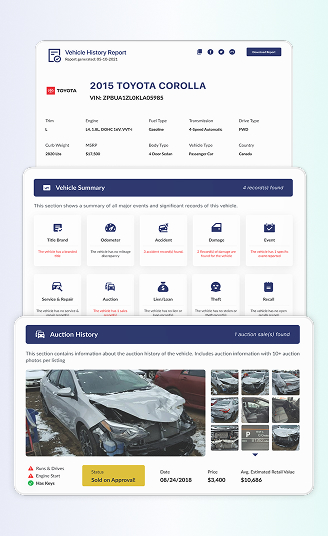
A simple Kenworth VIN decoder already gives useful information, but the PremiumVIN VIN check full report goes deeper. Once you decode Kenworth VIN numbers with our system, the report gathers data from multiple verified records and databases.
Below is what you’ll see inside the Kenworth vehicle history report.
Vehicle Specifications
The vehicle specifications section is where the Kenworth VIN number decoder begins its work. Once the VIN is decoded, the report reveals technical details about the Kenworth truck. This information helps buyers verify that the truck matches the seller’s description and factory configuration.
Year, Make, Model
This part confirms the official manufacturing year, the Kenworth brand identity, and the exact model. It ensures the truck being sold actually matches its claimed production year and model designation.
Trim
Some Kenworth trucks have different trims or configuration packages depending on fleet orders or factory setups. The report identifies these trim variations so collectors and buyers know the correct configuration.
Engine Type
The VIN data can reveal engine families used in the truck, including popular PACCAR or Cummins engine setups. This information is important for maintenance planning and resale value.
Sales & Auction History
Many Kenworth trucks pass through auctions and online listings before being resold.
Auction Date and Location
The report may show when and where the truck appeared in auction listings.
Sale Price
Auction price data provides insight into past market value.
Condition at Each Listing
Seller descriptions and condition notes from earlier listings help buyers see how the truck was presented over time.
Photos from Past Listings
Older listing images sometimes appear in the report, offering a glimpse of the truck’s previous condition.
Stolen Check
Truck theft is not uncommon, especially for high-value commercial vehicles.
Stolen Status Check
The report checks national databases to confirm if the Kenworth VIN was reported stolen.
Recorded Theft Incidents
If theft reports exist, the timeline and location may appear in the VIN history.
Service & Maintenance Records
Maintenance history often tells more about a truck than mileage alone.
Scheduled Maintenance
Records may show when routine services such as oil changes or inspections were performed.
Part Replacements
Major parts replaced during service visits may appear in the report.
Major or Minor Repairs
Repair history helps identify recurring issues that affected the Kenworth truck.
Notes from Inspections
Inspection notes sometimes mention component wear, safety issues, or recommended repairs.
Title Brand Check
Title brand checks are important for buyers who want to avoid serious legal or mechanical risks. The Kenworth VIN check will reveal title branding events that may affect the truck’s value or usability.
Salvage
A salvage title means the truck was declared a total loss by an insurance company. This usually happens after major accidents, floods, or severe damage.
Rebuilt
Some salvage vehicles are later repaired and inspected. A rebuilt title indicates that the Kenworth truck was restored to roadworthy condition after being declared a loss.
Lemon
In rare situations, vehicles with repeated mechanical failures receive a lemon designation. This section checks if the Kenworth truck was involved in such cases.
Junk Title
A junk title typically means the vehicle is not considered safe for road use anymore. Buyers should pay close attention if this status appears in the report.
Ownership Records
Ownership data helps paint a picture of how the truck has been used over time. The Kenworth VIN number decoder gathers available registration and ownership records connected to the VIN.
Owner Count
The report shows how many individuals or companies have owned the truck during its lifetime.
Ownership Timeline
This section tracks ownership changes across the years. It helps buyers understand whether the truck stayed with a single company or changed hands frequently.
Vehicle Use Type
The VIN history may reveal if the Kenworth truck was used for commercial freight, leasing operations, or personal ownership.
Registration Locations
State or regional registration data provides clues about where the truck operated during its service life.
Odometer Records
Mileage accuracy matters a lot for heavy trucks. High mileage is normal for commercial vehicles, but incorrect readings can signal fraud.
Mileage History from Multiple Sources
The Kenworth VIN lookup collects mileage records reported during inspections, registrations, and service visits.
Rollback Detection and Alerts
If there are sudden drops in recorded mileage, the report flags them. This may suggest an odometer rollback attempt.
Annual Usage Patterns
By comparing yearly mileage records, the report shows how heavily the Kenworth truck was used over time.
Lien / Loan Records
When someone buys a truck with financing, the lender may place a lien on the vehicle title. The report helps verify whether such financial claims exist.
Lien Record Identification
The system checks if a bank or financing company has placed a lien on the Kenworth truck.
Dates and Locations
Lien records often include filing dates and the location where the claim was recorded.
Verified Sources
Lien data comes from verified public and financial databases tied to vehicle registration systems.
Accident History
Truck accidents can have serious consequences. Structural damage can affect safety, resale value, and insurance costs.
Number of Accidents Reported
The report lists how many accidents were recorded for the Kenworth vehicle.
Date of Reported Accidents
Knowing when the accidents occurred helps determine whether the damage was recent or occurred many years ago.
Reported Accident Location
The location of each incident may also appear in the report, offering context for the recorded event.
Recalls Check
Vehicle recalls happen when manufacturers discover safety issues or defective components.
Open Recall Information
If a recall still requires repair, the report lists the affected parts and the official recall notice.
Completed Recall Events
This section confirms whether previous recalls were repaired by authorized service centers.
Manufacturer and Safety Agency Notices
The recall data may include notices issued by Kenworth, PACCAR, or safety agencies.
Free Kenworth VIN Decoder vs Full History Report
A free tool is useful when you want a fast Kenworth VIN lookup. But if you are close to buying, selling, or valuing a truck, the paid report gives a much wider picture.
| What You Can Check | Free Kenworth VIN Decoder (Quick Check) | Premium Kenworth Vehicle History Report (Full Report) |
|---|---|---|
| Kenworth year, model, and make | ✓ Confirms basic identity | ✓ Fully confirmed with production details |
| Basic Kenworth specs (engine, body, trim) | ✓ General specifications | ✓ Complete factory specifications |
| Title status (e.g., salvage, rebuilt, lemon) | Basic status hint only | ✓ Full title brand history |
| Accident history check | Not available | ✓ Detailed accident records when reported |
| Mileage and odometer records | Not available | ✓ Multiple recorded mileage entries |
| Odometer rollback/mileage inconsistency checks | Not available | ✓ Rollback flags and inconsistency alerts |
| Auction history and photos | Not available | ✓ Auction listings and images when available |
| Online listings and advertised sales | ✓ Current listing snapshot (when available) | ✓ Listings and advertised sales records |
| Timeline of previous listings and sales | Not available | ✓ Timeline of past listings and sale activity |
| Sales listings records & photos | Not available | ✓ Listing records and photos (when available) |
| Kenworth market value estimate | Not available | ✓ Value estimates and pricing ranges |
| Number of previous owners | Not available | ✓ Owner count (when available) |
| Past vehicle use (private, rental, fleet, commercial) | Not available | ✓ Use-type indicators when reported |
| Outstanding loans or lien records | Not available | ✓ Lien/loan flags when reported |
| Stolen vehicle check | Limited check | ✓ Detailed theft records if reported |
| Flood, fire, or hail damage indicators | Not available | ✓ Damage-event indicators when reported |
| Reported service or repair history | Not available | ✓ Service/repair records (when available) |
| Recall and warranty information | Limited overview | ✓ Recall history and basic warranty status |
| Downloadable PDF report | X Not included | ✓ Yes, easy-to-save PDF |
| Best suited for | Quick Kenworth VIN lookup and early screening | Buyers, sellers, collectors, and serious checks |
How Henry Used a Kenworth VIN Check Before Buying
A Kenworth truck may look clean, but the VIN report reveals its true history. For Henry, the Kenworth VIN decoder provided essential details on ownership, liens, mileage, and damage records, which were crucial before making a business investment.
Sample Report: 1NKDXUEX45J108356
Initial Impression
Henry reviewed a 2005 Kenworth T800 that looked straightforward at first. The truck showed no branded title, no accident record, no theft record, and no open recall record, which gave a solid first impression.
Critical Findings
- The truck had 1 damage-related record, even though no accident record was found.
- The report showed 2 lien or loan records, which is important before any purchase decision.
- Ownership history showed 3 owners, with the latest move from Virginia to Florida in 2023.
- Mileage records were consistent, rising from 2,038 miles in 2005 to 286,882 miles in 2023, with no mileage discrepancy flagged.
- The vehicle also had lease usage records, which gave Henry more context on how the truck had been used.
Outcome
For Henry, the report turned a basic truck listing into a more informed review. The clean title status and no accident record were positive, but the lien records, damage entry, and long usage timeline were the details that deserved closer attention.
Lessons Learned
Henry’s case shows why a Kenworth VIN check matters. A truck can still look acceptable while carrying financial or historical details that affect risk, value, and negotiation. The VIN report helped him assess the truck with facts, not assumptions.
Explore Other Kenworth VIN Search Tools
See other Kenworth tools below if you want more than a Kenworth VIN lookup. These tools help with factory details, title records, recall checks, and other practical ownership questions.
A Kenworth window sticker (monroney label) helps you see factory equipment, original features, and key specification details in a cleaner format. It is useful when you want to compare what the truck had when new versus what it has now.
A Kenworth recall check helps you see whether the truck has open or completed safety recalls linked to its VIN. This matters because unresolved recalls can affect safety, repairs, and ownership costs.
A Kenworth license plate lookup can be useful when the VIN is not immediately available, but you still want to begin researching the vehicle.
A Kenworth title check helps you review title brands such as salvage, rebuilt, or other status issues that affect value and risk.
Kenworth History and Brand Background
Kenworth has a strong place in American trucking culture. For many people, it is not just a truck brand. It is a name connected with long-haul work, heavy-duty engineering, and a bit of pride.
The Brief History of Kenworth
Kenworth began in 1923, and the company highlights more than 100 years of truck-building history. Today, Kenworth operates as a PACCAR brand, and PACCAR says it manufactures premium trucks under the Kenworth, Peterbilt, and DAF nameplates.
- Founded in 1923
- Part of PACCAR today
- Known for medium-duty and heavy-duty trucks
- Kenworth has celebrated 100 years of history on its official site
- Official Kenworth news has highlighted manufacturing in Renton, Washington, and Chillicothe, Ohio
Kenworth is not a discontinued brand, and it has not been merged into another truck brand. It remains an active PACCAR nameplate, which helps reduce confusion for users who mix it up with older or retired marques.
Decode Your Kenworth VIN Now
Run a quick Kenworth VIN lookup now and see the truck’s key identity details in seconds. If you need more, upgrade to the full history report.
FAQs About Kenworth VIN Decoder
Where is the VIN number on a Kenworth?
On many vehicles, the VIN is found on the dashboard area, driver-side door label, frame-related plate, or ownership documents. For modern vehicles, the VIN is the standard vehicle identification number used to encode specific vehicle information.
How to read a Kenworth VIN number?
The easiest way to read a Kenworth VIN number is to use our Free Kenworth VIN decoder, because it turns the code into readable details. So you’ll get the Kenworth details without doing the hassle.
How to check a semi truck VIN number online?
Start with a free Kenworth VIN lookup on PremiumVIN. A quick online VIN check helps confirm the truck’s basic identity, while the premium report goes further into the vehicle’s history records and background.
What does the 8th letter in a VIN number mean?
Use our Kenworth VIN number decoder first, since the meaning depends on the manufacturer’s coding structure. In many VIN systems, characters in the middle section help describe the vehicle’s configuration, and the exact interpretation depends on the manufacturer’s VIN rules.
What do the first 3 digits of a VIN mean?
The first three characters are the WMI, or World Manufacturer Identifier. This part identifies the manufacturer and is one of the first checks in any Kenworth VIN lookup. The WMI is the manufacturer-identifying section of the VIN.
How to decode VIN number?
The simplest way to decode a VIN number is to enter the VIN into the PremiumVIN decoder tool. It will read the VIN WMI, VDS, and VIS sections and turn that raw code into useful vehicle details.
How many digits are in a semi truck VIN?
For modern vehicles, including trucks, the standard VIN is 17 characters long under NHTSA regulations. Older classic vehicles can have shorter identification formats (often 5 -14 characters), which is why PremiumVIN also supports classic VIN decoding.
How to tell the model year from VIN?
To determine the model year from a 17-character VIN, check the 10th character. For vehicles made from 1981 onward, letters B-Y indicate 1981-2000, numbers 1-9 represent 2001-2009, and letters A-Y (excluding I, O, Q, U, Z, 0) are used for 2010 and later.
You don’t have to remember all of this. Just enter your VIN into our decoder lookup tools, and you will see the Kenworth model in seconds.
What makes a VIN invalid?
A VIN can be invalid if it has the wrong number of characters, forbidden characters, or a mismatched check digit. A decoder helps catch those issues quickly before you rely on the result.