
McLaren VIN Decoder – Check Engine, Trim & Specs by VIN
If you’re eyeing a used McLaren and your gut is saying there is something wrong. Run our McLaren VIN decoder to help you check the original factory details for free and spot common red flags early. Enter the McLaren VIN number and get results in seconds.
What is the McLaren VIN Number?
A McLaren VIN number (Vehicle Identification Number) is basically the car’s ID code. For most modern McLaren models, it’s a 17-character mix of letters and numbers, and it’s meant to stick with that vehicle for life. The VIN helps tie a specific McLaren to recorded details like manufacturer info, model-year coding, and other identifiers used in vehicle databases.
If you just want the quick answer, you can use a free McLaren VIN decoder online tool like PremiumVIN. This tool allows you to enter the VIN code and provides a comprehensive breakdown of the McLaren VIN. It also supports VIN lookups for classic-style numbers, which often contain 5 to 14 digits, whenever data is available.
What Information Does a McLaren VIN Decoder Provide?
A McLaren VIN decoder translates the vehicle’s identification number into readable factory specifications. This data assists buyers and owners in confirming that the supercar aligns with its original manufacturing records, especially important for limited-production models and track-day cars.
Vehicle Identity
Model Year and Manufacturer
The VIN’s 10th position identifies the exact model year, while the initial characters indicate manufacturer origin (S for UK-built McLaren, W for Germany-based Mercedes-McLaren collaboration era).
Trim and Variant
McLaren trim levels include Standard, Performance, Luxury, and special editions (LT, Spider, GT, 765LT). The decoder reveals the precise variant assignment – critical because an LT (Longtail) commands significantly higher value than a base model with similar appearance.
Carbon Fiber Chassis & Body Details
MonoCell Generation
Identifies which MonoCell chassis the vehicle uses:
MonoCell I (MP4-12C, early 650S) – First-generation carbon fiber tub
MonoCell II (570S, 540C, 600LT) – Improved stiffness and lower sills
MonoCage I (720S, 765LT, Senna) – Integrated roof structure for increased rigidity
MonoCage II (Artura, 750S) – Next-generation with integrated hybrid battery mounting
Body Configuration
Identifies coupe vs. Spider (convertible) configuration, and whether the car has the optional MSo (McLaren Special Operations) carbon fiber body panels.
Dimensions and Weight
Includes wheelbase, overall length, dry weight (a critical performance metric for McLaren), and weight distribution (typically 42/58 rear-biased for mid-engine layouts).
Powertrain & Mechanical Specifications
Engine Type
Discloses engine family, displacement, cylinder count, induction method, and power output:
| Engine Code | Models | Configuration | Power |
|---|---|---|---|
| M838T | MP4-12C, 650S, 675LT | 3.8L Twin-Turbo V8 | 592-666 hp |
| M840T | 570S, 540C, 600LT, GT | 3.8L Twin-Turbo V8 | 562-592 hp |
| M840TE | 720S, 765LT, 750S | 4.0L Twin-Turbo V8 | 710-740 hp |
| M630T | Artura | 3.0L Twin-Turbo V6 + Hybrid | 671 hp (combined) |
| Senna-specific | Senna, Senna GTR | 4.0L Twin-Turbo V8 | 789-814 hp |
Transmission
Confirms transmission type – all modern McLarens use 7-speed SSG (Seamless Shift Gearbox) or 8-speed SSG (Artura, 750S), with rear-wheel drive only (McLaren does not produce AWD models).
Induction and Exhaust
Identifies standard exhaust vs. Sports Exhaust (louder, titanium components) and whether the car has the optional Track Exhaust with reduced backpressure.
Safety & Equipment (Factory-Level)
Airbag System
Factory-installed airbag configuration – McLarens use a driver-focused system with fewer airbags than passenger cars (weight reduction priority).
McLaren Driver Assistance Features
Identifies factory-installed systems including:
IRIS Touchscreen (infotainment generation)
McLaren Track Telemetry (lap timing and data logging)
Reverse camera (optional on early models, standard later)
Vehicle Lift System (nose lift for speed bumps – essential for real-world use)
Seat and Restraint Systems
Factory-installed seat configuration: Comfort seats (touring), Sports seats (standard), or Super lightweight carbon fiber racing seats (LT, Senna).
Efficiency & Classification
EPA Vehicle Class
The Environmental Protection Agency’s classification – Sports Car, Supercar, or Exotic. This affects fuel economy ratings and emissions testing requirements.
Fuel Economy Ratings
EPA-estimated city, highway, and combined MPG (typically 15-18 MPG combined for V8 models). For the Artura hybrid, electric-only range (19 miles) and MPGe ratings.
Emissions Classification
Greenhouse gas ratings and gas guzzler tax status (McLarens incur the federal gas guzzler tax in the US, typically
How to Decode a McLaren VIN Number
Decoding your McLaren VIN is straightforward and takes less than a minute but understanding what the characters mean helps you verify authenticity.

Step 1: Find Your VIN
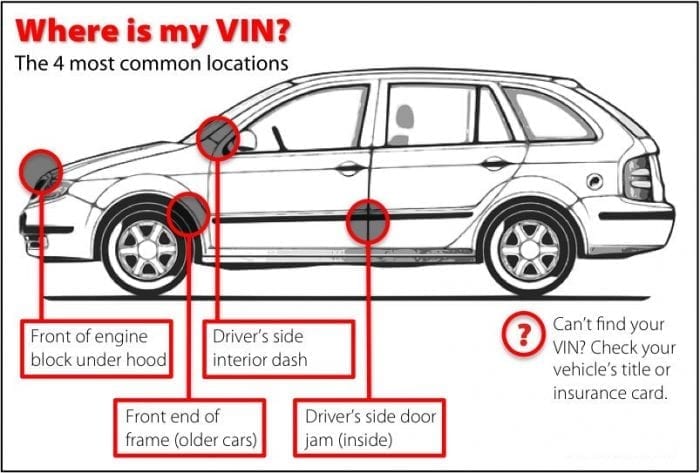
Find the 17-digit VIN number on the vehicle dashboard, driver-side door jamb, or registration documents. PremiumVIN also supports pre-1981 VIN formats.

Step 2: Enter the VIN
Type or paste the full McLaren VIN into the decoder tool above.

Step 3: Access Factory Specifications
Instantly view the vehicle's factory specifications, including engine, trim, transmission, and model year.
Where to Find the McLaren Vehicle Identification Number?
Your McLaren VIN is usually in a few standard places. If one spot is hard to read, check another. Here are some places you can check to see the VIN:
Dashboard (windshield area)
Look through the windshield on the driver’s side. The VIN is often visible on a small plate near the base of the dashboard.
Driver-side door jamb
Open the driver’s door and check the sticker or label area on the door frame. Many vehicles show VIN and manufacturing info there.
Vehicle registration and title
Official paperwork usually lists the VIN clearly. This is helpful if the car is stored or you can’t access it easily.
Insurance documents
Insurance cards and policy documents often include the VIN, especially for high-value vehicles.
Service records or dealer paperwork
Past invoices or service visits may list the VIN at the top. It’s useful for cross-checking consistency.
How to Read a McLaren VIN Number
A modern McLaren VIN is usually a 17-character code. It’s not random. It’s built in sections: the first part tells you who made it, the middle describes the vehicle, and the last part identifies the exact unit (plus the model year and plant code). So when you decode McLaren VIN data, you’re basically reading the car’s ID card, one chunk at a time
WMI (World Manufacturer Identifier)
WMI (World Manufacturer Identifier) is the first 3 characters of the VIN (positions 1–3). This section is the “who made it” area. It identifies the manufacturer and can also hint at the region or country group tied to that maker. It’s the part that helps separate a McLaren from other brands right away.
WMI Character Meaning
- Position 1: Identifies the geographic region or country group where the manufacturer is registered.
- Position 2: Identifies the manufacturer within that region group.
- Position 3: Often confirms the manufacturer division or helps complete the unique maker ID.
VDS (Vehicle Descriptor Section)
VDS (Vehicle Descriptor Section) is at positions 4–9. Think of this as the “what is it?” part of the VIN. McLaren (like other manufacturers) uses this area to encode key attributes such as model line, body type, engine setup, or restraint system details, depending on market rules.
VDS Character Meaning
- Positions 4–8: Manufacturer-defined vehicle attributes (model/series/body/engine-related coding varies by maker and market).
- Position 9: Check digit used to validate the VIN format and catch common errors or tampering.
VIS (Vehicle Identifier Section)
VIS (Vehicle Identifier Section) is the last part, usually positions 10–17. This is where the VIN becomes tied to one specific car, not just a model type. It includes the model year code, the factory/plant code, and the vehicle’s sequential production number. For collectors, this section matters because it’s where identity becomes truly unique.
VIS Character Meaning
- Position 10: Model year code (a standard year identifier, shown as a letter or number).
- Position 11: Manufacturing plant or factory code (meaning depends on the manufacturer’s coding).
- Positions 12–17: Sequential production number that uniquely identifies the vehicle.
Who Should Use the McLaren VIN Lookup Tool?
A McLaren VIN lookup tool isn’t just for hardcore car people. It’s for anyone who wants quick, solid facts from a VIN, without guessing. Whether you’re buying a used McLaren, selling one, or managing inventory.
Buying a McLaren is exciting, but it’s also the moment where small mistakes get expensive. A McLaren VIN check helps you confirm the basics, spot red flags earlier, and ask sharper questions before you pay. It’s not a replacement for a proper inspection, but it’s a smart first filter.
Identify hidden damages before purchase
Our McLaren VIN lookup can flag history clues like salvage branding, major damage records, or repeated incidents. It helps you avoid cars with problems that don’t show up in pictures.
Confirm that the McLaren matches the listing
Our McLaren VIN number decoder can verify that the year, model, and trim match what the seller claims. If the listing details feel “too loose,” this clears it up quickly.
Spot possible VIN cloning or suspicious identity issues
High-value cars can attract shady behavior. A VIN lookup helps you compare records against the car’s physical VIN locations and paperwork for consistency.
For sellers and dealers, a McLaren VIN lookup is a simple way to keep listings accurate and reduce headaches. It helps you prove what you’re selling, avoid mistakes in specs, and answer buyer questions faster.
Build buyer trust with cleaner information
Serious McLaren buyers ask detailed questions. When you can back up the basics with a VIN check, you look more transparent and prepared.
Create accurate listings faster
A McLaren VIN decoder helps fill in key specs correctly. It reduces the wrong trim problem that wastes everyone’s time.
Support paperwork and financing
VIN accuracy matters for registration, insurance, and financing forms. A VIN lookup helps ensure your documents match the car correctly.
If you’re into McLaren the “old-school” way, you know the joy is in the details. The right spec, the right story, the clean paperwork trail. A McLaren VIN lookup helps you confirm what the car is supposed to be, and it supports documentation for insurance, resale, and collection records.
Document originality for future resale
A VIN lookup helps you keep clear proof of what the McLaren is on record. That kind of documentation can support value when you sell later.
Spot mismatched trims or model confusion
Some McLaren models and variants look similar in listings. VIN decoding helps confirm the correct model year and trim, so you’re not guessing.
Check classic-style VINs or shorter chassis numbers
Not every collector car fits the modern 17-character format perfectly. PremiumVIN supports modern VINs and classic-style 5–14 digit numbers when available.
Supported McLaren Models
Here are some popular McLaren models people run through our McLaren VIN decoder. Don’t see yours? PremiumVIN can decode McLaren VIN data for all variants and model years, including classic-style VINs when available.
McLaren 570GT
McLaren 570S
McLaren 600LT
McLaren 650S
McLaren 675LT
McLaren 720S
McLaren GT
McLaren MP4-12C
Why Users Trust Our McLaren VIN Decoder
A McLaren is not the kind of car you buy casually, and the VIN check shouldn’t be casual either. PremiumVIN is built to keep the process simple while still giVIN g you serious information you can act on.
Most comprehensive database coverage
PremiumVIN is designed to pull deeper coverage where available, so you can see a fuller picture of the vehicle’s identity and history. It’s especially helpful for buyers and collectors who want details that actually support decisions.
24/7 customer support
VIN questions don’t always happen during office hours. PremiumVIN offers help around the clock, so you’re not stuck waiting while a seller pressures you to decide fast. It’s calmer that way.
High accuracy, cross-checked results
VIN data can be messy across different sources, so accuracy matters. PremiumVIN focuses on cross-checking key details so you’re less likely to get confusing mismatches.
No hidden fees or subscriptions
People hate surprise charges, and honestly, they should. PremiumVIN doesn’t try to trap you in subscriptions or confusing upgrades. You see what you’re getting, and you choose when to run a full report.
Daily data updates
Vehicle records can change. Titles get updated, listings appear and disappear, and new events can be reported over time. That’s why we aim for frequent data refreshes, so a McLaren VIN check you run today isn’t relying on old information from months ago.
Downloadable PDF
For buyers and collectors, saVIN g documentation is part of the game. PremiumVIN reports can be downloaded as a PDF, which makes it easy to keep in your records, share with an insurer, or attach to your collector folder.
Need More? Get Inside the McLaren Premium History Report?
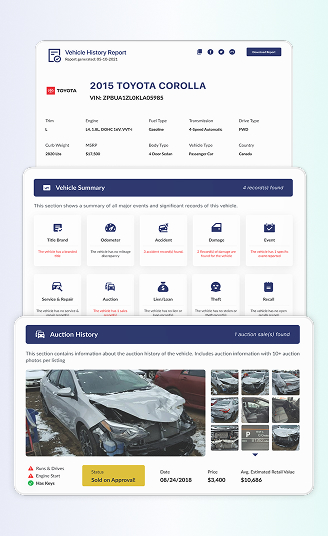
A free McLaren VIN decoder is a good start, but it’s usually not the finish line. If you’re buying, selling, importing, insuring, or documenting a McLaren for a collection, you want the full report that ties your McLaren to real-world records and common risk areas, like title brands, ownership changes, mileage patterns, lien/loan flags, accidents, damage, recalls, and more. Get the full report through our VIN check.
Title Check
The title status section scans for common title brands and red flags that can impact value, registration, and resale. For a high-end car like a McLaren, this is where you pause and read slowly.
Lemon
Lemon branding can show up when a vehicle had serious repeat issues under warranty rules in certain regions. If this appears, you’ll want to understand what happened and whether it was resolved properly.
Salvage
A salvage brand can mean the vehicle was declared a total loss by an insurer at some point. It doesn’t automatically mean “bad forever,” but it does mean you should verify repairs and history carefully.
Rebuilt
A rebuilt title can appear when a previously branded vehicle is repaired and approved for road use again, depending on local rules. It’s a big value and insurance factor, so it’s worth checking.
Ownership History
Ownership isn’t just curiosity. It can hint at how the car lived: long-term ownership may suggest stability, while rapid flips can suggest a problem car being passed around.
Owner Count (When Available)
If sources report it, this shows how many owners the vehicle may have had. It’s not always complete, but it’s a useful context when comparing listings and records.
Vehicle Use Type (When Reported)
Some records may indicate use types, like personal use versus commercial-style use.
Vehicle Specifications
This section helps confirm the basics match what you’re seeing in the driveway or in a listing. This is often where the foundation starts.
Year, Make, Model
This gives you the recorded model year and the core identity fields tied to the VIN. It’s helpful when listings are vague, or when a seller casually says “it’s basically a 2020” without paperwork to back it up.
Trim
The trim part helps confirm the variant or series information connected to that VIN, especially when different trims look similar in photos.
Auction History
Auction history can explain sudden ownership changes, weird condition notes, or why a car moved across states fast.
Auction date and location
If the vehicle appears in auction records, you may see the date and location. That helps you place the event in the broader timeline of ownership and mileage.
Sale price (When Available)
When reported, price history can provide a reality check. If the car is sold unusually cheaply, you’ll want to know why: is it the condition, damage notes, title issues, or something else?
Condition notes, such as primary and secondary damage
Some auction entries include condition flags. These can be blunt, which is honestly helpful, because you’re seeing what the market saw at the time.
Photos from past listings (When Available)
Old listing photos can be surprisingly useful. They can show previous damage, different wheels, missing parts, or changes that a fresh detail job tries to hide.
Service & maintenance Records
The service history can include maintenance events from available sources and can help you estimate how the car was treated.
Scheduled maintenance (When Reported)
This may list routine maintenance events if they appear in the data. Consistent routine maintenance is a quiet sign of responsible ownership, especially in performance cars.
Part replacements (When Reported)
If records include parts replaced, it can help you understand ongoing wear or recurring issues. It’s also useful when a seller claims “everything was just done.”
Service & maintenance Records
The service history can include maintenance events from available sources and can help you estimate how the car was treated.
Scheduled maintenance (When Reported)
This may list routine maintenance events if they appear in the data. Consistent routine maintenance is a quiet sign of responsible ownership, especially in performance cars.
Part replacements (When Reported)
If records include parts replaced, it can help you understand ongoing wear or recurring issues. It’s also useful when a seller claims “everything was just done.”
Theft Records
Theft checks matter for obvious reasons, but also for paperwork sanity. A stolen record can create registration nightmares, even if a seller seems honest.
Stolen Status Check
If records indicate a stolen status, treat it as a serious stop sign until proven otherwise with official documentation. It’s not the kind of thing you want to “sort out later.”
Recalls Check
The recalls section helps you see recall status tied to your VIN, which is useful before purchase and before you book service.
Open Recall Information
If an open recall is found, it may list the recall topic and status. Open recalls are worth handling quickly, especially for safety-related items.
Completed Recall Events
Completed recall entries can show that an issue was addressed. For buyers, this can be reassuring because it suggests the owner kept up with manufacturer-required fixes.
Accident Records
Accident history isn’t only about “was it hit.” It’s about how severe, how often, and whether the repairs were done properly. For a McLaren, even a minor-looking incident can have expensive consequences, so you’ll want the cleanest timeline possible.
Number of Accidents Reported
If accidents are reported in available sources, this section summarizes the count. One record isn’t automatically a deal-breaker, but it should shift how carefully you inspect the car.
Date of Reported Accidents
Dates help you place the incident in context. A recent accident may mean fresh repairs, while an older record may need deeper proof that repairs held up over time.
Reported Accident Location
Location data can sometimes appear with accident events. It’s mainly useful for cross-checking the story and verifying whether the event details match related records.
Lien/Loan check
A lien is basically “someone else may have a legal claim on this car.” If you’re buying, this matters because an unresolved lien can create paperwork problems later. This section helps you spot lien/loan hints reported in available records.
Lien Record Identification
If a lien record is found, the report may display it as a warning signal. You’ll still want to confirm with proper documentation, but it’s a smart early filter.
Dates and Locations (When Available)
When records include timing and location data, it can help you understand whether the lien is old history or something that might still be active and unresolved.
Mileage History
The mileage section compares mileage readings from multiple data sources over time. If something jumps backward or doesn’t follow a believable pattern, you’ll usually see the warning signs here.
Mileage History from Multiple Sources
This compiles reported mileage events over time. The key is consistency: does the mileage increase naturally, or does it appear as if someone edited the narrative?
Rollback Detection and Alerts
If the system detects suspicious mileage patterns, it may flag potential rollbacks.
Case Study: The “Perfect Spec” McLaren That Wasn’t So Perfect
Megan found a McLaren with a “rare spec” pitch. The seller made it sound like a collector’s dream. Megan still decided to decode McLaren VIN details first, just to make sure the basics lined up.
Sample Report: SBM13FAA2LW009121
Initial Impression
- Seller claimed rare spec and “hard to find.”
- The car looked impressive in photos.
- The listing was full of confident wording.
Critical Findings
- The VIN check raised a branded-title concern in the records.
- Mileage didn’t line up cleanly across sources.
- An insurance loss-style record showed up, plus a damage note.
Outcome
- Megan paused the deal and asked for proper documents.
- She walked away when the answers got vague.
- She avoided buying a McLaren with a risk profile she didn’t want.
Lessons Learned
- Photos don’t show paperwork problems.
- Title issues change value and insurance fast.
- Always run a McLaren VIN check before you fall in love.
Free McLaren VIN Decoder vs Full Vehicle History Report
A free McLaren VIN decoder is good for a fast identity check. But when money is on the line, the paid report is where the real “risk stuff” shows up. Think of free as a quick filter, and paid as the full story.
| What You Can Check | Free McLaren VIN Decoder (Quick Check) | Premium McLaren Vehicle History Report (Full Report) |
|---|---|---|
| McLaren year, model, and make | ✓ Confirms basic identity | ✓ Fully confirmed with production details |
| Basic McLaren specs (engine, body, trim) | ✓ General specifications | ✓ Complete factory specifications |
| Title status (e.g., salvage, rebuilt, lemon) | Basic status hint only | ✓ Full title brand history |
| Accident history check | Not available | ✓ Detailed accident records when reported |
| Mileage and odometer records | Not available | ✓ Multiple recorded mileage entries |
| Odometer rollback/mileage inconsistency checks | Not available | ✓ Rollback flags and inconsistency alerts |
| Auction history and photos | Not available | ✓ Auction listings and images when available |
| Online listings and advertised sales | ✓ Current listing snapshot (when available) | ✓ Listings and advertised sales records |
| Timeline of previous listings and sales | Not available | ✓ Timeline of past listings and sale activity |
| Sales listings records & photos | Not available | ✓ Listing records and photos (when available) |
| McLaren market value estimate | Not available | ✓ Value estimates and pricing ranges |
| Number of previous owners | Not available | ✓ Owner count (when available) |
| Past vehicle use (private, rental, fleet, commercial) | Not available | ✓ Use-type indicators when reported |
| Outstanding loans or lien records | Not available | ✓ Lien/loan flags when reported |
| Stolen vehicle check | Limited check | ✓ Detailed theft records if reported |
| Flood, fire, or hail damage indicators | Not available | ✓ Damage-event indicators when reported |
| Reported service or repair history | Not available | ✓ Service/repair records (when available) |
| Recall and warranty information | Limited overview | ✓ Recall history and basic warranty status |
| Downloadable PDF report | X Not included | ✓ Yes, easy-to-save PDF |
| Best suited for | Quick McLaren VIN lookup and early screening | Buyers, sellers, collectors, and serious checks |
How to Get a McLaren Vehicle History Report by VIN Number Lookup
Running a McLaren VIN lookup is pretty simple. You don’t need to decode anything by hand or memorize VIN characters. Just enter the VIN, check the preview, and then pull the full report if you want the deeper history details.
Step 1: Enter Your VIN
Paste the 17-character McLaren VIN (or a shorter classic-style number when supported) into the form above.
Step 2: Review the Preview
Scan the quick results to confirm basic identity details and see if anything feels off right away.
Step 3: Get the Report
Purchase the full report to view the complete timeline, records, and downloadable PDF.
Explore Other McLaren VIN Search Tools
See our extra tools help you check a McLaren from different angles, depending on what you’re trying to confirm.
A McLaren window sticker is basically the car’s original “factory summary” sheet. If you’re buying used, it’s a clean way to confirm the spec matches the seller’s claims.
A McLaren recall check helps you see whether safety recalls are open or completed (when reported). Recalls are not rare, but ignoring them can turn into risk, cost, and stress later.
A McLaren license plate lookup can help when you don’t have the VIN immediately, but still want to start research. It’s useful for early screening, especially when you’re browsing listings or looking at a car in person and only have plate info.
A McLaren title check matters because title issues can affect resale value, financing approval, and sometimes even insurance options. If you’re shopping, a title check is one of the fastest ways to avoid “nice car, bad paperwork” situations.
McLaren at a Glance: Racing Roots and Road-Car Identity
McLaren is one of those brands that feels a bit unreal at first. It’s not “just a car company.” It’s racing history, engineering obsession, and a lot of people quietly arguing online about specs. If you’re doing a McLaren VIN lookup, these fun facts help explain why McLaren details matter so much in the first place.
The Brief History of McLaren
McLaren began as a racing name, and it grew into a modern performance brand with road cars that still carry that motorsport mindset. The company’s identity is tightly linked to high-performance engineering, lightweight design, and a “do it properly or don’t do it” attitude.
- Racing-first DNA: McLaren is deeply tied to motorsport culture, and that shapes how the road cars feel.
- Engineering focus: The brand has a reputation for chasing performance through smart design, not just big numbers.
- Modern supercar image: McLaren road cars are built around speed, handling, and clean aerodynamic thinking.
- Serious collector interest: Limited runs and special versions attract collectors who care about originality and history.
- Brand structure changes: Ownership and corporate structure have shifted over time, which is why the McLaren “group” story can sound confusing.
Decode Your McLaren VIN Now
Ready to check the real details? Run a McLaren VIN lookup on PremiumVIN and get your VIN decoded in seconds. Enter the VIN, review the basic specs for free, and if the car looks promising, pull the full history report before you commit.
Frequently Asked McLaren VIN Questions
How to lookup a McLaren VIN number?
To look up a McLaren VIN number, first grab the VIN from the windshield area or driver-side door jamb, then paste it into our McLaren VIN lookup tool. Our decoder will confirm the basics, and if you need the deeper history (e.g., titles, accidents, mileage, liens), you can pull the full report on PremiumVIN.
How do I find McLaren specs by VIN?
To find McLaren specs by VIN, use the McLaren VIN decoder. A VIN can connect to specs like model year, manufacturing details, and other configuration data, depending on what’s available in records. If you want it simple, just enter the VIN and let the decoder format it into normal language.
What does a free McLaren VIN decoder provide?
Our free check will give you the basic identity, like the kind of “what car is this?” info, including the year, make, model, and general specs. It’s great for early screening, but it won’t always include the heavy stuff like accident records or mileage history.
Can I lookup my car specs by VIN number?
Yes, in many cases. A VIN is designed to encode or connect to key vehicle details, and our decoder tools can translate that into readable specs to confirm the core configuration.
Can I lookup a car VIN for free?
Yes, you can often do a free VIN lookup for basic info, especially for quick decoding and early checks. If you need full history depth, that’s where paid reports usually come in, because they pull more record types and timeline details.