
Report Methodology and Data-Source Classes
Summary: Every field in a PremiumVIN report or sticker falls into one of four evidence classes: manufacturer-sourced, decoded from VIN structure, aggregated from a third-party data provider, or user-supplied. Knowing which class a field belongs to tells you how much weight that specific piece of information can bear regardless of how complete or professional the overall report looks. |
Not all data in a vehicle report carries the same evidentiary weight. A field pulled directly from a manufacturer’s build record is a fundamentally different kind of evidence than a field estimated from VIN structure alone, and both are different again from a correction a customer submitted themselves. This page explains PremiumVIN’s four evidence classes and how they apply across every product.
The Four Evidence Classes
| Class | What it means | Where it commonly applies |
|---|---|---|
| Manufacturer-sourced | Drawn directly from a manufacturer build record or factory data feed for that specific VIN. | Window sticker MSRP and standard equipment, where available |
| Decoded from VIN structure | Derived by interpreting the VIN's encoded characters against known manufacturer coding schemes. | Make, model, model year, engine code, plant of assembly |
| Aggregated third-party data | Compiled from external providers — state title/registration systems, insurance-industry databases, auction platforms, recall databases. | Title brand, theft flags, lien records, accident history, recalls, auction/sales history |
| User-supplied | Submitted by the vehicle owner or a report requester as a correction or supplement. | Manual corrections during support review |
A single report routinely contains fields from more than one class. A Vehicle History Report might show a manufacturer-sourced trim level, a decoded engine code, an aggregated title-brand flag, and a user-supplied correction to a mileage figure, all in the same document. Evidence class is tracked at the field level, not the report level.
Why This Distinction Matters
Two reports that look equally complete can carry very different levels of confidence, depending on which evidence class supports each field. A window sticker built entirely from manufacturer data is a stronger evidentiary basis for an options claim than one reconstructed primarily from decoded VIN structure even though both may display the same layout.
This is also the basis for PremiumVIN’s window sticker disclosure standard: any window sticker PremiumVIN generates states whether its fields reflect manufacturer-sourced data, decoded data, or a combination, and flags fields that could not be resolved from either source.
How Evidence Class Applies by Product
VIN Decoder
Primarily decoded-from-structure. Coverage and confidence depend on VIN format, manufacturer coding consistency, and vehicle era (modern 17-digit VINs) generally decode more completely than pre-standardization or specialty formats.
Window Sticker
A mix of manufacturer-sourced and decoded data. See Coverage, Supported Vehicles, and Data Availability for which makes and years currently have stronger manufacturer-data coverage.
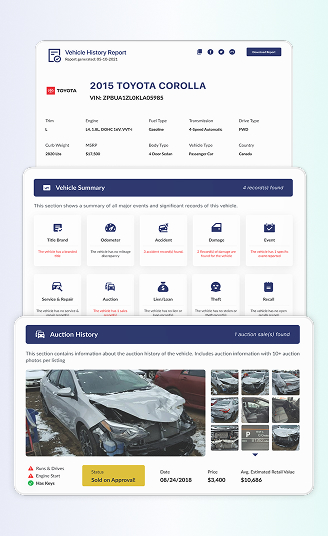
Vehicle History Report
Primarily aggregated third-party data. Each record type draws on a different class of external source for example, title brand data typically originates from state title and registration systems, while theft flags typically originate from insurance-industry and law-enforcement-reported databases. Coverage varies meaningfully by state, country, and how consistently the originating source has digitized its records.
Market Value Estimate
An estimate model informed by aggregated comparable-sale and listing data. This is explicitly an estimate, not a certified appraisal, see the PremiumVIN Claim Language Style Guide for approved phrasing.
What This Page Does Not Cover
This page explains where data comes from and how it is classified. It does not cover why specific data might be missing (see Why Vehicle Data May Be Missing or Incorrect) or what a given field can and cannot legally or physically prove (see What Digital Vehicle Documentation Can and Cannot Prove).