
Subaru VIN Decoder - Instantly Confirm Model, Trim, Engine, and More
Use our Subaru VIN decoder to confirm the exact year, make, model, trim, and key factory specifications in seconds. Enter the VIN to instantly verify the original configuration and avoid wrong vehicle purchases and part ordering.
What is a Subaru VIN Decoder?
A Subaru VIN decoder is a free online tool that reads your vehicle’s 17-character Vehicle Identification Number. It turns those characters into real details about your car, like the year, model, engine, and trim level.
Instead of guessing or digging through old paperwork, this Subaru VIN number lookup tool gives you instant, accurate answers. It saves time when buying, selling, or insuring a vehicle and helps you avoid costly mistakes.
What Can You Learn from Decoding Subaru VIN Numbers?
Decoding a Subaru VIN reveals far more than just the model year. Here’s a full breakdown of what you’ll discover.
Year, Make & Model
The VIN instantly confirms your Subaru’s exact production year, the manufacturer, and the specific model name.
Body Type
Find out whether your Subaru is a sedan, SUV, hatchback, wagon, or another body style entirely.
Engine Type & Capacity
Learn the exact engine type and size, such as a 2.5L flat-four or turbocharged Boxer engine.
Transmission
Find out if a Subaru came with a manual, automatic, or continuously variable transmission (CVT) from the factory.
Trim
See the original trim level, like Base, Premium, Limited, or Sport, as built at the factory.
Fuel Type
Check whether a Subaru runs on regular gasoline, premium fuel, or another factory-specified fuel type.
Number of Doors
Quickly confirm how many doors your Subaru originally had, from two-door coupes to five-door wagons.
Estimated Market Value
Get an estimated market value based on condition, outstanding, clean, average, or rough, helping you understand fair pricing instantly.
How to use our Subaru VIN Decoder?
Getting your Subaru VIN lookup results takes only a few seconds. Just follow these three simple steps below to get started.

Step 1: Enter the VIN
Enter the Subaru's 17-digit VIN into the form at the top of the page. You can also search using your license plate number instead.

Step 2: Decode Subaru VIN Number
Click submit to instantly view the year, make, model, engine, trim, transmission, and more factory details. This basic VIN check is completely free.

Step 3: Upgrade to VIN Report
Buying a used Subaru? Upgrade your search to get the full vehicle history report and reveal any hidden issues.
Where is the Subaru VIN Number Located?
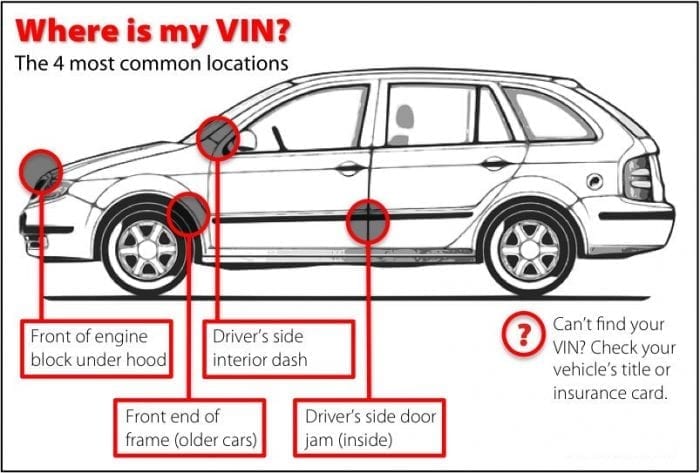
Not sure where to find your VIN? It’s stamped or printed in several spots on every Subaru. Here are the four most common places to check.
Dashboard (Driver's Side)
Look through your windshield on the driver’s side dashboard. You’ll see a small metal plate with the 17-digit VIN stamped clearly near the corner.
Driver's Side Door Jamb
Open the driver’s door and check the sticker on the door jamb or frame. It lists the VIN along with tire and paint codes.
Vehicle Registration & Insurance Card
The Subaru VIN is also printed on your registration card and insurance documents. Check either one if you can’t get to the car right now.
Engine Block or Frame
Pop the hood and look near the engine block or front frame rail. Some Subaru models stamp the VIN directly onto the metal there.
Benefits of Using a Subaru VIN Decoder
A Subaru VIN decoder isn’t just for one type of person. Buyers, sellers, insurers, and repair shops all rely on accurate VIN data daily. Here’s how each group benefits.
If you’re buying a Subaru, a quick Subaru VIN check protects you from scams and surprises before you hand over your money.
Confirm the Vehicle's True Identity
Make sure the VIN on the car matches the title, registration, and window sticker. This simple check helps you spot stolen or cloned vehicles fast.
Verify Factory Specs Match the Listing
Check that the engine, trim, and features actually match what the seller advertised. This stops you from overpaying for a lesser-equipped model.
Spot Inconsistencies Early
Checking the Subaru VIN confirms the car’s factory build, helping you spot inconsistencies before you buy. For the car’s full history, you can upgrade to our premium VIN report.
The Subaru VIN decoder can help build trust with buyers and make your listing stand out as honest and transparent.
Build Buyer Confidence
Sharing decoded VIN details upfront shows buyers you have nothing to hide. This builds trust and can speed up the sale.
Price Vehicles Accurately
Knowing the exact trim, engine, and features helps you set a fair, competitive price instead of guessing the vehicle’s true value.
Create Detailed, Accurate Listings
Pull exact specifications straight from the VIN to write listings that are accurate and appealing, keeping buyers from backing out later.
Insurance companies use the VIN information to set accurate premiums and reduce the risk of fraud across every policy they write for Subaru owners.
Calculate Accurate Premiums
Looking up the vehicle specs reveals safety features, engine size, and trim level, all of which affect the true risk and cost of insuring a vehicle.
Detect Insurance Fraud
Decoding a VIN helps insurers catch mismatched claims, cloned vehicles, or attempts to insure a car that doesn’t match its records.
Streamline Claims Processing
Accurate vehicle information speeds up claims by quickly confirming vehicle details without back-and-forth calls or extra paperwork delays.
Mechanics and parts suppliers depend on VIN decoding to find the exact components a specific Subaru model needs.
Order the Correct Parts
Decoding the VIN confirms the exact engine, trim, and production details needed to order parts that fit correctly the first time.
Reduce Costly Return Errors
Ordering the wrong parts wastes time and money. A Subaru VIN decoding before ordering helps avoid mismatched or returned components.
Speed Up Repair Estimates
Mechanics can quickly pull factory specifications to give accurate repair quotes without manually researching each vehicle’s exact configuration.
How Decoding a Subaru VIN Helped with Accurate Car Shopping
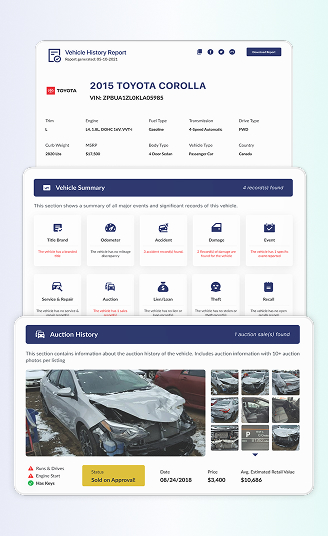
Martin is shopping for a used 2015 Subaru Outback. It looks tidy, the seller sounds confident, and the trim and specs are already checking out. But once Martin runs the VIN, the “fine” story gets more complicated, fast.
Sample Report: 4S4BSAEC6F3231127
Initial Impression
- Looks like a normal Outback Premium with popular extras (All Weather Package, moonroof, navigation).
- Specs look solid: 2.5L gas, CVT, AWD.
- The report shows no accident records and no open recalls, so Martin feels more relaxed at first.
Critical Findings
- A branded title flag shows up, with 2 related events listed.
- There’s a corrected title record, which Martin wants explained clearly.
- The report shows multiple lien/loan records, meaning ownership could be legally complicated if not cleared.
- A damage record appears even though accidents are listed as none, so Martin knows it’s not as “clean” as the seller makes it sound.
- Mileage history includes a small dip entry (not a huge drop, but enough to double-check paperwork and timeline).
Outcome
- Martin asks for lien release proof, title paperwork, and any documents tied to the corrected/branded title note.
- If the seller is clear and provides proof, Martin continues with the inspection and negotiation.
- If the seller avoids the questions, Martin walks away or renegotiates based on risk.
Lessons Learned
The VIN decode tells you what the Subaru is. The report shows what it went through. Martin learns that “no accidents” doesn’t automatically mean “no issues,” and title/lien history can be the real deal-breaker, even when the car drives fine.
Subaru VIN Breakdown: What Each 17-Digit VIN Character Means
Every Subaru VIN breaks down into three parts: the WMI, the VDS, and the VIS. These 17 characters provide accurate information about the vehicle specifications and history.
Let’s use a real example from this report: 4S4BSAEC6F3231127.
WMI (World Manufacturer Identifier)
The WMI (World Manufacturer Identifier) is the first 3 characters of the Subaru VIN. This part tells you where the vehicle was built and which manufacturer group reported it. For Subaru, you’ll often see WMIs that point to Japan-built vehicles, or North America production tied to Subaru’s Indiana facility reporting.
WMI Character Meaning (Example: 4S4)
- 1st character: (4) Points to the VIN being assigned under the United States region for this vehicle (the report lists Country: United States).
- 2nd character: (S) Manufacturer identifier used within that WMI grouping for Subaru.
- 3rd character: (4) Vehicle type grouping under Subaru’s WMI assignments (you’ll often see 4S4 used for Subaru MPV/SUV-type reporting).
Other Subaru examples you may see:
- 4S3 = WMI reported for Subaru passenger cars assembled by SIA (Indiana).
- JF1 = WMI reported for Subaru passenger car, assembled in Japan.
VDS (Vehicle Descriptor Section)
The VDS (Vehicle Descriptor Section) is usually characters 4 to 9. This is the “describe the vehicle” chunk. It can include model/series, body style, engine type clues, and restraint system info, depending on year and market. Also, in the U.S., the 9th character is the check digit, used to validate the VIN.
VDS Character Meaning(Example: BSAEC6)
- Position 4: (B) Subaru internal descriptor (model/series coding varies by year).
- Position 5: (S) Subaru internal descriptor (often tied to body/series grouping).
- Position 6: (A) Subaru internal descriptor (configuration coding varies).
- Position 7: (E) Subaru internal descriptor (can relate to equipment/restraint grouping depending on year).
- Position 8: (C) Subaru internal descriptor (more build detail tied to that model year).
- Position 9: (6) Check digit (used to confirm the VIN is mathematically valid).
VIS (Vehicle Identifier Section)
VIS is characters 10 to 17. This is where the VIN gets more personal. It usually includes the model year, the assembly plant, and the production sequence number. If you’re comparing two “similar” Outbacks, this section helps explain why they’re not literally the same vehicle. It’s also the part that helps separate one car from the next on the factory line.
VIS Character Meaning (Example: F3231127)
- Position 10: (F) Model year code (this VIN decodes to a 2015 Subaru Outback in the report).
- Position 11: (3) Assembly plant code (Subaru documents list plant codes like 1 and 3 for SIA, Lafayette, Indiana, depending on model/year setup).
- Positions 12–17: (231127) Sequential production number (the car’s “serial” within that year/plant run).
Decode Classic Subaru VIN Numbers
We don’t just decode modern Subarus. Our tool also supports pre-1981 classic models, helping enthusiasts and collectors confirm original factory details on vintage vehicles they’re restoring or researching.
Simply enter your classic Subaru’s VIN to reveal the year, make, model, trim, engine type, transmission, and fuel type, even on cars built decades ago.
Free vs. Premium Subaru VIN Decoder: What More Can You Find?
Not sure which option fits your needs? Our free VIN decoder covers the basics, while the premium VIN decoder digs deeper into the vehicle history. Compare both side-by-side below:
| What You Can Check | Free VIN Decoder | Premium VIN Decoder |
|---|---|---|
| Subaru year, model, and make | ✓ Confirms basic identity | ✓ Fully confirmed with production details |
| Basic Subaru specs (engine, body, trim) | ✓ General specifications | ✓ Complete factory specifications |
| Title status (e.g., salvage, rebuilt, lemon) | Basic status hint only | ✓ Full title brand history |
| Accident history check | Not available | ✓ Detailed accident records when reported |
| Mileage and odometer records | Not available | ✓ Multiple recorded mileage entries |
| Odometer rollback/mileage inconsistency checks | Not available | ✓ Rollback flags and inconsistency alerts |
| Auction history and photos | Not available | ✓ Auction listings and images when available |
| Online listings and advertised sales | ✓ Current listing snapshot (when available) | ✓ Listings and advertised sales records |
| Timeline of previous listings and sales | Not available | ✓ Timeline of past listings and sale activity |
| Sales listings records & photos | Not available | ✓ Listing records and photos (when available) |
| Subaru market value estimate | Not available | ✓ Value estimates and pricing ranges |
| Number of previous owners | Not available | ✓ Owner count (when available) |
| Past vehicle use (private, rental, fleet, commercial) | Not available | ✓ Use-type indicators when reported |
| Outstanding loans or lien records | Not available | ✓ Lien/loan flags when reported |
| Stolen vehicle check | Limited check | ✓ Detailed theft records if reported |
| Flood, fire, or hail damage indicators | Not available | ✓ Damage-event indicators when reported |
| Reported service or repair history | Not available | ✓ Service/repair records (when available) |
| Recall and warranty information | Limited overview | ✓ Recall history and basic warranty status |
| Downloadable PDF report | X Not included | ✓ Yes, easy-to-save PDF |
| Best suited for | Quick Subaru VIN lookup and early screening | Buyers, sellers, collectors, and serious checks |
What Subaru Buyers & Sellers Get from a Paid VIN Check
The free Subaru VIN decoder gives you factory specifications, while upgrading to a paid check unlocks the full vehicle history, revealing what the seller may not tell you. Here’s what to expect:
Vehicle Usage
Find out how the Subaru was used, whether as a personal, fleet, rental, or lease vehicle, before you commit to buying.
Ownership Records
See how many people have owned the vehicle and for how long. Multiple short-term owners can be a red flag worth investigating.
Title Brands
Discover if the Subaru carries a salvage, rebuilt, flood, or lemon title brand that could seriously affect its value and insurability.
Accident & Damage Records
Check if the vehicle was ever involved in a reported accident or sustained structural, airbag, or major mechanical damage at any point.
Theft Records
Find out if the Subaru was ever reported stolen or recovered. Buying a vehicle with a theft record can create serious legal headaches.
Mileage History
Review the odometer readings over time to spot any suspicious gaps or sudden drops that may indicate odometer fraud or tampering.
Lien and Loan Records
Check whether an outstanding loan or lien exists on the vehicle. Buying a car with an active lien can put your ownership at risk.
Sales History
See where and when the Subaru was previously sold, including private sales and dealership transactions, for a clearer picture of its past.
Auction Records & Photos
Access any auction listings the vehicle passed through, including condition-graded inspection reports and photos that show its true state at the time.
Why Choose Our Subaru VIN Decoder?
We combine accurate factory data and instant results to give you the most reliable Subaru VIN lookup available online today. Here’s what set us apart:
Instant and Accurate VIN Decoding
Get accurate Subaru specifications back in seconds to make an informed decision when it matters most.
Comprehensive Data Coverage
We pull data from trusted sources, covering modern models, older production years, and cases like imports or cars with incomplete public data.
Unlimited Free Checks
Before deciding to get the full VIN report, decode as many Subaru VINs as you need without hitting any limits or paywalls.
24/7 Customer Support
Our support team is always available to help you anytime, without delay.
Easily Decode ALL Popular Subaru Models
Looking for a specific model? You can find VIN decoders built for these popular Subaru vehicles.
Outback
Forester
Crosstrek
Impreza
Legacy
WRX
WRX STI
Ascent
BRZ
Solterra
Tribeca
Baja
SVX
Loyale
Justy
XV
Levorg
Exiga
Sambar
Vivio
Explore Other Subaru VIN Search Tools
Some buyers care most about factory specs. Others worry about recalls or title history. Either way, these Subaru VIN search tools let you choose the exact check you need.
A window sticker is like the car’s “birth receipt.” It can help confirm factory equipment, standard features, packages, and the original configuration.
A recall check helps you see whether a Subaru has open recalls that still need repair or if recall work is marked as completed. It’s also a smart check before long road trips, because nobody wants a surprise problem that could’ve been handled at a dealer.
If you don’t have the VIN handy, a license plate lookup can sometimes help you start the search using plate data. It’s useful for quick screening, early research, or when you’re looking at a car in a parking lot.
Title checks focus on the paperwork truth: salvage, rebuilt, lemon branding, and other title events that can affect insurance, resale value, and buyer confidence. Even if the car drives fine today, title brands can change what the Subaru is worth tomorrow.
Decode any Subaru VIN Number in Seconds
Ready to view any Subaru’s full factory specifications? Don’t rely on guesswork or outdated listings. Get fast, accurate answers in seconds, completely free to start.
Frequently Asked Questions About Subaru VIN Decoder
Can I decode a Subaru VIN without the actual VIN?
Yes, you can search using your license plate number instead if you don’t have the VIN handy.
Is a Subaru VIN the same as a chassis number?
Yes. Many people search for a Subaru chassis number decoder, but on modern Subarus, the VIN and chassis number are the same 17-digit code.
Can I decode an older or classic Subaru VIN?
Yes, our tool also decodes pre-1981 classic Subaru models, revealing the year, model, trim, engine, and more.
Why does the VIN matter when buying a used Subaru?
A Subaru VIN number lookup helps confirm the car’s true factory specs, protecting you from scams or mismatched listings. For accident, title history, and more, you can simply upgrade to a full VIN report.
What does the 8th digit of the VIN tell us?
The 8th digit of the VIN is part of the Vehicle Descriptor Section (VDS), and on many cars, it’s used to identify things like engine or configuration when there are multiple choices. The exact meaning depends on the manufacturer’s coding rules.