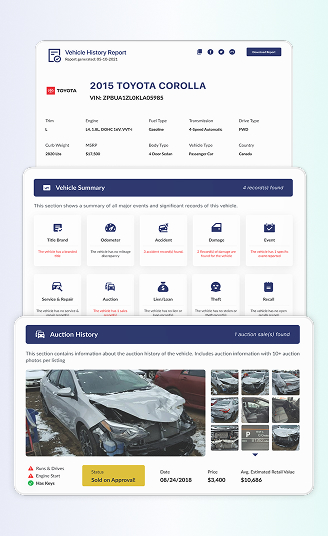

Verify Vehicle Outstanding Loans with Liens Check by VIN
Checking for liens before buying or selling a vehicle is important. An active lien means the car cannot be transferred freely, and in some cases, it could be repossessed if the debt is not settled. Run a lien check by VIN to see if a vehicle has outstanding loans and avoid delays, ownership issues, or unexpected financial risks.
What a Vehicle Lien Check Reveals
A vehicle lien check provides crucial financial and legal details connected to the car. It is especially useful during a private party car sale lien check, where there is no dealership to verify the records. Checking a vehicle lien before putting it into an auction helps to see if there’s financial claims left.
By checking a lien through VIN, you can:
- Check if a vehicle is financed in seconds
- Confirm active or released lien status
- Identify the lienholder and loan details
- Review previous lien history.
Types of Liens We Detect
A VIN lien check can uncover different types of financial claims recorded against a vehicle. Knowing these helps buyers avoid the risks of buying a used car with a lien attached.
Active Auto Loans
This is the most common type of lien. It shows the vehicle is financed, meaning the lender still has legal ownership rights until the loan is cleared.
Previous Lien History
Displays past liens that have already been cleared. This helps users understand the vehicle’s financial background.
Lien/Loan Information
On our vehicle history report, you can find complete information on the lien/loan, which is useful to examine before you purchase the vehicle.
Active vs. Released
An active lien means money is still owed, while a released lien confirms the debt has been paid. If unsure how to verify lien release on a car, check the VIN and get the vehicle history report to see the lien/loan information.
Lienholder Information
Shows the lender or financial institution that holds the legal claim on the vehicle. This may include banks, credit unions, or financing companies involved in the original purchase or loan agreement.
Lien Date
Indicates when the lien was officially recorded in the system. This helps users understand how long the financial obligation has been attached to the vehicle and whether it may still be active.
Multi-State Lien Search
Vehicles often move across state lines, which can make lien records harder to track. Our VIN check is able to search across multiple databases to see the hidden records of the lien/loan history.
Checking the VIN is critical when asking what happens if you buy a car with a lien. In many cases, the debt stays with the vehicle, not the previous owner.
Get More Than Just Liens and Loans With a Vehicle History Report
A full vehicle history report goes beyond lien details. It provides a broader view of the vehicle’s background, helping you verify records, spot risks, and make informed decisions.
Vehicle Specifications
Review details like country of origin, MSRP, engine size, fuel type, and drivetrain to confirm the vehicle matches its listing and suits your needs.
Theft Records
Check databases for theft reports, including when and where the vehicle was reported stolen, helping you avoid legal risks and ownership complications.
Title Brand Records
View title brands such as “salvage,” “rebuilt,” “flood,” or “lemon,” which highlight major events that may affect the vehicle’s safety, condition, and value.
Service History Records
See how the vehicle was taken care of by the previous owners. In this section, you can see the recorded service history, such as location, date, and the serviced components.
Odometer Reading
Check the complete odometer reading of the vehicle with our report. See the last recorded mileage and historical mileage records with dates.
Accident History
Review accident records, including dates, locations, and frequency, to better understand the vehicle’s past condition and any repairs that may affect performance.
Auction History
Access details about past auction sales, including dates, locations, final prices, and available photos that show the vehicle’s condition at the time.
Sales Listing History
Track previous listings with sale dates, prices, locations, and photos, helping you understand how the vehicle was marketed and priced over time.
Damage Verification
Identify reported damage from accidents, fire, or other incidents, including less visible issues like dents or prior auction-related damage.
Warranty Records
Check available warranty coverage, including types, duration, and mileage limits, to understand any remaining protection or coverage tied to the vehicle.
Why is Checking a Lien Important?
Buying a used vehicle without checking its lien/loan history can lead to serious problems. A VIN lookup helps answer buyers’ concerns, like checking a lien on a used car to reduce risk after purchasing the vehicle.
The Biggest Risk: Repossession
One of the main reasons to check for outstanding liens before buying a car is to avoid repossession. If a lien exists, the lender still has legal rights over the vehicle. This risk increases when records are not verified early, especially in private sales.
You’ll Inherit the Debt
When you buy a used car with a lien attached, the unpaid loan does not disappear. The debt can follow the vehicle, and that could increase the chance of you being responsible for the debt.
No Legal Protection
Private buyers often have limited protection. Without a proper private party car sale lien check, recovering money or keeping the vehicle can become difficult if issues arise.
Title Transfer Problems
A lien directly affects the vehicle title, which can delay or block ownership transfer. These problems often appear during registration or ownership changes, creating legal and administrative complications that can slow down or completely stop the buying process.
Can't Get a Clean Title
If a lien is still active, the title cannot be transferred freely. This creates problems when registering or insuring the vehicle under a new owner.
Seller Can't Deliver Title
Sellers may not legally complete the sale with an active lien. While possible, ownership transfer requires the debt to be cleared or properly managed.
Financial Surprises
Hidden liens can lead to unexpected costs after the purchase is complete. These financial issues often surface later, leaving buyers responsible for debts or legal steps they did not anticipate when completing the transaction.
You May Have to Pay the Loan
If the lien is not cleared, you may need to settle the remaining balance. This is why it is critical to check if a vehicle is financed by VIN before buying.
Mechanic's Liens Can Force Sale
Unpaid repair bills can result in a mechanic’s lien. In some cases, the vehicle may be sold legally to recover the outstanding balance.
Sellers
Lien checks are also important for sellers preparing their vehicle for sale. Clearing any financial claims early helps avoid delays, improves transparency, and makes the vehicle more attractive to buyers in competitive markets.
Prove Lien-Free Status
A VIN report confirms no active financial claims. This reassures buyers and helps address concerns about hidden debt tied to the vehicle.
Faster, Higher-Priced Sales
Vehicles with no liens are easier to sell. Buyers are more confident, which often leads to quicker transactions and stronger offers.
How a Vehicle History Report Saves a Buyer From Buying a Car With Liens/Loans
Jo wanted to purchase a used 2016 LAND ROVER RANGE from a private seller in Maine. The car looks clean with no dents, and the seller told him that it has clean records. Before he paid for the down payment, Jo ran a VIN check, and here’s what he found on the report to check its lien.
What the Lien/Loan Report Shows
Turned out, the vehicle has three records of lien/loan records. Here they are:
| Event Date | Location | Data Source |
|---|---|---|
| 11/29/2018 | MINNEAPOLIS, MN | Federal Motor Vehicle Records |
| 01/07/2020 | MC LEAN, VA | Federal Motor Vehicle Records |
| 01/17/2024 | LEEDS, ME | Federal Motor Vehicle Records |
Risks
If Jo proceeds with the purchase, the vehicle will pose a risk due to the lien and loan filed on 01/27/2024. There is a big chance that he will be responsible for the lien/loan records.
The Outcome
Jo has decided to call it off and find another car that has zero lien/loan risk.
How to Check Liens by VIN
Do you know that you can check the lien records of a vehicle at home all by yourself? Use our lien check by VIN and get the vehicle history report to see complete information about the vehicle, such as specs and records like lien/loan history.

Step 1: Find the VIN
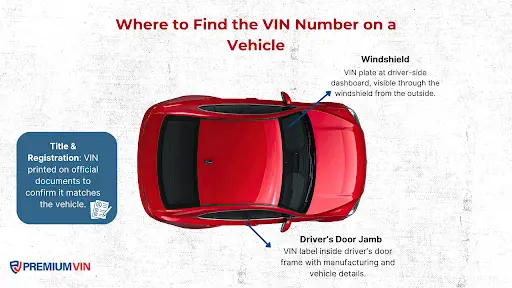
Check on the driver’s side doorjamb or on the vehicle’s paperwork, like the bill of sale or registration cards, to have the VIN. No VIN? You can also use the license plate number.

Step 2: Fill Out the Form
Click on the form above, then enter the VIN. After that, click on the button to submit the form.

Step 3: Get the Report
Wait for seconds to get the report. Then, proceed to payment to get the full vehicle history report, including lien history and more.
Where to Find a Vehicle VIN
The Vehicle Identification Number (VIN) is a unique 17-character code used to track a vehicle’s history. It can be found in several places on the vehicle and in official records, making it easy to run a flood check.
Dashboard
Check the lower corner of the windshield on the driver’s side. The VIN is typically visible from outside the vehicle through the glass.
Driver's Door Jamb
Open the driver’s door and inspect the door frame or pillar. A label or sticker usually displays the VIN along with other vehicle details.
Vehicle Documentation
The VIN is listed on documents such as the vehicle title, registration, and insurance papers. These records are reliable sources to confirm the correct VIN.
Why Choose PremiumVIN
Choosing the right tool for a lien check matters. PremiumVIN is designed to make it easy to check if a vehicle is financed by VIN, while providing accurate, fast, and detailed results that support confident buying or selling decisions.
Nationwide Search
PremiumVIN performs a wide-ranging search across multiple databases to uncover lien records from different states. This helps users complete a reliable vehicle lien search for background check purposes.
Complete History
The report includes lien status, records, ownership data, and other key vehicle details. This makes it easier to understand financial risks and avoid situations like choosing to buy a used car with a lien attached.
Quick Results
Results are generated quickly after entering the VIN, allowing users to act fast during deals. This is especially useful when completing a private party car sale lien check or evaluating a vehicle on short notice.
Affordable Report (Only $25)
PremiumVIN offers detailed reports at a competitive price, giving users access to important lien and vehicle data without high costs. It is a practical option for anyone who wants to check for outstanding liens before buying a car.
Verify Complete Vehicle Information With Our Tools
Quickly verify important vehicle details before buying. Use our tools to access records and avoid unexpected issues.
Options Check by VIN
Check factory-installed options using the VIN to confirm features, verify equipment, and make sure you are not overpaying.
Fuel Economy
View fuel efficiency ratings for different models to compare consumption and estimate long-term running and fuel costs.
Trim Package
Confirm the exact trim level using the VIN and ensure it matches the seller’s description and asking price.
Safety Ratings
Review official safety ratings to check crash performance and make sure the vehicle meets expected safety standards.
Make Sure You Don’t Inherit a Lien/Loan
Be a smart buyer and always check everything thoroughly when buying a used vehicle. Check the VIN to see the complete vehicle’s specifications, lien/loan information, odometer, and even its recall history.
FAQs About Lien Check by VIN
What is a vehicle lien?
A vehicle lien is a legal claim recorded on a car’s title by a lender, usually a bank, to secure a loan. It confirms the lender’s interest in the vehicle until the balance is fully paid. While active, the lien limits the owner’s ability to sell or transfer ownership.
How do I check if a car has a lien on it?
To check if a car has a lien, review the vehicle title or run a VIN check using a service like PremiumVIN to access a vehicle history report. If a lien exists, it means a lender has a legal claim that must be cleared before ownership can be transferred.
What happens if I buy a car with a lien?
Buying a car with a lien means the lender still has legal rights over the vehicle until the loan is settled. You cannot transfer the title into your name until the debt is cleared. If unpaid, the lender may repossess the vehicle, so the balance must be resolved first.
Can someone sell a car with an outstanding loan?
Yes, a car with an outstanding loan can be sold, but the loan must be paid off to complete the title transfer. Many sellers use the sale proceeds to settle the balance, either directly with the lender or through a secure third-party transaction.
How do I know if a lien has been released?
To confirm a lien release, check official records such as the DMV or the relevant authority where the vehicle is registered. A released lien means the debt has been paid, and the lender has removed their legal claim from the title.
How to run a lien check on a car?
To run a lien check on a car, use the 17-character VIN to access a vehicle history report through a service like PremiumVIN. You can also check with the state DMV or review the vehicle title for any listed lienholder. A lien indicates a legal claim that must be cleared to avoid repossession risks.
Who holds the lien on a car?
A lienholder is usually a bank, credit union, or financial institution that financed the vehicle. They hold a legal claim on the car’s title until the loan is fully paid, giving them the right to take back the vehicle if payments are not made.
What happens if I buy a car with a lien?
Buying a car with a lien means the seller still owes money, and the lender has legal rights over the vehicle. This can prevent you from transferring the title into your name, and the car may be repossessed if the debt remains unpaid.
Can lien holders track your car?
Yes, lienholders can track a vehicle in certain cases, especially if payments are missed or the loan involves high-risk financing. Some agreements allow GPS tracking devices to help lenders locate and recover the car if the borrower defaults.