
Rebuilt Title Check by VIN: Was This Vehicle Salvaged and Repaired?
A salvage vehicle can hit the road again after a proper repair and inspection. However, it could carry issues from the past. Check if the vehicle is marked as rebuilt now by clicking on the form and see the result in seconds.
What Can You See From the Rebuilt by VIN
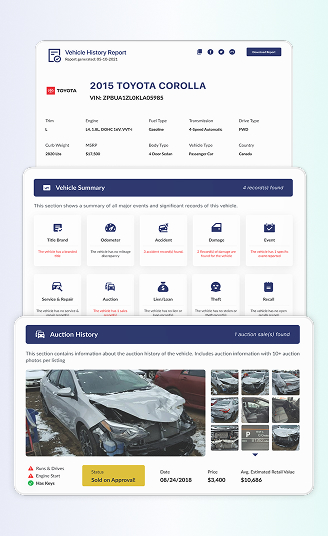
The rebuilt title check by the VIN tool helps you see complete information about the vehicle, especially when it was marked as a rebuilt.
Original Salvage History
A rebuilt title starts with a vehicle that was previously declared a total loss. Checking the original salvage history gives an insight into the damage severity and past ownership risks.
Prior Salvage Declaration
See if and when the vehicle was first declared a total loss by an insurance company. This helps determine how serious the damage was before repair.
Salvage Location
Find out where the vehicle was salvaged. Certain states or regions may have stricter inspection and insurance requirements that affect vehicle reliability.
Damage Severity
Understand the extent of the damage that led to the salvage title—minor, moderate, or severe. This is essential for safety and resale value.
Salvage Auction Records
View past auction listings, final sale prices, and photos when available. Auction history shows how the vehicle was marketed after the loss.
Rebuilt Title Status
Once repaired, a vehicle can receive a rebuilt title. This section confirms the legal status and ensures the car has passed inspection standards.
Current Rebuilt Brand
Check if the vehicle is currently branded as rebuilt. This identifies it as legally roadworthy but still reflecting its prior salvage status.
Inspection Date & Location
See when and where the rebuilt inspection occurred. Knowing this helps verify compliance with state requirements.
Inspection Results
Review the outcome of the official inspection, including whether repairs were approved and if the vehicle meets safety standards.
Title Washing Detection
Some vehicles may move across state lines to remove negative title brands. Detecting title washing protects buyers from misleading histories.
Multi-State Movement
Check if the vehicle has been retitled in multiple states, which could indicate attempts to hide previous damage.
Brand Consistency
Ensure that the salvage and rebuilt brands remain consistent in every record. Any discrepancy may require further investigation.
Repair Documentation (When Available)
Repair records give additional confidence that a vehicle has been properly restored and maintained.
Repair Shop Records
Access service and repair records from authorized shops to see what was fixed and who performed the work.
Parts Replacement
See details on replaced or upgraded components. This includes major systems like the transmission, engine, suspension, and safety features.
Difference Between Rebuilt vs. Salvage
A salvage title represents a vehicle that is damaged and not roadworthy, while a rebuilt title confirms the vehicle has been repaired, inspected, and is now legally drivable. Understanding these distinctions is crucial for safety, value, and insurance considerations.
| Aspect | Salvage Title | Rebuilt Title |
|---|---|---|
| Status | Undrivable, not repaired | Repaired, inspected, road-legal |
| Registration | Cannot be registered | Can be registered |
| Insurance | Generally not insurable | Sometimes insurable (limited options) |
| Financing | Impossible | Very difficult |
| Value Reduction | 50-70% | 40-60% |
| Safety | Unknown damage | Inspected, but repair quality varies |
Difference Between Rebuilt vs. Salvage
Rebuilt title history is crucial for anyone buying, selling, or insuring a vehicle. Understanding the past of a rebuilt car helps you avoid hidden safety risks, financial pitfalls, and potential surprises down the road. Knowing the full story ensures smarter decisions.
The Risk Spectrum
Rebuilt-title vehicles can vary widely in quality and safety. Understanding the full history helps buyers distinguish between a properly restored car and one with lingering issues that could affect performance or reliability.
Quality Rebuilds
Some vehicles are professionally restored to factory specifications, maintaining safety and performance. These are generally safe and reliable when repairs are documented properly.
Questionable Repairs
Other vehicles may have shortcuts in repairs, using substandard parts or incomplete fixes that could cause problems later, potentially leading to costly maintenance.
Safety Compromises
Poorly rebuilt cars may have structural weaknesses, compromised airbags, or other safety system failures, increasing risk in everyday driving and accidents.
Financial Realities
A rebuilt title has long-term financial implications. Knowing the history helps buyers and owners understand insurance, resale, and potential repair costs.
Insurance Challenges
Many insurers either limit coverage or charge higher premiums for rebuilt title vehicles, making protection more expensive or harder to get.
Financing Difficulties
Banks and lenders often hesitate to offer loans for rebuilt title vehicles, affecting affordability and purchase options.
Resale Limitations
A rebuilt title can reduce the vehicle’s market value by 20–40% compared to a clean title, making it harder to sell or trade in.
The "Good Deal" Illusion
A low price can be tempting, but without full context, buyers may underestimate hidden costs or risks associated with a rebuilt vehicle.
True Cost Calculation
Factor in repairs, insurance, potential future maintenance, and resale limitations to determine the actual value of a rebuilt vehicle.
Real Story: How a Rebuilt Title Check Revealed Hidden Flood Damage
A title check tool can help you to find the complete information of the vehicle title, especially when you have a plan to purchase a used vehicle. Take a look at how a vehicle report could reveal a car that has flood damage history.
What the Report Revealed
The report shows the 2008 FORD F-250 has a salvage report caused by flood. On the outside, the car looks fine and does not show any damage caused by the flood. A buyer decided to examine the vehicle report carefully, and this is what she found on the report.
Other Vehicle Title Check
Aside from being marked as salvage, the car carries a flood and rebuildable title.
Additional Issues Found on the Report
Aside from carrying a salvage title, the vehicle also carries additional problems.
- 2x accident history
- 4 lien or loans records
- Sold at an auction twice
- Titled to the insurance records
The Outcome
The buyer decided not to purchase the vehicle because it has too many problems. Buyers decided to purchase another car that fits her requirements well.
Factors to Consider Before Buying Rebuilt
A rebuilt vehicle has a fairly lower price compared to a vehicle in normal condition or slightly damaged. However, it is important to review the quality of repairs to ensure that past problems were fixed properly.
| Consideration | Why It Matters |
|---|---|
| Original Damage Type | Flood vs. accident vs. theft—different risk profiles |
| Repair Quality | Who did the work? Professional shop or backyard? |
| Parts Used | OEM, aftermarket, or used parts? |
| Inspection Thoroughness | Some states inspect rigorously; others are lenient |
| Insurance Verification | Verify coverage BEFORE purchase |
| Cash Purchase Required | Financing unlikely—be prepared |
| Future Resale | You'll face the same challenges when selling |
How to Check a Rebuilt Title by VIN
Checking a vehicle’s rebuilt status is easy, as our service can help you get the title status and help finding out the records.
Three Simple Steps
There are three simple steps you need to follow to check a vehicle’s rebuilt title by VIN. Follow these steps to get it done in seconds.

Step 1: Find the VIN
Check the driver’s side doorjamb, engine bay, or vehicle’s paperwork, like the bill of sale or registration card, to find the VIN.

Step 2: Fill Out the Form
Click on the form and then write down the VIN. After that, click on the button to submit the form.

Step 3: Unlock Full Rebuilt Report
Check on the preview page to see the complete specs information. Then, proceed to payment to get the full vehicle history report to see the title and records.
Why Choose PremiumVIN
PremiumVIN is a one-stop solution to help you check the vehicle’s background thoroughly. Our service can help decode a wide range of vehicles, from classic to modern. Here are the reasons why you need to use our tools to check a vehicle’s history.
Complete History
Check the complete vehicle history in less than a minute with our tool. Our services are easy to navigate, as you just need to enter the VIN on the form—no need to sign up!
Auction Photos
Get up to ten auction photos of the vehicle. Once you get the full vehicle history report, you’ll get pictures.
Affordable
While others cost more than $25/report, you can get the full vehicle history report for only $19.99.
Instant Results
No need to wait for more than a minute to get the report. You’ll get the vehicle history report in less than thirty seconds.
Check the Vehicle Rebuilt Status
Be sure to check the vehicle’s complete title, especially for rebuilt, to check everything before you pay for anything!
Frequently Asked Questions About Rebuilt Titles
Is it dumb to buy a car with a rebuilt title?
Buying a rebuilt title car is not always a bad decision, but it does come with added risks. While the lower price can be appealing, buyers should carefully inspect the vehicle, review its history, and consider possible insurance, resale, and repair challenges.
How do I check if a car has a rebuilt title?
To check if a car has a rebuilt title, run a VIN check through a vehicle history report service like PremiumVIN and review the title records carefully. It is also important to inspect the vehicle for signs of past repairs, repainting, uneven panel gaps, or flood damage.
What's the difference between salvage and rebuilt?
A salvage title means the vehicle was declared a total loss and is not considered roadworthy, while a rebuilt title shows the vehicle has been repaired, inspected, and approved for legal road use.
Is it safe to buy a rebuilt title car?
A rebuilt title car can be safe if repairs were completed properly, but buyers should still proceed with caution. These vehicles are often sold at lower prices, though hidden structural, electrical, or safety issues may still exist.
Can I insure a rebuilt title car?
Yes, a rebuilt title car can usually be insured, though coverage options may be more limited compared to a clean-title vehicle. Some insurers may only offer liability coverage, and premiums are often higher due to the added risk.
How trustworthy is a rebuilt title?
Rebuilt titles are considered higher risk because the vehicle was previously declared a total loss before being repaired. Although some rebuilt vehicles are restored correctly, they may still have hidden damage, lower resale value, and insurance limitations.