
Salvage Title Check by VIN: See If a Car Was Ever Totaled
Was this car ever declared a total loss by an insurance company? A salvage title cuts value by 40-60% and makes insurance difficult. Check the vehicle’s salvage title status by using the Salvage Title Check by VIN tool. Click on the form below to begin.
What a Salvage Title Check Reveals
A salvage title check exposes far more than just a label—it reveals whether a vehicle has been declared a total loss by an insurance company, along with hidden risks that may not be visible during a basic inspection.
It helps uncover title brands, prior damage events, and even attempts to “clean” a vehicle’s history through title washing.
Salvage Title History
This section outlines the vehicle’s branding status over time, helping you understand whether it has ever been classified as salvage and how that status may have changed. It provides essential context that goes beyond what a current title alone can show.
Current Salvage Status
Confirms whether the vehicle is currently branded as salvage, rebuilt, or carries any permanent title designation affecting its legality and value.
Past Salvage Declaration
Reveals if the vehicle was previously declared salvage—even if it has since been repaired, rebuilt, or issued a clean-looking title in another state or region.
Salvage Date & Location
Shows exactly when and where the vehicle was declared a total loss, giving context around the incident and helping trace its history more accurately.
Salvage Reason
Explains why the vehicle was written off, whether due to a major accident, flood damage, fire, theft recovery, or other insurance-related causes.
Insurance Total Loss Records
This section focuses on the financial and insurance side of the vehicle’s history, showing how and why it was deemed uneconomical to repair. It helps validate whether the damage was severe enough to justify a total loss decision.
Claim Details
Provides insight into the insurance claim, including the company involved, estimated repair costs, and the reason the vehicle was deemed a total loss.
Auction Sales
Highlights whether the vehicle was sold through salvage auctions such as Copart or IAAI, where many insurance write-offs are redistributed back into the market.
Why Salvage Title Matters
A salvage title is one of the most damaging records a vehicle can carry, impacting not just value, but also safety, insurability, and long-term usability.
Value Destruction
Vehicles with salvage history suffer significant financial impact, even if they appear fully repaired. This affects both immediate pricing and long-term resale potential in the market.
40–60% Depreciation
A salvage title can reduce a vehicle’s market value by up to half, even if repairs appear flawless on the surface.
Resale Difficulty
Most buyers avoid salvage vehicles entirely, making them significantly harder to sell and limiting the potential market.
Insurance & Financing
Salvage branding creates complications when trying to insure or finance a vehicle, often limiting your options and increasing overall ownership costs.
Insurance Refusal
Many major insurers will not provide full coverage for vehicles with a salvage or rebuilt title.
High Premiums
If coverage is available, it often comes with higher premiums and limited protection compared to clean-title vehicles.
Financing Impossible
Most lenders refuse to finance salvage vehicles, meaning buyers often need to pay in full up front.
Safety Concerns
Beyond financial drawbacks, salvage vehicles may carry risks related to structural integrity and repair quality, which can affect long-term reliability and safety.
Hidden Damage
Structural or internal damage may remain even after repairs, and it’s not always visible during a standard inspection.
Repair Quality Unknown
There is often no clear record of who repaired the vehicle or whether proper standards were followed, increasing the risk for future issues.
How a Salvage Check Helps Buyers Save Thousands of Dollars
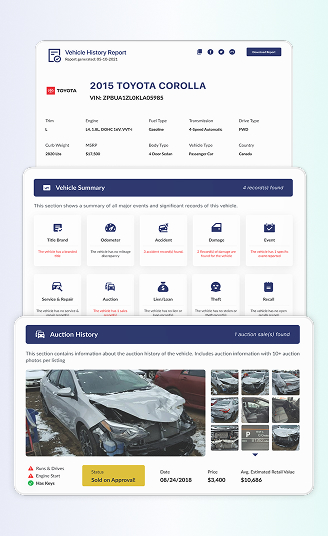
Jennifer wanted to purchase a used 2015 Toyota Corolla from a private seller in Ohio. Before she decided to purchase the car, she purchased a full vehicle history report, and this is what she found on the report.
Title History Check
A salvaged car can look flawless on the inside, but if it carries past issues from the past, it would be a big issue.
Salvage History
The car was actually marked as salvage. Additionally, it has salvage auction records and major or minor damage caused by an accident.
Other Records
On the vehicle history report, there are other red flags aside from the vehicle.
- 3x accident history
- 2 damages are recorded
- Sold at an auction once
- Has an insurance loss
Salvage vs. Other Title Types
Not all title brands carry the same level of risk. Understanding the difference between a salvage title and other common title types helps you assess a vehicle’s safety, value, and long-term reliability before making a decision.
| Title Type | Meaning | Can Be Registered? | Insurance Possible? |
|---|---|---|---|
| Salvage | Insurance total loss | No (must be inspected/rebuilt) | No |
| Rebuilt | Repaired salvage | Yes | Sometimes |
| Clean | No major issues | Yes | Yes |
| Junk | Parts only | No | No |
How to Check Salvage Title by VIN
Checking the salvage title on a vehicle is fairly easy if you know the right tool and the right steps. Follow these simple steps to get it done in seconds.

Step 1: Enter Your VIN
Input your vehicle’s 17-character VIN into the form above. This ensures you are checking the correct car, truck, or SUV before moving forward.

Step 2: View Basic Info for Free
Quickly confirm the year, make, and model at no cost. This free preview lets you verify that the VIN matches the vehicle you’re investigating before purchasing a full report.

Step 3: Unlock the Full Salvage Report
Get the complete details by purchasing the report. You’ll see any salvage history, title washing attempts, and past insurance records—information essential for making an informed buying or selling decision.
Where to Find Your VIN
The VIN is placed on several spots on the vehicle and the paperwork, like the vehicle’s bill of sale, registration cards, and more. Check the section below to see the VIN location.
Dashboard
Look through the windshield on the driver’s side. The VIN is usually etched or printed near the base of the glass for easy visibility.
Driver’s Door Jamb
Open the driver’s door and inspect the door edge or door frame. Most vehicles have a VIN sticker or plate in this area.
Vehicle Title & Registration
All official documents, including the title, registration, and insurance papers, list the VIN for verification purposes.
Why Choose PremiumVIN
The PremiumVIN is a one-step solution for everyone who wants to run a quick and complete check on a vehicle before deciding to purchase it.
Multi-State Search
We search across all U.S. states to uncover potential title washing attempts, giving you peace of mind.
Complete Brand History
See every title brand the vehicle has ever held, not just its current status, including salvage, rebuilt, or flood records.
Auction Records
Access insurance auction data with dates, sale prices, and photos of the vehicle when available.
Quick Results
Get the full vehicle history report in less than a minute. You can download or print the report as well.
Affordable
At just $19.99, you can avoid the costly mistakes that come with buying a hidden salvage vehicle.
Ready to Check Any Vehicle for Salvage History?
Don’t discover a salvage title after you buy. Know the truth before you hand over your money.
Enter the VIN on the form above and check everything thoroughly before you decide to purchase the vehicle.
Salvage Title FAQs
What is a salvage title?
A salvage title is a brand applied to a vehicle when an insurance company declares it a total loss—usually from an accident, flood, theft recovery, or fire.
How do I check if a car has a salvage title?
Enter the VIN above. Our salvage check searches national insurance and DMV databases to reveal if a vehicle has ever been declared salvage.
Can a salvage title be cleared or removed?
No. Once a vehicle has been declared salvage, that history follows it forever. Title washing is illegal, and our multi-state search catches it.
What's the difference between salvage and rebuilt title?
Salvage means the vehicle is undrivable—a total loss not yet repaired. Rebuilt means it was repaired, inspected, and is now legal to drive.
Is it safe to buy a salvage title car?
Generally, no. Even professionally repaired salvage vehicles may have hidden structural damage, compromised safety systems, and insurance difficulties.
Why do salvage title cars exist for sale?
Insurance companies sell salvage vehicles at auction to recover part of their payout. Buyers repair them and resell them, sometimes without full disclosure.
How much less is a salvage title car worth?
A salvage or rebuilt title typically reduces a vehicle’s value by 40-60% compared to an identical clean-title vehicle.
Can I insure a salvage title car?
Many major insurers will not cover salvage vehicles. Those that do often require a rebuilt title and charge significantly higher premiums.
Can I finance a salvage title car?
Almost never. Banks and credit unions will not lend on salvage or rebuilt title vehicles.
What is title washing for salvage vehicles?
Title washing is moving a salvage vehicle to a state with weaker disclosure laws, then retitling it without the salvage brand. Our multi-state search catches this.
How quickly will I receive my salvage title report?
Instantly. After payment confirmation, your complete salvage check report is immediately available.
What if my salvage check finds no issues?
That’s good news—the vehicle has no recorded salvage history. Always combine with a physical inspection.