
Warranty Check by VIN
Before buying a used vehicle, it’s important to know whether any factory warranty coverage remains. A warranty check by VIN shows available coverage, warranty status, and more details to help you make a good decision when purchasing.
What is a Warranty Check by VIN?
A warranty check by VIN is a service you can use to verify a vehicle’s warranty coverage using its 17-digit Vehicle Identification Number (VIN). A vehicle has its own VIN; manufacturers use it to identify the unit’s warranty coverage, limits, and expiration dates/miles.
Plenty of automakers link the vehicle’s warranty information to the VIN, allowing dealerships and service centers to view and track warranty status, repairs, and eligibility for covered services. The amount of warranty coverage remaining depends on several factors, including the vehicle’s current mileage and the manufacturer’s warranty policies.
What Information Can You Get from a Warranty Check by VIN
PremiumVIN’s check warranty by VIN service can help you to get the most comprehensive information about the vehicle, including complete information on warranty coverage and warranty limitations. Finding the warranty information helps buyers and sellers to understand the warranty terms and conditions and check if it’s still covered under warranty.
Factory Warranty
A factory warranty, also known as a bumper-to-bumper warranty, covers vehicle components against defects in materials or workmanship. A warranty check shows the original coverage period, the limit of mileage, and whether the vehicle has any warranty left.
Powertrain Warranty
The powertrain warranty covers major components that help the vehicle move, including the engine, transmission, and drivetrain. Run a warranty check by VIN to see if the vehicle is still covered by the powertrain warranty.
Corrosion Warranty
Many manufacturers provide corrosion or rust-perforation coverage for specific body panels and structural components. A warranty check shows the length of corrosion protection remaining on a vehicle.
Emissions Warranty
Federal and manufacturer-backed emissions warranties may cover components designed to control vehicle emissions. A warranty lookup can help identify available emissions coverage and applicable warranty periods for qualifying parts.
Roadside Assistance Coverage
Some new vehicles include roadside assistance for a limited time. Owners are able to verify eligibility for services such as towing, battery jump-starts, lockout assistance, and emergency fuel delivery.
Certified Pre-Owned Coverage
If the vehicle was sold as a certified pre-owned (CPO) vehicle, it’ll include additional warranty protection beyond the original factory coverage. A warranty check can help confirm whether any CPO warranty benefits remain active.
Extended Warranty Information
Some vehicles are protected by extended service contracts purchased separately from the original warranty. Check the warranty by VIN to see the extended coverage, expiration dates, and warranty providers.
Warranty Start and Expiration Dates
Warranty coverage is often calculated from the vehicle’s original in-service date rather than its model year. A warranty check can help identify when coverage began and when specific warranties are scheduled to expire, as seen from its mileage and the months’ limitation.
Warranty Claims and Repair History
Manufacturer warranty records show repairs that were previously completed under warranty. These records can provide useful insight into the vehicle’s maintenance and repair history.
Why Does Knowing the Warranty Information Matter?
Knowing the vehicle’s warranty status is important as it helps buyers and owners make an informed decision before purchasing a used vehicle, planning for future repairs, or evaluating ownership costs.
Used Vehicle Purchases
A warranty check can help determine if a used vehicle still has active factory or extended warranty coverage. This information allows buyers or sellers to assess the vehicle’s value and understand what repairs may be covered after the purchase.
Repair Budgeting
Vehicle repairs can be expensive, especially when major components fail unexpectedly. By verifying warranty coverage, owners can identify which repairs may be covered and estimate potential out-of-pocket expenses that could exist.
Ownership Costs
The cost of owning a vehicle is more than fuel and insurance. Active warranty coverage can reduce maintenance and repair expenses, helping owners better understand the true cost of ownership and prepare for future vehicle-related costs.
Negotiation Leverage
The cost of owning a vehicle is more than fuel and insurance. Active warranty coverage can reduce maintenance and repair expenses, helping owners better understand the true cost of ownership and prepare for future vehicle-related costs.
Reduce Uncertainty
Knowing that a manufacturer or warranty provider may still cover certain repairs can reduce uncertainty for buyers. Whether purchasing a used vehicle or continuing ownership, understanding the available coverage helps reduce uncertainty about unexpected repair costs.
How to Check Warranty by VIN
To check the warranty by VIN, you can use PremiumVIN’s warranty check by VIN service and follow these simple steps to get it done in seconds.

Step 1: Enter the VIN
Check on the driver’s side doorjamb, on the windshield, or on the vehicle’s paperwork to find the VIN.

Step 2: Fill Out the Form
Once you have the VIN, you can click on the form above and write down the VIN of any vehicle you want to check.

Step 3: Get the Vehicle History Report
Wait for the report to generate. Then, check the preview page to see vehicle specs and market value. You may proceed to payment and download the vehicle history report.
Why is Running a Warranty Check by VIN Important?
PremiumVIN’s VIN-based warranty check provides more information beyond the warranty history records. These insights can be useful when purchasing, selling, insuring, or maintaining a vehicle. Here’s what you’ll be getting in the report:
Verify Factory Warranty Information
Verify the vehicle’s original factory warranty coverage. This includes warranty start dates, coverage terms, mileage limitations, and whether any portion of the manufacturer’s warranty remains active.
Check Powertrain Coverage
Powertrain warranties often provide longer coverage than standard factory warranties. By checking the VIN, owners and buyers can examine whether the important components, such as the engine, transmission, and drivetrain, are still protected.
Check Corrosion and Emissions Warranties
Many manufacturers offer separate corrosion and emissions warranties with coverage periods that differ from bumper-to-bumper protection. Check the VIN to identify available coverage in order to make sure that the warranty is still on.
Review Manufacturer Warranty Details
Warranty terms vary by manufacturer, model, and model year. Check the important warranty information, including coverage types, exclusions, and eligibility requirements established by the vehicle manufacturer.
Confirm Vehicle Specifications by VIN
In addition to warranty information, the tool can also be used to check vehicle specifications. This includes the vehicle’s trim level, engine type, transmission, drivetrain configuration, production details, and factory-installed equipment.
Can a VIN Show Remaining Warranty?
Yes. A VIN can be used to determine if the vehicle is still covered by warranty. Manufacturers commonly use the VIN to track the attached warranty information for their vehicles, service records, and coverage eligibility. One thing you need to know is that warranty coverage is determined by many factors aside from the VIN.
Original In-Service Date
Warranty coverage begins on the original date of service, which is the date when the vehicle was serviced for the first time. The warranty period started to count from this date, which is why it’s crucial.
Mileage
Most factory and powertrain warranties are limited by mileage and time. Even if a vehicle falls within the limitation of the time period, coverage can expire once the set limit from the manufacturer is reached.
Manufacturers Records
Warranty records are often maintained by the manufacturer and the authorized dealership. The records include the warranty claims, repair history, coverage updates, and other information used to verify warranty eligibility.
Transferability Rules
Unfortunately, not all warranties are automatically transferred to the new owner when the vehicle is sold. Some manufacturers allow warranty coverage to remain active when the vehicle is sold; however, others might require a rigid transfer process.
Warranty Check vs. Vehicle History Report
A warranty check and a vehicle history report are valuable tools you need when running a quick check on a vehicle’s background. However, they serve a different purpose. A warranty check focuses on showing detailed information about the vehicle’s warranty, while the vehicle history report shows complete records of the vehicle.
| Warranty Check | Vehicle History Report |
|---|---|
| Verifies factory warranty status | Shows ownership history |
| May reveal powertrain coverage | Reveals accident and damage records |
| Can identify corrosion and emissions warranties | Includes title information and branding |
| May show roadside assistance eligibility | May contain service and maintenance records |
| Helps estimate future repair coverage | Helps evaluate the vehicle's overall history |
| Useful for warranty verification | Useful for purchase decisions and risk assessment |
What Information is Available on a Vehicle History Report
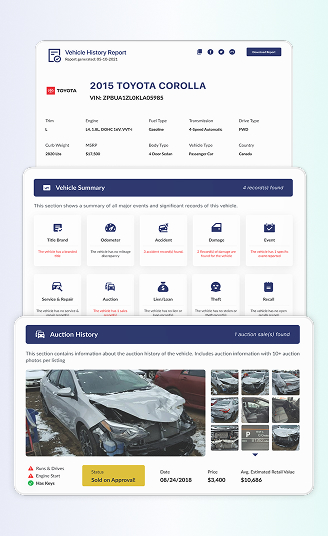
A VIN decoder only shows basic vehicle information, such as the manufacturer, model, engine, and production details. If you need a broader overview, a vehicle history report shows additional records about the vehicle’s past.
Vehicle Specifications
Access detailed vehicle specifications in a single report, including the country of manufacture, engine details, transmission, fuel capacity, original MSRP, and other factory-equipped features. This information helps verify the vehicle’s original configuration and suitability for your needs.
Title Records
Review title records to identify potential issues that may affect the vehicle’s value or usability. Records may include salvage, rebuilt, lemon, theft, or odometer-related title brands, depending on data availability.
Odometer Readings
View recorded odometer entries and their associated dates to understand the vehicle’s mileage history. Comparing historical readings can help identify potential inconsistencies or unexpected changes.
Accident and Damage History
Check for reported accidents, damage events, or other incidents that may have affected the vehicle. Available records also include accident dates, locations, and details related to collision, flood, fire, or other types of damage.
Auction History
See whether the vehicle has appeared at an auction and review available details such as sale date, location, auction status, sale price, and, when available, historical auction photos.
Ownership History
Review historical ownership records, including registration locations, ownership periods, and changes in ownership over time. Personal information, such as owner names and addresses, is not included.
Recalls Check
Search for active and past safety recalls issued by the manufacturer. Addressing open recalls can help improve vehicle safety and prevent potential mechanical or safety-related issues.
Engine Information
Verify engine specifications, including engine type, displacement, configuration, fuel type, and other available factory data.
Theft Records
Check the detailed information on the vehicle’s theft records, such as the date and location where it happened.
Sales History
Check how many times the vehicle has been put on sale. In this section, you can see the sales location and the final price of the vehicle.
Service Records
Check the detailed information on the vehicle’s service and maintenance history. You can see the location where the vehicle was serviced, what components were serviced and changed.
Check Any Vehicle Warranty by VIN
Use our warranty VIN check by VIN to get detailed information about your vehicle’s warranty before you decide to purchase a used vehicle. Be a smart buyer and ensure the vehicle is well-protected before buying.
FAQs About Warranty Check by VIN
Can I check warranty coverage by VIN?
Yes. A VIN warranty check is one of the most reliable ways to verify a vehicle’s warranty coverage. Because warranty eligibility is typically based on factors such as the original in-service date, mileage, and manufacturer records, the VIN helps identify the coverage that may still remain on the vehicle.
Can I verify a used vehicle's warranty before buying?
Yes. Checking a used vehicle’s warranty status before purchase is highly recommended. Using the VIN, buyers may be able to confirm whether the vehicle still has factory warranty coverage, Certified Pre-Owned (CPO) protection, or an active extended warranty.
How do I check the warranty of my car?
To check your vehicle’s warranty, first locate the 17-digit Vehicle Identification Number (VIN). The VIN can usually be found on the driver’s side dashboard near the windshield, inside the driver’s doorjamb, or on vehicle registration and insurance documents.
How many years does a car warranty last?
New vehicle warranties vary by manufacturer and coverage type, but many last between three and ten years. Most warranties expire when either the time limit or the mileage limit is reached, whichever occurs first.
How to check the extended warranty on car?
To verify an extended warranty, locate the vehicle’s VIN and contact the warranty provider, selling dealership, or an authorized dealership for the vehicle’s brand. They can often confirm whether an extended service contract remains active and what coverage is included.
How do I check how much warranty is left on my car?
To determine whether a vehicle still has warranty coverage, use the VIN along with the current odometer reading. Remaining coverage is typically calculated using the vehicle’s original in-service date and the manufacturer’s warranty terms, including both time and mileage limitations.