
Alfa Romeo VIN Decoder – Decode VIN & Check Vehicle Specifications
Looking at a used Alfa Romeo? Run an Alfa Romeo VIN decoder to confirm specifications, original configuration, and key records before buying or selling.
What is the Alfa Romeo VIN Number?
An Alfa Romeo VIN (Vehicle Identification Number) is a unique identification code that distinguishes your Giulia, Stelvio, Tonale, or Spider from other vehicles. Most modern Alfa Romeos have a 17-character VIN, which became standard in the early 1980s in the U.S. However, classic Alfa Romeos may have shorter VINs that use older numbering systems.
If you just want the quick answer, you can use an Alfa Romeo VIN decoder lookup tool like PremiumVIN, which lets you paste the code, get a clear Alfa Romeo VIN breakdown, and even for classic-style numbers (often 5–14 digits, where data is available).
Who Should Use the Alfa Romeo VIN Lookup Tool?
An Alfa Romeo VIN lookup tool is not only for buyers. Honestly, it fits many situations. Whether you are buying, selling, restoring, or simply curious about an Alfa Romeo you admire, a VIN check helps clear confusion.
Buying an Alfa Romeo is exciting, but it also comes with risk if you skip the background checks. A VIN lookup helps buyers slow things down and see the full picture before money changes hands. It is especially useful when the seller’s story sounds good but feels a little too smooth.
Confirm the car matches the listing
The VIN helps confirm the year, model, trim, and engine details, so the Alfa Romeo you see online matches the car in real life.
Review mileage consistency
Mileage records can show if the odometer reading makes sense over time or if there are gaps worth questioning.
Gain confidence before negotiating
When you know the car’s background, you negotiate from facts, not guesswork.
Sellers and dealers also benefit from using an Alfa Romeo VIN number decoder, especially when buyers ask detailed questions. HaVIN g clear records ready builds trust and reduces back-and-forth.
Verify a vehicle’s value
A VIN-based history helps support pricing by showing condition, history, and prior sales data.
Reduce last-minute deal issues
Early VIN checks prevent deals from falling apart during title transfer or financing.
Address buyer concerns quickly
VIN reports answer common buyer questions without long explanations.
For enthusiasts, an Alfa Romeo is more than transport. It’s about history, design, and identity. A VIN lookup helps protect that story.
Verify factory originality
VIN decoding data helps confirm whether the major components correspond to the original manufacturing specifications.
Validate rare configurations
Certain trims and options possess a higher degree of collectibility. Premium vehicle history helps verify their rarity and appeal in the market.
Protect investment value
Maintaining comprehensive vehicle records is crucial for preserVIN g the resale value of an asset over time and also safeguarding the investor’s financial interest.
Alfa Romeo VIN Structure Explained
Every Alfa Romeo VIN follows a structure that tells a story. You do not need to memorize it, but understanding the basics helps you know what the VIN decoder is reading behind the scenes. Modern Alfa Romeos use a 17-character VIN made up of three main sections.
WMI (World Manufacturer Identifier)
The WMI is the first three characters of the Alfa Romeo VIN. This section confirms the brand and country of origin. For Alfa Romeo vehicles built for global markets, the WMI almost always starts with a code that points back to Italy. This helps confirm that the vehicle is genuinely an Alfa Romeo and not a rebadged model.
For example, using the VIN ZARFAECN0J7583907, the WMI is ZAR.
WMI Character Meaning
- Z – Indicates the vehicle was manufactured in Italy
- A – Manufacturer group identifier
- R – Alfa Romeo brand designation
Together, ZAR confirms the vehicle is an Alfa Romeo produced under the Italian manufacturing group.
VDS (Vehicle Descriptor Section)
The VDS is the next six characters in the VIN. This part describes the vehicle itself. The exact meaning of each character can vary depending on the model year, which is why manual decoding is difficult for most people.
VDS Character Meaning
- Characters indicate the model family (such as Giulia or Stelvio)
- Engine configuration and fuel type
- Body style and drivetrain layout
- Safety and restraint system indicators
- Internal Alfa Romeo production codes
This section is where most of the technical identity of the Alfa Romeo is stored.
VIS (Vehicle Identifier Section)
The VIS is the final eight characters of the VIN. This section identifies when and where the vehicle was built, along with its unique serial number. Even two identical Alfa Romeos will have different VIS numbers.
VIS Character Meaning (J7583907)
- 10th character (J) – Model year (2018)
- 11th character (7) – Assembly plant code
- Last six characters – Unique production sequence number
This section confirms the production year and helps separate one Alfa Romeo from every other unit produced.
Supported Alfa Romeo Models
Below are some popular Alfa Romeo models. PremiumVIN supports VIN decoding for all Alfa Romeo models and years, including classic vehicles with shorter VIN formats.
Spider
Giulia
Giulietta
MiTo
159
156
147
166
Brera
GT
GTV
GTV6
Alfetta
Alfasud
Alfasud Sprint
75
90
145
146
155
164
2600
Montreal
33
8C Competizione
Disco Volante
SZ
GTA
Giulia TZ
33 Stradale
Why Users Trust Our Alfa Romeo VIN Decoder
When checking an Alfa Romeo VIN, accuracy and clarity matter more than flashy claims. Users trust our decoder because it focuses on real vehicle records, clear explanations, and consistent access. Whether you are doing a quick check or reviewing a full history report, the goal stays the same: show what is recorded, without confusion or pressure.
Most comprehensive database coverage
Our Alfa Romeo VIN decoder pulls data from multiple recorded sources, helping users see more than just basic vehicle details in one place.
Live Chat with VIN Expert
Users can talk with a real VIN expert when something in the report feels unclear or needs a simple explanation.
High accuracy, cross-checked results
Information is reviewed across different reporting channels to reduce mismatches and give users a clearer picture of the vehicle’s background.
Daily data updates
Vehicle records can change due to new registrations, recalls, or reported events, so frequent updates help keep reports aligned with the latest available information.
Unlimited free checks
Users can run the Alfa Romeo VIN lookups tools as often as needed without limits, which is useful when comparing listings or researching multiple vehicles.
Downloadable PDF
Full vehicle history reports can be downloaded as PDFs, making it easy to save, print, or share with inspectors or buyers.
Need More Than Specs? Get Alfa Romeo History Report?
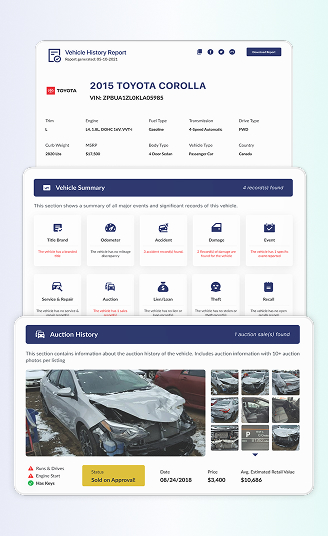
A free Alfa Romeo VIN decoder provides details like year, model line, and configurations, but a Premium History Report by VIN check reveals crucial real-world information such as title brands, accident history, mileage patterns, lien/loan flags, theft indicators, recalls, and sale records.
Vehicle Specifications
This section is the clean starting point. It helps confirm the Alfa Romeo identity in a practical way, so you’re not guessing based on badges, seller claims, or a blurry listing photo.
Year, Make, Model
You’ll see the reported year, “Alfa Romeo” as the make, and the model name captured in the records. It’s useful when paperwork is inconsistent, especially with imports or older documentation that shortens model names.
Trim
Trim details help separate similar-looking cars. For example, a trim line can change the engine, wheels, interior, or driver assists. For an Alfa Romeo buyer, trim can also change the price by a lot, which is why this part matters.
Engine & Drivetrain
When reported, this shows basic engine and drivetrain information tied to the VIN record set. It can help you spot a mismatch early.
Accident Records
Accidents happen. The real question is what happened, how it was repaired, and whether the car’s current condition matches the story.
Number of Accidents Reported
If accident entries exist, this section may show how many were reported through available data. It gives context when a seller says “just a small bump,” but the record history suggests otherwise.
Date of Reported Accidents
Dates help you connect events to ownership periods, listings, or major repairs. It also helps when a vehicle suddenly changes hands shortly after an incident.
Reported Accident Location
Location details, when available, help you understand where the incident was recorded. It’s not gossip, it’s context for verifying the timeline.
Damage History
Damage records aren’t only about crashes. A clean-looking Alfa Romeo can still have a past that affects long-term reliability and value.
Fire Damage
Fire damage is rare, but serious. If it’s reported, it’s a major flag because heat can affect wiring, seals, interior materials, and long-term safety.
Flood Damage
Flood events can follow a car for years. Even if it “dries out,” moisture can cause corrosion, electrical faults, and interior mold issues. If a flood is reported, treat it as a big deal.
Dent and Scratch Damage
Smaller damage entries can still matter for collectors and resale value. Repaints and bodywork are not automatically bad, but they should match the asking price and the seller’s story.
Mileage History
Mileage strongly affects value, but consistency matters more than the number itself. A low-mileage Alfa Romeo with long reporting gaps or post-accident stagnation can carry a higher risk than a well-documented higher-mileage car. This section focuses on patterns and inconsistencies.
Mileage History from Multiple Sources
PremiumVIN can show mileage readings when they appear across different record sources over time. The goal is simple: a timeline that makes sense, not a single number that can be manipulated.
Rollback Detection and Alerts
If the mileage pattern drops in a way that doesn’t match normal usage, that’s a red flag. It doesn’t automatically prove wrongdoing, but it does give you a reason to ask tougher questions.
Annual Usage Patterns
When enough mileage points exist, you may see a rough sense of yearly driVIN g patterns. For collectors, low and consistent usage can matter. For daily drivers, consistent mileage often matches routine maintenance rhythms.
Last Known Mileage Entry
This will show the most recent recorded mileage event in the data set. It helps when a listing claims “current miles” but doesn’t show proof beyond a dashboard photo.
Lien/Loan Check
This section is about avoiding paperwork disasters. Because honestly, nothing kills the mood like buying an Alfa Romeo and finding out there’s an unresolved claim tied to it.
Lien Record Identification
When lien/loan records are reported, this section helps you see whether there may be an outstanding financial interest connected to the vehicle. It’s especially important for private-party purchases.
Dates and Locations
If details exist, you will see dates and locations tied to lien or loan record events. This can help you verify that the seller’s timeline lines up with what’s recorded.
Recalls Check
Recalls are part of modern car ownership. They’re not shameful. But open recalls do matter, because they can relate to safety and drivability.
Open Recall Information
When open recalls are reported, you can see what’s still outstanding. This helps you plan the next step: contact an authorized dealer and ask about remedy status.
Completed Recall Events
If a recall has been addressed, completion entries can show up. This can be reassuring for buyers who don’t want unresolved safety issues hanging over a purchase.
Manufacturer and Safety Agency Notices
Recall data often ties back to manufacturer reporting and safety channels, including agencies that track these campaigns. VIN-based recall matching is a common method used in these systems.
Theft Records
This section is blunt, but necessary. Buying a stolen car can cause serious legal and financial trouble, even if you personally did nothing wrong.
Stolen Status Check
When theft status is reported in available records, this section helps you see whether the vehicle has a theft flag tied to it.
Warranty Status
Warranty talk can feel boring until you’re staring at a repair bill. Then it becomes very interesting, very fast.
Basic Warranty Term
This section will show recorded basic warranty-related timing information when it’s reported. It’s helpful if you’re buying newer Alfa Romeo models and want to understand what coverage might still apply.
Coverage Notes
If coverage notes appear, they can help clarify whether warranty status is likely active, expired, or uncertain. It’s not a promise, but it helps you plan your next steps.
Service & Maintenance Records
Service data is where a car’s habits show up. For collectors, it supports authenticity and care. For daily drivers, it supports reliability.
Scheduled Maintenance
When service events are reported, this section shows logged maintenance milestones. Not all service visits are captured, but consistent records often reflect more attentive ownership. It helps you see whether the vehicle followed normal care patterns or skipped important intervals.
Part Replacements
This can include reported replacements that show up in available records. It’s useful for spotting repeated fixes, like recurring battery issues, brake work, or cooling system attention.
Major or Minor Repairs
Repair entries help you separate routine upkeep from bigger events. If you see major repair notes, it’s a reason to review supporting documents and inspection results.
Auction History
Auction history can matter more than people think. A car may pass through auctions for normal reasons, or because it had problems that a retail buyer would question.
Auction Date and Location
If the Alfa Romeo cars have crossed an auction and online listing, you will see when and where the vehicle appeared in auction channels.
Sale Price
Some records will include available sale price signals. This can help you compare today’s asking price with prior market movement, especially for collector-minded buyers.
Condition Notes, such as Primary and Secondary Damage
When condition notes exist, they can provide context for repairs and repaint work. It helps you avoid paying “clean car” money for a car that had a rough period.
Number of Photos Taken at Auction
Some auction records include up to 10 photo counts or access to photo sets, depending on availability. For collectors, those images can help confirm what changed over time.
Why Decoding an Alfa Romeo VIN Number Is Crucial
VIN decoding is not just for curiosity. It directly affects buying decisions, pricing, and long-term ownership. A clean-looking Alfa Romeo can still carry a complicated history, and the VIN is often the only way to see that clearly before committing.
Sample Report: ZARFAEBN3J7582817
Initial Impression
- Brian was looking for a used Alfa Romeo. The car looked sharp, had low mileage, and was advertised as well-maintained. The seller mentioned it was mainly used on weekends and had no serious issues.
- At first glance, it felt like a safe buy.
Critical Findings
- A previously reported accident appeared in the vehicle’s history
- The incident date did not match the seller’s claim of “no past issues.”
- There is a junk record listed
- The vehicle had appeared in one auction listing
- The report shows 2 open recalls
Outcome
- With the VIN report in hand, Brian confronted the seller, who admitted the car had been in a “minor” accident. Brian requested a professional inspection and negotiated the price accordingly, ultimately paying less or avoiding a bad deal.
Lessons Learned
- Brian’s experience highlights the importance of decoding an Alfa Romeo VIN. A simple VIN check provided clarity, reduced risk, and prevented him from relying solely on the seller's claims. For second-time buyers, the VIN report acts as a valuable second opinion
Free Alfa Romeo VIN Decoder vs Paid Vehicle History
If you only need basic details, free tools work. For serious decisions, history matters. See the details below:
| What You Can Check | Free Alfa Romeo VIN Decoder (Quick Check) | Premium Alfa Romeo Vehicle History Report (Full Report) |
|---|---|---|
| Alfa Romeo year, model, and make | ✓ Confirms basic identity | ✓ Fully confirmed with production details |
| Basic Alfa Romeo specs (engine, body, trim) | ✓ General specifications | ✓ Complete factory specifications |
| Title status (e.g., salvage, rebuilt, lemon) | Basic status hint only | ✓ Full title brand history |
| Accident history check | Not available | ✓ Detailed accident records when reported |
| Mileage and odometer records | Not available | ✓ Multiple recorded mileage entries |
| Odometer rollback/mileage inconsistency checks | Not available | ✓ Rollback flags and inconsistency alerts |
| Auction history and photos | Not available | ✓ Auction listings and images when available |
| Online listings and advertised sales | ✓ Current listing snapshot (when available) | ✓ Listings and advertised sales records |
| Timeline of previous listings and sales | Not available | ✓ Timeline of past listings and sale activity |
| Sales listings records & photos | Not available | ✓ Listing records and photos (when available) |
| Alfa Romeo market value estimate | Not available | ✓ Value estimates and pricing ranges |
| Number of previous owners | Not available | ✓ Owner count (when available) |
| Past vehicle use (private, rental, fleet, commercial) | Not available | ✓ Use-type indicators when reported |
| Outstanding loans or lien records | Not available | ✓ Lien/loan flags when reported |
| Stolen vehicle check | Limited check | ✓ Detailed theft records if reported |
| Flood, fire, or hail damage indicators | Not available | ✓ Damage-event indicators when reported |
| Reported service or repair history | Not available | ✓ Service/repair records (when available) |
| Recall and warranty information | Limited overview | ✓ Recall history and basic warranty status |
| Downloadable PDF report | X Not included | ✓ Yes, easy-to-save PDF |
| Best suited for | Quick Alfa Romeo VIN lookup and early screening | Buyers, sellers, collectors, and serious checks |
How to Get an Alfa Romeo Vehicle History Report by VIN Number Lookup
Getting a report does not take long, and you do not need technical knowledge.

Step 1: Enter Your VIN
Type the Alfa Romeo VIN carefully into the form above. After that submit the VIN

Step 2: Review the Preview
In a moment, you will see the free preview. Check the basic details to confirm you entered the correct VIN.

Step 3: Get the Report
Proceed to payment to access the full vehicle history report when ready.
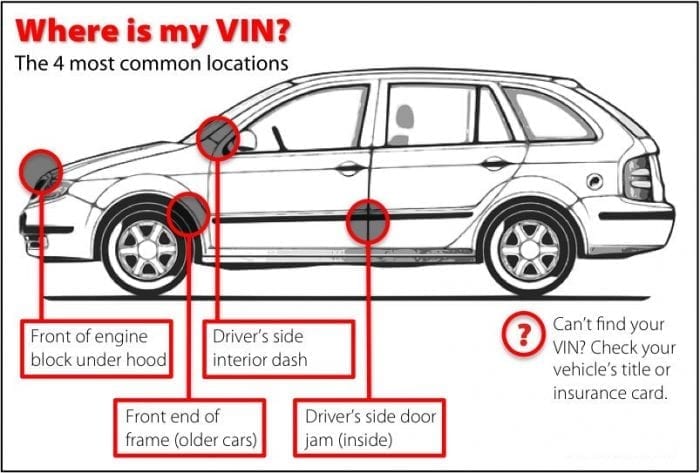
Where to Find an Alfa Romeo Vehicle Identification Number?
Your Alfa Romeo VIN is usually easy to locate if you know where to look.
Dashboard
Look through the lower corner of the windshield on the driver’s side. The VIN is usually stamped on a small metal plate that can be read from outside the car.
Driver’s Door Area
Open the driver’s door and check the doorjamb or the area where the door latches to the frame. Many Alfa Romeo models place a VIN sticker or plate here.
Vehicle Documents
The VIN is always listed on official paperwork, including vehicle title documents, registration documents, and insurance papers. These should match the VIN on the vehicle itself.
Owner’s Manual
On some Alfa Romeo vehicles, the VIN is printed near the front pages of the owner’s manual. This is useful when the car is not physically nearby.
Front Footwell
On certain MiTo and Giulietta models, the VIN is embossed under an access plate in the front footwell.
Boot (Trunk Area)
Some models have a chassis plate under the carpet on the left-hand side of the boot.
Engine Bay or Chassis
The VIN may be stamped under the hood, on the firewall, or directly onto the chassis itself. This is more common on older vehicles and restorations.
Explore Other Alfa Romeo VIN Search Tools
If you want more than a standard VIN lookup, PremiumVIN offers additional tools designed for deeper checks.
A window sticker details the original factory configuration of an Alfa Romeo, including engine specifics, standard features, optional equipment, and pricing. It’s useful for confirming originality, comparing trims, and identifying later-added features.
Recall checks help owners and buyers see if there are open safety recalls linked to the VIN. This matters for safety and peace of mind, especially before long trips or resale.
An Alfa Romeo license plate lookup can help you find vehicle information when the VIN is not immediately available. It is useful for quick checks on parked or advertised vehicles.
Title checks focus on legal status. They help identify salvage, rebuilt, or lemon brands that may affect ownership, resale, or insurance approval.
Facts About Alfa Romeo
Alfa Romeo has always stood apart from mass-market brands. It blends the Italian design, racing heritage, and a strong connection to its roots. The brand built its reputation through motorsport success, driver-focused cars, and distinctive styling shaped by classic Italian design houses.
Even its logo reflects history, combining Milan’s red cross with the Visconti serpent, a symbol tied to the brand’s origins.
The Brief History of Alfa Romeo
- 1910: Founded in Milan as A.L.F.A. (Anonima Lombarda Fabbrica Automobili) by Ugo Stella; the first model was the 24 HP, focused on performance from the start.
- 1915–1920: Engineer Nicola Romeo takes control; the company becomes Alfa Romeo.
- 1920s–1930s: Builds a strong motorsport reputation with wins at Targa Florio and Mille Miglia; Enzo Ferrari runs Alfa’s racing team before founding Ferrari.
- 1923: Driver Ugo Sivocci introduces the Quadrifoglio (four-leaf clover) symbol, still used on Alfa’s performance models today.
- 1933: Italian state takes ownership due to financial trouble; production continues, including wartime industrial work.
- Post-WWII: Shifts to broader production with models like the 1900 and the highly successful Giulietta (1954).
- 1986: Sold by the Italian state to the Fiat Group.
- 2014–Present: Operates under Fiat Chrysler Automobiles, now part of Stellantis.
Decode Your Alfa Romeo VIN Now
Run your Alfa Romeo VIN decoder now and keep the paperwork tidy. It’s helpful for restorations, imports, and classic Alfa documentation too.
Frequently Asked Alfa Romeo VIN Questions
What is the VIN number on an Alfa Romeo?
The VIN number on an Alfa Romeo is the vehicle’s ID code. Most modern Alfa Romeos use a 17-character VIN that stays with the car for life, while some older VIN tage models may have shorter chassis or classic VIN formats.
Can I look up my car specs by VIN?
Yes, you can look up your car specs by VIN. The online Alfa Romeo VIN lookup tool, like PremiumVIN, can give you access to see the basics factory specs like year, make, model, engine, trim, and other common specs at no cost.
Is Alfa Romeo basically a BMW?
No. Alfa Romeo is an Italian brand under Stellantis, while BMW is a separate German manufacturer with different platforms, engines, and design philosophy.
Is there a free VIN lookup?
Yes. PremiumVIN offers a free Alfa Romeo VIN decoder tool so you can check the car’s identity first. If you need deeper items like accidents, title branding, recalls, or auctions, that’s what the paid report is for.
Is Alfa Romeo made by Ferrari?
No. Use PremiumVIN to decode the VIN so you’re not relying on myths. Alfa Romeo and Ferrari are separate brands; Alfa Romeo is part of Stellantis today, while Ferrari is its own company.
Where to find VIN number on Alfa Romeo?
To find the VIN number on an Alfa Romeo, check the lower windshield on the driver’s side, the driver door jamb area, and your paperwork, like title, registration, or insurance papers. Some models also list it in the owner’s manual. For older/classic Alfa Romeo models, you may also see stamps/plates in the footwell, boot area, or engine bay/chassis locations.