
Free Hino VIN Number Check and Decoder Tool
Use our Hino VIN decoder to instantly check important vehicle details such as model, engine type, chassis configuration, body style, and manufacturer information. Enter your Hino VIN number to decode the vehicle’s factory specifications and verify key truck details before buying, registering, or ordering parts.
What is the Hino VIN Decoder?
A Hino VIN decoder is a tool that reads the 17-digit Vehicle Identification Number (VIN) to identify the truck’s original factory specifications. Every Hino VIN contains encoded information about the vehicle’s manufacturer, model, engine type, chassis, and production details.
Using a Hino VIN lookup helps owners and buyers confirm the truck’s original configuration and verify important specifications before purchasing, maintaining, or registering the vehicle.
What Information Can You Get From a Hino VIN Decoder?
Our free Hino VIN decoder helps identify key factory details for your Hino truck. A Hino VIN lookup may reveal:
Model and Series
Identify the Hino model and vehicle series, such as Hino 195, 238, 258, 268, 338, or 358. Each series has different weight capacities, engine options, and intended applications. Knowing the exact series helps you determine whether the truck suits your operational needs.
Engine Specifications
Verify engine type, displacement, horsepower, torque, and fuel type (diesel or alternative fuel). Hino trucks typically use Hino-branded diesel engines known for reliability and fuel efficiency. The engine code confirms whether the truck has the standard or upgraded powerplant.
Chassis Configuration
Confirm chassis and cab setup, including cab style (regular cab, crew cab), wheelbase length, axle configuration (single, tandem, or pusher), and suspension type. Chassis configuration directly affects the truck’s maneuverability, load capacity, and suitability for different body types.
Body Type
Check body classification and truck type whether the vehicle was built as a box truck, dump truck, refrigerated truck, stake bed, tractor, or chassis cab for upfitting. The body type determines the truck’s primary function and resale market.
Gross Vehicle Weight Rating (GVWR)
Verify the gross vehicle weight rating, which indicates the maximum allowable weight of the truck including the vehicle itself, cargo, driver, and fuel. GVWR classes typically range from Class 4 (14,001-16,000 lbs) to Class 8 (33,001+ lbs). This is critical for legal compliance, licensing, and insurance purposes.
Manufacturer Details
Confirm production and manufacturer information, including assembly plant location and build year. Hino trucks are manufactured in Japan and also assembled in the United States for North American markets.
How to Decode a Hino VIN Number
Decoding your Hino VIN is simple and takes less than a minute.

Step 1: Find Your VIN
Find the 17-digit VIN number on the vehicle dashboard, driver-side door jamb, or registration documents.

Step 2: Enter the VIN
Type or paste the full Hino VIN into the decoder tool above.

Step 3: Access Factory Specifications
Instantly view the vehicle's factory specifications, including engine, trim, transmission, and model year.
Hino VIN Number Structure Explained
A modern Hino VIN number normally has 17 characters. Like other standardized VINs, it is split into three main sections: WMI, VDS, and VIS. The U.S. VIN system is managed under NHTSA rules. That is why a Hino VIN decoder can turn a confusing code into something useful.
WMI (World Manufacturer Identifier)
The WMI stands for World Manufacturer Identifier. It is the first three characters of the VIN. This part tells you the manufacturer identity and, in many cases, the general country or region tied to the vehicle.
For Hino, official manufacturer-submitted VIN structure files in the NHTSA vPIC system show examples such as 5PV for certain U.S. or Canadian Hino vehicles and JHH for certain Hino forward-control models.
WMI Character Meaning
Example: 5PV
- 1st character: 5 — identifies the geographic region as the United States in VIN coding.
- 2nd character: P — part of the manufacturer identifier assigned within that region.
- 3rd character: V — completes the WMI for the specific Hino manufacturer submission.
Example: JHH
- 1st character: J — identifies Japan in VIN coding.
- 2nd character: H — manufacturer code used within that region.
- 3rd character: H — completes the Hino WMI in that submitted structure.
VDS (Vehicle Descriptor Section)
The VDS means Vehicle Descriptor Section. It usually covers characters 4 through 9. This part describes the vehicle itself, and it may include model family, cab type, engine family, body configuration, brake system, or other manufacturer-defined details. On Hino trucks, the exact meaning can change by model year and market, which is why a manual guess is risky.
VDS Character Meaning
- 4th to 8th characters — usually describe model, cab type, incomplete vehicle type, wheelbase, brake system, engine, or similar build attributes, depending on the submitted Hino structure.
- 9th character — check digit used to validate the VIN structure mathematically and reduce typing errors.
VIS (Vehicle Identifier Section)
The VIS means Vehicle Identifier Section. It usually covers characters 10 through 17. This is the part that helps identify the exact vehicle. It commonly includes the model year code, the assembly plant code, and the production sequence number. If two Hino trucks look nearly the same, the VIS is one of the things that separates them clearly.
VIS Character Meaning
- 10th character — indicates the model year.
- 11th character — identifies the assembly plant or production location code used by the manufacturer.
- 12th to 17th characters — unique serial or production sequence for that truck.
Where to Find Hino Vehicle Identification Number?
The VIN can appear in more than one place. Exact placement can vary by market and series, so it is smart to compare more than one location.
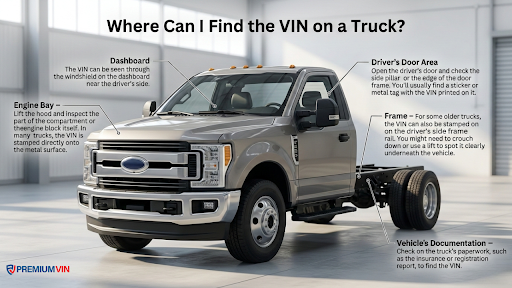
Dashboard
Look through the windshield near the dashboard area for a VIN plate or label if your Hino model uses one.
Driver-side door jamb
Many trucks place an identification label on or near the driver-side door frame.
Chassis or frame area
Some Hino trucks also carry a stamped or attached identifier on the frame or chassis section.
Registration papers
The VIN is commonly printed on registration documents, which helps when you are checking a truck remotely.
Insurance documents
Insurance paperwork often includes the VIN or chassis number as part of the vehicle identity.
Title documents
If a title document is available in your market, compare that number with the physical vehicle.
Service records
Workshop or maintenance paperwork may also list the VIN and help you cross-check consistency.
Who Should Use the Hino VIN Lookup Tool?
A Hino VIN lookup is useful for more than one type of person. It helps buyers check risk before paying, helps sellers present a truck more clearly, and helps collectors or long-time Hino fans confirm identity, specifications, and history.
Since Hino is part of the Toyota Group and is known mainly for trucks and buses, accurate VIN decoding matters even more when the vehicle is used for work, export, or restoration.
If you are planning to buy a used Hino truck, the VIN is one of the first things you should check. A clean-looking truck can still have title issues, mileage problems, damage history, or recall records that are not obvious in photos or short conversations.
Confirm the Hino matches the listing
A VIN lookup helps verify the year, make, model, and other key details, so you can compare the truck itself with the seller’s description more confidently.
Spot title brands early
A branded title, such as salvage or rebuilt, can affect value, insurance, and resale. It is better to know that before negotiation starts.
Understand the commercial use context
Many Hino vehicles are work trucks. A VIN report can help you understand whether the vehicle likely had heavy fleet use.
For sellers and dealers, a Hino VIN number decoder is not just a research tool. It helps you describe the vehicle correctly, support the asking price, and reduce avoidable problems during the sale.
Create more accurate listings
A VIN lookup helps confirm the truck’s details, so you are less likely to list the wrong year, trim, engine, or body type.
Support cleaner paperwork
Lien, title, and vehicle identity details matter during transfer. Early VIN checking can prevent last-minute confusion.
Help export transactions
For exported or cross-border Hino trucks, VIN-based identity checks help create a more reliable paper trail.
Collectors, restorers, and long-time Hino fans usually care about details more than the average buyer. PremiumVIN can also decode many classic Hino identifiers, including older 5 to 14-digit formats, which matters because the 17-character VIN standard became widely required from the 1981 model year onward.
Support restoration planning
A VIN check gives you a better baseline before you start ordering parts, repainting, or rebuilding.
Research rare or older market versions
Imported or unusual Hino units can be harder to identify without a structured VIN check.
Prepare for shows or enthusiast events
A clear VIN-based identity summary is helpful when you want to present the truck properly.
Supported Hino Models
Below are some popular Hino models people search for most often. PremiumVIN can decode far more than this list, including older and classic Hino identifiers.
145
155
165
185
195
198
238
258
268
300
308
338
358
500
700
Conventional Type Truck
Dutro
FA14
FA1415
FA15
FA1517
FB14
FB15
FB1715
FB1817
FC
FD
FD16
FD17
FD20
FD2218
FD2220
FD2320
FE
FE16
FE17
FE19
FE20
FE2618
FE2620
FF17
FF19
FF20
FF23
FF3018
FF3020
FFC1
FG
FG19
FG22
FM
FS
FY
GC17
GC20
GD
GH
Ranger
SF17
SG19
SG20
SG22
SG23
SG231
SG3320
SG3323
SG3325
SG5523
XFC710
XFC720
XFC740
XJC700
XJC710
XJC720
XJC730
XJC740
Why Users Trust Our Hino VIN Decoder
People use PremiumVIN because they want a Hino VIN decoder that is easy to read, broad in coverage, and useful in real buying situations.
Live Chat with VIN Expert
Some users want a simple human explanation, especially when title brands, mileage gaps, or older VIN formats appear.
Downloadable PDF
A downloadable PDF makes it easier to save, print, or share a Hino vehicle history report for inspection or recordkeeping.
High accuracy, cross-checked results
We cross-check key identity points to reduce mismatches and make the Hino VIN number decoder more dependable for real decisions.
Most comprehensive database coverage
Our Hino VIN decoder is designed to connect VIN identity with broader vehicle-history categories, helping users review more than just surface-level specs.
Daily data updates
Vehicle records change over time. Frequent updates help keep Hino VIN lookup results closer to current reportable information.
No hidden fees or subscriptions
The pricing approach is straightforward. Users can run basic checks without feeling trapped in unclear recurring charges.
Need More Than Specs? Get a Hino Full Vehicle History Report
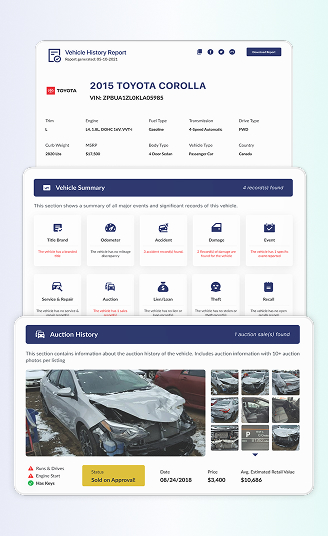
When you run a Hino VIN lookup, the PremiumVIN report will reveal detailed data collected from reliable vehicle records. This includes specifications, ownership information, title records, accidents, and service data connected to that particular Hino VIN number.
Our VIN Check also helps collectors, truck buyers, and dealers confirm Hino specs and history records. If you are checking a used truck or verifying authenticity, the report will clearly show the recorded history so you can understand the vehicle’s past before making a decision.
Vehicle Specifications
A Hino VIN number decoder will first reveal the basic technical details of the vehicle. These specifications help confirm if the truck’s description actually matches what the seller claims. It also helps collectors check Hino model codes and production details connected to that VIN.
Year, Make, Model
The report will confirm the manufacturing year, the Hino brand, and the exact model series associated with the VIN number. This prevents confusion when similar truck models exist in different production years.
Trim
The trim level of the Hino vehicle will appear in the report. Trim information helps identify different equipment levels, cabin configurations, and optional features installed during production.
Engine Specifications
The report will show engine configuration data such as displacement, engine family, and fuel type. This is useful when performing a Hino engine number check or verifying the truck’s actual engine specification.
Title Brand Check
Title brands are important legal indicators attached to a vehicle’s registration history. A Hino VIN check will show if the truck has been marked with special title brands that indicate past damage or legal issues.
Salvage
A salvage title means the vehicle was declared a total loss by an insurance company. This can significantly affect the resale value and safety considerations of a Hino truck.
Rebuilt
If a vehicle previously had a salvage title but was repaired and inspected, it may receive a rebuilt title. The report will clearly show this status for the decoded Hino VIN number.
Lemon
A lemon title indicates the vehicle had repeated defects that could not be fixed properly during its early life cycle.
Accident History
Accident records can reveal serious damage that may affect performance and safety. A decode Hino VIN search will show these historical reports.
Number of Accidents Reported
The report will summarize the total number of recorded accidents associated with the Hino vehicle.
Date of Reported Accidents
Each recorded accident event will include the approximate date when the incident occurred.
Reported Accident Location
The report may include the region or city where the accident took place.
Severity Indicators
Some accident reports also include details about the severity of the damage recorded at the time.
Damage Check
Not all vehicle damage appears in accident reports. Inspection records and auction listings often reveal issues that were never formally documented. The Premium Hino VIN reports help detect various damage events tied to the vehicle.
Fire Damage
This section shows if the vehicle was affected by fire incidents reported through insurance or inspection records.
Flood Damage
Flood exposure can lead to electrical issues and corrosion. This section helps detect vehicles that have experienced water damage.
Dent and Scratch Damage
Inspection and auction reports sometimes record visible body damage such as dents or scratches.
Hail Damage
Hailstorms can leave widespread body panel damage. The VIN report will indicate these incidents when they appear in records.
Structural Damage
Serious structural damage affecting the vehicle frame will appear in this section if reported by official sources.
Recalls Check
Manufacturers issue recalls when safety problems are discovered in certain vehicle models. A Hino VIN lookup will reveal whether the truck has recall records.
Open Recall Information
This shows any recall notices that remain unresolved for the vehicle.
Completed Recall Events
The report may show recalls that were already repaired or resolved by authorized service centers.
Manufacturer and Safety Agency Notices
Safety alerts issued by manufacturers or government safety agencies may appear here.
Component Recall Details
This section may list which parts or systems were affected during the recall campaign.
Stolen Check
Vehicle theft is a real concern in the used truck market. A Hino VIN check helps confirm whether the vehicle was reported stolen.
Stolen Status Check
The report will show whether the vehicle is currently listed in stolen vehicle databases.
Recorded Theft Incidents
If the truck was previously reported stolen but later recovered, that information will appear in the history.
Recovery Information
When available, the report may include recovery dates or law enforcement updates connected to the VIN record.
Warranty Status
Warranty information helps buyers understand whether any manufacturer coverage remains active.
Basic Warranty Term
The report will display the typical warranty coverage period associated with that Hino model.
Remaining Warranty Coverage
If the vehicle is still within its coverage period, the report may show the estimated remaining protection.
Manufacturer Warranty Notes
Some vehicles may also show extended warranty programs or service coverage information.
Service & Maintenance Records
Maintenance records help confirm whether the truck was properly cared for throughout its lifetime.
Scheduled Maintenance
This section shows routine maintenance entries such as oil changes, inspections, and recommended service intervals.
Part Replacements
The report will show replacement records for components like brakes, filters, or other service parts.
Major or Minor Repairs
Repair entries may indicate whether the vehicle required major mechanical repairs or smaller service work.
Notes from Inspections
Inspection reports sometimes include technician notes describing the vehicle’s mechanical condition.
Maintenance Frequency
Regular maintenance intervals can help indicate responsible ownership and overall vehicle care.
Auction History
Many used trucks appear in auction marketplaces before being sold to dealers or buyers.
Auction Date and Location
The report will list when and where the vehicle was sold at auction.
Sale Price
Auction sale values can help estimate the market value of the vehicle during past transactions.
Condition Notes
Auction listings often include remarks about visible damage or mechanical condition.
Vehicle Run Status
Some auction records indicate whether the truck started or ran during inspection.
Auction Photos
In some cases, archived auction images are linked to the VIN history report.
Sales History
Past sales listings can show how frequently the vehicle has been sold or advertised.
Number of Times Listed
The report may show how many times the vehicle appeared in sales listings.
Condition at Each Listing
Listing descriptions often mention the vehicle’s condition at the time it was offered for sale.
Photos from Past Listings
Archived listing photos may appear in the report, helping buyers visually review the vehicle’s past condition.
How Jeremy Used a Hino VIN Lookup Before Buying
A Hino VIN lookup helps transform a simple truck listing into verifiable information. For commercial vehicles, this step is important because the VIN confirms the truck’s true specifications, ownership history, and recorded incidents. It also ensures the vehicle follows the correct Hino VIN structure for its model year and production market.
Sample Report: 5PVNV8JV2G4S55204
Initial Impression
Jeremy found a used 2016 Hino 338 truck advertised as clean and work-ready. Before contacting the seller, he used the PremiumVIN decoder to verify the truck’s identity and review the available vehicle records.
On the surface, it looked like a workable commercial truck.
Critical Findings
- The VIN confirmed the truck as a 2016 Hino 338 diesel truck with a conventional cab body type.
- The vehicle had three ownership records, with registrations previously reported in Colorado and Minnesota.
- The title check showed no salvage, rebuilt, flood, or other branded titles, indicating a clean title history.
- The report recorded one accident event reported in Denver, Colorado, in July 2021, with minor damage noted.
- The truck had four lien or loan records, meaning financing institutions previously held ownership rights during different periods.
- No open recall or theft records were identified in the available database.
Outcome
After reviewing the VIN report, Jeremy confirmed that the truck’s basic identity matched the seller’s listing. However, the accident record and lien history indicated that a more detailed inspection and financial clearance would be necessary before finalizing the purchase.
Lessons Learned
A free Hino VIN decoder provides an essential first verification step. It confirms the vehicle’s identity and highlights potential concerns early.
For buyers like Jeremy, the full vehicle history report provides deeper insight into ownership, accidents, and financial records before committing to a purchase decision.
Free Hino VIN Decoder vs Paid Vehicle History Report
A free Hino VIN decoder is good for fast screening. A paid report is for when the truck starts to feel serious, and you want more than surface-level answers.
| What You Can Check | Free Hino VIN Decoder (Quick Check) | Premium Hino Vehicle History Report (Full Report) |
|---|---|---|
| Hino year, model, and make | ✓ Confirms basic identity | ✓ Fully confirmed with production details |
| Basic Hino specs (engine, body, trim) | ✓ General specifications | ✓ Complete factory specifications |
| Title status (e.g., salvage, rebuilt, lemon) | Basic status hint only | ✓ Full title brand history |
| Accident history check | Not available | ✓ Detailed accident records when reported |
| Mileage and odometer records | Not available | ✓ Multiple recorded mileage entries |
| Odometer rollback/mileage inconsistency checks | Not available | ✓ Rollback flags and inconsistency alerts |
| Auction history and photos | Not available | ✓ Auction listings and images when available |
| Online listings and advertised sales | ✓ Current listing snapshot (when available) | ✓ Listings and advertised sales records |
| Timeline of previous listings and sales | Not available | ✓ Timeline of past listings and sale activity |
| Sales listings records & photos | Not available | ✓ Listing records and photos (when available) |
| Hino market value estimate | Not available | ✓ Value estimates and pricing ranges |
| Number of previous owners | Not available | ✓ Owner count (when available) |
| Past vehicle use (private, rental, fleet, commercial) | Not available | ✓ Use-type indicators when reported |
| Outstanding loans or lien records | Not available | ✓ Lien/loan flags when reported |
| Stolen vehicle check | Limited check | ✓ Detailed theft records if reported |
| Flood, fire, or hail damage indicators | Not available | ✓ Damage-event indicators when reported |
| Reported service or repair history | Not available | ✓ Service/repair records (when available) |
| Recall and warranty information | Limited overview | ✓ Recall history and basic warranty status |
| Downloadable PDF report | X Not included | ✓ Yes, easy-to-save PDF |
| Best suited for | Quick Hino VIN lookup and early screening | Buyers, sellers, collectors, and serious checks |
How to Get a Hino Vehicle History Report by VIN Number Lookup
Checking a Hino truck by VIN is simple. You do not need technical skills, and you do not need to decode every character manually. The process is meant to be straightforward.
Step 1: Enter Your VIN
Type or paste the Hino VIN carefully into the search box. One wrong character can change the result.
Step 2: Review the Preview
Check the free preview first to confirm the truck’s basic identity and decide whether you need deeper history.
Step 3: Get the Report
If the truck is a serious option, open the full report to review title, mileage, ownership, accident, auction, and more.
Explore Other Hino VIN Search Tools
See other Hino tools below. They work well when a normal Hino VIN lookup is only the start, not the full picture.
A Hino window sticker helps you understand how the truck was originally configured when new. It can show factory equipment, trim-related details, body information, and other build data that buyers often want to confirm before paying.
A Hino recall check helps you see whether the truck has open recall campaigns or completed recall-related work tied to the VIN. Since recalls can affect safety, compliance, and downtime, this tool is helpful for both current owners and used-truck buyers.
A Hino license plate lookup is useful when you do not have the VIN yet, but still want to begin research. It can help with early screening, listing reviews, or situations where the seller shares only a plate number first.
A Hino title check focuses on legal and branding issues, such as salvage, rebuilt, or other title warnings when reported. This matters because title history can affect resale value, insurance, financing, and buyer confidence.
Understanding Hino and Its Commercial Truck Legacy
Hino has a long history in commercial vehicles, and that matters because people often search Hino VINs for trucks that were used hard, exported, or kept for many years. The brand is not discontinued. It remains active and officially presents itself as part of the Toyota Group in the global market for heavy-duty trucks and buses.
The Brief History of Hino
Hino Motors says it was established in 1942, while its earlier corporate roots go back further. The company officially states that under the Hino brand, it represents the Toyota Group in the global market for heavy-duty trucks and buses.
- Parent company context: Hino is part of the Toyota Group, which helps explain why some buyers connect Hino with Toyota in the commercial vehicle world.
- Core identity: Hino is known mainly for trucks and buses rather than passenger cars.
- Global presence: Hino operates internationally through regional networks and dealer support.
- Commercial focus: Many Hino VIN searches relate to fleet, logistics, and medium-duty or heavy-duty vehicle use.
Decode Your Hino VIN Now
Use our Hino VIN decoder to instantly verify the truck’s model, engine, chassis details, and factory specifications. If you need deeper records, unlock a full vehicle history report to check accident history, title records, mileage, and ownership information before buying.
Frequently Asked Hino VIN Questions
Where is the VIN located on a Hino truck (300 Series, 500 Series)?
On many Hino trucks, the VIN is commonly found near the dashboard area, on a driver-side door label, on a chassis or frame identifier, and on paperwork such as registration or insurance documents. Exact placement can vary by market and series, so cross-checking more than one location is the smart move.
How do I decode a Hino truck VIN to find the model and engine type?
To decode a Hino truck VIN to find the model and engine type, use the PremiumVIN Hino VIN decoder and enter the full VIN carefully. A VIN decoder reads the WMI, VDS, and VIS sections and returns the truck’s model year, manufacturer identity, and available spec details.
For Hino, some engine and configuration meanings are manufacturer-defined, so using a decoder is safer than guessing character by character.
How do I decode a Hino truck VIN to find the model and engine type?
To decode an International truck VIN for engine type, start with PremiumVIN and enter the full VIN. The decoder reads the manufacturer-reported structure and returns supported engine-related details, which is far easier than trying to interpret the middle characters by hand.
How do I check for recalls or service campaigns on my Hino truck using the VIN?
To check for recalls or service campaigns on my Hino truck using the VIN, you can start with the PremiumVIN lookup, then confirm recall status through a VIN-based recall check. In the U.S., NHTSA’s official recall tool also lets users check recall status by VIN. That matters because open recalls can affect safety, repairs, and downtime.
What do the different digits in a Hino VIN represent?
A modern Hino VIN normally follows the standard 17-character structure used in NHTSA VIN systems. The first three characters are the WMI, the next section is the VDS, and the last section is the VIS. Together, they identify the maker, vehicle attributes, model year, plant code, and unique serial sequence.
Can I get a vehicle history report for a used Hino truck using its VIN?
Yes. PremiumVIN can provide a Hino vehicle history report based on the VIN. Depending on available records, that can include title history, accident records, mileage entries, lien flags, auction records, theft indicators, and more. This is especially useful before buying a used commercial truck.
How can I tell the model year of a Hino truck from the VIN?
To tell the model year of a Hino truck from the VIN, see the 10th character of a standard 17-character VIN. A VIN decoder reads that code and matches it to the proper year table. That is one reason why a structured Hino VIN lookup is faster and safer than doing it manually.
Where can I decode a Hino VIN for free online?
You can use the PremiumVIN Hino VIN decoder for a free initial lookup. It is a simple way to confirm basic identity and review whether the truck is worth deeper checking.
What is the difference between a Hino VIN and a chassis number?
For many modern vehicles, people use “VIN” and “chassis number” almost interchangeably. In practice, a standard VIN is the globally standardized 17-character identifier, while some older or market-specific vehicles may use shorter chassis-style numbers. That is why PremiumVIN supports not only standard Hino VINs, but also many classic shorter identifiers.
Can a VIN be changed?
No. Legally, a VIN is meant to remain tied to the vehicle for life. If a VIN looks altered, inconsistent, or tampered with, that is a serious warning sign and should be verified carefully.
Are all VINs unique?
Yes. A proper VIN is intended to uniquely identify one vehicle, which is why it matters so much for registration, recalls, and vehicle history.
What if my VIN has fewer than 17 characters?
That can happen with older or classic vintage vehicles. The 17-character standard became widely required starting with the 1981 model year, so many earlier vehicles used shorter identifiers. PremiumVIN can decode many classic Hino numbers in the 5 to 14-digit range as well.