
Plymouth VIN Decoder – Check Vehicle Details by VIN
Run Plymouth VIN decoder and see year, model, trim, and key specs instantly. Enter the VIN to instantly verify the original configuration and avoid wrong vehicle purchases and part ordering, especially crucial for classic Plymouth models. Need accident history, mileage, or title records? Upgrade anytime for the full Plymouth vehicle history report.
What is the Plymouth VIN Decoder?
A Plymouth VIN number is the vehicle’s unique identification code. Think of it as the car’s fingerprint. For modern Plymouth vehicles, the VIN usually contains 17 characters, made up of letters and numbers, and it stays with the car for its entire life.
Now, here’s where things get interesting. Plymouth was a brand under Chrysler, later part of DaimlerChrysler, and it was officially discontinued in 2001. Because of that, many Plymouth models you see today are classics and may have a VIN shorter than 17 characters, often only 5 to 14 digits.
That’s why a regular VIN decoder may fail or give partial results. The Plymouth VIN decoder by PremiumVIN supports both modern and classic Plymouth VIN formats. Enter the VIN, and the system does the work for you. No need to decode Plymouth VIN characters by memory or guess what each digit means.
What Can You Learn from Decoding Plymouth VIN Numbers?
Decoding a Plymouth VIN reveals far more than just the model year. Here’s a full breakdown of what you’ll discover.
Year, Make & Model
The VIN instantly confirms your Plymouth’s exact production year, the manufacturer, and the specific model name.
Body Type
Find out whether your Plymouth is a coupe, convertible, sedan, wagon, or another body style entirely.
Engine Type & Capacity
Learn the exact engine type and size, such as a 318 V8, 383 V8, or 440 V8, as it left the factory.
Transmission
Find out if a Plymouth came with a manual or automatic transmission from the factory.
Trim
See the original trim level, like Base, Premium, Sport, or a performance-specific designation like ‘Cuda or GTX.
Fuel Type
Check whether a Plymouth runs on regular gasoline, premium fuel, or another factory-specified fuel type.
Number of Doors
Quickly confirm how many doors your Plymouth originally had, from two-door coupes to four-door sedans and wagons.
Estimated Market Value
Get an estimated market value based on condition, outstanding, clean, average, or rough, helping you understand fair pricing instantly.
How to use our Plymouth VIN Decoder?
Getting your Plymouth VIN lookup results takes only a few seconds. Just follow these three simple steps below to get started.

Step 1: Enter the VIN
Enter the Plymouth's VIN into the form at the top of the page. Our tool supports both modern 17-character VINs and classic 5-14 digit formats. You can also search using your license plate number instead.

Step 2: Decode Plymouth VIN Number
Click submit to instantly view the year, make, model, engine, trim, transmission, and more factory details. This basic VIN check is completely free.

Step 3: Upgrade to VIN Report
Buying a used or classic Plymouth? Upgrade your search to get the full vehicle history report and reveal any hidden issues.
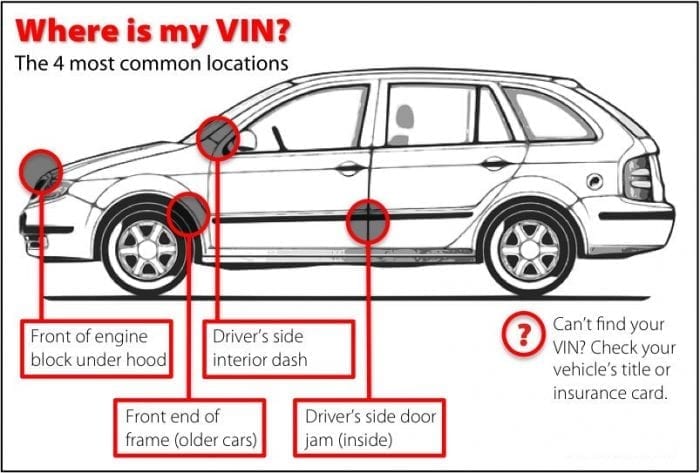
Where to Find Plymouth Vehicle Identification Number?
Every Plymouth has its VIN placed in several locations. Checking more than one spot helps confirm accuracy.
Dashboard
Look through the windshield at the lower corner of the dashboard on the driver’s side. Many vehicles show the VIN on a plate there.
Driver-side door jamb label
Open the driver’s door and check the door jamb area. Many vehicles have a label with the VIN printed on it.
Vehicle paperwork
Insurance cards, registration documents, and title paperwork often list the VIN. This helps confirm you’re typing the correct code.
Engine bay or frame stamping
Some Plymouth models may have additional VIN markings. The exact placement can vary by model and era, so it’s normal if it isn’t obvious.
Benefits of Using a Plymouth VIN Decoder
The Plymouth VIN decoder tool is made for people who want clear answers without digging through paperwork or guessing. Whether you are buying, selling, or just restoring an old Plymouth in your garage, decoding the VIN helps you understand the car’s real story.
If you are thinking about buying a Plymouth, especially a used or classic one, a VIN lookup is almost a must. Many Plymouth cars have long histories, and not everything is always disclosed upfront. A VIN check helps you see the bigger picture before you commit.
Confirm the Vehicle's True Identity
Make sure the VIN on the car matches the title, registration, and window sticker. This simple check helps you spot stolen or cloned vehicles fast.
Verify Factory Specs Match the Listing
Check that the engine, trim, and features actually match what the seller advertised. This stops you from overpaying for a lesser-equipped model, a common issue with classic cars.
Spot Inconsistencies Early
Checking the VIN confirms the car’s factory build, helping you spot inconsistencies before you buy. For the car’s full history, you can upgrade to our premium VIN report.
For sellers and dealers, a Plymouth VIN lookup builds trust. Buyers today ask more questions, and having verified information ready makes the sale smoother and faster.
Verify a vehicle’s value
When you can back up the condition and history with documentation, your pricing looks more reasonable. Buyers trust listings more when details match the record trail.
Handle trade-ins with more confidence
A VIN check can reveal risk indicators that affect trade-in value. If something looks off, you can adjust before it becomes your problem.
Reduce return and dispute risks
When buyer expectations match the record, disputes drop. The goal is fewer surprises for both sides after the sale.
Plymouth collectors care about details, originality, and history. A VIN lookup helps protect the legacy of these cars and keeps restorations honest and accurate.
Verify Plymouth VIN authenticity
Collectors often worry about swapped tags or messy paperwork. A VIN lookup helps you compare the VIN format and reported records for consistency.
Document your collection properly
A clear report can help you keep organized records for insurance, estate planning, or just personal documentation.
Compare multiple cars before you buy
If you’re choosing between two similar Plymouths, comparing record signals can be more helpful than relying on photos alone.
Plymouth VIN Breakdown: What Each VIN Character Means
A Plymouth VIN is not random. Each section of the VIN tells a specific part of the car’s story, from who made it to where it was built. Understanding the structure helps you see why VIN decoding is so useful, especially for classic Plymouth vehicles with shorter or older formats.
WMI (World Manufacturer Identifier)
The WMI is the first part of the VIN and identifies the manufacturer and country of origin. For Plymouth, this section often connects back to Chrysler, since Plymouth was one of its core brands. It sets the foundation for everything that follows in the VIN.
WMI Character Meaning
A common Plymouth-related WMI pattern you may see is 1P3 (often associated with Plymouth-branded passenger vehicles in the U.S.).
Example WMI: 1P3
- 1: Country/region code (commonly the United States for this prefix)
- P3: Manufacturer/brand assignment in the WMI system (commonly tied to Plymouth/Chrysler-related registrations in VIN databases)
VDS (Vehicle Descriptor Section)
The VDS describes the vehicle itself. This part of the Plymouth VIN includes information about the model, body type, engine, and restraint system. It is especially useful when checking whether a Plymouth matches its advertised configuration.
VDS Character Meaning
Example VIN (first 9 characters): 1P3AB46X (example format for explanation only)
- Positions 4–8: Vehicle attributes defined by the manufacturer (often model/body/engine-related coding)
- Position 9: Check digit (commonly used in North America to help validate VIN format)
VIS (Vehicle Identifier Section)
The VIS is the final part of the VIN and helps identify the individual vehicle. It often includes the model year, assembly plant, and production sequence number. This section makes each Plymouth VIN unique.
VIS Character Meaning
Example VIS: YH123456 (example format for explanation only)
- Position 10: Model year code (encoding system used in North America)
- Position 11: Assembly plant code (manufacturer-defined)
- Positions 12–17: Sequential production/serial number (unique to the vehicle)
Decoding Classic Plymouth VIN Numbers
We don’t just decode modern Plymouths. Our tool also supports classic models from before the standard 17-character VIN system, helping enthusiasts and collectors confirm original factory details on vintage vehicles they’re restoring or researching. Simply enter your classic Plymouth’s VIN to reveal the year, make, model, trim, engine type, and more.
Supported Plymouth Models
Below are just some popular Plymouth models we can decode. PremiumVIN supports all Plymouth models, years, and even classic VIN formats.
Barracuda
Road Runner
Fury
Duster
Belvedere
GTX
Valiant
Satellite
Superbird
Voyager
Prowler
Acclaim
Why Users Trust Our Plymouth VIN Decoder
People trust our Plymouth VIN decoder because it focuses on accuracy, clarity, and real-world use, not confusing technical language.
Most comprehensive database coverage
We connect decoding to broad, structured datasets so your Plymouth VIN lookup has a better chance of returning meaningful results, especially when vehicles pass through multiple reporting channels.
Unlimited free checks
You can run the free Plymouth VIN decoder as often as you want for early screening. It’s built for quick decisions before you spend more time or money.
24/7 customer support
When something looks confusing, support matters. Our customer support is available to help users understand what the report is showing and what it means.
High accuracy, cross-checked results
Our process relies on structured decoding rules and cross-checking across available sources to reduce obvious mismatches.
Downloadable PDF
A report is more useful when you can save it. The premium Plymouth vehicle history report can be downloaded as a PDF for sharing, recordkeeping, or later comparison.
Daily data updates
Vehicle records can change as new events are reported. Regular updates help the Plymouth VIN check reflect newer inputs when they become available in the data pipeline.
Free Plymouth VIN Decoder vs Full Vehicle History
If you only need the basics, a free Plymouth VIN decoder is fine. But if money is on the line, the premium report usually gives the details people argue about later.
| What You Can Check | Free Plymouth VIN Decoder (Quick Check) | Premium Plymouth Vehicle History Report (Full Report) |
|---|---|---|
| Plymouth year, model, and make | ✓ Confirms basic identity | ✓ Fully confirmed with production details |
| Basic Plymouth specs (engine, body, trim) | ✓ General specifications | ✓ Complete factory specifications |
| Title status (e.g., salvage, rebuilt, lemon) | Basic status hint only | ✓ Full title brand history |
| Accident history check | Not available | ✓ Detailed accident records when reported |
| Mileage and odometer records | Not available | ✓ Multiple recorded mileage entries |
| Odometer rollback/mileage inconsistency checks | Not available | ✓ Rollback flags and inconsistency alerts |
| Auction history and photos | Not available | ✓ Auction listings and images when available |
| Online listings and advertised sales | ✓ Current listing snapshot (when available) | ✓ Listings and advertised sales records |
| Timeline of previous listings and sales | Not available | ✓ Timeline of past listings and sale activity |
| Sales listings records & photos | Not available | ✓ Listing records and photos (when available) |
| Plymouth market value estimate | Not available | ✓ Value estimates and pricing ranges |
| Number of previous owners | Not available | ✓ Owner count (when available) |
| Past vehicle use (private, rental, fleet, commercial) | Not available | ✓ Use-type indicators when reported |
| Outstanding loans or lien records | Not available | ✓ Lien/loan flags when reported |
| Stolen vehicle check | Limited check | ✓ Detailed theft records if reported |
| Flood, fire, or hail damage indicators | Not available | ✓ Damage-event indicators when reported |
| Reported service or repair history | Not available | ✓ Service/repair records (when available) |
| Recall and warranty information | Limited overview | ✓ Recall history and basic warranty status |
| Downloadable PDF report | X Not included | ✓ Yes, easy-to-save PDF |
| Best suited for | Quick Plymouth VIN lookup and early screening | Buyers, sellers, collectors, and serious checks |
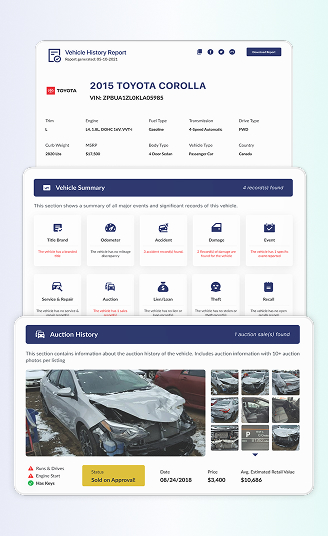
What Will You Get Inside the Plymouth Premium History Report?
When you run the Plymouth VIN check with PremiumVIN, you’re not just decoding numbers. You’re getting a full picture of the recorded vehicle’s life. This is especially helpful for collectors, overseas buyers, or anyone dealing with older Plymouth models, where paperwork can be missing or incomplete.
Vehicle Specifications
The vehicle specifications section gives you a solid foundation. It explains what the Plymouth was when it left the factory, not what it turned into later. This is important when originality matters, which it often does with classic cars.
Year, Make, Model
This part confirms the production year, Plymouth make, and exact model. It helps you avoid common issues where cars are advertised with the wrong year or mismatched model details, which happens more often than people admit.
Trim
Trim information shows the original configuration level of the Plymouth. For collectors, this matters a lot because trim levels can significantly affect value, rarity, and historical accuracy.
Engine and Drivetrain
Here you’ll see recorded engine type, displacement, and drivetrain details when available. It helps verify whether the engine matches factory records or if changes may have happened over time.
Title Check
Title issues can quietly destroy a good deal. This section focuses on legal status and past title branding connected to the Plymouth VIN.
Salvage
A salvage title means the Plymouth was declared a total loss by an insurer. This doesn’t always mean the car is bad, but it does affect value and insurability.
Rebuilt
Rebuilt titles indicate the vehicle was repaired and approved for road use again. The report helps you see when this happened and under what circumstances.
Lemon
Lemon branding shows if the Plymouth was returned due to repeated defects. It’s rare with older cars, but when it appears, it’s worth paying attention to.
Mileage History
Mileage on older Plymouth vehicles can be tricky. This section gathers mileage records from multiple points in time.
Mileage History from Multiple Sources
Instead of relying on a single reading, the report compares mileage entries from inspections, registrations, and sales records.
Rollback Detection and Alerts
This helps identify mileage inconsistencies. Even small gaps can matter, especially for collectors focused on authenticity.
Annual Usage Patterns
This gives a rough idea of how often the Plymouth was driven, which can explain wear or unusually low mileage claims.
Lien and Loan Check
Hidden financial claims can cause serious problems after purchase. This section focuses on outstanding obligations tied to the Plymouth VIN.
Dates and Locations
In this part of the report, you will see when and where liens were recorded, which helps assess whether they are active or resolved.
Verified Sources
Information is pulled from recognized databases, adding a layer of confidence for buyers and sellers.
Ownership History
Ownership history gives insight into how the Plymouth was treated over time. Fewer owners often suggest consistent care, but that’s not always the full story.
Owner Count
This shows how many registered owners the Plymouth had. It’s helpful for spotting frequent ownership changes, which can be a red flag.
Ownership Timeline
The timeline shows approximate periods each owner held the vehicle. Long gaps or short ownership cycles can raise questions worth asking.
Vehicle Use Type
Some records indicate whether the Plymouth was used personally, commercially, or for other purposes, which can affect wear and tear.
Registration Locations
This shows where the car was registered over time. Climate and region matter more than people think, especially for rust-prone classics.
Accident Records
Accidents don’t automatically ruin a Plymouth, but they do change how you evaluate it. This section summarizes reported accident-related signals where records exist.
Number of Accidents Reported
When accident events are recorded, you can see the count. It helps you compare one vehicle against another during a Plymouth VIN lookup decision.
Date of Reported Accidents
Timing can matter. A minor incident ten years ago is different from a recent serious crash, even if the car currently looks fine.
Reported Accident Location
Accident location data can provide context when it’s available, especially if you’re trying to match a vehicle’s timeline with the seller’s explanation.
Severity Indicators
Some datasets include indicators like disabling damage or towing. If those are present, they help you judge whether an accident was likely cosmetic or more structural.
Damage History
Damage is not always labeled as an “accident.” Weather events, storage issues, and non-collision damage can still affect value and safety.
Flood Damage
Flood damage can be hidden for a while, then show up as electrical issues, mold, or corrosion. This is one of the biggest risks in the used vehicle history record.
Fire Damage
Fire exposure can create long-term electrical and structural problems. If fire-related records appear, it’s a serious signal worth slow, careful review.
Hail Damage
Hail claims can be common in certain regions. It may be cosmetic, but repairs (or lack of repairs) can affect resale and restoration planning.
Recalls Check
Even older vehicles can have a recall history tied to safety actions. This section helps you see what’s been reported.
Open Recall Information
If open recalls are reported, you’ll see what’s still unresolved. It’s a practical checklist item before you treat a Plymouth as “ready to drive.”
Completed Recall Events
Completed recalls can be reassuring. They show that at least some official repairs or updates may have been addressed in the vehicle’s lifetime.
Manufacturer and Safety Agency Notices
When notices appear in records, they add context to what the recall was about and why it mattered. It helps the report feel less like random code.
Recall Timeline Context
If recall items have a date context, you can better judge how current the information is and whether it’s still relevant to your ownership plans.
Service & Maintenance Records
Maintenance history is one of the clearest signals of how a Plymouth was treated. This section focuses on recorded service events where available.
Scheduled Maintenance
If scheduled service events are present, they can show whether the vehicle followed a reasonable maintenance rhythm over time.
Part Replacements
Replacement records (when reported) help you see whether wear items were addressed. That’s useful when you’re budgeting for what might come next.
Major or Minor Repairs
Repair entries can give context to how the vehicle was kept running. A few repairs are normal; patterns can be more telling.
Notes from Inspections
Sometimes inspection notes show up, and they can be surprisingly direct about the condition. If these are available, they help cut through vague descriptions.
Auction History
Auction records can show up when a vehicle passes through wholesale channels. This can add context that listings sometimes leave out.
Auction Date and Location
This helps you see when and where the Plymouth appeared at auction, which can be useful for tracing its timeline and value shifts.
Sale Price
When price data is available, it offers a reality check against today’s asking price. It’s not a final verdict, but it’s a meaningful context.
Condition Notes (Primary and Secondary Damage)
Auction condition notes can mention damage types or operational status. They’re not perfect, but they’re often more direct than a casual ad.
Whether the Vehicle Started or Ran
If the auction record includes run-and-drive notes, it helps you judge whether the Plymouth was operational at that time.
Number of Photos Taken at Auction
When photo counts are recorded, it hints at documentation depth. More documentation can sometimes mean fewer unanswered questions later.
From Listing to Records: Noah’s Plymouth VIN Story
Decoding a Plymouth VIN is not just about curiosity. It helps protect buyers, supports honest sellers, and preserves classic cars. Without VIN decoding, people rely on stories. With it, they rely on records.
Sample Report: 1P3EW65G21V700300
Initial Impression
- Noah was considering a 2001 Plymouth Prowler advertised as clean and well cared for. Everything looked right on the surface, but before moving forward, he ran a PremiumVIN report to confirm the story.
Critical Findings
- Vehicle identity and core specs matched the listing (year, model, trim, engine).
- Mileage records were consistent, with no rollback or mileage discrepancy flagged.
- Ownership history showed two owners, with the second owner holding the car long term.
- No reported lien, theft, or open recall issues were found.
Outcome
- Instead of guessing, Noah used the report to ask direct questions. He requested title documents and clarification. The report didn’t kill the deal, but it changed the conversation and protected him from walking in blind.
Lessons Learned
- Decoding a Plymouth VIN isn’t about finding reasons to walk away. It’s about knowing what you’re actually buying. For Noah, the report turned uncertainty into clear, informed next steps, before any money changed hands.
How to Get a Plymouth Vehicle History Report by VIN
Getting a Plymouth VIN report is simple and does not require technical knowledge. Here’s how:
Step 1: Enter Your VIN
Type the VIN into the Plymouth VIN lookup field. Double-check the characters, so you don’t get a false error.
Step 2: Review the Preview
You’ll see a quick preview of the basic vehicle identity. If it matches the car in front of you, you’re on the right track.
Step 3: Get the Report
Upgrade to the premium report to view deeper recorded history sections like title checks, accident signals, mileage patterns, liens, and listings.
Explore Other Plymouth VIN Search Tools
If you need more than just a VIN decoder, you can explore other Plymouth tools below.
A Plymouth window sticker shows factory options, original MSRP, and specifications. It helps collectors confirm originality and understand how the car was originally equipped.
Recall checks show serious safety risks, such as faulty brakes or airbags, preventing accidents and injuries. Even older Plymouth models may have recall records worth reviewing.
A Plymouth license plate lookup tool can provide vehicle details when the VIN is not immediately available, helping with early research.
Title checks help confirm legal ownership and branding history. This is especially useful when dealing with imported or old vintage Plymouth vehicles.
A Brief History of Plymouth and Its Lasting Impact
Plymouth was once one of America’s most recognizable automotive brands, known for affordability and strong design identity.
The Brief History of Plymouth
Plymouth was introduced by Chrysler in 1928 and quickly became popular for reliable, well-priced vehicles.
- Plymouth played a major role in American muscle car history
- The brand was officially discontinued in 2001
- Many Plymouth models remain highly collectible today
Decode Your Plymouth VIN Now
Ready to decode Plymouth VIN? Enter the VIN for a quick identity check, and upgrade only if you want the deeper history sections.
Frequently Asked Plymouth VIN Questions
Where is the VIN located on a classic Plymouth (e.g., Barracuda, Road Runner)?
On classic Plymouth models, the VIN is commonly found on the dashboard near the windshield, the driver-side door jamb, or stamped on the radiator support or frame rail. Once found, you can enter it into PremiumVIN to confirm identity and available history.
What is a Plymouth “fender tag” and how do I decode it?
A Plymouth fender tag is a metal plate in the engine bay that lists factory options, paint, trim, and drivetrain codes. It is separate from the VIN. PremiumVIN focuses on VIN-based decoding and history, while fender tags are best used alongside VIN results for deeper authenticity checks.
How can I tell if my Plymouth Barracuda is a real ’Cuda using the VIN?
The VIN can help confirm year, model series, and engine-related codes, which is the first step. PremiumVIN helps verify whether the VIN structure aligns with a ’Cuda-era Barracuda, but full confirmation often requires matching VIN data with fender tag and engine stampings.
Is there a difference between a VIN and a serial number on older Plymouths?
Yes. Many older Plymouths used serial numbers before the standardized 17-character VIN system became mandatory in the early 1980s. PremiumVIN supports decoding many classic Plymouth serial/VIN formats, ranging from 5 to 14 characters, when records are available.
How do I decode the VIN on a 1970 Plymouth Road Runner or GTX?
A 1970 Plymouth Road Runner or GTX VIN typically encodes model year, assembly plant, body style, and engine code. You don’t need to decode it manually. Enter the VIN into PremiumVIN, and the system interprets the structure and returns supported vehicle details.
What do the letters and numbers in a Plymouth VIN mean (e.g., RM21, RH23)?
These codes are part of Plymouth’s older VIN system. For example, “RM” or “RH” often refers to the model series, while numbers indicate body style and engine type. PremiumVIN helps translate these codes into readable vehicle identity details when decoding classic VINs.
How do I identify the engine type (e.g., 318, 383, 440) from the VIN?
On many classic Plymouths, the VIN includes an engine code that points to the original factory engine configuration, not necessarily the engine currently installed, which is common with older Plymouths. PremiumVIN decodes these engine-related VIN characters when supported, helping you understand what the vehicle was originally built with.
Where can I decode a Plymouth VIN for free online?
You can use the free Plymouth VIN decoder on PremiumVIN to confirm basic vehicle identity like year, make, and model. For deeper checks, such as title history, mileage records, or damage indicators, the paid Plymouth vehicle history report is available.
What is the “Hamtramck Registry” and why is it important for Plymouth decoding?
The Hamtramck Registry is a well-known collector database for Mopar vehicles. It is not a VIN decoder itself. PremiumVIN complements registry research by confirming VIN structure and recorded history before you rely on third-party collector databases.
How do I verify the authenticity of a classic Plymouth VIN?
Start by checking VIN placement, format, and consistency across the vehicle. Then use PremiumVIN to decode the VIN and review available records. For high-value cars, VIN decoding should be combined with physical inspection and documentation review.