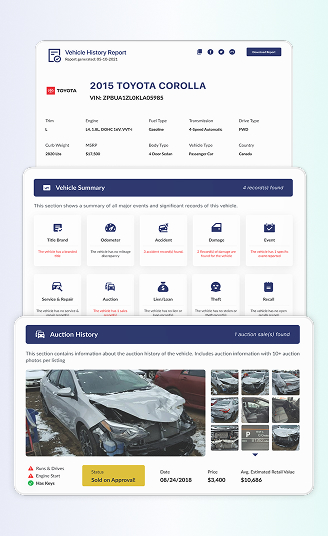

Check Your Vehicle Recalls Status with VIN Lookup
A vehicle recall can point to serious safety issues that are not always visible during a basic inspection. From faulty airbags to brake failures, these problems are identified by manufacturers after the car is already on the road. Check the recall status by VIN now to find out!
What a Vehicle Recall Check Reveals
A VIN recall check provides detailed safety-related information reported by manufacturers and tracked by authorities like the National Highway Traffic Safety Administration. It focuses on defects that could affect the vehicle’s safe operation.
Complete Open Recall Information
When a recall is active, the report breaks down everything you need to understand the issue and what needs to be done next. Here is the list of information you’ll get from our vehicle report that shows the vehicle’s recall:
NHTSA Campaign Number
Each recall is assigned a unique campaign number. This reference ID helps track the issue across official databases and makes it easier to verify details with dealerships or service centres.
Recall Date
This shows when the recall was officially issued. It helps determine how long the issue has existed and whether the vehicle may have been driven with the defect for an extended period.
Recall Description
The description explains the defect in simple terms, such as airbag malfunction, fuel system leaks, or electrical faults, so you understand exactly what the problem is.
Affected Components
This section highlights the specific parts involved, like brakes, steering, airbags, or engine components. It gives a clearer idea of how the issue could impact safety and performance.
Manufacturer's Remedy
The manufacturer outlines how the issue will be fixed. In most cases, repairs are carried out at no cost through authorised dealerships.
Recall Completion Status
A recall check does more than list issues. It shows whether repairs have been completed, are still pending, or only partially done, helping buyers and sellers quickly understand the vehicle’s current safety condition.
Open/Unrepaired
An open recall means the defect has not been fixed. The vehicle may still have a safety issue that needs attention, and repairs should be scheduled as soon as possible.
Closed/Completed
A closed recall confirms the repair has been completed. The issue linked to the recall should no longer affect the vehicle’s safety, performance, or compliance with manufacturer standards.
Look Beyond Recalls: See the Vehicle’s Detail
A recall check is a great start, but it only shows part of the story. A full vehicle history report gives deeper insight into the vehicle’s condition, history, and potential risks before you decide.
Vehicle Specifications
Review details like engine size, fuel type, drivetrain, and origin to confirm the vehicle matches its listing and fits your expectations.
Theft Records
Check if the vehicle was ever reported stolen, including when and where, helping you avoid legal trouble or ownership complications.
Title Brand History
Check whether the vehicle is branded as “salvage,” “rebuilt,” or “flood,” which may affect safety, reliability, and long-term value.
Lien and Loan Records
Find out if there is an active or past loan tied to the vehicle, which could delay ownership transfer or create financial risks.
Fleet, Rental, or Lease Usage
Identify whether the vehicle was used commercially, which may indicate heavier use, higher mileage, and increased wear over time.
Accident History
Review reported accidents, including frequency and locations. You will also get the accident date.
Auction History
See past auction activity, including dates, locations, and prices, along with photos that show the vehicle’s condition at the time.
Sales Listing History
Track how the vehicle has been listed over time, including past prices, locations, title, and images that reflect its condition.
Damage Verification
Check any hidden or reported damage from accidents, fire, flood, or other incidents, including issues that may not be obvious during a visual inspection.
Warranty Records
Check remaining warranty coverage, including types, duration, and mileage limits, to understand any protection still available.
Why Do You Need to Check Vehicle Recalls
A vehicle recall check by VIN helps uncover safety issues that may not be visible during inspection. It also shows risks that can affect costs, ownership responsibility, and long-term reliability before buying.
Safety Comes First
Vehicle recalls are issued for defects that can affect safe operation. Ignoring them can lead to serious consequences, especially when critical systems like airbags, brakes, or fuel components are involved.
Known Defects Are Dangerous
Recalls are not minor issues. They involve proven defects that can increase the risk of accidents, injuries, or mechanical failure if left unresolved.
Airbags That Don’t Deploy
Faulty airbags may fail to deploy during a crash or deploy incorrectly, increasing the risk of injury instead of protecting occupants as intended.
Fire Risks & Stalling
Some recalls involve fuel leaks or electrical faults that can cause fires. Others may lead to engine stalling, which can be dangerous, especially at high speeds.
Financial Implications
A car recall check before buying does more than highlight safety concerns. It also helps buyers understand potential financial risks, including repair delays, reduced resale value, and possible legal responsibility if known defects are ignored.
Free Repairs—But Only If You Know
Manufacturers typically fix recall issues at no cost, but this only happens if the owner is aware of the recall and takes action. To get this, make sure to pay attention to any recall announcements.
Resale Value Impact
Vehicles with unresolved recalls may be harder to sell or valued lower, as buyers often avoid cars with known safety issues.
Liability Concerns
Selling or driving a vehicle with an open recall could lead to liability risks, especially if the defect contributes to an accident.
Sellers
Checking a recall status by VIN before listing a vehicle helps sellers identify and fix issues early. This improves the vehicle’s condition and makes it easier to present as safe, reliable, and ready for the next owner.
Prove Recalls Are Complete
Showing that all recalls have been resolved helps demonstrate that the vehicle has been properly maintained and is ready for the next owner.
Build Trust
Sharing results from an NHTSA recall lookup adds transparency to the sale. Buyers are more confident when they can verify that the vehicle has no unresolved safety recalls.
Current Owners
Checking recalls regularly helps owners stay informed about potential risks and take action before issues become serious. If you purchase it used, be aware that the vehicle might carry damage from unresolved recalls.
Protect Your Family
Unresolved recalls can put passengers at risk. Fixing these issues ensures the vehicle remains safe for everyday use with your loved ones.
Schedule Free Repairs
Owners can contact authorised dealerships to fix recall issues at no cost, helping maintain safety without added expenses.
Real Story: How a Recall Check Revealed a Dangerous Defect
Teddy wanted to purchase a used 2015 DODGE DURANGO from a private seller. The seller said that it has no hidden defects and has clear records. He decided to do a background check by checking the VIN, and here’s what he found on the report.
Sample VIN: 1FTEW1EGXFKE62790
What the Recall Check Revealed
After examining the report, it turned out the vehicle has many recalls history. Here’s what he found on the report.
Open Recalls
The vehicle has two open recall records.
| Date of Recall | Components | Recall ID |
|---|---|---|
| 06/21/2018 | Unspecified | U65 |
| 07/24/2018 | Unspecified | U06 |
General Recalls
Aside from the general recalls, the report also showed that the car has another general recall.
| Date of Recall | Components | Recall ID |
|---|---|---|
| 06/29/2015 | Suspension | 2015-292 |
| 07/22/2015 | Equipment:electrical: radio/tape deck/cd etc. | R40 |
| 07/22/2015 | Suspension | 2015-331 |
| 07/26/2015 | Suspension: rear | 16V168000 |
| 03/23/2016 | Brakes | 2016-130 |
| 05/16/2018 | Electrical system: wiring | U49,U59-U65,U68,U73 |
| 05/17/2018 | Engine | 2018-269 |
The Outcome
Teddy decided not to purchase the vehicle because it has too many recall histories that can be dangerous for both the vehicle and passengers.
How to Check Vehicle Recalls by VIN
To check if the car has a recall, you can do it with our Vehicle Recall Check by VIN and get the vehicle history report. Follow these simple steps to get it done in less than a minute.

Step 1: Find the VIN
Examine the driver’s side doorjamb or the paperwork, like the bill of sale, to get the VIN. If you do not find the VIN, you can also use the license plate number.

Step 2: Fill Out the Form
Click on the form, then enter the VIN. After that, you must click on the button to submit the form.

Step 3: Get the Report
Wait for a few seconds to get the report generated. Then, check on the preview page to see the recall snippet. Then, proceed to payment to get the full vehicle history report.
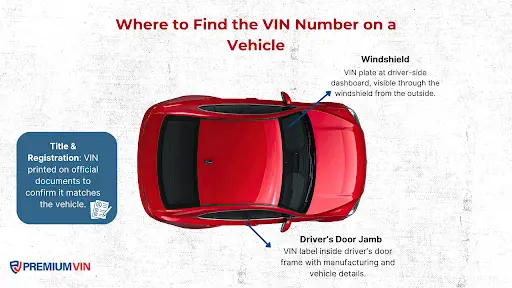
Where to Find the VIN on a Vehicle
To find the VIN on a vehicle is easy; you just need to examine a few parts on the vehicle’s body and on its paperwork.
Dashboard
The VIN is commonly located on the dashboard near the windshield on the driver’s side. It can be seen from outside the vehicle by looking through the glass.
Driver's Door Jamb
Open the driver’s side door and check the door jamb area. The VIN is usually printed on a sticker or metal plate attached to the frame.
Vehicle Documents
You can also find the VIN on official paperwork such as the registration, insurance documents, or title. These records often list the full 17-character VIN.
Why Choose PremiumVIN
Our VIN check service helps you to examine the complete information of the vehicle. Unlike the other service, we can get it done in less than a minute. Plus, you can download the report as well.
Complete Report
Get more than just basic details. Our reports combine key vehicle data with important history records to give a clearer understanding of the vehicle.
Fully Integrated
Access multiple data points in one place, including title records, ownership history, and other important background details.
Fast and Quick Decoding
Enter the VIN and receive your report within seconds. There is no waiting time, allowing you to quickly access important vehicle details when making decisions.
Affordable Vehicle Report
Our reports are competitively priced, giving you access to important vehicle information without high costs. With only $25, you will get the complete information on the vehicle, like auction, accident, recalls, and more.
Explore More Ways to Check a Vehicle
Looking to dig deeper? These tools help you verify details, compare information, and spot anything that doesn’t add up before you decide to take it home.
Options Check by VIN
Use the VIN to confirm factory-installed features and equipment.
Fuel Economy
Check fuel efficiency ratings across different models to compare consumption.
Trim Package
Verify the exact trim level using the VIN and make sure it aligns with the seller’s description and pricing.
Safety Ratings
Review official safety ratings to understand crash performance and ensure the vehicle meets expected safety standards.
Check Any Recalls History Before Buying
Accidentally purchasing a used car with a recall history is dangerous. That is why you need to check the vehicle history report and examine the recall history–make sure they are fixed and closed.
FAQs About Recall Check by VIN
Can I check if my VIN has a recall?
Yes, you can check for vehicle recalls using a 17-character Vehicle Identification Number (VIN) at no cost. Tools like PremiumVIN allow users to view unrepaired safety recalls reported over recent years.
Are car recalls public record?
Yes, car recalls are public records. In the United States, manufacturers must report safety defects or noncompliance issues to authorities, making this information accessible to the public.
How do I see if my car has been recalled?
To check if a car has been recalled, enter the 17-character VIN into a recall lookup tool such as PremiumVIN. The VIN is typically located on the windshield or registration documents. Recall repairs are usually completed at no cost by authorized dealerships.
Can a VIN reveal a car's accident history?
Yes, a Vehicle Identification Number (VIN) can be used to access a car’s accident history. By running a VIN check through services like PremiumVIN, users can view records related to damage, title issues, and past repairs.
What is the most recalled car brand?
Ford has been one of the most recalled car brands in recent years, with a high number of recall campaigns affecting millions of vehicles. These recalls often involve both minor issues and more serious safety concerns.
How can I check if a vehicle has had an accident?
To check if a vehicle has been in an accident, review a VIN-based history report and inspect the car for physical signs such as uneven paint, panel gaps, or repair marks. Other indicators may include irregular tire wear or replaced parts.