

- A clean title doesn’t guarantee a perfect car; it only means the vehicle was never declared a total loss.
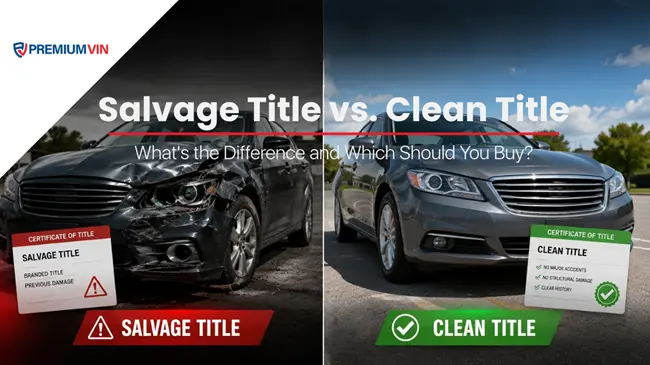
- A salvage title means the car was significantly damaged and written off by an insurance company.
- Flood and fire damage are usually higher risk than standard collision damage, even if repaired.
- Rebuilt titles are repaired salvage vehicles, but the damage history never disappears.
- Always check the VIN before buying a used vehicle.
When you look for a used car on an online marketplace, the listing pictures look clean and neat–with no visible damage or scratches.
However, one thing that often caught attention is the selling price, as it is priced lower than the current price.
You see two vehicles side by side. Same year, same mileage, same trim. One costs a couple of thousand less. You might think one of them had a rough life. Clean titles and salvage titles aren’t just words on paper. They can change how easy it is to get a loan, how insurance treats the car, and even how much someone will pay for it later.
Before you decide to purchase a used vehicle, make sure to run a quick title check by VIN to see the vehicle’s actual title. This article will guide you through the process of title checking and ensure you get the best vehicle.
What is a Clean Title?
Most cars on the road carry a clean title. Basically, a clean title means the car hasn’t been branded salvage, rebuilt, junk, or flood-damaged by the state. It hasn’t been declared a total loss by the insurance company.
Clean-title vehicles usually sell for more. Banks prefer them. Insurance is easier. Dealers have fewer headaches. And when it comes time to sell, more people are willing to buy them.
What a Clean Title Doesn’t Show.
Here’s the thing: clean doesn’t always mean the car doesn’t have problems.
A car can get into an accident and still keep a clean title if the damage wasn’t bad enough for the insurance company to declare it a total loss. Years of hard use, minor accidents, or patchy maintenance? A clean title doesn’t care. The paper stays clean. So yes, a clean title is better than a salvage one on paper. But it’s not a guarantee.
Why Buyers Usually Prefer Clean Titles
Loans are easier to get. Insurance companies usually offer full coverage. Reselling? Smoother. Still, a clean title isn’t magic. A poorly maintained vehicle can still cost a fortune in repairs. But if all else is equal, most buyers will lean toward the clean-title car because it comes with fewer unknowns.
What is a Salvage Title?
A salvage title is a title issued by the insurer when the vehicle has been damaged badly, and the insurer decides that the vehicle is not worth fixing. In some cases, the repair fee costs more than the market value of the vehicle. So, instead of covering the repair, they pay the owner to take care of the car from their responsibility, and then the car is branded as salvage.
In reality, a salvaged title does not always mean the car is destroyed. The insurer calculates it precisely. If the vehicle’s repair cost gets too close to the car’s worth, the insurance company will deem it a total loss.
How is a Vehicle Marked as Salvage?
Most people think that a vehicle will be put as salvage when it is involved in a big crash. In reality, it is just a part of the requirement. Usually, the main reason why it was put as a salvage is the total loss calculation.
Total Loss Threshold
An insurance company puts a vehicle as a total loss when the repair value is too close to its actual cash value, and then they decide to write it off.
Take a look at the example:
A car is worth $15,000, and the estimated repair fees are around $13,000 or more due to labor, parts, and other costs–the insurer may decide that the vehicle is not worth fixing. At that point, they decided to pay the owner, then take vehicle ownership, and the vehicle would be marked as salvage.
Common Reasons Why a Vehicle Receives a Salvage Title
There are a few common reasons that could cause a vehicle to be marked as a salvage. Take an example of a vehicle that was involved in an accident; it could be marked as salvage by the insurer due to its extensive damage. Here are common reasons why a vehicle is marked as salvage:
Accident
Accidents are a common cause of a vehicle being marked as salvage; however, they are not the only cause. Severe collisions that damage crucial components such as structural or multiple systems often cause high repair costs that result in a salvage title.
Flood and Fire Damages
Flood damage is another major cause of a salvage title. This usually occurs after hurricanes or major storms. Water can affect the electric system, engine, and interior components of a vehicle.
Fire damage works similarly, often impacting wiring, sensors, and plastics even if the exterior damage looks manageable.
Hail Damage
Severe hail can also be enough to total a vehicle, in some cases, especially when body panels, glass, and paint are heavily affected. Even theft recovery can lead to a salvage title. If a stolen vehicle is recovered after the insurance claim has already been paid and it comes back missing parts or damaged, it can still be branded as salvage despite never having been involved in a crash.
Does a Salvage Title Mean That the Vehicle is Unsafe?
Not automatically.
A salvage title does not always mean that the vehicle is dangerous. A vehicle involved in a front-end collision can be repaired properly and returned to the road in good condition. These vehicles usually perform normally after years of repair.
However, the most complicated ones are flood and fire damage. Water can seep into the deepest part of wiring, modules, and connectors; these could lead to complicated electrical problems that might not be shown immediately.
Corrosion can develop over time, and issues may appear months after the repair. Fire damage can also weaken wiring insulation, sensors, and plastic components, even if the car looks fine externally.
Repair Quality Matters More Than the Label
Two salvage vehicles can look identical on paper but be completely different in reality. One may have been repaired by a reputable shop using proper parts and documented procedures, while another may have been fixed cheaply just to get it back on the road for resale.
That is why a physical inspection and a vehicle history report matter before buying a used vehicle, either from a private seller or a dealership. Without that information, you’re pretty much just placing a bet on something you do not know about.
Ownership Implications
Owning a salvage-title vehicle comes with trade-offs. Insurance, financing, registration, and resale are all affected. Being aware of these limitations helps avoid surprises and ensures informed decisions when considering a cheaper salvage car.
- Insurance Limitations: Full coverage may be hard to get; liability is usually easier, but comprehensive or collision can require inspections or be denied.
- Financing Restrictions: Most banks avoid salvage vehicles. Cash purchases are common; specialty lenders may be an option.
- Registration Requirements: Some states require inspections before a vehicle can legally return to the road to confirm repairs and safety compliance.
- Reduced Resale Value: Even fully repaired vehicles typically sell for 20–40% less than comparable clean-title cars, limiting future profits.
What is the Difference Between a Salvage Title vs. Clean Title?
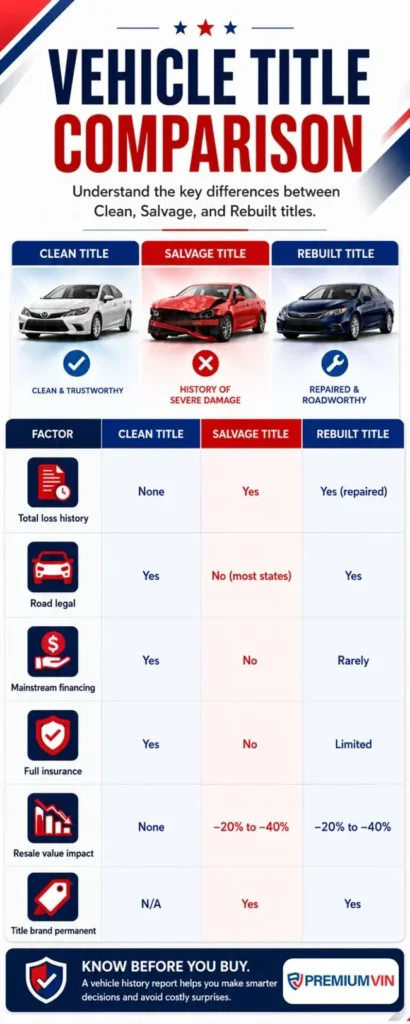
When comparing clean and salvage titles, the differences go beyond just the price tag. Each title affects financing, insurance, road legality, and resale value differently. Understanding these contrasts helps buyers make smarter decisions and avoid costly surprises.
Refer to the table below to see the difference between those titles:
Can a Clean-Titled Vehicle have an Accident Damage?
If the vehicle has a clean title, it does not always mean the vehicle was never damaged. It means the damages weren’t severe enough to trigger a total loss. Unknowingly, many vehicles on the road have an accident history but carry a clean title.
Accident History vs. Title Status
A lot of buyers mix these two things up, but they’re not the same. A car can be repaired after an accident and still keep a clean title if the repair cost never crossed the insurance total-loss threshold.
- Minor accidents don’t trigger salvage: Fender benders or moderate repairs often stay under insurance thresholds, so the title remains clean.
- The title doesn’t reflect all repairs: A clean title may still hide bodywork, repainting, or structural fixes that were never reported as a total loss.
Is a Salvage Title Car Worth Buying?
Whether a salvage title car is worth it really depends on the buyer. For some people, it’s an easy way to save money; for others, it’s just too risky. It comes down to budget, purpose, and how much risk you can handle.
When It Can Make Sense
Salvage cars aren’t always a bad deal. In the right situation, they can offer real value, especially if the damage was properly repaired and documented.
Cash buyers, project cars, rare vehicles: Best suited for people who don’t rely on financing and understand the risks.
Well-documented repairs: Service records, receipts, and inspection reports can make a big difference in confidence and value.
When to Avoid
There are situations where a salvage car just doesn’t make sense, even with a low price tag. The long-term risks can outweigh the savings.
- Financing needed: Most lenders won’t approve loans for salvage vehicles.
- Resale within a few years: You’ll likely lose money again when selling due to the title brand.
- Flood/fire-damaged vehicles: Higher risk of hidden electrical or structural issues over time.
Where Rebuilt Titles Fit In
Rebuilt titles sit somewhere between salvage and clean. These are vehicles that were once declared a total loss but have since been repaired and inspected before being allowed back on the road.
- Former salvage vehicles, repaired, inspected, road-legal: They can be driven again but still carry their past damage history permanently.
- Insurance options better than salvage, but not equivalent to clean: Some coverage is available, but usually with limitations or reduced valuation.
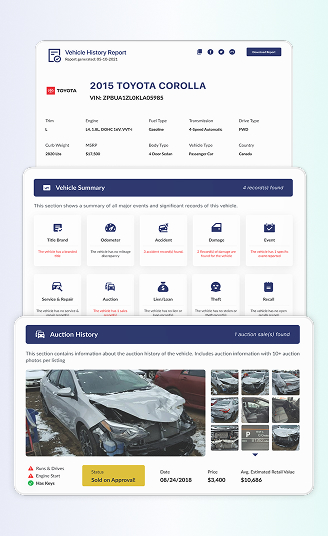
How to Check a Vehicle’s Title by VIN
To check the vehicle’s title by VIN, you can use a trusted tool to see the title and avoid scams. Follow these simple steps to get it done in less than a minute.
Step 1: Find the VIN
Check the driver’s side doorjamb, windshield, and/or the vehicle’s paperwork, such as the bill of sale or registration paper.
Step 2: Enter the VIN
Click the form and write the VIN of the vehicle you want to check. Then, click on the button to submit the form.
Step 3: Get the Vehicle History Report
Wait for the report to be generated. Then, check on the preview page, where you can see the vehicle’s specifications and market value. After that, proceed to payment to get the vehicle history report
Clean Title or Salvage Title: Which Should You Get?
At the end of the day, the difference between a salvage title and a clean title comes down to risk, not just price. A clean title usually means fewer unknowns and easier ownership, while a salvage title reflects a history of major damage that may still carry long-term consequences even after repairs.
There are situations where salvage cars can make sense, but only for informed buyers who understand what they’re getting into. Before making any decision, run a VIN check to see the complete information, such as the title, accident history, damage check, maintenance history, and more.
Frequently Asked Questions About Salvage vs. Clean Title
Is a salvage title the same as a clean title?
A salvage title is different from a clean title. A clean title indicates the vehicle has never been declared a total loss by an insurance company, making it easier to insure, finance, and sell. A salvage title, on the other hand, is assigned to a vehicle that suffered significant damage and was deemed a total loss by an insurer.
Is it worth buying a car with a salvage title?
For most buyers, a salvage title vehicle comes with more risks than rewards. While these vehicles are often sold at a lower price, they may have hidden damage, higher insurance costs, and reduced resale value. A salvage title also indicates that the vehicle was previously considered a total loss by an insurance company.
What is better, a salvage title or a rebuilt title?
A rebuilt title is generally more practical for everyday drivers because the vehicle has been repaired, inspected, and approved for road use. A salvage title indicates that the vehicle was declared a total loss and cannot legally return to the road until the required repairs and inspections have been completed.
What are red flags when buying a salvage car?
A salvage title cannot be converted back into a clean title. Once a vehicle has been branded as salvage, that designation remains part of its history. However, after the necessary repairs and inspections are completed, the vehicle may qualify for a rebuilt title, allowing it to be legally driven again.
How much should a salvage title drop the price?
A salvage or rebuilt title can significantly reduce a vehicle’s market value compared to a similar clean-title model. While discounts often range from 20% to 40%, some vehicles may lose 50% or more of their value depending on the extent of the damage, repair quality, and buyer demand.
Can a salvage title become clean?
No, a salvage title cannot be changed back to a clean title. Once a vehicle has been designated as salvage, that record remains part of its history permanently. However, after the necessary repairs and inspections are completed, the vehicle may qualify for a rebuilt title, allowing it to be legally registered and driven again.