

Buying a used car without checking its history can be risky. Hidden accidents, title problems, odometer fraud, and unpaid liens can turn a good deal into an expensive mistake.
For consumers visiting dealerships and planning to purchase used vehicles, the vehicle history is a very important tool when deciding on the best vehicle for themselves. With the vehicle history right in front of them and the reliable information they find, buyers are given an opportunity to make informed decisions and get reliable vehicles from any dealership of their choice.
The good news is that there are several ways to check vehicle history for free, including recall databases, VIN decoders, and title records.
However, free tools only provide limited information. If you want to uncover accident records, salvage history, mileage issues, and auction data, you may need a full vehicle history report.
Some vehicle history companies and websites have made it easy to check a car’s vehicle history by VIN, and some even offer this service for free. This article explains how to check vehicle history for free and the best vehicle history check websites to visit.
Start with a free VIN check → VIN Decoder
What Is a Vehicle History Report?
A vehicle history report is a record of a vehicle’s background based on its VIN (Vehicle Identification Number).
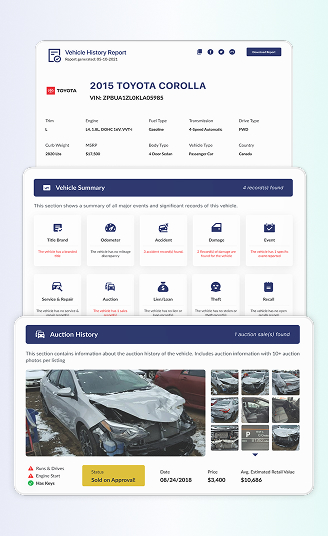
What a Vehicle History Report Can Include
Title History
Clean, salvage, rebuilt, flood, or lemon law brands.
Accident Records
Reported collisions, damage severity, and airbag deployment.
Odometer Readings
Mileage records from inspections, service visits, and title transfers.
Theft Records
Reports of stolen vehicles and recovery status.
Lien Information
Outstanding loans that could affect ownership transfer.
Recall History
Open safety recalls from manufacturers.
Ownership Records
Number of previous owners and registration states.
Auction Records
Sale dates, locations, prices, and condition photos.
Service History
Maintenance records from dealerships and repair shops.
Why Vehicle History Matters
Avoid Hidden Problems
A car may look clean in person but have a salvage title, flood damage, or rolled-back mileage.
Make Informed Decisions
Complete history helps you determine fair value and avoid costly mistakes.
Negotiate with Confidence
Knowledge of past damage or title issues gives you leverage.
Get the complete picture → Full Vehicle History Report
How to Check Vehicle History for Free
There are several free resources available that let you verify parts of a vehicle’s history.
1. Use a Free VIN Decoder
A VIN decoder lets you enter a VIN number and retrieve basic manufacturer information.
What a Free VIN Decoder Shows
Year, make, and model
Trim level
Engine type and displacement
Transmission type
Manufacturing plant
Country of origin
Why It’s Useful
This helps confirm that the VIN matches the seller’s description and that the vehicle is what it claims to be.
Where to Start
PremiumVIN offers a free VIN decoder that provides basic specifications instantly.
Try our free VIN decoder → VIN Decoder
2. Check Recall History for Free
The NHTSA (National Highway Traffic Safety Administration) recall database allows you to check if a vehicle has unresolved safety recalls.
What the NHTSA Database Shows
Open safety recalls
Recall campaign numbers
Affected components (airbags, brakes, steering, fuel systems)
Manufacturer remedy information
Why This Matters
Open recalls may affect the vehicle’s safety and resale value. Some recalls involve serious risks like airbag explosions or brake failure.
What It Doesn’t Show
Recall databases do not show accident records, title issues, or mileage problems.
3. Search Theft Records
You can check if a vehicle has been reported stolen using public databases such as the NICB VINCheck.
What NICB VINCheck Shows
Theft records
Salvage reports from participating insurance companies
Why It’s Useful
This helps identify whether the vehicle has been declared stolen or salvaged by insurers.
Limitations
Coverage may be incomplete, and accident history is often missing. NICB also limits users to five searches per day.
4. Review Title Information
Some state DMV portals allow limited title checks, though access varies significantly by state.
What State DMV Checks May Reveal
Title brands (salvage, rebuilt, junk, flood)
Ownership verification
Basic title status
Why This Helps
Spotting red flags like salvage or rebuilt titles can save you from a bad purchase.
Limitations
Many DMV systems restrict public access or only provide partial data. Most states charge a fee for title history searches.
5. Other Free VIN Check Websites
Several websites offer free VIN checks or previews, including:
PremiumVIN
Free VIN decoder preview with basic specs. Full reports require purchase.
Detailed Vehicle History (DVH)
Free preview; comprehensive reports require payment.
VINCheck.info
Free vehicle history reports with equipment data and specifications.
iSeeCars
Free VIN check with price analysis, accident history, and recalls.
Vehicles Report
Free preview; full reports require purchase.
Free VIN Check vs. Full Vehicle History Report
Here’s the difference between free tools and a complete report.
| Feature | Free VIN Check | Full History Report |
|---|---|---|
| VIN Specifications | ✅ Yes | ✅ Yes |
| Recall Data | ✅ Yes | ✅ Yes |
| Theft Check | ⚠️ Limited | ✅ Yes |
| Accident History | ❌ No | ✅ Yes |
| Mileage Verification | ❌ No | ✅ Yes |
| Auction Records | ❌ No | ✅ Yes |
| Auction Photos | ❌ No | ✅ Yes |
| Title Brand History | ⚠️ Limited | ✅ Yes |
| Lien Records | ❌ No | ✅ Yes |
| Ownership History | ⚠️ Limited | ✅ Yes |
| Service History | ❌ No | ⚠️ When available |
| Market Value | ❌ No | ✅ Yes |
When You Need a Full Vehicle History Report
Free checks are useful for initial research, but if you’re serious about buying the vehicle, you should run a full vehicle history report.
Situations That Require a Full Report
Buying from a Private Seller
Private sellers have less oversight than dealers. A full report protects you from undisclosed issues.
Purchasing from Auction
Auction vehicles often have unknown histories. Full reports reveal damage and title problems.
Buying Out of State
Cross-state purchases make it harder to inspect the vehicle in person. A full report is essential.
Verifying Mileage
Full reports compare mileage records over time to detect rollback fraud.
Checking for Salvage Title History
Free checks may miss title washing. Full reports search across multiple states.
Confirming Accident Records
Full reports include insurance claims and damage severity—information free tools don’t provide.
The Cost of Skipping a Full Report
Financial Loss
A $25 report can save you thousands. Hidden flood damage, salvage titles, or odometer fraud can cost $5,000-$20,000.
Safety Risks
Undisclosed structural damage or airbag failures put you and your family at risk.
Legal Problems
Buying a stolen vehicle or one with an active lien can lead to repossession and legal trouble.
➡️ Protect yourself with a full report → Run a Vehicle History Report
FAQs About Free Vehicle History Report
Can I check vehicle history for free?
Yes. Free resources include VIN decoders (basic specs), NHTSA recall database, NICB theft and salvage checks, and some state DMV title lookups. However, these free tools do not show accident history, mileage verification, auction records, or lien information.
What's the best free VIN check website?
For basic specifications, PremiumVIN’s free VIN decoder is a great start. For a complete picture, you’ll need a full vehicle history report.
What information is missing from free VIN checks?
Free checks typically do not include accident history, mileage verification, auction records with photos, lien records, complete ownership history, or service records.
When should I pay for a full report?
After you’ve done initial research and are seriously considering purchasing the vehicle. The full report is your final verification before making an offer.
How quickly do I get a full report?
Instantly. After entering the VIN and completing payment, your complete vehicle history report is available immediately.
Final Words
Overall, these websites and companies are excellent resources for learning how to check vehicle history for free. With some of these companies, you may get a free report. Others, however, give a preview and would require payment to access more details. Make sure you pick a report provider that suits your budget and provides concise and comprehensive information on your vehicle.
You can absolutely check vehicle history for free, and free tools are useful for:
Decoding the VIN
Checking recalls
Verifying theft records
But free resources only show part of the picture.
If you want to verify accidents, title brands, mileage fraud, auction history, and ownership records, you need a full vehicle history report.
Start with a free VIN decoder, then run a full report before buying to avoid expensive surprises.