
Texas VIN Check: Look Up a Vehicle Before You Buy or Title It
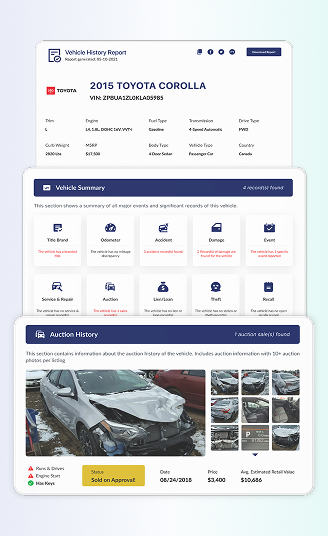
A Texas VIN check starts with the 17-character Vehicle Identification Number on the vehicle and its title, and it answers two separate questions: what the vehicle is, and what records exist about it. Decoding the VIN identifies the year, make, model and specifications. A vehicle history report goes further and compiles the records available for that VIN, such as title brands, accident and damage records, mileage readings, liens or loans, theft records and recalls. Neither replaces a mechanic’s inspection or the certificate of title that your county tax office processes.
This page covers the parts of a vehicle check that are specific to Texas: how Texas brands titles, why flood history matters in a Gulf Coast state, what changed when safety inspections ended in 2025, and what the 30-day title deadline means for a buyer. PremiumVIN is a private vehicle-information service. It is not the Texas Department of Motor Vehicles, and the records in a PremiumVIN report are not limited to Texas.
What a Texas VIN check can show, and what it can’t
A VIN check shows available records, not the full life of the vehicle. The table separates the questions buyers ask from the source that actually settles each one
| Question | Document that settles it | What a VIN check adds |
|---|---|---|
| What exact vehicle is this? | The VIN itself | Year, make, model, trim and specifications decoded from the VIN structure and available data |
| Is the title branded? | The Texas certificate of title and TxDMV records | Title-brand records where they appear in the sources searched |
| Was it damaged? | Repair invoices, a physical inspection | Accident and damage records, plus auction and sales history with photos when available |
| Is there a loan on it? | The title and the lienholder | Lien or loan records where supported |
| Has the mileage been altered? | The odometer statement on the title | Mileage readings from different records, so jumps and gaps are visible |
| Was it reported stolen? | Law enforcement, insurer | Theft records where available |
| Is a recall open? | The manufacturer | Recall information where available |
| What is it worth? | Dealers, appraisers | Market-value information, which is not an appraisal and not the value Texas uses for tax |
A sparse report is not proof of a clean history. “No matching record found” means the searched sources returned nothing for that VIN. It does not mean the event never happened.
Find the VIN and match it before you search
The VIN must match across the vehicle and its paperwork. Vehicles built from 1981 onward carry a standardized 17-character VIN that never uses the letters I, O or Q. On North American vehicles, the 9th character is a check digit, the 10th encodes the model year and the 11th identifies the assembly plant.
Look for the VIN at the base of the windshield on the driver’s side, on the label in the driver’s door jamb, and on the title, registration and insurance papers. Compare at least two physical locations with the title. If the numbers differ, stop and ask why before any money changes hands.
Vehicles built before 1981 do not follow the 17-character rule, and formats vary by manufacturer. PremiumVIN can decode pre-1981 VINs, but records for older vehicles are often sparse. The classic car VIN lookup page explains the differences.
Texas title brands and what they mean
In Texas, the certificate of title is where a brand is recorded. TxDMV’s Title Check page describes the brand categories used in the national NMVTIS system. The ones buyers meet most often:
| Brand | What it means |
|---|---|
| Salvage | The vehicle was damaged beyond a state-defined share of its value. It can be rebuilt, but cannot return to the road until it is |
| Rebuilt (Texas title reads "Rebuilt Salvage") | A former salvage vehicle that passed required inspections after repair |
| Junk | Incapable of safe operation, and never to be titled or registered again |
| Water Damage | Damaged exclusively by flood water |
| Odometer | The mileage is flagged as true or not true |
| Manufacturer buyback | Returned to the manufacturer under warranty or a lemon law |
| Gray market | Built for use outside the United States and not compliant. TxDMV states it cannot be titled or registered in Texas |
TxDMV notes that a rebuilt vehicle can cost more to repair than it is worth, that insurers sometimes decline to cover one, and that its value is lower than an unbranded equivalent. See the PremiumVIN guides to title checks and salvage titles for how these brands appear in reports.
Two Texas-specific points are worth knowing. First, Texas ties salvage status to repair cost relative to the vehicle’s pre-damage value, and commentary on Texas law commonly describes the threshold as 100 percent, higher than in some other states. An insurance total loss and a Texas salvage brand are related but not identical events, and a report can show one without the other. Second, TxDMV can apply a brand reported by another state to a Texas title. If an owner disputes it, TxDMV’s process requires an official written statement from the reporting state. For a buyer, that means a vehicle’s history in other states is part of its Texas history.
Flood and storm damage: why Texas buyers look twice
Texas has a formal Water Damage brand, but the brand only exists if the damage was reported. Hurricane Harvey in 2017 shows the scale of the issue. The Insurance Council of Texas estimated about 250,000 insured vehicles flooded, with roughly $4.75 billion in auto losses, while the National Hurricane Center reported about half a million cars flooded across Southeast Texas. Other estimates ran as high as one million. Vehicles that were uninsured, or whose owners never filed a claim, may carry no record at all.
Hail is the other recurring Texas hazard. The Insurance Council of Texas counted nearly $5 billion in auto and homeowner hail claims in 2016 alone. Hail damage reaches a vehicle history only when a claim, auction listing or repair record creates a data point. A damage record is a lead to follow up with repair invoices and an inspection, not a verdict.
TxDMV’s buyer guidance for flood damage is physical: check under the carpets for dampness, look for silt or grit inside the cabin and engine compartment, and have a mechanic inspect the vehicle. The records and the physical check answer different questions, and each can catch what the other misses.
Liens and loans
A lien is a lender’s recorded claim against a vehicle. In a private sale, the title shows the lienholder, and the seller needs a lien release from the lender before the title can move cleanly to the buyer. A PremiumVIN report may include lien or loan records where the sources support them. Treat that as a prompt to ask the seller directly and to confirm the release with the lienholder. PremiumVIN cannot confirm legal ownership or title status.
Mileage and the title’s odometer statement
In a Texas private sale, TxDMV tells buyers to have the seller print and sign their name on the back of the title, enter the sale date and write in the odometer reading. Compare that figure with the mileage readings in the report. A rising sequence of readings is consistent with normal use. A drop, or a long gap followed by an unusually low figure, is a reason to ask for service invoices. A gap is not proof of tampering, because many vehicles simply have few recorded readings.
Texas ended safety inspections. Here is what that changes for buyers
Since January 1, 2025, non-commercial vehicles in Texas no longer need an annual safety inspection to register. House Bill 3297 replaced it with a $7.50 Inspection Program Replacement Fee collected at registration ($16.75 for a new vehicle, covering two years). Commercial vehicles still need safety inspections.
Emissions testing continues. Gasoline vehicles that are 2 to 24 years old must pass an emissions test before registration in 17 counties: Brazoria, Collin, Dallas, Denton, Ellis, El Paso, Fort Bend, Galveston, Harris, Johnson, Kaufman, Montgomery, Parker, Rockwall, Tarrant, Travis and Williamson. Bexar County joins the program on November 1, 2026, according to TxDMV and TCEQ, with a station fee of $18.50. Electric vehicles are exempt from emissions tests.
For a buyer, this has two practical effects. A used vehicle no longer has a recent state safety inspection behind it, so an independent mechanic’s inspection carries more weight. And in an emissions county, a vehicle that cannot pass its test becomes a repair bill before it can be registered. A VIN check does not certify emissions compliance or mechanical condition.
Buying in Texas: the paperwork and the deadline
TxDMV states that Texas provides no warranty or consumer protection on the reliability of a used vehicle, whether the seller is a dealer or an individual. For passenger cars and pickups, dealers must post a Buyers Guide showing whether the sale is “as is” or with a warranty. Its private-sale checklist:
- Get the signed title. Never leave a private sale without it.
- Complete Form 130-U, the Application for Texas Title and/or Registration. The seller prints and signs and enters the sales price.
- Let the seller keep the plates. A Vehicle Transit Permit from TxDMV allows 5 days of legal driving to reach the county tax office.
- Apply for the title within 30 days of the sale. County tax offices assess a $25 penalty for each 30-day period or part of one, up to $250. Motor vehicle sales tax is 6.25 percent.
Texas also publishes a Standard Presumptive Value for used vehicles, which counties use in certain tax calculations. It is a tax figure. It is not an appraisal and it is not the same thing as PremiumVIN’s market-value information, which gives context for negotiating but is neither a certified appraisal nor a predicted sale price.
Buying from another state, moving to Texas, or importing
New Texas residents generally have 30 days to title and register a vehicle they bring in. When a vehicle is out of state or exempt from Texas inspection, Texas paperwork allows the owner to self-certify the VIN on Form VTR-270, and the record then carries a “VIN certification waived” remark. In plain terms, that VIN may not have been physically verified by an inspector, so matching it yourself matters.
A vehicle from outside the United States adds federal and state conformity questions. A history report can help you investigate available records about auction activity, damage or title events before you commit, but it cannot confirm that a vehicle is eligible for import or registration. Ask TxDMV or your county tax office before purchase, especially for a gray-market vehicle.
When you also need to know how it was equipped
A history report tells you what happened to a vehicle. A Window Sticker addresses a different question: how it was configured. PremiumVIN generates a reconstructed Window Sticker using available vehicle configuration and sticker-related data. It may include trim, MSRP, options, packages and colors where available. It is not necessarily the original factory-issued sticker, and what appears depends on the records available for that vehicle. It does not prove that a vehicle still has its original equipment or has not been modified.
How to run a Texas VIN check on PremiumVIN
Running a report takes less than a minute. Here is how it works.

Step 1: Enter the VIN or License Plate
Enter the VIN, or a supported license plate, in the search box above.

Step 2: Review the Free Preview
Review the free preview, which shows vehicle specifications and market-value information where available.

Step 3: Choose Your Report
Decide whether you need the Vehicle History Report or a reconstructed Window Sticker. Both are available online and as PDF downloads.
What appears in a report depends on the vehicle, the identifier and the sources available. Information in a report is labeled by type: decoded from the VIN, sourced from manufacturer or third-party data, estimated, or reconstructed. Not every field is populated for every vehicle.
What a VIN check does not replace
A PremiumVIN report is not a government record, a physical inspection, a certified appraisal or a legal confirmation of title or ownership. It does not guarantee a complete history or detection of every accident, theft or title issue. For a Texas purchase, the checks that settle the decision are the signed title and lien release, TxDMV’s own Title Check, and an independent mechanic’s inspection. A VIN report helps you decide which of those to scrutinize hardest.
Texas VIN check FAQs
Is a VIN check in Texas free?
Decoding a VIN and viewing a market-value preview are free in PremiumVIN where data is available. A full Vehicle History Report is a paid product. Current prices are on the pricing page.
Does a VIN check show the owner?
No. A VIN check identifies a vehicle and available records about it. PremiumVIN does not provide owner identity lookups.
Does Texas put flood damage on the title?
Texas has a Water Damage brand for vehicles damaged exclusively by flood water. A flooded vehicle that was never reported, or that was titled elsewhere without a flood brand, may not show one, so a physical inspection still matters.
What does “Rebuilt Salvage” mean on a Texas title?
The vehicle was previously branded salvage and passed the required inspections after repair. It can be registered and driven. TxDMV cautions that insurability and value can be affected.
How do I check for a lien on a Texas vehicle?
Check the lienholder listed on the title, ask the seller for the lender’s lien release, and review lien or loan records in a history report where available. Confirm any open loan with the lender directly.
Are Texas safety inspections still required?
Not for non-commercial vehicles since January 1, 2025. Emissions tests are still required in 17 counties, and in Bexar County beginning November 1, 2026.
What if the report shows no accidents?
It means no matching accident record was found in the sources searched. Unreported or uninsured damage does not appear, so pair the report with an inspection.
Is PremiumVIN the same as TxDMV’s Title Check?
No. TxDMV’s Title Check is a separate program that runs through NMVTIS with providers approved by the U.S. Department of Justice. PremiumVIN is a private service that compiles available records from multiple sources.