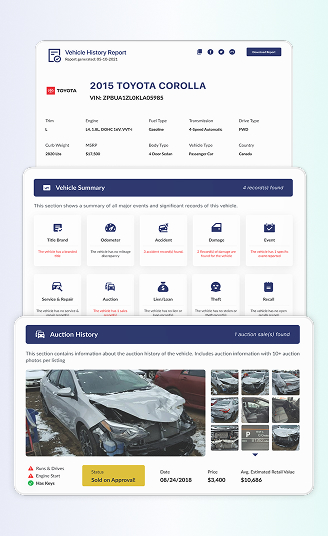



- A flood-damaged vehicle can be caused by major flooding or a hurricane.
- A flooded vehicle usually has serious damage to its electrical and structural components.
- Run a quick physical inspection to see the signs of damage and get a vehicle history report to check the complete vehicle’s condition
After hurricanes and major flooding, thousands of affected cars, trucks, and SUVs are repaired, cleaned, and put back on the market. Some stay in the same state; others get shipped across the country and sold to buyers who have no idea the vehicle was ever underwater.
The problem usually shows up later. Maybe it’s a musty smell that never completely goes away. Maybe it’s an airbag warning light that suddenly appears. Sometimes it’s a series of electrical problems that seem unrelated until a mechanic discovers corrosion inside the wiring.
In this article, we’ll explain how to avoid a flood-damaged car and run a flood check by VIN, how to run a flood VIN check, what free databases can and can’t tell you, and what warning signs to look for when inspecting a used vehicle in person.
Why Flood-Damaged Cars Are Dangerous to Buy
A vehicle can look perfectly normal after being cleaned. The paint shines, the seats look fresh, and the engine starts without any warning lights. That’s why flood-damaged cars could be masked easily and catch buyers off-guard.
What Water Actually Does to a Vehicle
Water doesn’t damage every part of a vehicle equally. Some components may survive with little or no issues. Others can begin failing weeks or months after the flood has already happened. A lot of these problems don’t appear overnight, which makes a flood-damaged car seem perfectly fine until the new owner has already bought it.
Electrical System Damage
Modern vehicles rely heavily on electronics. The engine, transmission, anti-lock brakes, airbags, power steering, and even the infotainment system all depend on electrical components working properly. When water gets into those systems, corrosion often starts forming inside connectors and wiring. Even after the vehicle appears dry, corrosion may continue spreading where nobody can see it.
Mechanical and Structural Damage
If water enters the engine or transmission, the situation can become worse. Internal parts depend on clean lubricants to operate correctly. Water contamination can damage bearings, seals, and other components that cost thousands of dollars to repair or replace.
Interior and Safety Systems
Floodwater can soak into carpet padding, seat cushions, insulation materials, and air ducts. Thus, sensors on airbags and seatbelt pretensioners are designed to work under very specific conditions. Water exposure can easily damage them in a way that a vehicle history report alone cannot show you the data.
Where Do Flood-Damaged Cars Usually End Up?
Flood-damaged vehicles usually end up at a salvage auction, and they are usually bought by junkyards or car rebuilders. Once the vehicle is marked as a total loss by insurance, these vehicles are sold to be dismantled either for their parts or resold to buyers under the salvage or rebuilt title.
Why the VIN Becomes So Important
The title may change over time, but the VIN stays with the vehicle for its entire life. Insurance records, auction records, title events, and other historical data are often tied directly to the VIN. That’s why a VIN check is usually one of the fastest ways to investigate a vehicle’s past before any transaction happens.
How Flood Damage Gets Recorded on a VIN
Flood damage can appear in several different ways depending on how the incident was handled. Some records come from insurance companies. Others come from state title agencies or salvage auctions.
Insurance Total Loss Claims
When an insurance company determines that repairing a flooded vehicle costs too much, the vehicle may be declared a total loss. That event often becomes part of the VIN history. Even years later, buyers may still be able to see that the vehicle was written off after a flood event.
State Title Brands
States use title brands to warn future buyers about a vehicle’s history. Some states use the word “Flood.” Others may use “Water Damage” or issue a salvage title instead. Because title branding rules vary, buyers should look beyond the current title and review the full vehicle history whenever possible.
Salvage Auction Records
Many flood-damaged vehicles eventually pass through salvage auctions before returning to the road. For example, a vehicle may be declared a total loss, sold through an auction, repaired, and later offered for sale by another owner. The auction record can become an important clue when trying to understand what happened to the vehicle.
Situations Where Records Can Be Missing
Flood damage may not appear if the owner never filed an insurance claim. Some vehicles are repaired privately and sold without entering major reporting systems. That is one reason experienced buyers combine a VIN check with a physical inspection.
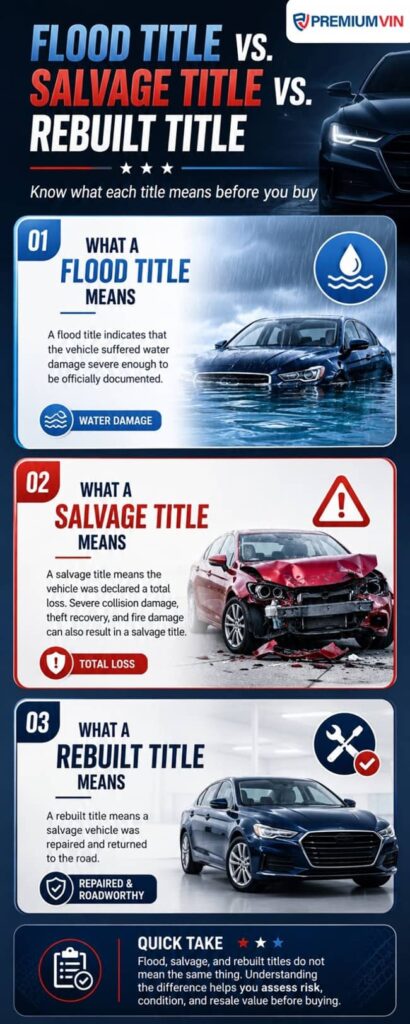
Flood Title vs. Salvage Title vs. Rebuilt Title
These terms are often confused, but they do not mean the same thing. Here’s what sets them apart:
How to Check a VIN for Flood Damage
A flood VIN check is usually straightforward and only takes a few minutes. The goal is to build a timeline of the vehicle’s history and identify any records connected to water damage.
Step 1: Find the VIN
Check the driver’s side doorjamb, windshield, engine bay, or the vehicle’s paperwork for the VIN.
Step 2: Enter the VIN
Once you have the VIN, enter the VIN on our VIN check service. Then, click on the button to submit the form.
Step 3: Get the Report
Wait for the report to generate. Then, examine the preview page to see the specifications and market value. You may proceed to payment to get the flood damage information.
What a Flood VIN Check Shows
On the vehicle history report, you can see this information:
- Flood title brands
- Water damage records
- Insurance total-loss events
- Salvage history
- Rebuilt title records
- Auction activity
Can You Check a VIN for Flood Damage for Free?
Free tools exist, but they have limits. Check on this section below to see what free checks are available.
NICB VINCheck
NICB VINCheck can identify certain stolen vehicles and insurance total losses. It can be a good starting point; however, it does not cover the whole title history.NHTSA
NHTSA can be helpful if you want to check recall and safety issues related to a vehicle. Unfortunately, it does not show flood damage records.State DMV Portals
Some state DMVs show title information, but coverage varies widely. In many cases, buyers only see the most recent title event rather than the vehicle’s full history.Can Flood Damage Be Hidden From a Vehicle History Report?
Sometimes, yes. A vehicle history report has information that was reported somewhere along the vehicle’s life.
The owner may have paid for repairs without involving insurance. The vehicle may have been damaged before entering a reporting system, or the flood event may have occurred in a location where records were never shared with major databases.
Why a VIN Check and Inspection Work Best Together
A vehicle history report only shows the recorded data, while the vehicle might tell otherwise. That is why you need to combine a vehicle history report and a manual inspection by a professional vehicle inspector.
Physical Signs of Flood Damage to Check
Even when the vehicle history looks clean, it is worth spending more time and money to hire a professional car inspector to help you examine the condition before deciding to purchase the vehicle.
Mold and Odor
A musty smell is one of the common signs of a flooded vehicle. You can check the vehicle’s under-floor mats, inside the trunk, and around the spare tire compartment for unusual odors, moisture, stains, or signs of mold growth.
Electrical Problems
Floodwater can damage a vehicle’s wiring, sensors, and electronic components. Watch for warning signs such as malfunctioning power windows, dashboard lights turning on randomly, faulty cameras, or inconsistent operation of other electrical features.
Rust and Corrosion
Water exposure can cause rust in areas that normally stay dry. Inspect seat brackets, interior fasteners, dashboard supports, door hardware, and other metal components for corrosion that may indicate previous flood damage.
Mechanical Issues
Flood damage can affect important mechanical systems, including the engine, transmission, and other components. During an inspection or test drive, look for unusual noises, performance issues, fluid contamination, or signs that repairs may have been made after water exposure.
What to Do If a VIN Check Shows Flood Damage?
If the vehicle history report shows the vehicle has flood damage, it does not mean that you should stop checking the vehicle. A vehicle that has a flooded title might spend its whole life being checked and fixed so it can be put on the road again.
When You Should Walk Away
You should walk away if the seller cannot show the documentation that states the vehicle was fixed. If the flooded vehicle has plenty of electrical complaints, missing records, and unclear ownership history, it usually carries a big risk.
When It Might Still Be Worth Considering
If the flooded vehicle were repaired and properly documented, it may still be worth considering. Make sure to always bring a trusted mechanic to inspect the vehicle, so you do not get scammed.
How to Avoid Buying a Flood-Damaged Vehicle
Buying a used car with hidden flood damage can lead to expensive repairs and safety issues later. Before you decide to purchase a used car from different makes, you need to inspect its records and do an offline inspection to see if it has hidden problems that might not be visible on the live records.
Check the Vehicle History Report by VIN
A vehicle history report based on the VIN can reveal important records linked to flood damage. Buyers can check for flood titles, salvage records, reported accidents, and other damage information before you make a decision to purchase the vehicle.
Inspect the Interior for Water Damage
Flood damage often leaves signs inside the vehicle, even after repairs or cleaning. Check the carpets, seats, and upholstery for discoloration, mildew, water stains, loose materials, or mismatched interior parts that may suggest previous water exposure.
Look for Mud, Rust, and Corrosion
Water can reach hidden areas that are difficult to clean or repair. Inspect places such as the trunk, glove compartment, under the seats, and dashboard for mud residue, rust, corrosion, or signs of moisture buildup.
Check for Unusual Odors
A musty or moldy smell can be a warning sign of previous flood exposure. Some sellers may use air fresheners or cleaning products to cover unpleasant odors, so buyers should pay attention to unusual smells inside the cabin.
Test Electrical Components
Floodwater can damage wiring, sensors, and electronic systems throughout a vehicle. During a test drive, check features such as power windows, lights, dashboard controls, infotainment systems, and other electrical components for unusual behavior.
Get a Professional Inspection
A professional inspection can uncover issues that are difficult for buyers to identify on their own. A trusted mechanic can check the vehicle’s mechanical condition, electrical systems, and possible signs of previous flood repairs.
Be Careful With Unusually Cheap Vehicles
If the car is priced way too low compared to the usual market value, be aware, as it might be a warning sign. While a low price does not always guarantee that the vehicle has flood damage, you should investigate the vehicle history report to see what’s up.
Should You Check Flood Damage by VIN?
A flood-damaged vehicle can be detailed, polished, and photographed so well that it looks better than the vehicle parked next to it. The problem is that flood damage is rarely about appearance. The expensive issues are usually hidden behind interior panels, inside electrical connectors, or underneath the vehicle.
That is why many buyers check the VIN before they negotiate a price. Spending a few minutes reviewing a vehicle’s history is far easier than spending the next six months trying to figure out why warning lights keep appearing after every rainstorm.
FAQs About Flood Damage by VIN
How to check the VIN for flood damage?
To check for flood damage by VIN, run the vehicle’s 17-digit VIN through a service like PremiumVIN. A vehicle history report can reveal important title brands, including flood, salvage, or junk status, helping buyers identify potential risks before purchasing.
How to tell if a vehicle has had flood damage?
To tell if a vehicle was flooded, it often leaves behind warning signs such as musty smells, dried mud in hidden areas, water stains on upholstery, or discoloration on seatbelts. Reviewing a vehicle history report and arranging a professional inspection can help confirm whether the vehicle has been affected by water damage.
Is it illegal to sell a flood-damaged car?
Not really. Selling a flood-damaged vehicle is generally legal as long as the damage is fully disclosed to the buyer. However, concealing known water damage or attempting to hide the vehicle’s history through title washing may be considered fraud and can result in legal penalties.
Should I buy a car with a flood title?
In most cases, no, flood-damaged vehicles carry significant risks. Water exposure can lead to electrical failures, corrosion, and safety issues that may not appear until months after purchase. While the initial price may seem attractive, repair costs can quickly outweigh any savings.
Do car dealers have to disclose flood damage?
Yes. Dealers are typically required to disclose any known flood damage and accurately represent the vehicle’s title status. Failing to disclose flood-related issues or misrepresenting a vehicle’s history may violate consumer protection and fraud laws.