

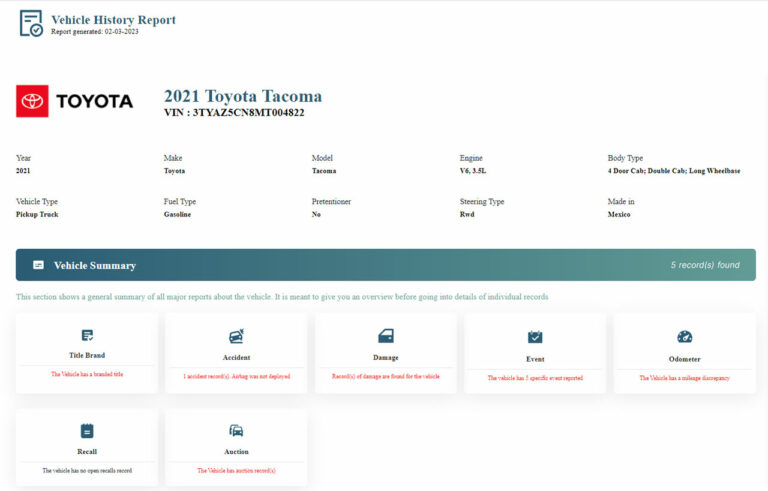
Buying a used car without checking its history can be risky but using the wrong vehicle history report provider can be just as dangerous.
A vehicle history report is a document that contains vehicle information, including accidents, damages, lien and loan records, and more. With this document, car buyers are given the opportunity to make informed decisions and get really good deals. However, scammers have begun to create vehicle history report scams targeting both car buyers and sellers. If you are selling or buying a car anytime soon, pay attention to the common vehicle history report scams that will be highlighted in this article.
➡️ Need verified vehicle history data? → Get a Trusted PremiumVIN Vehicle History Report
What Are Vehicle History Report Scams?
Vehicle history reports are supposed to protect car buyers and sellers from scams, but these scammers have found a way to carry out malicious activities under the guise of vehicle history reports. So what are the vehicle history report scams?
Vehicle history report scams happen when:
- fake websites sell fabricated VIN reports,
- sellers provide altered reports,
- fraudsters impersonate trusted report providers,
- buyers pay for incomplete or fake vehicle records.
These scams exploit buyers who want peace of mind before purchasing a used vehicle.
How These Scams Work
Fake Websites Sell Fabricated VIN Reports
Scammers create websites that look legitimate but deliver worthless, incomplete, or entirely fictional vehicle data.
Sellers Provide Altered Reports
Dishonest sellers edit legitimate reports to hide accidents, salvage titles, or odometer rollbacks.
Fraudsters Impersonate Trusted Providers
Scammers copy the branding of real companies to trick buyers into paying for fake reports.
Buyers Pay for Incomplete or Fake Records
Victims receive outdated information, missing critical data, or nothing at all—while their payment information is compromised.
These scams exploit buyers who want peace of mind before purchasing a used vehicle. Instead of protection, they get deception.
Common Vehicle History Report Scams Buyers Should Know
Scammers use several tactics to defraud used car buyers. Here are the most common schemes.
1. Fake Vehicle History Report Websites
Scammers create websites that look legitimate and promise “instant vehicle reports” at attractive prices. But after payment, the report is fake, the data is incomplete, or nothing is delivered at all.
How the Scam Works
The scammer builds a website with professional-looking logos and layouts
They offer VIN reports at suspiciously low prices to attract budget-conscious buyers
After you enter your VIN and payment information, they deliver a fabricated report
Some sites simply take your money and disappear
Warning Signs of Fake Websites
Suspiciously low prices (far below industry standards)
No company background or “About Us” information
Poor website design with broken links or grammatical errors
No physical address or legitimate contact information
No real customer support—only email forms that go unanswered
Pressure to “act now” or limited-time offers
How to Protect Yourself
Only use established, reputable VIN report providers
Research the company before entering any payment information
Look for real customer reviews on independent platforms
Verify the company has transparent contact information and a physical address
➡️ Use a trusted provider → PremiumVIN Vehicle History Report
2. Seller Requests a Specific VIN Report Site
This is one of the most common scams targeting car sellers, but it also affects buyers.
How the Scam Works
A scammer posing as an interested buyer contacts a car seller
They engage in normal conversation about the vehicle to build trust
They request a vehicle history report or “national title report” from a specific website
The link they provide leads to a fake site controlled by the scammer
The seller pays for the report, and the scammer collects the payment—and often the seller’s credit card information
The Scammer’s Profit
Direct payment for fake reports
Stolen credit card data for future fraudulent purchases
Personal information for identity theft
The Golden Rule
Never use a report website suggested only by the seller or buyer. Always choose your own trusted provider.
Real-World Example
According to ScamPulse, several witnesses have reported that fake VIN check websites often end with “.VIN” to appear authentic. These sites are designed solely to steal information.
3. Fake CARFAX or PDF Reports
Some dishonest sellers create forged documents to hide a vehicle’s true history.
How the Scam Works
The seller obtains a legitimate report for a different vehicle
They edit the PDF to change the VIN and hide negative information
They send you a forged screenshot or altered document
The fake report shows a clean history—even if the vehicle has salvage titles, accidents, or odometer fraud
What Fake Reports Hide
Salvage or rebuilt titles
Accident history with structural damage
Odometer rollback fraud
Multiple ownership transfers (indicating problems)
Outstanding liens or loans
How to Protect Yourself
Never accept a PDF report from a seller as final verification
Run your own report using the VIN from the vehicle itself (not from the seller’s document)
Compare the VIN on the vehicle’s dashboard with the VIN on any report
If the seller refuses to provide the VIN for you to check yourself, walk away
4. Outdated or Incomplete Reports
Some sellers provide old reports that don’t reflect the vehicle’s current condition.
How the Scam Works
The seller obtained a vehicle history report months or years ago
The report was clean at that time
Since then, the vehicle has been in accidents, acquired a salvage title, or had other issues
The seller provides the outdated report to make the vehicle appear cleaner than it is
Another Variation
Some sellers deliberately hide accident or damage information from insurance companies and DMVs to keep their titles clean. When you run a report, the damage may not appear—but it still exists.
How to Protect Yourself
Ensure you are looking at the most recent version of any report
Run your own report—don’t rely on what the seller provides
Verify details with multiple reputable sources when possible
Always conduct a professional inspection and test drive
5. Incomplete “Free VIN Reports”
Many “free report” sites are designed to collect your information rather than provide value.
How the Scam Works
A website offers “free vehicle history reports” as bait
You enter your VIN and email address
The site shows minimal information—basic specs only
They pressure you to “upgrade” to a paid report for complete data
The paid report may be incomplete, outdated, or entirely fabricated
What Free Sites Often Hide
They don’t reveal their data sources
Accident history is frequently missing
Title brand information is incomplete
No auction records or photos
No odometer verification
The Real Cost
While the monetary cost may be low, the risk is high. A free report that misses a salvage title or accident history could cost you thousands in hidden repairs and diminished value.
➡️ Learn more about free vs. paid reports → How to Check Vehicle History for Free
Why Fake Vehicle History Reports Are Dangerous
A fake vehicle history report isn’t just a waste of money—it can cost you thousands in hidden repairs, legal problems, and safety risks.
Hidden Accident History
Undisclosed accident damage can lead to expensive repairs down the road. Structural issues may compromise the vehicle’s safety in a future crash. Frame damage can cause uneven tire wear, alignment problems, and poor handling.
Salvage or Rebuilt Titles
You may unknowingly buy a vehicle that was previously declared a total loss. Salvage and rebuilt titles permanently reduce value by 40-60%. Many insurers won’t cover these vehicles, and most lenders won’t finance them.
Odometer Fraud
Mileage rollback scams can inflate vehicle value by thousands of dollars. A vehicle with 150,000 miles rolled back to 60,000 miles may have serious wear on the engine, transmission, and suspension. You’ll face major repairs much sooner than expected.
Theft Records
If you unknowingly buy a stolen vehicle, law enforcement will seize it—and you’ll lose every dollar you paid. You may also face legal complications for possessing stolen property, even if you had no knowledge of the theft.
Lien Records
Outstanding liens can become your financial problem. The lender can repossess the vehicle from you—even if you paid the seller in full. You may also be unable to register the vehicle or obtain a clean title.
How to Spot a Fake Vehicle History Report Provider
Legitimate VIN report providers have certain characteristics. Fake ones lack them.
Transparent Data Sources
Legitimate Providers | Fake Providers |
| Explain where their data comes from (NMVTIS, DMVs, auctions, insurance databases, salvage records) | Hide or obscure their data sources |
| Are transparent about data limitations | Make exaggerated claims about data completeness |
| Provide sample reports showing real data | Cannot provide real sample reports |
Clear Contact Information
Legitimate Providers | Fake Providers |
| Physical business address | No physical address (only a PO box or nothing) |
| Customer support email and often phone number | No phone support—email only, often unanswered |
| Clear refund and privacy policies | Vague or missing policies |
| About Us page with company history | No company background information |
Secure Checkout
What to Look For | Red Flags |
| HTTPS in the website URL (padlock icon in browser) | No HTTPS (non-secure connection) |
| Secure payment processing (Stripe, PayPal, or other reputable processors) | Unusual payment methods (cryptocurrency, wire transfer only) |
| Clear pricing with no hidden fees | Prices that seem too good to be true |
| Visible terms and conditions | Hidden fees revealed only at checkout |
Real Sample Reports
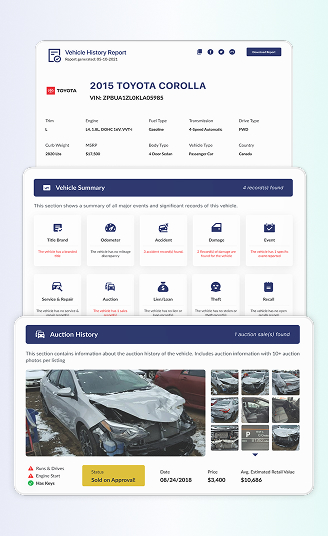
A legitimate provider should offer a real sample report showing exactly what customers receive. This demonstrates transparency and builds trust.
What to Check in a Sample Report
Does it include accident history?
Does it show title brands?
Are auction photos included?
Is the data presented clearly?
➡️ View a real sample report → Sample Vehicle History Report
How PremiumVIN Helps Protect Buyers From VIN Report Scams
Unlike fake report websites, PremiumVIN provides verified, transparent vehicle data from authoritative sources.
- verified historical records,
- accident and salvage data,
- title history,
- theft records,
- mileage records,
- ownership history,
- recall information.
PremiumVIN also offers:
- secure checkout,
- transparent reporting,
- customer support,
- instant report delivery.
When You Should Always Run a Trusted Vehicle History Report
A trusted vehicle history report is essential in these high-risk situations.
Buying from a Private Seller
Private sellers have less oversight than dealerships. They may not know—or may not disclose—the vehicle’s true history. Always run your own report.
Buying from Auction
Auction vehicles often have complex histories. Many have been damaged, declared salvage, or sold after theft recovery. Auction records reveal the truth.
Buying from Facebook Marketplace or Craigslist
These platforms have minimal seller verification. Scams are common. A vehicle history report is your best defense.
Purchasing Out of State
Cross-state purchases make it harder to inspect the vehicle in person. Title washing—moving a vehicle to hide its salvage history—is more common across state lines. A trusted report catches this.
H3: The Price Seems Too Good
If a deal seems too good to be true, it probably is. A suspiciously low price may indicate hidden problems—salvage title, accident damage, or odometer fraud. Verify before buying.
Frequently Asked Questions
How do you know if someone is scamming you for a car?
There are several signs that someone may be trying to scam you when selling a car, including:
- The seller insists on communicating only via email or text and refuses to speak with you over the phone or in person.
- The seller claims to be selling the car for someone else and cannot meet with you or provide a test drive.
- The seller asks for payment in advance or requests that you wire money or use an unusual payment method.
- The seller offers the car at a price that is too good to be true or significantly lower than the market value.
- The seller refuses to provide the vehicle history report or other documentation related to the car’s history.
What are the most common car-selling scams?
Some of the most common car-selling scams include:
- Title washing: This involves changing the title status of a car to hide its history, such as by removing the “salvage” designation.
- Odometer rollback: This involves resetting the car’s odometer to make it appear as if it has lower mileage than it actually does.
- Payment scams: This includes requesting payment in advance, asking for payment via wire transfer or other unusual methods, or providing fake payment details.
- Selling a car that has been in a flood or other type of disaster without disclosing the damage
- Selling a car with hidden mechanical problems without disclosing the issues
Are there scams on cars?
Yes, there are various scams that can occur when buying or selling a car. It’s important to be aware of these scams and take appropriate precautions, such as researching the car’s history with the PremiumVIN VIN check tool, conducting a thorough inspection, and only buying from reputable sellers and dealers.
Vehicle history report scams can cost buyers thousands in hidden repairs, fraud, and financial risk. A fake report may hide a salvage title, accident damage, odometer rollback, or outstanding lien leaving you with a vehicle that’s worth far less than you paid.
The safest step before buying any used car is verifying the vehicle with a trusted provider. Don’t rely on reports provided by sellers. Don’t use websites recommended only by sellers. Run your own report using the VIN from the vehicle itself.
Protect your investment with a verified PremiumVIN Vehicle History Report today.