Tennessee VIN Check for Vehicle History Reports

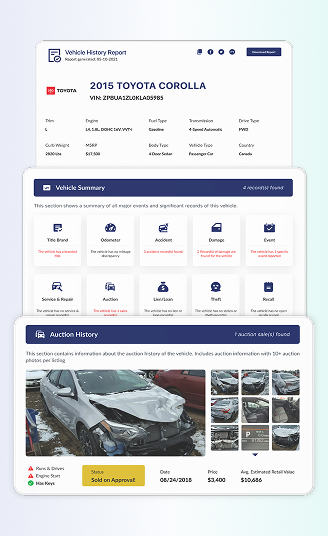
A Tennessee VIN check helps buyers investigate a vehicle’s recorded history before purchasing a used car, truck, or other vehicle. The Vehicle Identification Number connects the vehicle to available records that may reveal previous title classifications, reported accidents, salvage events, flood damage, mileage entries, theft records, and auction activity.

10% OFF
question-mark Why do we need your phone number?
Why do we need your phone number?
We'll send your vehicle report or sticker link via text for easy access.
Our support team may contact you if we find issues with your report or sticker.
Your data is never shared with third parties.
Get 10% off your purchases by providing your phone number.
Look up trim, colors, MSRP, options, packages and more with Window sticker by VIN lookup

Tennessee has a specific process for converting a salvage vehicle into a rebuilt vehicle. The process includes documentation of the original damage, photographs, replacement-parts receipts, identification of parts sources, and an anti-theft inspection. A vehicle that completes the applicable process receives a title branded Rebuilt Vehicle Anti-Theft Inspected.

Flood history also deserves attention. Tennessee distinguishes between qualifying freshwater-flood damage and saltwater damage when determining whether a vehicle may be titled or rebuilt. A vehicle can look presentable after repairs while still having electrical, corrosion, or other problems that are not apparent during a brief visual inspection.

A Tennessee VIN check through PremiumVIN helps investigate available vehicle-history records before a purchase. The information returned depends on the vehicle and the reporting sources available for its VIN. A report should be considered alongside the title, seller documentation, and an independent vehicle inspection.

To begin, use the PremiumVIN VIN Check and enter the vehicle’s VIN.

What a Tennessee VIN Check Can Reveal

A vehicle’s current appearance and title do not necessarily show every event in its history. Available historical records can help buyers identify earlier events that warrant additional investigation.

Depending on source availability, a Tennessee vehicle history report may include:

  • Title history: Available title transactions and title-brand information.
  • Salvage records: Reported insurance total-loss events and salvage classifications.
  • Rebuilt history: Available records identifying a vehicle that previously carried a salvage designation.
  • Flood damage: Reported flood events or flood-related title information.
  • Accident history: Reported collisions and damage events.
  • Odometer history: Available mileage entries and possible inconsistencies between readings.
  • Theft records: Available theft or recovery information.
  • Auction history: Recorded auction appearances and available sale or condition information.
  • Ownership and registration events: Historical entries available from reporting sources.

Not every vehicle has records in every category. An event that does not appear in a report may still have occurred if it was never reported to a source represented in the available data.

Tennessee Salvage Titles and Rebuilt Vehicle Classifications

Tennessee’s salvage and rebuilt title process is one of the most important subjects for buyers evaluating vehicles with previous damage.

The Tennessee Department of Revenue administers the salvage and rebuilt title process. When an insurance company determines that a vehicle is a total loss, the original title and registration are void under the state’s stated procedure. For qualifying vehicles, the owner can apply for a Salvage Certificate or a Non-repairable Certificate.

These classifications have different consequences.

Salvage Certificate

A Salvage Certificate identifies a vehicle that has been classified as salvage following a total-loss event.

Tennessee’s Department of Revenue explains that owners of vehicles less than 10 years old can apply for a Salvage Certificate when the vehicle qualifies under the state’s process. The certificate prevents the vehicle from being operated on Tennessee roadways.

A salvage vehicle should not be treated as an ordinary used vehicle simply because it can be repaired. Its title history and eligibility for a rebuilt title must be considered before a buyer assumes it can return to road use.

When reviewing a vehicle with a salvage history, investigate:

  • The reported reason for the total-loss classification.
  • The type and extent of the original damage.
  • Whether the damage involved structural or safety-related components.
  • Whether replacement parts were used.
  • Whether the vehicle later completed Tennessee’s rebuilt-title process.
  • Whether photographs and repair documentation are available.

A salvage designation is a reason to examine the vehicle’s history more closely. It does not, by itself, describe every damaged component or the quality of subsequent repairs.

Non-repairable Certificate

Tennessee distinguishes a non-repairable vehicle from a salvage vehicle that may qualify for rebuilding.

A Non-repairable Certificate prevents the vehicle from being titled or registered in Tennessee. It should not be confused with a Salvage Certificate, which may be followed by an application for a rebuilt title if the vehicle qualifies and completes the required process.

Before purchasing a vehicle with a non-repairable history, verify its legal status and permitted use with the Tennessee Department of Revenue. Do not assume that repairs or replacement components make it eligible for normal road registration.

Rebuilt Vehicle Anti-Theft Inspected Title

A Tennessee salvage vehicle that has been repaired may qualify for a regular certificate of title branded Rebuilt Vehicle Anti-Theft Inspected.

The rebuilt-title process requires more than a statement from the seller that the vehicle has been repaired. The applicant must provide supporting information about the vehicle’s previous damage and the parts used during reconstruction.

The state’s process includes:

  • The Salvage Certificate of Title.
  • An Application for Motor Vehicle Identification Certification.
  • Photographs of the damaged vehicle.
  • Receipts for replacement parts.
  • Information identifying the source of used parts.
  • Documentation supporting the rebuilder’s application.
  • The applicable fee and inspection process.

The rebuilt designation remains part of the vehicle’s title history. It does not erase the original salvage event.

For buyers, this distinction matters because a rebuilt vehicle has a previous damage and salvage history even when it has subsequently received a title that permits road registration.

Read more about salvage title history and rebuilt title classifications.

Tennessee's Rebuilt Vehicle Inspection Process

Tennessee’s rebuilt-title process includes an inspection administered through the state’s Anti-Theft Unit.

The purpose of this process is to verify vehicle identity and address concerns involving the use of stolen parts during reconstruction. It is not equivalent to a comprehensive mechanical inspection or a guarantee that the vehicle is free of safety defects.

Photographs of the Vehicle Before and After Repairs

The Tennessee Department of Revenue requires photographs documenting the vehicle’s damaged condition as part of its rebuilt-title application process. The application instructions also address photographs of the repaired vehicle.

These photographs provide a visual record of the vehicle before and after reconstruction. They can help document the extent of the original damage and the work performed.

For a prospective buyer, available before-and-after photographs may help answer questions such as:

  • Which areas of the vehicle were damaged?
  • Was the damage concentrated in one section or spread across multiple areas?
  • Were exterior body panels or other major components replaced?
  • Does the repaired vehicle appear consistent with the documented damage?
  • Are there visible differences between the original and repaired condition?

Photographs are supporting evidence, not proof that every repair meets manufacturer specifications.

Replacement-Parts Receipts and Source Identification

Tennessee requires receipts for parts used in rebuilding a salvage vehicle.

The documentation requirements differ according to the parts’ source.

For parts removed from another vehicle, the receipt must identify the buyer and seller and provide the year, make, and VIN of the donor vehicle.

For parts obtained from an in-house supply, the Department of Revenue requires a copy of the front and back of the title demonstrating ownership.

Receipts for newly purchased parts must identify the parts as new.

This documentation helps the state investigate the origin of components used in the rebuilding process and reduce opportunities for stolen parts to enter reconstructed vehicles.

When buying a Tennessee rebuilt vehicle, ask the seller for available parts receipts, repair invoices, photographs, and the rebuilt-title documentation. Compare those materials with the vehicle’s reported history and physical condition.

What the Anti-Theft Inspection Does Not Prove

The rebuilt-title inspection should not be interpreted as a complete safety or mechanical assessment.

Tennessee’s county-clerk guidance explains that the Anti-Theft Unit’s inspection focuses on vehicle identity, the use of parts, and compliance with the rebuilding process. It does not perform a general safety inspection.

Therefore, a vehicle with a Rebuilt Vehicle Anti-Theft Inspected title may still have:

  • Poorly performed structural repairs.
  • Mechanical problems unrelated to vehicle identity.
  • Electrical faults.
  • Airbag or restraint-system concerns.
  • Corrosion or damage that was not identified during the title process.
  • Components that require further professional evaluation.

A rebuilt title documents a state title process. It does not replace an independent pre-purchase inspection.


Flood-Damaged Vehicles in Tennessee

Flood history is an important part of vehicle due diligence in Tennessee, particularly when a vehicle previously operated in an area affected by hurricanes, storms, or inland flooding.

The Tennessee Department of Revenue distinguishes between different types of flood damage when determining whether a vehicle may be titled and registered.

Freshwater Flood Damage

Tennessee’s Department of Revenue states that a flooded vehicle may generally be titled and registered if it can be determined that the vehicle was not damaged by salt or brackish water. The title for such a vehicle is branded FLOOD.

A flood-branded title is a significant historical indicator. It tells a prospective buyer that the vehicle has a recorded flood-related classification.

However, the title brand does not provide a complete description of the water exposure or every component affected.

Floodwater may affect:

  • Electrical wiring and connectors.
  • Electronic control modules.
  • Sensors and vehicle computers.
  • Interior carpeting and insulation.
  • Seat wiring and restraint-system components.
  • Engine or transmission components, depending on exposure.
  • Metal surfaces and connectors vulnerable to corrosion.

Some water-related problems may appear after the vehicle has been cleaned and repaired. Intermittent electrical faults and corrosion can develop over time.

Saltwater and Brackish-Water Damage

Saltwater damage is materially different from qualifying freshwater flood damage.

Tennessee’s Motor Vehicle Commission explains that the Motor Vehicle Anti-Theft Act distinguishes freshwater-flood vehicles that may be rebuilt from saltwater-damaged vehicles that cannot be rebuilt.

This distinction is important when evaluating a vehicle that has been transported into Tennessee from another state after a coastal storm or hurricane.

Do not assume that a vehicle is eligible for rebuilding merely because it has been cleaned, repaired, or given a title in another jurisdiction. Verify its title history and eligibility with the appropriate state authority.

How to Investigate a Flood-Damaged Vehicle

A VIN check may identify reported flood events or a flood-related title classification when that information is available in the underlying records.

A buyer should also look for physical signs of water exposure, including:

  • Musty or damp odors inside the passenger compartment.
  • Mud, silt, or water residue beneath seats or carpeting.
  • Corrosion around electrical connections.
  • Unusual residue beneath the dashboard or in the engine compartment.
  • Recently replaced interior components that do not match the vehicle’s age.
  • Electrical warning lights or intermittent electronic behavior.

Tennessee’s Motor Vehicle Commission specifically advises buyers to look for damp carpets, musty odors, and mud or silt under seats or in the engine area. It also recommends having a trusted mechanic inspect a vehicle because flood damage can lead to electrical and corrosion problems.

A vehicle history report cannot physically identify every flood-damaged component. Use the report to guide further investigation rather than treating the absence of a flood record as proof that the vehicle has never been exposed to water.

Out-of-State Salvage and Flood History

A vehicle’s current Tennessee title does not necessarily tell the complete story of its earlier history.

Vehicles can move between states after an accident, insurance total-loss event, flood, or rebuilding process. A buyer should therefore consider where the vehicle was previously titled and operated.

Tennessee law addresses the disclosure of previous salvage, non-repairable, rebuilt, and flood classifications on subsequent titles when the relevant information is available in state records.

However, title-brand retention does not guarantee that every event from every jurisdiction will appear in a vehicle’s records. Reporting delays, differences between state systems, and events that were never reported can affect the information available to a buyer.

When evaluating a vehicle previously registered outside Tennessee:

  1. Review available title and brand history.
  2. Check for earlier salvage or rebuilt classifications.
  3. Investigate possible flood or total-loss events.
  4. Compare the vehicle’s current title with its available historical records.
  5. Request repair invoices and supporting documentation if the vehicle was rebuilt.
  6. Arrange an independent inspection when previous damage is suspected.

This is particularly important for vehicles purchased from areas affected by major flooding. Tennessee regulators have warned consumers about flood-damaged vehicles transported from other states and sold without adequate disclosure.

Odometer Disclosure and Mileage History in Tennessee

Mileage is another important part of a vehicle’s history.

When a used vehicle is titled in Tennessee, an odometer disclosure statement is required when applicable. The disclosure records the mileage represented during the ownership transfer.

Federal odometer disclosure requirements changed for vehicles with model year 2011 and newer. Under the current federal framework, the disclosure period is 20 years for model year 2011 and newer vehicles. Vehicles with model year 2010 and older remain subject to the previous 10-year exemption period.

This distinction matters when evaluating older used vehicles because not every vehicle is subject to the same disclosure period.

When reviewing available mileage records, look for:

  • A later recorded mileage that is lower than an earlier reading.
  • Large gaps between dated mileage entries.
  • Mileage changes that do not align with the vehicle’s age or use.
  • An odometer reading reported as not actual mileage.
  • Differences between service records, inspection documents, and title disclosures.

A mileage inconsistency warrants investigation, but it does not automatically establish odometer fraud. Data-entry errors, instrument-cluster replacements, and differences in reporting can also create inconsistencies.

A VIN check may provide mileage entries from available sources, but it cannot guarantee that every odometer reading has been recorded.

Learn more about VIN mileage history and odometer information.

Buying a Used Vehicle in Tennessee

A Tennessee VIN check is most useful when the available history is compared with the vehicle’s title, seller documentation, and current condition.

Before purchasing a used vehicle, follow these steps.

Search Icon

Step 1: Verify the VIN on the Vehicle

Locate the VIN and compare it with the number printed on the title and registration documents.

Check for differences between the identification number on the vehicle and the number supplied by the seller. Signs of alteration or inconsistent identification should be investigated before proceeding.

If you need help locating the identification number, see where to find a VIN.

Report Icon

Step 2: Review Available Vehicle-History Records

Enter the VIN into the PremiumVIN VIN Check tool.

Review available information about title history, salvage events, rebuilt classifications, reported accidents, flood records, mileage, theft, and auction activity.

Pay particular attention to whether the vehicle previously carried a salvage or flood classification.

Check Icon

Step 3: Compare the Report With the Current Title

Check whether the title supplied by the seller is consistent with the available vehicle-history information.

A vehicle with a Rebuilt Vehicle Anti-Theft Inspected brand has a different history from a vehicle with no recorded salvage classification.

If the vehicle was previously titled in another state, investigate its earlier title history rather than relying exclusively on the most recent Tennessee title.

Search Icon

Step 4: Request Rebuilding Documentation

For a rebuilt vehicle, ask the seller for available:

• Photographs of the vehicle before repairs.
• Photographs after repairs.
• Replacement-parts receipts.
• Donor-vehicle information for used parts.
• Repair invoices.
• Rebuilt-title and inspection documentation.

The documents can help you understand the original damage and the parts used during reconstruction.

Report Icon

Step 5: Arrange an Independent Mechanical Inspection

A rebuilt-title anti-theft inspection is not a general mechanical or safety inspection.

Have a qualified mechanic evaluate the vehicle before purchase, particularly if it has a salvage, rebuilt, or flood history.

The inspection should consider the areas associated with the original damage, including structural components, suspension, electrical systems, engine, transmission, and occupant-restraint systems where relevant.

Check Icon

Step 6: Verify Ownership and Liens

Review the title and confirm that the seller has the documentation needed to transfer ownership.

Check for outstanding lienholder interests and obtain any required lien release. A vehicle-history report should not be treated as a substitute for official title and lien verification.

What a Tennessee VIN Check Cannot Confirm

A VIN check is a research tool. It is not a guarantee that a vehicle has a complete or problem-free history.

The information available for a particular VIN depends on the underlying reporting sources. A report may not contain every accident, insurance claim, title transaction, repair, mileage reading, flood event, or auction appearance.

A Tennessee VIN check cannot independently establish:

  • That a vehicle has never been involved in an accident.
  • That a vehicle has never experienced flood or saltwater damage.
  • That every previous salvage or rebuilt event has been reported.
  • That every replacement part was installed correctly.
  • That a rebuilt vehicle is mechanically safe.
  • That a vehicle has no hidden structural or electrical problems.
  • That the displayed odometer reading is accurate.
  • That the title is free of every possible defect or lien.
  • That the seller is the legal owner.
  • That a vehicle has a clean history simply because no adverse record appears.

For a clearer understanding of how vehicle records are interpreted, review PremiumVIN’s report methodology, data coverage and availability, and documentation limitations.

Run a Tennessee VIN Check Before Buying

Tennessee’s salvage and rebuilt title process makes the original damage, replacement-parts documentation, and anti-theft inspection important parts of a vehicle’s history.

Flood history adds another layer of due diligence. Freshwater-flood vehicles may receive a FLOOD title brand when eligible for titling, while saltwater damage can prevent a vehicle from being rebuilt. These distinctions matter when evaluating vehicles purchased locally or transported into Tennessee from another state.

Enter the VIN into PremiumVIN to review the records available for the vehicle. Compare the report with the title, seller documentation, and an independent inspection before making a purchase decision.

Frequently Asked Questions About Tennessee VIN Checks

How do I run a VIN check in Tennessee?

Enter the vehicle’s VIN into PremiumVIN’s VIN Check tool. The report can help you investigate available title, salvage, rebuilt, flood, accident, mileage, theft, and auction information. The records returned depend on the vehicle and the underlying data sources.

A Salvage Certificate identifies a vehicle classified as salvage after a qualifying total-loss event. Tennessee’s salvage process prevents the vehicle from being operated on state roadways under that certificate. A qualifying vehicle may later apply for a rebuilt title after repairs and completion of the applicable process.

It is the title brand Tennessee uses for a qualifying vehicle that previously had a salvage title and completed the state’s rebuilt-title process. The process includes supporting repair and parts documentation and an anti-theft inspection.

No. The anti-theft inspection focuses on vehicle identity and the rebuilding process, including concerns about stolen parts. Tennessee’s county-clerk guidance states that the Anti-Theft Unit does not perform general safety inspections. An independent mechanical inspection is still important.

A qualifying salvage vehicle may be repaired and submitted for a rebuilt title. The owner must provide the required application, photographs, parts receipts, and supporting documentation. The vehicle must also complete the applicable inspection process unless the inspection requirement is waived by the department.

A salvage vehicle may qualify for a rebuilt title after the required repairs and state process. A Non-repairable Certificate prevents the vehicle from being titled or registered in Tennessee.

It depends on the type of flood damage. Tennessee’s Department of Revenue states that a vehicle generally may be titled and registered if it has not been damaged by salt or brackish water. Such a vehicle receives a FLOOD title brand. Saltwater-damaged vehicles cannot be rebuilt under the state’s stated guidance.

A report may identify flood-related title information or reported flood events when those records are available. It cannot guarantee that every flood incident has been reported or recorded. A physical inspection is important when water exposure is suspected.