

When you look for a used vehicle in the used market, you might come across two crucial documents: the window sticker and the build sheet. Both provide complete details about the car’s specifications, options, features, and more.
The window sticker shows what the buyer sees at the dealership—price, fuel economy, and features. The build sheet, on the other hand, shows the factory side of the story, detailing every component, code, and specification used to assemble the vehicle.
Understanding the difference helps you make smarter decisions when buying, selling, or restoring a car. This guide breaks down what each document includes, when to use them, and how to access both using just the VIN.
What is a Window Sticker?
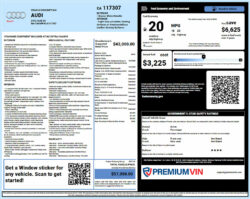
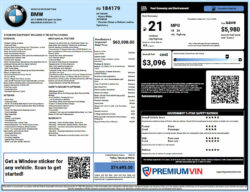
A window sticker (officially called the Monroney label) is the federally required label displayed on every new vehicle at dealerships. It was introduced by the Automobile Information Disclosure Act of 1958 to protect consumers from deceptive pricing.
What Information Does a Window Sticker Include?
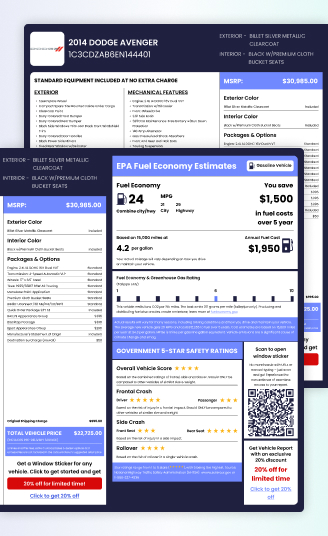
A window sticker has the complete information about the vehicle when it was finished being manufactured. Without further ado, here’s the list of information you’ll be getting from the window sticker:
Standard Features
Lists all equipment included with the base trim, so buyers know exactly what comes as standard without additional cost.
Optional Packages and Upgrades
Covers factory-installed extras with individual pricing, such as technology packages, upgraded audio systems, or a sunroof.
Manufacturer’s Suggested Retail Price (MSRP)
MSRP is the base price of the vehicle without additions from optional packages or equipment.
Total Price
The total price includes MSRP plus any optional packages, additional features, and destination charges. The total price shows the final amount price for the vehicle.
Fuel Economy Ratings
Shows Environmental Protection Agency estimates for city, highway, and combined fuel efficiency to help compare running costs.
Safety Information
Includes National Highway Traffic Safety Administration crash test ratings along with a summary of safety features.
Warranty Information
Outlines coverage for basic, powertrain, and corrosion warranties, giving buyers a snapshot of protection after purchase.
Who is the Window Sticker For?
The window sticker can be used by both the seller and the buyer. It has crucial information that everyone needs to know before any transaction happens.
Consumers and Buyers
Designed for everyday car buyers who need a quick, clear understanding of pricing, features, and value at the dealership.
Easy to Read
Presented in straightforward language, avoiding technical codes or complex terminology often found in factory documents.
Legal Requirement
Required on all new vehicles sold in the United States, ensuring consistent and transparent information across every dealership.
What is a Build Sheet?
A build sheet (also known as a broadcast sheet) is an internal factory document that lists every single component used to assemble a specific vehicle. The document outlines the full list of components used, configuration, and the car production details during manufacturing.
What Information Does a Build Sheet Include?
Here’s where things get technical, in a good way. The information on the build sheet goes beyond what’s on the window sticker, as it shows exactly how the car was built.
Exact Factory Configuration
The build sheet shows the vehicle exactly as it was assembled at the factory, including all installed components, from major systems to smaller supporting parts.
Engine, Transmission, and Drivetrain Details
This section shows the detailed specifications, such as engine codes, transmission types, axle ratios, and drivetrain setups. It has a more precise breakdown than most consumer-facing documents.
Production Codes and Internal Options
The document also contains internal manufacturer codes that represent specific options and configurations.
Assembly Plant Information
The build sheet shows where the vehicle was assembled, down to the specific factory level, and in some cases, it also contains the car’s production line. For brands like Ford or BMW, these details are crucial for collectors.
Production Date and Sequence
In addition to showing the vehicle’s model year, the build sheet shows the exact production date and sequence number. This information helps place the car inline with the broader production timeline.
Part Numbers
Every major and minor vehicle component is assigned to an OEM part number. This number is crucial for car restorers to source the right parts.
Who is the Build Sheet For?
Initially, the build sheet is made for factory workers to help them assemble the parts, not for casual buyers. Over time, it switched and became a go-to reference for a specific group of cars.
Factory and Assembly Line Workers
Originally, the build sheet was intended for assembly line workers as a guideline during the production process. The buildsheet shows what they should install to make sure the car matches its intended configuration with no errors.
Collectors and Enthusiasts
For some collectors, they valued the build sheet other than its paperwork. The build sheet confirms the vehicle’s originality and validates rare specs. And it helps restorers bring back a vehicle to its exact condition.
Dealership Service Departments
Used to identify exact replacement parts for repairs. When things get specific, a window sticker won’t cut it. Service departments usually use a build sheet to identify the exact component.
Advanced Researchers
For serious buyers, auction specialists, and historians, they usually need more details about the vehicle. That is why those people usually look for the build sheet, as it provides more information compared to the window sticker.
Window Sticker vs Build Sheet: Differences
While both documents originate from the factory, they serve completely different audiences and purposes.
Comparison Table
| Feature | Window Sticker | Build Sheet |
|---|---|---|
| Purpose | Consumer-friendly overview | Factory-level technical data |
| MSRP | ✅ Included | ❌ Not included |
| Options & Packages | ✅ Simplified names | ✅ Detailed internal codes |
| Technical Details | ❌ Limited | ✅ Extensive |
| Part Numbers | ❌ Not included | ✅ Included |
| Ease of Understanding | ✅ Easy, plain language | ❌ Complex, requires decoding |
| Legal Requirement | ✅ Federally required | ❌ Internal document only |
| Target Audience | Buyers, dealers, lenders | Factory workers, collectors, restorers |
To Conclude
Sometimes, you do need more details when things get serious, e.g., needing a restoration or thorough fixing that needs extra details. A simple window sticker can cover all your needs by showing you crucial details about the vehicle.
Window Sticker
The consumer-facing price and features label is required by law on every new vehicle. It shows MSRP details, features, options, and complete specifications.
Build Sheet
The factory’s internal parts list documents every component in the vehicle. It lists every component and configuration used to assemble that specific vehicle, down to the smallest detail.
Which One Should You Use?
The right document depends on your goal. One gives you clarity at a glance; the other reveals what’s happening beneath the surface. Most buyers go with the window sticker, but some of them opt for both the build sheet and the window sticker.
Choose a Window Sticker If You Need These Details
Think of it like a quick fact check–the window sticker details the complete information about the vehicle to help you decide without slowing down.
Original MSRP
Knowing what the vehicle cost when new helps with depreciation calculations. The window sticker shows the detailed information about the vehicle’s MSRP to help you spot an overpriced listing.
Easy-to-Read Features and Options
The window sticker lays out features in plain language, making it easy to scan trims, packages, and add-ons without digging through technical codes.
Fuel Economy and Safety Ratings
You get standardized efficiency figures and safety scores, which makes comparing different vehicles far more straightforward—especially when narrowing down daily drivers.
A Quick Overview Before Purchase
If you just need a quick verification, a window sticker is enough. By checking the window sticker, you are able to make sure that the advertised price/specs match.
Choose a Build Sheet If You Need These Information
A build sheet has more comprehensive information compared to a window sticker. If you need to check precise information, get a build sheet.
Full Factory Configuration
Every component, every option, exactly as the car left the factory. No summaries, no simplifications, this section only shows the raw data.
Detailed Technical Specifications
You’ll see the most detailed information on the vehicle’s gear ratios, suspension codes, wiring harness numbers—the complete picture.
Production-Level Data
From assembly date to plant location and production sequence, this gives you a deeper timeline of the car’s origin and how it fits into the production run.
Part Number Lookups
Find exact OEM part numbers for replacements or restoration. When you look for parts, precision is a must; the build sheet provides the OEM numbers.
Do You Need Both?
Not always. For most buyers and sellers, the window sticker is more than enough. It shows pricing, features, fuel economy, and options in an easy-to-read format to cover the needs for a typical transaction.
The build sheet, however, is more technical and detailed, showing exact factory specifications, part numbers, and production codes. This level of detail is usually unnecessary unless you need more precise information.
When to Use Both
Using both documents becomes important in specific situations. If you’re restoring a vehicle, sourcing exact replacement parts, or verifying factory-original details, the build sheet adds valuable technical insight.
For example, repair shops may rely on it to confirm part numbers, paint codes, or exact configurations. But for buying or selling, the window sticker alone typically provides all the information you need to make a confident decision.
Buying a Used Car
The window sticker verifies MSRP and options. The build sheet confirms technical details like axle ratio or transmission code that might not be shown on the listing description.
Complete Vehicle Documentation
For collectors, complete paperwork matters. Having the window sticker is enough to get the detailed information on the vehicle’s complete specifications.
How to Get a Window Sticker by VIN
You can retrieve a window sticker using a vehicle’s VIN. Here’s how.

Step 1: Find the VIN
Locate the 17-character VIN on the dashboard, door frame, or vehicle documents.

Step 2: Use a Trusted Tool
Enter the VIN into a trusted service like PremiumVIN.

Step 3: Get the Window Sticker
Check the preview page to ensure the YMM is correct. Then, proceed with the payment to get the window sticker for any makes and models.
Limitations You Should Know
While both documents are incredibly valuable, they have important limitations.
What Window Stickers and Build Sheets Don't Show
One thing you need to know is that a build sheet and a window sticker are two documents that show how the vehicle was assembled and contain detailed specifications; not a live report of what has happened in real life.
For your reference, here’s the information that is not included in either the build sheet nor window sticker.
Current Condition
Mechanical health, rust, or wear aren’t reflected in factory documents.
Odometer Readings
Mileage history requires a separate mileage check.
Title Status
Salvage, rebuilt, or flood titles don’t appear on window stickers or build sheets.
Aftermarket Modifications
Only factory-original equipment is documented. Aftermarket changes won’t appear.
If you need to check the current condition of the vehicle, you can use our VIN Check service and get a vehicle history report. The report details the vehicle’s odometer history, sales report, accident check, and even auction history.
Frequently Asked Questions
Is a window sticker the same as a build sheet?
No. A window sticker is a clean, consumer-facing summary of price and features. A build sheet is far more detailed—an internal factory document listing every component used during assembly.
Which is more accurate?
Both are accurate, just in different ways. The window sticker reflects marketed features and pricing, while the build sheet captures the exact factory configuration. If you need technical depth, the build sheet goes further.
Can I get a window sticker by VIN?
Yes, a vehicle’s original window sticker (Monroney label) can be accessed using its 17-digit VIN through services like PremiumVIN, allowing you to view standard features, optional equipment, fuel economy, and MSRP.
Do I need a vehicle history report as well?
Yes, and this is where many buyers slip up. Factory documents don’t show accidents, mileage history, or title status. Pair them with a history report for a complete picture.
Why would a collector want a build sheet?
Because details matter. Build sheets help confirm rare configurations, verify matching components, and guide accurate restorations without guesswork.
Do all vehicles have build sheets?
Most vehicles built after the 1960s do, although not all were preserved. For modern cars, especially post-1981, this data is usually stored in manufacturer databases.
Can I get a build sheet for a classic car?
Often, yes; but it depends on the brand and year. Some records were lost over time, while others have been archived and can still be accessed today.
How quickly can I get a window sticker?
Pretty much instantly. Enter the VIN into a lookup tool, and you’ll typically get results within seconds.
Is the build sheet the same as a VIN decoder?
No. A VIN decoder gives you a basic overview from the 17-character VIN. A build sheet goes much deeper, showing component-level details you won’t get from decoding alone.
Will a build sheet help me find replacement parts?
Absolutely. It includes OEM part numbers, which makes sourcing the correct replacements far easier, especially for precise repairs or restorations.