
North Dakota VIN Check
Before buying a used vehicle in North Dakota, review its available history records and compare them with the seller’s statements and title documents. Enter the VIN to investigate reported accidents, damage, title brands, mileage records, theft information, auction activity, and other available vehicle details.
North Dakota has specific rules for salvage vehicles, damage disclosure, and reconstructed vehicles. Understanding these distinctions can help you evaluate a vehicle that has been damaged, repaired, or transferred from another state.
Why Check a Vehicle's VIN in North Dakota?
A vehicle’s current title and physical condition may not reveal every event in its history. A vehicle that has been repaired after a major accident, for example, may retain a salvage-related title brand even after it returns to the road.
North Dakota’s title rules make this particularly important. The state uses a damage threshold for salvage classification, carries forward salvage brands, and requires an inspection before a reconstructed salvage vehicle can receive a regular title.
A VIN check helps you investigate available historical records before deciding whether to purchase a vehicle, arrange an inspection, or request additional documentation from the seller.
North Dakota Salvage Title Rules
When Does a Vehicle Qualify for a Salvage Title?
Under North Dakota Century Code Section 39-05-20.2, a vehicle damaged in excess of 75% of its retail value, as determined by the National Automobile Dealers Association official used-car guide, is subject to the state’s salvage-title process.
The law specifically excludes glass damage and hail damage when calculating whether the damage exceeds the 75% threshold.
This distinction matters when evaluating a vehicle with a significant damage history. The visible condition of a vehicle alone does not establish whether it was classified as salvage under North Dakota law.
A buyer should review the available title history and damage records rather than relying only on the seller’s description or the vehicle’s current appearance.
North Dakota Excludes Glass and Hail Damage From the Salvage Calculation
North Dakota’s salvage-title threshold is not calculated by treating every type of damage equally.
Glass damage and hail damage are excluded from the 75% retail-value calculation under the state’s salvage-title statute. This is a specific legal distinction that buyers should understand when reviewing a vehicle that has experienced storm or glass damage.
However, the exclusion from this particular salvage calculation does not mean that hail or glass damage is irrelevant to the vehicle’s condition, insurance history, or resale value.
A vehicle may still have a reported damage history even if that damage did not cause it to meet the state’s salvage threshold.
What Happens When a Salvage Vehicle Is Reconstructed?
A salvage vehicle that is reconstructed does not automatically lose its previous salvage history.
North Dakota allows a regular certificate of title to be issued after reconstruction when the required application, salvage certificate, inspection documentation, and applicable fee are provided.
The resulting title must carry the words Previously Salvaged. The brand is also carried forward onto subsequent titles.
This is important for buyers because a vehicle may be legally titled again after reconstruction while retaining a permanent indication of its previous salvage status.
A rebuilt or reconstructed vehicle should therefore be evaluated based on both its current condition and its documented history.
North Dakota's Inspection Requirement for Reconstructed Vehicles
North Dakota requires a reconstructed vehicle to be inspected before it can receive the applicable regular title.
The inspection must be completed by a business that:
- Is registered with the North Dakota Secretary of State.
- Is in good standing.
- Offers motor vehicle repair services to the public.
- Is not the same business that reconstructed the vehicle.
The inspection is documented using the state’s Certificate of Vehicle Inspection, Form SFN 2486.
This requirement creates an important distinction between a vehicle’s repair history and its title status. A completed inspection is part of the state’s title process; it does not mean that every historical damage event has disappeared or that a commercial VIN report can certify the vehicle’s current mechanical condition.
Buyers should review the title, available repair documentation, inspection paperwork, and vehicle condition together.
North Dakota Damage Disclosure and Previously Damaged Titles
North Dakota also has a damage-disclosure framework that buyers should understand separately from the salvage-title threshold.
The North Dakota Insurance Department explains that damage exceeding $10,000 or 25% of a vehicle’s total value, excluding hail damage and normal wear and tear, must be reported when the vehicle is sold or traded. The title is then marked to indicate that the vehicle was previously damaged.
This disclosure rule should not be confused with the 75% salvage-title calculation.
The two thresholds serve different purposes:
- 75% threshold: Used in determining whether a vehicle is subject to the salvage-title process, with glass and hail damage excluded from the calculation.
- $10,000 or 25% disclosure threshold: Described by the North Dakota Insurance Department for reporting qualifying previous damage when selling or trading a vehicle.
A vehicle may have a previous-damage brand without having the same title status as a vehicle that meets the salvage threshold.
When evaluating a used vehicle, review the exact wording on its title and investigate the available damage records.
How North Dakota Handles Out-of-State Salvage Titles
A vehicle may be damaged and titled in another state before it is brought into North Dakota. Its previous title status remains relevant when it is transferred.
North Dakota’s Department of Transportation explains that vehicles transferred into the state with branded titles receive a branded North Dakota title. Its dealer guidance also distinguishes salvage titles from certain other out-of-state designations, including non-rebuildable, junk, parts-only, and similar brands.
This matters when buying a vehicle that was previously registered in another state. A current North Dakota title should not be treated as the complete record of the vehicle’s earlier history.
Investigate available records associated with the VIN, including previous title brands, damage events, and auction history where reported.
What Can a North Dakota VIN Check Reveal?
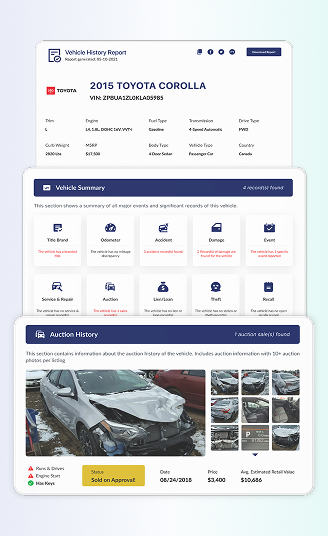
A PremiumVIN Vehicle History Report may contain different categories of information associated with a vehicle. The available information depends on the vehicle and the records supplied by contributing data sources.
Vehicle Specifications
Review available vehicle identity information, such as model year, make, model, engine, body style, and other specifications.
Compare the returned details with the vehicle and its documents to make sure you are investigating the correct vehicle.
For vehicle identification and specification information, use the PremiumVIN VIN Decoder.
Title Brands and Salvage History
Available title information may help identify reported salvage or other branded-title events.
For a North Dakota vehicle, pay particular attention to whether the title indicates salvage, previously salvaged, or previously damaged status.
A commercial history report provides additional research context. It does not issue, replace, or certify an official North Dakota title.
Accident and damage records
Available accident and damage records may help identify reported collisions, insurance losses, or other damage events.
These records can be useful when evaluating a vehicle that has been repaired or resold after an accident.
However, not every collision, repair, or insurance claim appears in every data source. The absence of a reported accident does not prove that a vehicle has never been damaged.
Mileage records
Review available odometer readings and compare entries from different dates.
Inconsistent readings may indicate a mileage discrepancy that deserves further investigation. Missing entries, however, do not prove that the odometer is accurate.
Compare the report with service invoices, inspection paperwork, and the vehicle’s displayed mileage.
Theft Records
A report may contain available theft-related information associated with the VIN.
If a theft record appears, review its details and verify the vehicle’s status with the appropriate authority before proceeding with a purchase.
Auction and Sales History
Available auction and sales records may show previous listings, sale events, reported condition information, and photographs.
Historical auction information can be particularly useful when a vehicle has experienced damage and was later repaired or offered for resale.
Remember that auction photographs and condition descriptions represent the vehicle at the time of the listing, not necessarily its current condition.
How to Check a North Dakota Vehicle by VIN
You can use PremiumVIN to begin researching a vehicle using its VIN.

Step 1: Enter the VIN
Find the vehicle identification number on the vehicle or its documents and enter it into the lookup form.

Step 2: Review the vehicle specifications
Check the returned year, make, model, and other available details to confirm the vehicle identity.

Step 3: Access the Vehicle History Report
Review the available historical records, paying attention to title brands, damage, mileage, theft, and previous sales.
Step 4: Compare the results with the documents
Review the vehicle's current title, previous title documents, repair records, and seller disclosures.
Step 5: Arrange an independent inspection
If the vehicle has a salvage or previous-damage history, have a qualified professional assess its current condition.
You can start with the PremiumVIN Vehicle History Report to investigate available records associated with the vehicle.
What to Check Before Buying a Used Car in North Dakota
A VIN report is one part of vehicle due diligence. Before completing a purchase, consider the following checks.
Check for a Previously Salvaged Brand
If the title says Previously Salvaged, investigate the vehicle’s earlier damage and reconstruction history.
Ask the seller for the salvage title, repair documentation, and applicable inspection paperwork. The brand indicates a previous salvage history even if the vehicle has since been reconstructed.
Review Previous Damage Disclosures
Compare the seller’s description with available damage records and the title’s branding.
A vehicle with a previous-damage brand may not have the same legal classification as a salvage vehicle. Understanding the exact title designation is important when assessing its history.
Verify the Vehicle's VIN
Compare the VIN shown on the vehicle with the number on the title and other ownership documents.
A discrepancy should be resolved before purchase. Do not rely on a history report to resolve an unexplained difference between the physical vehicle and its paperwork.
Review Out-of-State History
If the vehicle previously came from another state, investigate its available title and damage records from before the transfer to North Dakota.
A current state title does not necessarily describe every previous event in the vehicle’s history.
Arrange a Physical Inspection
A history report cannot establish the vehicle’s current mechanical or structural condition.
For a vehicle with previous damage or reconstruction, consider an independent inspection of its frame, suspension, safety systems, body structure, and other relevant components.
North Dakota VIN Check vs. VIN Decoder
A VIN check and a VIN decoder answer different questions.
A VIN decoder identifies a vehicle and provides available specifications, such as model year, make, model, engine, and configuration details.
A VIN check focuses on available historical information associated with the vehicle, including reported title brands, damage, accidents, mileage, theft, auction activity, and other records.
Use the PremiumVIN VIN Decoder when you want to identify a vehicle and review its specifications. Use the Vehicle History Report when you want to investigate available historical records before buying, selling, or evaluating a vehicle.
Check a North Dakota Vehicle Before You Buy
A vehicle’s current title and appearance may not reveal every part of its history. North Dakota’s salvage and damage-disclosure rules make it especially important to understand the difference between a previously damaged vehicle and one that has received a salvage classification.
Review the available VIN history, compare it with the vehicle’s title and supporting documents, and arrange an independent inspection when necessary.
Enter the VIN to investigate the vehicle’s available specifications and history records with PremiumVIN.
Frequently Asked Questions About North Dakota VIN Checks
How do I check a vehicle's history in North Dakota?
Enter the VIN into PremiumVIN to review available vehicle specifications and historical records. Depending on the vehicle and source availability, the report may contain title, accident, damage, mileage, theft, auction, and sales information.
What is the salvage-title threshold in North Dakota?
North Dakota’s salvage-title statute uses a damage threshold of more than 75% of the vehicle’s retail value, based on the specified used-car valuation guide. Glass and hail damage are excluded from this calculation.
Does hail damage count toward a North Dakota salvage title?
Hail damage is excluded from the 75% salvage-title damage calculation under North Dakota law. However, hail damage may still be relevant to a vehicle’s insurance and damage history.
What does Previously Salvaged mean on a North Dakota title?
Previously Salvaged indicates that the vehicle had a salvage history and was subsequently processed for a regular title after reconstruction and the required documentation and inspection. The brand remains on subsequent titles.
Does North Dakota require an inspection for rebuilt vehicles?
Yes. North Dakota requires a reconstructed salvage vehicle to be inspected by a qualifying business before the applicable regular title can be issued. The inspection must be documented using the state’s required form.
What is the difference between a salvage title and a previously damaged title?
A salvage title relates to the state’s salvage classification process. A previously damaged brand indicates qualifying prior damage disclosure. These designations are not interchangeable, so buyers should examine the exact wording on the title and investigate the vehicle’s history.
Can I check a North Dakota vehicle that was previously registered in another state?
Yes. You can use the VIN to investigate available historical records associated with the vehicle. Records from previous states may be available depending on the contributing data sources.
Does a clean VIN report prove that a vehicle has never been in an accident?
No. A report reflects available records, not every event in a vehicle’s lifetime. Accidents, repairs, or damage that were never reported to contributing sources may not appear.
Where can I verify a North Dakota vehicle's title status?
Contact the North Dakota Department of Transportation Motor Vehicle Division for official title-related information and requirements. PremiumVIN provides a commercial vehicle-history research service; it is not a state agency and does not issue or certify North Dakota titles.