
South Dakota VIN Check
A South Dakota VIN check helps you investigate available vehicle history records before buying, selling, or evaluating a used vehicle. Enter the VIN to look for reported title brands, salvage and rebuilt records, accident and damage history, mileage readings, theft information, and vehicle specifications. The records available depend on the vehicle and reporting sources.
Check a South Dakota Vehicle Before You Buy
A vehicle’s current title does not always tell you everything about its previous condition. It may have been declared a total loss in another state, repaired and retitled, or transferred into South Dakota with a damage-related brand from its earlier title.
These details matter when assessing a used vehicle, especially one that has crossed state lines or undergone significant repairs.
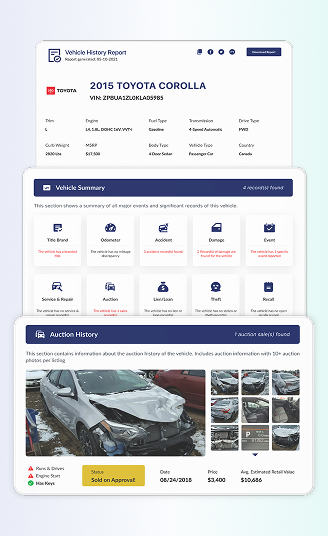
A PremiumVIN lookup can help you review available information associated with the vehicle’s VIN. Depending on the vehicle and source data, a report may include:
- Available title and salvage-related records.
- Reported accident and damage events.
- Recorded odometer readings and mileage inconsistencies.
- Available theft and recovery information.
- Auction and sales history, including available photographs.
- Vehicle specifications and applicable recall information.
- Estimated market-value information.
Use the report as one part of your vehicle research. It does not replace an official South Dakota title record, a physical inspection, or confirmation from the relevant government agency. An absent record does not prove that an accident, repair, or other event never occurred.
South Dakota Title Brands and Out-of-State Vehicle History
One important feature of South Dakota’s title system is how it handles vehicles previously titled in another state.
Under South Dakota Codified Law § 32-3-51.16, when a vehicle comes into South Dakota with an out-of-state title, the first South Dakota title and subsequent titles must identify the previous state and any brand or notation shown on that earlier title.
This means a vehicle’s earlier title history can remain relevant after it is transferred into South Dakota. A change in registration state does not automatically remove a previous damage designation.
For example, a vehicle might have been:
- Declared salvage in another state.
- Rebuilt and given a rebuilt title in its previous state.
- Branded because of damage before being transferred to South Dakota.
- Transferred between multiple states before its current registration.
When evaluating a vehicle, compare its current title with available historical records. Pay attention to the state that originally applied a brand, because different jurisdictions may use different terminology and title procedures.
South Dakota’s rules for out-of-state brands are particularly important for buyers purchasing vehicles from auctions, dealers, or private sellers who obtained inventory from other states.
How South Dakota Handles Salvage Vehicles
South Dakota has specific statutory provisions for vehicles declared total losses by insurers or self-insurers.
Under SDCL § 32-3-51.19, a salvage vehicle, for the purposes of the referenced salvage-title provisions, is a motor vehicle that an insurer or self-insurer determines to be a total loss because of theft or damage caused by events such as:
- Fire.
- Vandalism.
- Collision.
- Weather.
- Submersion in water.
- Flood.
The statute also contains important scope limitations. Its definition for these provisions does not apply to vehicles more than ten model years old or vehicles with a gross vehicle weight rating above 16,000 pounds.
This limitation should not be interpreted as meaning that older or heavier vehicles cannot have damage history or other title brands. It defines the scope of the particular statutory salvage provisions.
For a buyer, the key distinction is between a vehicle with reported damage and a vehicle that has received a formal salvage designation. A damage event may appear in a history record without necessarily producing a salvage title. Conversely, a salvage title indicates a significant title-status event that deserves further investigation.
What Happens When a Salvage Vehicle Comes Into South Dakota?
A salvage vehicle that has been repaired may qualify for a rebuilt title, but completing repairs does not automatically restore its previous title status.
South Dakota requires the owner to follow the rebuilt-vehicle application and inspection process.
According to the South Dakota Department of Revenue, the vehicle must be completely assembled and in running condition before the owner submits the relevant applications. The owner must also preserve documentation for the vehicle and the parts used during reconstruction.
Documents required during reconstruction
The Department of Revenue instructs owners to retain relevant ownership and parts documentation, including:
- Previous vehicle titles.
- Manufacturer’s Statements or Certificates of Origin (MSO/MCO).
- Bills of sale.
- Invoices and receipts.
- Other ownership documentation for the vehicle and parts used in reconstruction.
These records help establish the source and ownership of the components used to rebuild the vehicle.
Department of Revenue inspection
South Dakota rebuilt vehicles are subject to inspection by the Department of Revenue.
The owner must complete an Application for Motor Vehicle Title and Registration and an Application for Inspection of Rebuilt Motor Vehicle. The applications are filed through the county of the applicant’s residence.
The Department of Revenue identifies three inspection locations:
- Sioux Falls.
- Pierre.
- Rapid City.
After the vehicle passes inspection, the owner takes the certificate of inspection and relevant ownership and parts documents to the local county treasurer’s office. The owner must also pay applicable taxes and fees.
A rebuilt title is issued after the inspection and tax requirements are satisfied.
The rebuilt title does not erase previous history
South Dakota law requires a vehicle previously branded as rebuilt, either in South Dakota or another jurisdiction, to receive a rebuilt title.
This is an important distinction for used-car buyers. A vehicle may have been repaired and approved through an inspection process, but its rebuilt status remains part of its title identity.
A rebuilt title is not the same as a never-damaged or clean-title vehicle.
For the official procedure, see the South Dakota Department of Revenue Rebuilt Vehicles guidance and SDCL § 32-3-51.6.
South Dakota Dealer Damage Disclosure Requirements
South Dakota also has a specific disclosure rule for dealers selling vehicles with salvage or similar damage-related title brands.
Under SDCL § 32-3-51.18, a vehicle offered for sale by a motor vehicle dealer or used vehicle dealer must display a sticker, decal, or notice disclosing damage when the current title identifies a salvage brand or similar damage-related brand.
The statute also provides a consumer remedy when a dealer fails to comply: the purchaser may return the vehicle within ten days after receiving the title, and the dealer must provide a full refund.
This requirement is useful context for South Dakota buyers, but it should not be treated as a substitute for independently reviewing a vehicle’s records.
A disclosure notice may describe the damage designation on the current title. It does not necessarily explain the original cause of damage, the full extent of repairs, or the vehicle’s present mechanical and structural condition.
Before completing a purchase, compare the title brand with available history records and request supporting repair documents when applicable.
What to Investigate in a South Dakota Vehicle History Report
A vehicle-history report brings together available records from different reporting sources. The information returned for one vehicle may differ from another because not every organization reports every event.
A PremiumVIN report may provide the following information when available.
Title and brand history
Review available title-related records and reported brands, including salvage and rebuilt designations. For a vehicle previously titled outside South Dakota, compare the earlier jurisdiction’s brand with the current title information.
Accident and damage records
Look for reported accidents and damage events. Some records may include dates, locations, or damage descriptions. Not every collision, repair, or insurance claim is necessarily reported.
Odometer readings
Compare mileage readings recorded at different points in the vehicle’s history. Unexplained changes or inconsistencies may require additional investigation using inspection documents, service records, and the vehicle itself.
Theft records
Review available theft-related records associated with the VIN. If a concerning result appears, confirm its meaning with the appropriate law-enforcement or state authority.
Auction and sales history
Auction and sales records may help explain how a vehicle entered the used-car market. When available, listings and photographs can provide context about previous damage, condition, or sale events.
This information can be especially useful when assessing vehicles that were previously sold through salvage or wholesale channels.
Vehicle specifications
A VIN can help identify a vehicle’s model year, make, model, engine, and other available factory specifications.
For a specification-focused lookup, use the PremiumVIN VIN Decoder. The decoder focuses on vehicle identity and configuration, while the VIN Check focuses on available historical records.
Buying a Used Car in South Dakota: What to Verify
A history report is most useful when its findings are compared with the vehicle and its supporting documents.
Before buying a used vehicle in South Dakota:

Step 1: Match the VIN
Compare the VIN displayed on the vehicle with the title and the VIN entered into the lookup.

Step 2: Review the current title
Check for salvage, rebuilt, or other damage-related brands.

Step 3: Check previous title states
If the vehicle came from another jurisdiction, investigate the earlier title brand and the state that applied it.
Step 4: Ask for repair documentation
For a rebuilt vehicle, request available invoices, bills of sale, receipts, and reconstruction records.
Step 5: Review the inspection documentation
Ask for the relevant South Dakota rebuilt-vehicle inspection certificate when the vehicle has undergone the state process.
Step 6: Compare mileage records
Investigate unexplained changes or gaps in available odometer readings.
Step 7: Check lien and ownership documents
Confirm that the seller can transfer ownership and that any recorded security interest has been properly released.
Step 8: Arrange an independent inspection
Have a qualified mechanic evaluate structural repairs, mechanical condition, and safety systems.
For vehicles purchased from another state, pay particular attention to whether the previous title included a salvage, rebuilt, or non-rebuildable designation. South Dakota’s title rules make that earlier information relevant to the vehicle’s subsequent title.
Check a South Dakota VIN Before You Buy
A vehicle’s current title, previous title brands, reported history, and physical condition each provide different evidence. Reviewing these details together can help you identify issues that deserve further investigation before buying or selling a vehicle.
Enter the VIN into PremiumVIN to review available vehicle specifications and history records. If you do not have the VIN, you can also use the PremiumVIN License Plate Lookup for supported U.S. vehicles.
For the broader lookup process and available vehicle information, visit the PremiumVIN VIN Check page.
FAQs About South Dakota VIN Checks
How do I check a VIN in South Dakota?
Enter the vehicle’s VIN into PremiumVIN to review available vehicle specifications and history records. The information returned depends on the vehicle and reporting sources. For official title or registration questions, contact the South Dakota Department of Revenue or your county treasurer.
Does South Dakota carry out-of-state title brands onto its titles?
Yes. Under SDCL § 32-3-51.16, South Dakota must identify the previous state and any brand or notation shown on the earlier title on the first and subsequent South Dakota titles. Separate provisions address vehicles entering the state with salvage or similar brands.
What happens when a salvage-titled vehicle is transferred to South Dakota?
Under SDCL § 32-3-51.5, a vehicle with an out-of-state salvage or similar brand must receive a South Dakota salvage title or, at the owner’s option, a junking certificate. The applicable result depends on the previous title designation and the statutory requirements.
What is the difference between a salvage title and a rebuilt title in South Dakota?
A salvage title identifies a vehicle within the salvage-title process. A rebuilt title is issued after an eligible vehicle has been repaired and completed the required South Dakota application, documentation, inspection, and tax process. A rebuilt title does not erase the vehicle’s earlier salvage history.
Does South Dakota inspect rebuilt vehicles?
Yes. The Department of Revenue inspects rebuilt vehicles. The owner must submit the required applications and supporting documentation, including records for the vehicle and parts used in reconstruction. After inspection and completion of the applicable tax requirements, the rebuilt title can be issued.
Can a non-rebuildable vehicle receive a rebuilt title in South Dakota?
A vehicle whose title is marked non-rebuildable or parts only is subject to South Dakota’s junking-certificate requirements. It should not be treated as an ordinary repairable salvage vehicle.
Does South Dakota require dealers to disclose salvage damage?
South Dakota law requires dealers to display a sticker, decal, or notice when a vehicle’s current title contains a salvage or similar damage-related brand. The statute provides a ten-day return and full-refund remedy if the dealer fails to comply with the disclosure requirement.
Can a VIN check show every accident in South Dakota?
No. A VIN check can return available accident and damage records, but not every collision, repair, or insurance event is necessarily reported to the sources used by a vehicle-history provider. A report with no accident entry should not be interpreted as proof that the vehicle has never been damaged.
Can I check a South Dakota vehicle with its license plate?
PremiumVIN supports license plate lookup for eligible U.S. vehicles. If you do not have the VIN, visit the PremiumVIN License Plate Lookup page. Available information may vary by vehicle and reporting source.