
Utah VIN Check for Vehicle History Reports
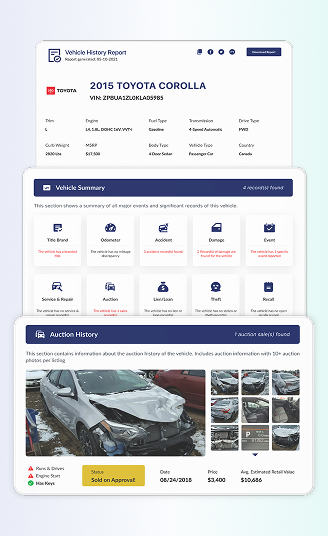
A Utah VIN check helps buyers investigate a vehicle’s recorded history before purchasing a used car, truck, or other vehicle. The Vehicle Identification Number connects the vehicle to available records that may reveal previous title brands, salvage events, rebuilt/restored classifications, reported accidents, mileage entries, theft records, and auction activity.
Utah has an important rule for buyers evaluating previously damaged vehicles: a salvage or rebuilt/restored title brand cannot simply be removed after repairs. A vehicle that has been repaired may qualify for a rebuilt/restored title, but the previous salvage classification remains part of its title history.
Utah also requires specific disclosure when branded vehicles are offered for sale. This is particularly relevant to vehicles that have been declared total losses, repaired, and subsequently titled in Utah or another state.
A Utah VIN check through PremiumVIN helps investigate available vehicle-history information before a purchase. The records returned depend on the vehicle and the reporting sources available for its VIN. A report should be evaluated alongside the current title, seller documentation, and an independent inspection.
What a Utah VIN Check Can Reveal
A vehicle’s current title and physical appearance do not necessarily show every event in its history. Historical records can help identify earlier damage, title changes, or mileage inconsistencies that warrant additional investigation.
Depending on source availability, a Utah vehicle history report may contain information about:
- Title history: Available title transactions and historical title classifications.
- Salvage history: Reported insurance total-loss events and salvage designations.
- Rebuilt/restored history: Available records identifying a vehicle repaired after a salvage classification.
- Accident history: Reported collisions and damage events.
- Flood and fire damage: Available damage-related records and title information.
- Odometer history: Recorded mileage entries and possible discrepancies.
- Theft records: Available theft or recovery information.
- Auction history: Recorded auction appearances and available sale or condition information.
- Manufacturer buyback history: Available records associated with a manufacturer repurchase or replacement.
Not every vehicle has records in every category. An event that does not appear in a report may still have occurred if it was never reported to a source represented in the available data.
Utah Salvage Titles and Rebuilt/Restored Vehicles
Utah defines a salvage vehicle as one damaged by collision, flood, or another occurrence to the extent that the cost of repairing it for safe operation exceeds its fair market value. The definition also includes a vehicle declared salvage by an insurer or another state or jurisdiction when the vehicle is not precluded from further registration and titling.
A rebuilt/restored vehicle is a salvage vehicle that has been repaired and restored to operation.
These classifications matter because a vehicle’s repair status and its historical title brand describe different things. Repairing a vehicle does not erase the original salvage event.
Salvage Title
A Utah title carrying the Salvage brand identifies a vehicle that has been classified as salvage.
A salvage designation may follow a collision, flood, or another damaging event. It may also result from an insurance company’s total-loss determination or a salvage classification issued by another jurisdiction.
When evaluating a vehicle with a Utah salvage history, investigate:
- The reported reason for the salvage classification.
- Whether the vehicle was involved in a collision or another damaging event.
- Whether the insurance company declared it a total loss.
- Whether the vehicle was subsequently repaired.
- Whether it received a rebuilt/restored title.
- Whether repair documentation and supporting photographs are available.
A salvage title does not describe every damaged component or establish the quality of later repairs. Buyers should investigate the original damage rather than relying only on the title’s current status.
Rebuilt/Restored Title
A vehicle that has been repaired and restored to operation may receive a Utah title branded rebuilt/restored.
The rebuilt/restored designation identifies a vehicle that previously had a salvage classification and subsequently underwent repairs. It does not mean that the original salvage history has disappeared.
Utah explicitly states that a salvage or branded title cannot have its brand removed simply because the vehicle has been repaired. The same restriction applies to vehicles previously branded by another state or jurisdiction.
This is important when reviewing a vehicle that has moved across state lines. A buyer should not assume that a vehicle with a later Utah title has a clean history merely because its previous damage is no longer visible.
For a complete evaluation, compare the current title with available historical records and ask the seller for repair documentation.
Read more about salvage title history and rebuilt title classifications.
Why Utah Does Not Remove Salvage Brands
Utah’s title-brand policy preserves the historical classification even after a vehicle has been repaired.
This creates an important distinction:
- A Salvage title identifies the vehicle’s salvage status.
- A rebuilt/restored title identifies a vehicle that was previously salvage and has since been repaired and restored to operation.
- Neither title independently guarantees the vehicle’s present mechanical condition or repair quality.
Utah’s DMV also states that a branded title issued by another state cannot be cleared through a Utah inspection procedure.
For buyers, this means that an out-of-state title history deserves attention even when the vehicle is now registered or titled in Utah.
Seller Disclosure for Salvage and Branded Vehicles
Utah requires dealers and private sellers to provide written notification to prospective purchasers when the vehicle has a salvage certificate or branded title, subject to the applicable statutory exceptions.
For dealers, the disclosure must be provided before negotiating the sale and displayed prominently when the vehicle is offered for sale. Utah identifies Form TC-814 for this disclosure process.
This requirement gives buyers a reason to request the title and disclosure documentation before committing to a purchase.
A seller’s disclosure should be compared with the vehicle’s available title history. If the report identifies a previous salvage or rebuilt classification that the seller has not discussed, investigate the discrepancy before proceeding.
Utah Manufacturer Buyback and Lemon Law Title Brands
Utah also has a title brand for qualifying vehicles repurchased or replaced by a manufacturer because of an alleged nonconformity.
The title brand is:
The title brand is: MANUFACTURER BUYBACK NONCONFORMING VEHICLE
A nonconformity generally involves a defect, malfunction, or condition that fails to conform to an express warranty or substantially impairs the vehicle’s use, safety, or value.
Utah’s Lemon Law applies to qualifying new motor vehicles. A manufacturer buyback is not the same as a salvage vehicle resulting from a collision or insurance total-loss claim.
What a Manufacturer Buyback Means for Buyers
A manufacturer buyback history indicates that the vehicle was previously returned to the manufacturer or its agent in exchange for a replacement vehicle or refund because of an alleged or identified nonconformity.
Utah requires the manufacturer or a subsequent seller to disclose the buyback status to a prospective buyer in writing and in a clear and conspicuous manner.
The disclosure identifies the vehicle and lists the nonconformities associated with the buyback. The required disclosure must be provided each time the vehicle is resold.
When evaluating a manufacturer buyback vehicle, investigate:
- The defect or nonconformity that led to the buyback.
- Whether the problem involved safety, operation, or vehicle value.
- Whether the manufacturer performed repairs.
- Whether the same issue was reported after the vehicle returned to service.
- Whether the required buyback disclosure is available.
A manufacturer buyback does not automatically mean the vehicle has collision or salvage history. It represents a separate title and consumer-disclosure issue.
Utah's 2027 Vehicle Title Brand Changes
Utah enacted House Bill 228, the Vehicle Sales Amendments, during the 2026 General Session. The law is scheduled to take effect on January 1, 2027.
The legislation strengthens title-brand identification and introduces additional checks when a vehicle receives a new Utah title.
The changes are important for buyers because vehicles can move between states after a total-loss event or serious damage. If historical information is not carried forward, a vehicle may appear to have a cleaner title history than its actual record supports.
National Title Database Checks
Under HB 228, the Motor Vehicle Division will check the National Motor Vehicle Title Information System (NMVTIS) before issuing a new Utah title.
The requirement is intended to identify relevant out-of-state title brands, salvage classifications, total-loss history, and damage information before a new Utah title is issued.
For buyers, this creates an additional safeguard against title washing, where a vehicle’s previous damage or title classification is not reflected accurately after it moves between jurisdictions.
More Specific Damage-Related Brands
The 2027 legislation provides for more specific title-brand classifications, including:
- Fire damaged.
- Flood damaged.
- Hail damaged.
- Gray market.
- Stolen/recovered.
- Rebuilt and restored.
A vehicle with a qualifying damage history may receive a rebuilt/restored designation while retaining the original damage category. For example, the title may identify a vehicle as rebuilt and restored following flood or fire damage.
The legislation also addresses odometer discrepancies. When the Motor Vehicle Division identifies an odometer discrepancy, the title must indicate that status.
Why the 2027 Changes Matter When Buying a Used Vehicle
The changes are intended to make title histories more transparent when vehicles move between states.
A buyer evaluating a vehicle in Utah should pay attention to:
- Whether the vehicle previously carried an out-of-state salvage or damage brand.
- Whether a total-loss event appears in available historical records.
- Whether the current title reflects the vehicle’s earlier damage classification.
- Whether the vehicle has a rebuilt/restored designation.
- Whether an odometer discrepancy is recorded.
The new requirements take effect on January 1, 2027. Buyers should distinguish the title rules in force before that date from the additional database-check and branding requirements that apply after the effective date.
Reconstructed Vehicles Are Not the Same as Rebuilt/Restored Vehicles
Utah also has a separate title category for reconstructed vehicles. This classification should not be confused with a rebuilt/restored vehicle that previously carried a salvage title.
A reconstructed vehicle is one that has been materially altered from its original construction through the removal, addition, or substitution of essential parts, whether new or used.
For example, a vehicle assembled using the body of one vehicle and the frame of another may qualify as reconstructed.
Documentation for a Reconstructed Vehicle
Utah requires supporting documentation when an owner applies to title and register a reconstructed vehicle.
The process may include:
- An Ownership Statement, Form TC-569A, explaining how essential parts were acquired and how the vehicle was constructed.
- Titles for the vehicles from which essential parts were obtained.
- Original bills of sale and receipts for the parts used.
- An application for a Utah Motor Vehicle Identification Number.
- A Utah title application.
- Photographs showing the vehicle’s interior and exterior.
- A safety inspection and emissions inspection, if applicable.
- An authorized VIN inspection.
The title and registration requirements depend on the vehicle’s construction and applicable rules.
A reconstructed vehicle is not necessarily a vehicle that was previously declared a total loss. The classification describes a material change to the vehicle’s original construction, while rebuilt/restored describes a previously salvaged vehicle that has been repaired.
This distinction matters when reviewing title history, vehicle identity, and parts documentation.
Odometer Disclosure and Mileage History in Utah
Mileage is another important part of vehicle due diligence.
Utah requires an odometer mileage disclosure statement during applicable vehicle sales and ownership transfers. The disclosure records the mileage represented by the seller and identifies whether the reading is actual mileage, exceeds the odometer’s mechanical limits, or is not actual mileage.
Utah’s disclosure rules generally exempt vehicles that are 20 years old or older, vehicles with a gross vehicle weight rating of 16,000 pounds or more, and certain government transactions.
The state also requires applicable odometer information to be recorded on the title and ownership-transfer documentation.
What to Check in a Vehicle's Mileage History
When reviewing available mileage entries, look for:
- A later mileage reading that is lower than an earlier reading.
- Large gaps between dated mileage entries.
- Mileage changes that do not align with the vehicle’s age or use.
- An odometer disclosure indicating that the displayed mileage is not actual.
- A documented odometer replacement or repair.
- Differences between title, service, inspection, and auction records.
An odometer discrepancy can have several explanations, including instrument-cluster replacement, reporting errors, or incorrect data entry. It should be investigated rather than automatically treated as proof of fraud.
Utah law also addresses odometer tampering and false mileage disclosures. Altering an odometer to show mileage other than the vehicle’s true mileage can carry criminal consequences.
A VIN check may provide mileage entries from available reporting sources, but it cannot guarantee that every reading has been recorded.
Learn more about VIN mileage history and odometer information.
Utah Title History and Out-of-State Vehicles
A vehicle’s current Utah title does not necessarily show every event that occurred before the vehicle entered the state.
Vehicles may move between states after an accident, insurance total-loss claim, salvage classification, or rebuilding process. Title systems and historical reporting sources may not always contain the same information.
Utah’s existing rules prohibit removal of a salvage or branded title classification simply because a vehicle has been repaired. Its 2027 legislation adds a national database check before issuing a new Utah title.
When reviewing a vehicle previously titled outside Utah, investigate:
- Earlier state title brands.
- Reported insurance total-loss events.
- Salvage or rebuilt/restored classifications.
- Flood, fire, or other damage records where available.
- Mileage entries recorded in other jurisdictions.
- Auction or insurance-sale activity.
A recent out-of-state title deserves particular attention when the seller cannot explain the vehicle’s previous ownership or title history.
Compare the current title with the available historical records and ask the seller for supporting documents.
Buying a Used Vehicle in Utah
A Utah VIN check is most useful when its findings are compared with the title, seller disclosures, repair records, and physical condition of the vehicle.
Before buying a used vehicle, consider the following steps.
Step 1: Verify the VIN
Locate the VIN on the vehicle and compare it with the number printed on the title and registration documents.
Check for inconsistencies between the vehicle's identification number and the seller's paperwork. Signs of alteration or mismatched identification should be investigated before proceeding.
If you need help locating the identification number, see where to find a VIN.
Step 2: Review Available Vehicle-History Records
Enter the VIN into the PremiumVIN VIN Check tool.
Review available title, salvage, rebuilt/restored, accident, mileage, theft, and auction information.
Pay particular attention to previous title brands and whether the vehicle has a history of total loss or manufacturer buyback.
Step 3: Examine the Current Title and Seller Disclosures
Check whether the current title is consistent with the vehicle's available history.
For branded vehicles, request the applicable written disclosure and supporting documentation. Utah's disclosure requirements are particularly relevant to salvage and rebuilt/restored vehicles.
Step 4: Request Repair Documentation
For a previously salvaged vehicle, ask the seller for available:
Compare the documents with the reported damage and current vehicle condition.
Step 5: Arrange an Independent Inspection
A title brand does not establish the present mechanical or structural condition of a vehicle.
Utah's DMV recommends having a body shop or mechanic inspect a vehicle with possible previous damage. This is particularly important for vehicles with salvage, rebuilt/restored, flood, or reconstructed histories.
The inspection should address the areas associated with the original damage, including structural components, suspension, electrical systems, and safety equipment where relevant.
Step 6: Verify Ownership and Lien Status
Check that the title belongs to the vehicle being purchased and that the VIN matches the vehicle.
Verify that the seller has signed the title correctly and that any lienholder shown on the title has released its interest. A VIN history report is not a substitute for official title and lien verification.
What a Utah VIN Check Cannot Confirm
A VIN check is a research tool, not a guarantee of a vehicle’s complete history or present condition.
The information available for a particular VIN depends on the underlying reporting sources. A report may not contain every accident, repair, insurance claim, title transaction, mileage reading, or auction event.
A Utah VIN check cannot independently establish:
- That a vehicle has never been involved in an accident.
- That a vehicle has never been declared a total loss.
- That every salvage or rebuilt event has been reported.
- That every title brand has been captured in available historical data.
- That all previous repairs were performed correctly.
- That a rebuilt/restored vehicle is mechanically safe.
- That the displayed odometer reading is accurate.
- That the title is free of every possible defect or lien.
- That a manufacturer buyback vehicle has no remaining defects.
- That the seller is the legal owner.
- That a vehicle has a clean history simply because no adverse record appears.
For a clearer understanding of how vehicle records are interpreted, review PremiumVIN’s report methodology, data coverage and availability, and documentation limitations.
Run a Utah VIN Check Before Buying
Utah’s permanent title-brand policy makes previous salvage and rebuilt/restored history particularly important when evaluating a used vehicle. A vehicle may be repaired and returned to operation, but its branded title history remains relevant to the next buyer.
The state’s manufacturer buyback classification and its upcoming 2027 title-brand changes add further reasons to investigate a vehicle beyond its current appearance and asking price.
Enter the VIN into PremiumVIN to review the records available for that vehicle. Compare the report with the title, seller disclosures, repair documentation, and an independent inspection before making a purchase decision.
Frequently Asked Questions About Utah VIN Checks
How do I run a VIN check in Utah?
Enter the vehicle’s VIN into PremiumVIN’s VIN Check tool. The report can help you investigate available title, salvage, rebuilt/restored, accident, mileage, theft, and auction information. The records returned depend on the vehicle and the underlying reporting sources.
Can a Utah salvage title be changed to a clean title after repairs?
No. Utah states that a salvage or branded title cannot have its brand removed simply because the vehicle has been repaired. A qualifying repaired vehicle may receive a rebuilt/restored title, but the previous salvage history remains relevant.
What does rebuilt/restored mean on a Utah title?
Rebuilt/restored identifies a vehicle that previously carried a salvage classification and has subsequently been repaired and restored to operation. It does not mean that the original salvage history has been erased or that the vehicle is guaranteed to be in perfect condition.
Can an out-of-state salvage title be cleared in Utah?
No. Utah states that a vehicle with a branded title issued by another state or jurisdiction is not eligible to have the brand removed through a Utah inspection procedure.
What is a manufacturer buyback title in Utah?
A Manufacturer Buyback Nonconforming Vehicle brand identifies a vehicle previously returned to its manufacturer or its agent in exchange for a replacement vehicle or refund because of an alleged or identified nonconformity. Utah requires written disclosure of the buyback status to subsequent buyers.
What is the difference between a rebuilt/restored vehicle and a reconstructed vehicle?
A rebuilt/restored vehicle previously carried a salvage classification and was subsequently repaired. A reconstructed vehicle has been materially altered from its original construction through the removal, addition, or substitution of essential parts.
The classifications describe different vehicle histories and title processes.
Does Utah require a safety inspection for rebuilt vehicles?
Utah requires a safety inspection for salvage vehicles that have been rebuilt and are requesting a rebuilt title. Most other passenger vehicles no longer require a safety inspection as a general prerequisite for registration. Inspection requirements depend on the vehicle’s classification and applicable circumstances.
Does a Utah VIN check show salvage history?
A report may identify available salvage and title-brand records, including historical information from reporting sources. However, it cannot guarantee that every salvage event or title transaction has been reported.