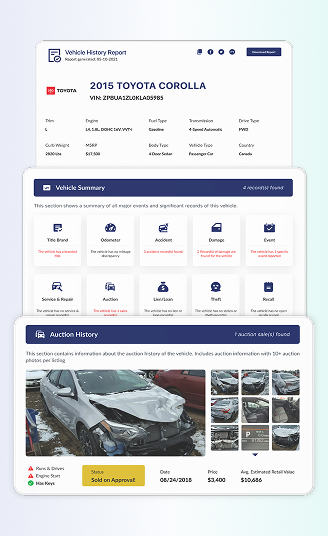

Washington VIN Check: Investigate Vehicle History Before Buying
A used vehicle in Washington can have a title history that differs from its current registration, particularly when it was previously declared a total loss, rebuilt, or transferred from another state. Checking the vehicle’s recorded history before purchase helps identify events that may require additional documentation or physical inspection.
A Washington VIN check uses the Vehicle Identification Number (VIN) to investigate available records associated with a vehicle. These records may include accident and damage events, title brands, mileage readings, theft records, liens, recalls, and auction or sales history, depending on the vehicle and reporting sources.
Use the VIN to start a PremiumVIN vehicle history check. The purpose is to understand what the available records establish, identify inconsistencies, and determine what needs confirmation before completing the transaction.
Washington Vehicle History: What to Investigate Before a Title Transfer
Washington’s vehicle purchase process involves more than receiving a signed title. Buyers need to examine the vehicle’s history, review the ownership documents, and complete the applicable title-transfer requirements.
Three separate questions matter:
- What happened to the vehicle? Investigate available accident, damage, salvage, mileage, theft, and auction records.
- What does its current title establish? Examine the title document, ownership information, and any recorded brands or liens.
- Does the vehicle require additional verification? Certain salvage, rebuilt, or identification-discrepancy cases require a physical inspection before Washington will accept a title application.
A VIN history report helps investigate the first question and provides context for the others. It does not replace an official title or lien verification, nor does it perform a physical vehicle inspection.
Identify Previous Damage and Total-Loss Events
An accident record and a total-loss designation describe different aspects of a vehicle’s history.
An accident or damage record may indicate that an incident was reported. A total-loss event indicates that an insurer or other relevant authority treated the vehicle as a total loss under the applicable process.
When reviewing available records, distinguish between:
- Reported collision or damage events.
- Insurance-related total-loss information.
- Salvage title designations.
- Subsequent rebuilt or retitled events.
- Auction listings associated with damaged vehicles.
These events should be interpreted together rather than as interchangeable labels.
For example, a vehicle may have sustained damage, received a salvage designation, undergone repairs, and later returned to the market. A buyer needs to understand the sequence of events, not simply whether the report contains the word “accident.”
Where available, compare historical auction photographs and damage descriptions with the vehicle’s present condition. Request repair invoices and have an independent professional examine structural components when the vehicle has a significant damage history.
Understand Washington's Salvage and Rebuilt Title Distinctions
Washington has specific title procedures for vehicles declared salvage or rebuilt after a total loss.
The Washington Department of Licensing explains that a vehicle declared salvage cannot legally be driven or parked on public highways or roads until a new title has been issued.
A vehicle that has been repaired is not automatically eligible for a new Washington title. Its documentation, ownership circumstances, and applicable inspection requirements matter.
Understand Washington's Salvage and Rebuilt Title Distinctions
Under Washington Revised Code RCW 46.12.560, a vehicle inspection by the Washington State Patrol or another authorized inspector is generally required before a title application is accepted in specified cases, including:
- A vehicle declared a total loss or salvage under Washington law.
- A vehicle rebuilt after its title was returned to the Department of Licensing, when the vehicle was not retained by the registered owner at the time of destruction or total loss.
- A vehicle presented with another state’s documents showing a total-loss or salvage designation when that state has not subsequently issued a valid registration certificate.
The law also requires damaged major component parts to be repaired or replaced before the vehicle is presented for inspection.
The distinction is important for buyers: an available salvage or total-loss record is a reason to investigate the vehicle’s documentation and inspection status. It does not, by itself, establish that the vehicle has completed Washington’s requirements.
Official references:
What the Washington State Patrol examines
A WSP VIN inspection is a physical examination, not a search of a commercial vehicle-history database.
For rebuilt salvage vehicles, the inspection process includes examination of major component parts and supporting ownership documentation. The WSP identifies components such as:
- Engine and short block.
- Frame and cab.
- Transmission and transfer case.
- Doors, front or rear clips, and quarter panels.
- Front or rear differential.
- Truck bed or box.
- Hood, fenders, bumpers, and seats.
- Airbags and catalytic converter.
The applicable inspection requirements and supporting documents depend on the vehicle and the reason for inspection. A vehicle must have the damaged major components repaired or replaced before it can be inspected under the rebuilt-salvage process.
The buyer should therefore distinguish three separate forms of evidence:
- Historical records: What available accident, title, and auction records indicate happened to the vehicle.
- Repair documentation: What parts were repaired or replaced and what supporting receipts exist.
- Physical inspection: Whether the vehicle meets the applicable Washington inspection requirements.
A PremiumVIN report addresses available historical records. It does not certify repairs or satisfy the WSP inspection requirement.
See the Washington State Patrol VIN inspection guidance for the current process, appointment requirements, and documents.
Check the Title and Lien Information Separately
A vehicle history report and a current title document answer different questions.
Historical title records may reveal available title brands or changes in the vehicle’s recorded status. The current title is the ownership document used in the Washington transfer process.
Washington DOL instructs buyers to obtain the current title, ensure all owners have signed it, and contact the department to verify that the title is valid and clear of liens.
This official verification is important because a historical report should not be treated as a guarantee that a vehicle is currently free of financial interests or ownership restrictions.
Before paying the seller:
- Compare the VIN printed on the title with the VIN physically displayed on the vehicle.
- Check that the seller’s ownership documentation is consistent with the transaction.
- Review any available title-brand history.
- Ask about outstanding loans or other interests affecting the title.
- Confirm title validity and lien status with Washington DOL.
The official Washington DOL vehicle purchase and registration guide explains the required documents and transfer process.
Compare Odometer Records With Washington's Disclosure Requirements
Mileage history helps establish whether recorded odometer readings follow a consistent sequence.
A report may contain readings from different events, such as registration, inspection, auction, or other reported transactions. The date and source of each reading matter when evaluating an apparent inconsistency.
Look for:
- A reading that is lower than an earlier recorded value.
- A sudden mileage increase that needs explanation.
- A long gap between recorded readings.
- A difference between the seller’s stated mileage and available historical records.
An inconsistent reading does not automatically prove odometer tampering. It may require checking the underlying documents and the vehicle’s odometer.
Washington’s title-transfer instructions also specify an odometer-disclosure distinction by model year:
- Model year 2011 and newer: The buyer should complete the odometer-disclosure section on the title.
- Model year 2010 and older: Washington DOL identifies these vehicles as exempt from the odometer-mileage reporting requirement.
This is an administrative disclosure rule, not proof that a particular odometer reading is accurate.
Examine Out-of-State History Before Registering the Vehicle
A vehicle currently titled or registered in Washington may previously have been registered, damaged, sold, or declared salvage in another state.
The current Washington paperwork does not necessarily describe every earlier event.
This is especially relevant when buying:
- A vehicle recently transported from another state.
- A rebuilt vehicle with out-of-state salvage documentation.
- A vehicle previously sold through an insurance or salvage auction.
- A vehicle whose title history contains multiple jurisdiction changes.
Use the VIN to investigate available records associated with the vehicle across its reported history. Compare those records with the current title and the seller’s documentation.
For a vehicle with an out-of-state salvage designation, determine whether the documentation triggers the Washington inspection requirements described under RCW 46.12.560.
A history report can help identify the question. The Washington DOL and WSP determine the applicable administrative and inspection requirements.
Review Theft, Recall, and Auction Records
These record categories provide different types of information and should not be interpreted as substitutes for one another.
Theft-related records
Available theft records may indicate that a vehicle was reported stolen. A database result is not a substitute for confirmation of the vehicle’s current legal status.
The WSP specifically explains that someone who only wants to check whether a vehicle is recorded as stolen does not need to schedule a full VIN inspection. A commissioned law-enforcement officer can check the vehicle’s stolen status.
If you suspect a vehicle is stolen, contact local law enforcement rather than relying solely on a commercial history report.
Recall records
Recall information concerns manufacturer-issued safety campaigns, not the vehicle’s accident or title history.
Check the VIN through the National Highway Traffic Safety Administration recall search to investigate applicable recalls. Ask the seller for documentation when a recall appears, because an issued recall and a completed repair are different things.
Auction and sales records
Auction records may provide historical sale details, damage descriptions, and photographs when those records are available.
For a vehicle with a previous salvage or total-loss event, historical auction photographs can help you compare its earlier condition with the vehicle being offered today.
Photographs are supporting evidence, not a complete repair history. They do not establish which parts were replaced, whether repairs followed manufacturer procedures, or whether the vehicle passed a required state inspection.
Washington's 15-Day Vehicle Title Transfer Rule
Washington buyers generally have 15 days after acquiring a vehicle to transfer ownership into their name.
According to Washington DOL, late penalties are:
- $50 on the 16th day.
- $2 per day after the 16th day, up to a maximum of $125.
The buyer generally needs the current signed title, a Vehicle Title Application, applicable odometer disclosure, and a bill of sale. Additional documentation may be required depending on the transaction.
Washington DOL recommends researching a vehicle’s history before purchase. It also advises buyers to use the VIN and license plate number to check NHTSA for recalls and other safety issues.
The title-transfer deadline is separate from the time needed to investigate a vehicle before purchase. Ideally, review the history and documents before paying the seller, rather than waiting until the transfer deadline approaches.
Source: Washington DOL vehicle purchase and registration requirements.
How to Check a Washington Vehicle by VIN
Use the vehicle’s VIN to investigate its available history before completing the purchase.

Step 1: Match the VIN to the vehicle
For most modern passenger vehicles, the VIN is a 17-character identifier. Check the number on the driver's side dashboard or driver's door-jamb label and compare it with the title and registration documents.
Do not proceed with a transaction until any mismatch has been explained and verified.

Step 2: Submit the VIN to PremiumVIN
Open the PremiumVIN VIN Check page and enter the VIN.
If you have the registration plate rather than the VIN, use the Washington license plate lookup.

Step 3: Examine the available history records
Review the returned vehicle information and the history categories available for that vehicle. Pay particular attention to accident and damage events, title brands, mileage readings, theft records, liens, recalls, and auction or sales history where reported.
Step 4: Compare the report with the seller's documents
Check the current title, odometer disclosure, repair invoices, and other supporting documents against the information in the report.
Step 5: Resolve issues through the appropriate source
Contact Washington DOL for official title and lien questions. Contact WSP or a licensing agent when a physical VIN inspection or salvage-title procedure may apply. Arrange an independent mechanical inspection when the vehicle's condition requires professional assessment.
PremiumVIN provides a historical-record research tool. It does not issue Washington titles, release liens, certify roadworthiness, or conduct physical VIN inspections.
Interpreting Missing or Conflicting Vehicle Records
A vehicle history report contains information made available by contributing sources. It is not a complete record of every event in the vehicle’s life.
A missing accident record does not prove that no accident occurred. A missing mileage entry does not establish that the odometer has never been altered. A report without a salvage entry does not replace examination of the current title.
When information conflicts:
- Verify the VIN entered in the search.
- Compare the dates and sources of the reported events.
- Review the physical title and registration documents.
- Request repair and service records from the seller.
- Confirm official title or lien information with Washington DOL.
- Seek a physical inspection when the vehicle’s condition or identification is uncertain.
For more detail on the limits of vehicle-history information, see Why Vehicle Data May Be Missing.
Investigate a Washington Vehicle Before Purchase
A Washington title transfer establishes the ownership documentation required by the state, while a vehicle history report helps investigate recorded events that may have occurred before the transaction.
Review available history before purchase, compare it with the current title and repair documents, and confirm any official title or inspection requirements with the relevant Washington authority.
Start with a PremiumVIN Washington VIN check to investigate the vehicle’s available historical records.
FAQs About Washington VIN Checks
What does a Washington VIN check show?
A VIN check investigates available records associated with a vehicle. Depending on the vehicle and reporting sources, information may include accident and damage events, title brands, mileage readings, theft records, liens, recalls, and auction or sales history.
Can a VIN check confirm that a Washington title is clear?
No. A vehicle history report may contain historical title or lien information, but it is not an official confirmation of current title status. Washington DOL advises buyers to contact the department to verify that the title is valid and clear of liens.
Does every salvage vehicle in Washington need a WSP inspection?
Washington law requires a vehicle inspection in specified total-loss, salvage, and rebuilt-vehicle circumstances before a title application is accepted. The requirement depends on the vehicle’s history and ownership circumstances. A licensing agent can help determine whether an inspection is necessary.
Does a Washington VIN inspection check the vehicle's accident history?
No. A WSP inspection is a physical vehicle-identification and component inspection for applicable title purposes. Accident and damage history is a separate subject investigated through available historical records and supporting documentation.
Can I check an out-of-state vehicle before registering it in Washington?
Yes. A VIN search can investigate available records associated with a vehicle even when it was previously registered in another state. This is useful when examining earlier title brands, damage events, mileage readings, and auction records.
How long do I have to transfer a vehicle title in Washington?
Washington generally gives buyers 15 days after acquiring a vehicle to transfer ownership. The DOL specifies a $50 penalty on the 16th day and $2 for each additional day, up to $125.
Does Washington require odometer disclosure?
Washington DOL instructs buyers to complete the odometer-disclosure section for vehicles from model year 2011 onward. Vehicles from model year 2010 or earlier are identified as exempt from the mileage-reporting requirement in its purchase guidance.
Can I use a VIN check to find out whether a vehicle is stolen?
A history report may contain available theft-related records, but it is not an official stolen-vehicle determination. The Washington State Patrol explains that a commissioned law-enforcement officer can check whether a vehicle is recorded as stolen.