
West Virginia VIN Check
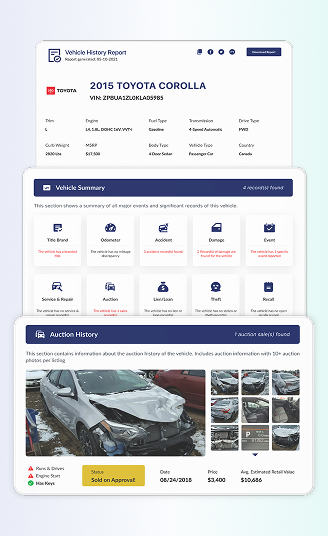
A West Virginia VIN check helps you investigate available vehicle history records before buying or evaluating a used vehicle. Enter the VIN to review reported title brands, salvage and reconstructed history, accidents, damage, mileage records, theft information, and vehicle specifications. Available information varies by vehicle and reporting source.
West Virginia Title Brands: More Than a Salvage Designation
West Virginia law recognizes several distinct damage-related title classifications. These include salvage, reconstructed, cosmetic total loss, cosmetic total loss salvage, flood, fire, and nonrepairable vehicle status.
These terms describe different circumstances. A vehicle declared a total loss because of substantial damage does not necessarily receive the same title treatment as one declared a cosmetic total loss. A vehicle repaired after a salvage designation also follows a different process from one classified as nonrepairable.
When investigating a West Virginia vehicle, the title brand is an important starting point. The next step is to understand what event led to that designation and whether the vehicle was subsequently repaired, inspected, or retitled.
West Virginia's 75% Total-Loss Rule
Under West Virginia Code §17A-4-10, a vehicle meets the statutory definition of a total loss when its damage equals 75% or more of its market value, determined using a nationally accepted used-car value guide. A vehicle can also meet the definition through the state’s flood-damage provision.
The 75% threshold is part of West Virginia’s statutory total-loss framework. It should not be treated as a universal rule for every insurer’s decision in every jurisdiction.
The law requires an insurer to determine whether a totaled vehicle is repairable, cosmetically damaged, or nonrepairable before the applicable title documentation is processed.
This distinction matters because the resulting title or certificate can affect whether the vehicle may return to road use and what a future buyer should investigate.
Cosmetic Total Loss Is Not the Same as Salvage
West Virginia provides a separate title classification for a vehicle declared a cosmetic total loss.
This applies when an insurer determines that the damage is exclusively cosmetic and that no repair is necessary for the vehicle to be legally and safely operated on public roads.
When the owner retains the vehicle, the DMV may issue a title branded Cosmetic Total Loss instead of a salvage certificate. The law states that this designation cannot be removed from the title.
There are two important limitations:
- Flood and fire damage are excluded from the statutory definitions of cosmetic damage and cosmetic total loss.
- A cosmetic total-loss designation does not mean the vehicle has no damage. It means the insurer determined that the damage was cosmetic and did not require repair for legal and safe operation under the relevant provision.
If the insurer retains the vehicle rather than the owner, the law provides for a cosmetic total-loss salvage certificate. The vehicle’s subsequent title treatment follows the applicable statutory process.
For a buyer, this distinction is important. A cosmetic total-loss brand should not automatically be interpreted as equivalent to a conventional salvage designation, but it should still be disclosed and investigated.
Salvage Certificates and Reconstructed Vehicles
West Virginia separates a repairable salvage vehicle from a vehicle that has completed the reconstruction and inspection process.
Salvage certificate
When an insurer determines that a totaled vehicle is repairable, West Virginia issues a salvage certificate to the insurer or to the owner who retains the vehicle.
A salvage certificate does not authorize ordinary road use. Under §17A-4-10, the vehicle cannot be titled or registered for operation on West Virginia streets and highways until it satisfies the reconstructed-vehicle requirements.
This is an important distinction when purchasing a vehicle from a salvage auction or private seller. A vehicle may be physically repairable without being legally eligible for ordinary registration at the time of sale.
Reconstructed vehicle
West Virginia defines a reconstructed vehicle as a vehicle that was totaled under the state’s law or another jurisdiction’s law and subsequently rebuilt under the applicable requirements. The statutory definition also covers vehicles materially altered through the removal, addition, or substitution of essential parts.
Before a reconstructed vehicle can be titled or registered for operation, it must pass two inspections:
- An inspection at an official West Virginia state inspection station.
- An examination by the West Virginia Division of Motor Vehicles.
After both inspections are approved, the owner can apply for a new certificate of title. The salvage certificate must be surrendered as part of the title process.
The resulting title identifies the vehicle’s reconstructed status. West Virginia law also requires the appropriate flood or fire designation when applicable.
A reconstructed title therefore documents a later stage in the vehicle’s history. It does not erase the original total-loss or salvage event.
Reconstruction records and replacement parts
West Virginia’s DMV reconstruction guidance requires owners to preserve documentation for the work performed.
Relevant records include:
- Photographs of the vehicle before reconstruction, showing the front, rear, and both sides.
- Receipts for replacement parts, equipment, materials, and labor.
- The salvage certificate and related title documents.
- The state safety inspection certificate.
- The DMV reconstructed-vehicle examination documentation.
When major components from another vehicle are used, the donor vehicle’s VIN must also be provided. The DMV guidance identifies components such as the engine, transmission, front and rear clip assemblies, fenders, hood, bumper, quarter panels, floor panels, and certain groups of doors.
The state’s guidance instructs owners to retain reconstruction records, receipts, and photographs for at least three years.
For a buyer, these documents can help establish how a reconstructed vehicle was repaired and whether the seller can substantiate the work performed.
Official guidance: West Virginia DMV reconstructed-vehicle process.
Flood-Damaged and Fire-Damaged Vehicle Brands
West Virginia’s title law includes separate provisions for flood- and fire-damaged vehicles.
The statutory definition of a flood-damaged vehicle is specific: the vehicle must have been submerged in water to the extent that water entered the passenger or trunk compartment.
This is a legal definition for the relevant title provisions. It should not be interpreted as proof that water below that level cannot cause mechanical or electrical damage.
West Virginia law also provides for flood and fire branding in the title process. A reconstructed vehicle title can carry the appropriate flood or fire designation, depending on the vehicle’s history and applicable classification.
When evaluating a vehicle with a flood or fire brand, investigate the original event and the subsequent repair history. Water intrusion can affect electrical connectors, control modules, wiring, interior components, and mechanical systems. Fire exposure can affect structural materials, wiring, and safety components.
A title brand identifies a recorded classification. It does not independently describe the vehicle’s complete present condition.
Nonrepairable Vehicles and Parts-Only Status
West Virginia distinguishes a repairable salvage vehicle from a vehicle classified as nonrepairable.
Under §17A-4-10, a vehicle may be classified as nonrepairable when the insurer or vehicle owner determines that it cannot be safely operated on public roads and has no resale value except as a source of parts or scrap.
A nonrepairable motor vehicle certificate is issued instead of a salvage certificate under the applicable process.
This distinction is critical when buying a damaged vehicle. A salvage vehicle may qualify for reconstruction and a subsequent title if it meets the state’s requirements. A nonrepairable vehicle is not an ordinary rebuild candidate.
Do not assume that a vehicle can return to road use simply because someone has replaced damaged components or performed mechanical repairs. Its title classification and legal eligibility must be confirmed through the applicable state process.
Out-of-State Salvage and Damage Brands in West Virginia
A vehicle’s title history can span several states. West Virginia’s title law addresses vehicles that were previously branded in West Virginia or another jurisdiction.
Under §17A-4-10, the owner or title holder of a West Virginia-titled vehicle that has previously been branded as salvage, reconstructed, cosmetic total loss, cosmetic total-loss salvage, flood, fire, or an equivalent designation must apply for a title showing the applicable brand upon becoming aware of it.
The law also addresses subsequent title transfers involving vehicles previously branded under the West Virginia process. When a previously branded vehicle is presented with an out-of-state title that does not show the earlier brand, the DMV must apply the appropriate brand before issuing the new title.
This matters when a seller presents a current title that appears different from an earlier document. A title transfer does not necessarily remove a previous damage classification.
For used-car buyers, compare the current title with available historical records. Pay attention to:
- The state that originally applied the brand.
- The exact terminology used on the earlier title.
- Whether the vehicle was later classified as reconstructed.
- Whether flood, fire, or cosmetic total-loss designations remain relevant.
- Whether the current title reflects the vehicle’s previous branding.
A vehicle-history report can help identify available historical information, but official title status should be confirmed with the relevant motor vehicle agency.
What a West Virginia VIN Check Can Help You Investigate
A VIN identifies a vehicle, while historical records describe events reported about it. These are different types of information.
A PremiumVIN VIN Check may return available information from the following categories, depending on the vehicle and reporting sources.
Title and damage history
Review available title-related records and damage designations, including reported salvage, reconstructed, flood, fire, and other title brands.
Compare any reported brand with the vehicle’s current title and previous ownership documents.
Accident records
Investigate available accident records and reported damage events. A record may provide event details when supplied by its source, but not every collision or repair is necessarily reported.
Mileage records
Compare recorded odometer readings across available historical events. Unexpected decreases, large gaps, or inconsistent readings may warrant further investigation.
Theft records
Review available theft-related information associated with the VIN. Confirm any concerning result with the relevant authority before relying on it for a purchase decision.
Auction and sales history
Available auction and sales records can help explain how a vehicle entered the used-car market. Historical listings and photographs, when available, may provide context about its condition before a later sale or repair.
Vehicle specifications
Confirm available vehicle identity and factory specification information, such as model year, make, model, engine, and configuration.
For a specification-focused lookup, use the PremiumVIN VIN Decoder. The decoder identifies vehicle attributes; the VIN Check focuses on available historical records.
Evaluating a Reconstructed Vehicle Before Purchase
A reconstructed title establishes a title classification, not a complete assessment of the vehicle’s present condition.
Before buying a reconstructed or previously salvaged vehicle in West Virginia:

Step 1: Match the VIN
Compare the identifier on the vehicle with its title and the number entered into the lookup.

Step 2: Identify the original brand
Determine whether the vehicle was previously salvage, cosmetic total loss, flood, fire, or another classification.

Step 3: Review the repair history
Request photographs, parts receipts, labor invoices, and available inspection documents.
Step 4: Check replacement components
Where major components came from donor vehicles, ask for the associated documentation.
Step 5: Compare mileage records
Investigate unexplained odometer changes or gaps.
Step 6: Confirm the current title
Verify that the title reflects the applicable reconstructed or damage-related designation.
Step 7: Arrange an independent inspection
Have a qualified professional assess structural repairs, airbags, electrical systems, mechanical condition, and other safety-critical components.
These steps are especially important for vehicles purchased from salvage auctions or transferred into West Virginia after reconstruction in another state.
Check a West Virginia VIN Before You Buy
West Virginia’s title classifications distinguish repairable salvage vehicles, cosmetic total-loss vehicles, reconstructed vehicles, and nonrepairable vehicles. Understanding those differences can help you interpret available history records more accurately.
Enter the VIN into PremiumVIN to review available vehicle specifications and historical information. For the broader vehicle-history lookup process, visit the PremiumVIN VIN Check page.
FAQs About West Virginia VIN Checks
What does a salvage title mean in West Virginia?
A salvage certificate is issued for a vehicle that an insurer determines is a repairable total loss under the applicable law. The vehicle cannot be titled or registered for ordinary road use until it completes the required reconstructed-vehicle inspection and title process.
What is the total-loss threshold in West Virginia?
West Virginia Code §17A-4-10 defines a total loss as damage equivalent to 75% or more of the vehicle’s market value, determined using a nationally accepted used-car value guide. The law also includes vehicles meeting its flood-damage definition.
What is a cosmetic total-loss title in West Virginia?
A cosmetic total-loss title applies when an insurer determines that damage is exclusively cosmetic and that no repair is necessary for the vehicle to be legally and safely operated on public roads. The title designation cannot be removed under the statute.
Is a cosmetic total loss the same as a salvage title?
No. West Virginia provides a separate cosmetic total-loss title for qualifying exclusively cosmetic damage. A repairable total-loss vehicle follows the salvage certificate process. Flood and fire damage are excluded from the statutory cosmetic total-loss definition.
Can a salvage vehicle be driven in West Virginia?
A vehicle with a salvage title cannot be registered for ordinary public-road operation until it completes the required reconstructed-vehicle process. The state’s DMV guidance describes a one-trip permit issued by the West Virginia State Police for transporting a salvage vehicle to the required inspection.
What inspections does a reconstructed vehicle need in West Virginia?
A reconstructed vehicle must pass an inspection at an official state inspection station and a separate examination by the West Virginia DMV. After approval, the owner can apply for the appropriate reconstructed title.
Does a reconstructed title remove the original salvage history?
No. A reconstructed title identifies the vehicle’s later title status after repair and inspection. It does not mean the vehicle was never declared a total loss or issued a salvage certificate.
How does West Virginia define a flood-damaged vehicle?
For the relevant title provisions, West Virginia defines a flood-damaged vehicle as one submerged in water to the extent that water entered the passenger or trunk compartment.
Can a nonrepairable vehicle receive a reconstructed title?
A nonrepairable vehicle is classified as having no resale value except for parts or scrap and as incapable of safe road operation. It should not be treated as an ordinary repairable salvage vehicle.
Can a West Virginia VIN check show every accident or title event?
No. A VIN check can return available records, but not every accident, repair, insurance event, or title transaction is necessarily represented in the data sources used by a vehicle-history provider. Missing information does not prove that an event never occurred.
Can I use a license plate instead of a VIN?
PremiumVIN supports license plate lookup for eligible U.S. vehicles. If you do not have the VIN, use the PremiumVIN License Plate Lookup page. Available information varies by vehicle and reporting source.