

Key Takeaways:
- A 13-digit VIN usually indicates a pre-1981 vehicle. Unlike modern 17-character VINs, classic VINs follow manufacturer-specific formats.
- There is no universal 13-digit VIN decoder. GM, Ford, Chrysler, AMC, and other automakers each use different VIN structures and character meanings.
- A 13-digit VIN can reveal key factory specifications. These often include the model year, engine, body style, assembly plant, and production sequence.
- Use a classic VIN decoder for accurate results. Modern 17-digit VIN tools may reject older VINs.
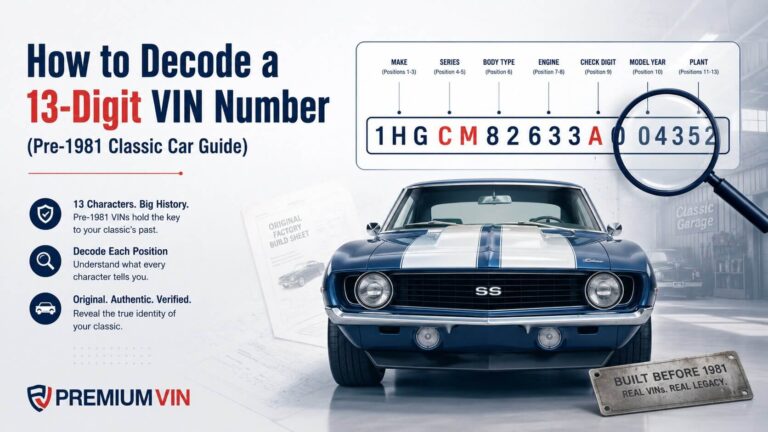
Learning how to decode a 13-digit VIN is the first step toward identifying a classic vehicle’s original specifications. In most cases, a 13-digit VIN shows that the vehicle was built before the 17-character Vehicle Identification Number (VIN) system became mandatory in 1981.
A classic VIN is not the same as a modern VIN. Prior to standardization, each manufacturer used its own coding system to identify its model, body style, engine, assembly plant, and production sequence.
Because of these differences, decoding a classic VIN depends on who built the vehicle. Read this guide through to find a way to decode the classic 13-digit VIN format used by GM, Ford, Chrysler, and AMC, and show an easy way to identify a classic vehicle’s factory specifications in seconds.
Why do 13-digit VINs Exist?
Vehicle Identification Numbers have not always followed the same format. Before the modern 17-character VIN became the industry standard, manufacturers used several numbering systems that varied in both length and structure.
VINs Before Standardization (1954–1980)
In the late 1960s, the U.S. government introduced VIN requirements to improve vehicle identification, simplify vehicle registration, and help reduce fraud. Starting in the 1969 model year, passenger vehicles sold in the United States were required to display a standardized VIN on a certification label.
As a result, classic vehicles from this era commonly have VINs ranging from 11 to 13 characters
The Shift to the 17-Character VIN
Everything changed with the 1981 model year, when the National Highway Traffic Safety Administration (NHTSA) required all passenger vehicles sold in the United States to use the standardized 17-character VIN, based on the international ISO 3779 standard.
Why Most VIN Decoders Don't Support 13-Digit VINs
17-character and standardized VINs did not exist back then. Before the VIN standardization model year, every automaker developed its own identification system. At that time, a VIN could range from 9 to 17 digits, although 11-, 12-, and 13-character VINs were common in the United States.
Each manufacturer has their own designation; the same characters from the same position can mean something else. For example, a 1970 Ford VIN follows a different structure than a 1970 Chevrolet VIN, even though both vehicles were built during the same period.
This means there is no one-size-fits-all 13-digit VIN decoder. Before decoding a classic VIN, the vehicle’s manufacturer must be identified so the correct decoding format can be applied.
What Information is Included in a Classic VIN?
Although every manufacturer used its own structure, many classic VINs include several different types of information, such as:
- Model year: Often identifies the vehicle’s production year, although the character position varies by manufacturer.
- Assembly plant: Indicates the factory where the vehicle was built.
- Sequential production number: A unique serial number assigned during manufacturing that helps distinguish one vehicle from another.
Other details, such as series, body type, engine type, and trim level, are all dependent on the manufacturer.
How to Decode a 13-digit VIN Number?
To decode the 13-digit VIN number, you can use PremiumVIN and follow these simple steps:
Step 1: Find the VIN
Check the driver’s side doorjamb, in the engine bay, or on the vehicle’s paperwork, like a bill of sale or the vehicle’s registration paper.
Step 2: Enter the VIN
Visit PremiumVIN’s classic car VIN decoder service and enter the VIN into the form. Then, click the button to submit the form.
Step 3: Check the Specs
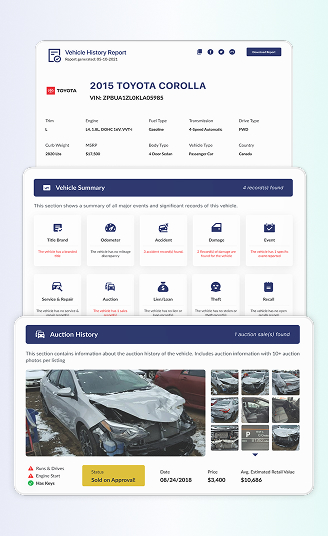
As soon as the VIN is decoded, you can view the preview page to see complete vehicle specs and market value. Need to get more information? Proceed to payment and get a classic history report.
What Will You Get From PremiumVIN's 13-Digit VIN Decoder?
Manually decoding a classic VIN means finding the correct manufacturer’s guide and interpreting each character one by one. PremiumVIN simplifies the process by automatically recognizing the vehicle’s manufacturer and production era, then retrieving the available factory specifications and build information in seconds.
What's Included for Free
Enter a valid 13-digit VIN to instantly access key factory details that help identify and verify a classic vehicle before buying, restoring, or researching it.
Engine
View the factory engine code and displacement to confirm the vehicle’s original powertrain configuration.
Model Number
Identify the vehicle’s original model or series designation for more accurate identification.
Axle Type
See the factory-installed axle configuration, when available, to better understand the vehicle’s drivetrain setup.
Drivetrain
Find the original drivetrain configuration, such as rear-wheel drive (RWD), four-wheel drive (4WD), or other applicable layouts based on the vehicle.
Original MSRP
See the manufacturer’s suggested retail price (MSRP) when the vehicle was sold new. Refer to this section when negotiating with the seller.
Current Market Value
Get an estimated market value range based on the vehicle’s model year, specifications, and comparable vehicles in today’s market.
What Information is Not Included in the Free Classic VIN Decoder
A basic classic VIN decoder shows detailed specifications information on the vehicle. However, please note that it does not show the car’s full records, such as:
Title
Check if the vehicle was marked as salvage, rebuilt, fire-damaged, lemon brand, flood-damaged, junk, or scrapped, and many more.
Odometer Records
Examine the recorded odometer history of the vehicle’s odometer history along with the recorded date of the odometer.
Auction History
See if the vehicle was ever sold at an auction. See the location, auction date, final status, and selling price of the vehicle.
Accident Records
Check the detailed accident history, like the date and location of the accident.
Damage History
If the vehicle carries a damage history caused by major/minor damage from an accident, salvage auction, dents, scratches, and more.
Recall Check
The classic report shows the complete recall information, such as date, causes, and how the vehicle recall was handled.
Ownership Records
Knowing and understanding the ownership records is important. See the previous registration location, year of purchase, and ownership duration.
Theft Check
Accidentally purchasing a stolen vehicle can lead to costly mistakes. You can see the location where the car was stolen and the date.
Sales History
See if the vehicle was sold many times beforehand. You can check the complete information on the vehicle’s sales history.
Real Case: Why You Should Use a Specific Classic VIN Decoder
Kim wanted to purchase a used 1975 Pontiac Hardtop Coupe. Before she proceeded to purchase the vehicle, she wanted to run a quick check to see if the vehicle matched the seller’s description.
Sample VIN: 2W87S5N553980
When the Problem Arises
Kim uses a VIN decoder tool she found on the internet without knowing the fact that it wasn’t intended for classic VINs with fewer digits than 17 digits.
Lesson Learnt
Kim then decided to use a VIN decoder service that can be used to decode classic VINs, like PremiumVIN.
Common Mistakes When Decoding a Classic VIN
Decoding a classic car VIN by hand is challenging, as some of the manufacturers do not have a standardized version. These are the common mistakes that happen when you try to decode a classic VIN by hand.
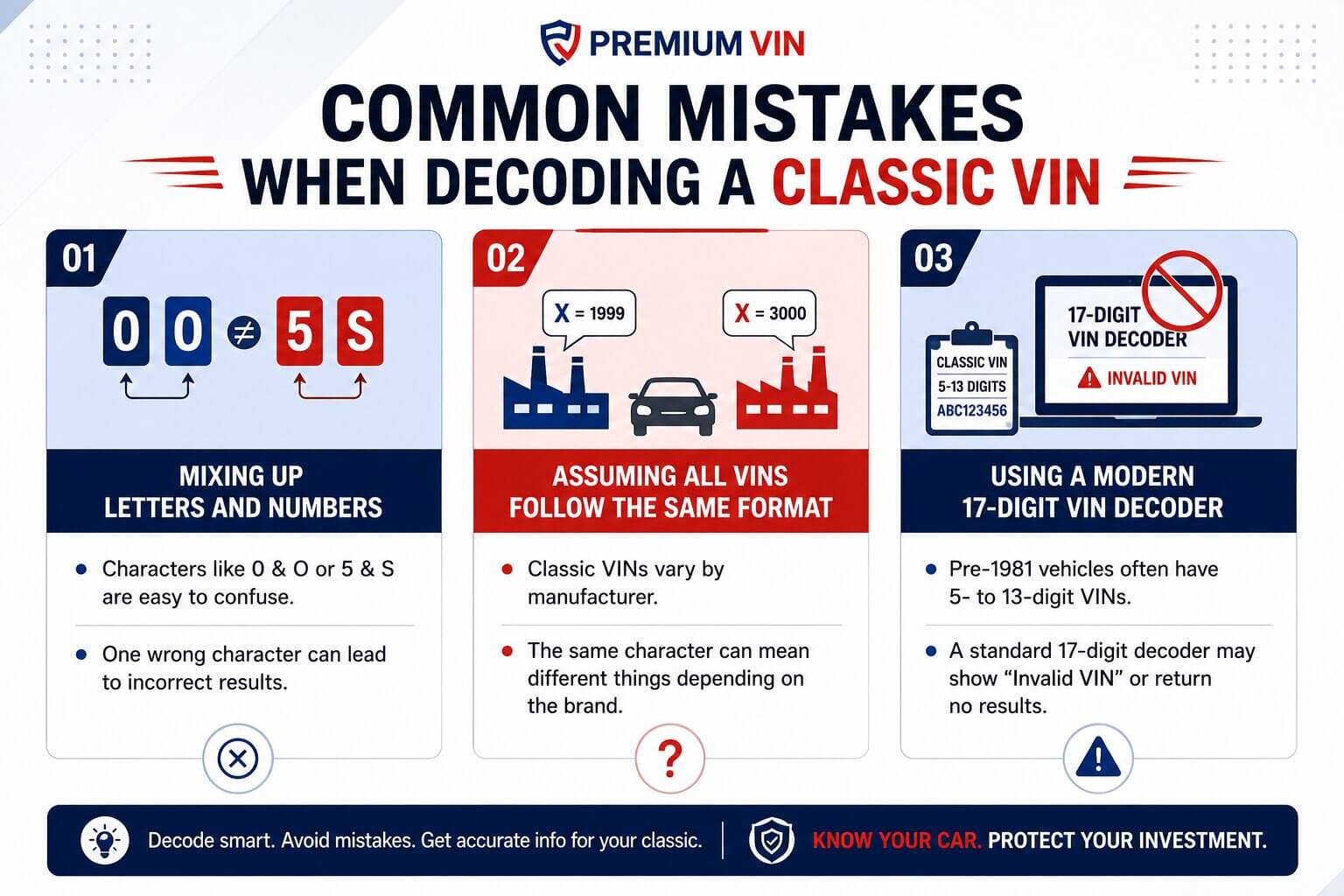
Confusing Numbers and Letters
Characters such as 0, O, or 5 and S can be difficult to distinguish, even though they are written clearly on the VIN. Even when the characters are correct, the same code might represent different information.
Assuming Every VIN Follows the Same Style
A character that identifies the assembly plant on one manufacturer’s VIN may represent the engine, body style, or another specification on a different brand. Always refer to the manufacturer’s VIN sheet information to correctly decipher each code one by one.
Use Modern 17-Digit VIN
A classic VIN decoder must be used to decode a 13-digit VIN using a specialized tool that is specifically made to decode a 13-digit VIN, not the 17-digit VIN decoder. Entering a 13-digit VIN into a modern VIN decoder may return an “invalid VIN” message or no results at all.
Where to Find the VIN on a Classic Car VIN
To find the VIN on a classic car, you can examine the body parts or the vehicle’s paperwork. Take a look at the section below to see where you can find the VIN.
- Dashboard: On many late-model classics, the VIN plate is located on the driver’s side of the dashboard and is visible through the windshield.
- Driver’s door jamb: Look for a VIN plate or certification label on the driver’s door or door jamb.
- Firewall or cowl: Many classic vehicles have a VIN plate or identification tag mounted on the firewall or cowl under the hood.
- Frame rail: Some manufacturers stamped the VIN directly onto the vehicle’s frame, often near the front suspension or steering components.
- Engine block: Certain vehicles include a partial VIN or derivative serial number stamped on the engine block for identification purposes.
- Vehicle paperwork: The VIN is also listed on the vehicle title, registration, insurance documents, and other ownership records.
More Insight: On GM models, you may check the cowl tag, as it has important information such as assembly plant, trim level, paint code, and build date, which is not fully encoded in the VIN.
Read also: Why Every Used Car Buyer Needs a Vehicle History Report?
Who Needs to Decode a 13-Digit VIN?
It does not matter whether you want to purchase, sell, collect, or restore a classic vehicle; knowing the real information helps to make better decisions, ensure the car matches its original build, and verify its authenticity.
Classic Car Buyers
A VIN decode helps buyers confirm that the vehicle’s model, engine, body style, and production year match the seller’s description. It can also reveal factory specifications that are difficult to identify through appearance alone.
Classic Car Sellers
Providing decoded VIN information gives potential buyers greater confidence in the vehicle’s authenticity. It also helps create more accurate listings by confirming exact details before advertising the car.
Collectors and Restorers
Collectors and restoration enthusiasts use VIN decoding to verify a vehicle’s original configuration before sourcing parts or beginning restoration work. Knowing the factory specifications helps preserve authenticity and avoid costly mistakes during the restoration process.
Conclusion on Decoding Classic 13-Digit VIN
Before you decide to purchase a classic car, it is better to run a quick VIN decoder to verify the vehicle’s identity, specifications, MSRP, and understand the condition in which it was in when it left the factory.
To decode a classic vehicle’s VIN, you should use a specialized tool that is intended to decode classic VINs, as the format is different than the modern 17-digit VIN. Whether you’re buying, selling, restoring, or collecting a classic car, decoding the VIN is an essential first step toward making better decisions before purchasing the vehicle.
FAQs on How to Decode Classic 13-Digit VINs
Is there a classic Mustang VIN decoder?
Yes. A classic Mustang VIN decoder can decode the 11-character VIN used on first-generation Mustangs (1964½–1973). It identifies the model year, assembly plant, body style, engine code, and sequential production number. You can use our classic VIN decoder to decode a classic VIN.
Can you decode a classic car VIN?
Yes. Since the standardized 17-character VIN wasn’t introduced until the 1981 model year, classic cars use manufacturer-specific VIN formats. Decoding them requires the correct make- and year-specific VIN chart or a classic VIN decoder.
How to decode classic car VIN numbers?
Classic car VINs vary by manufacturer and model year because there was no standardized VIN format before 1981. Instead of today’s 17-character VIN, older vehicles may use identification numbers ranging from 5 to 13 characters. To decode one, first identify the vehicle’s make and model, then use the appropriate manufacturer-specific decoding guide or a classic VIN decoder that supports classic vehicles.
What is the VIN classic number?
A VIN (Vehicle Identification Number) is a unique identifier assigned to a vehicle. Modern vehicles use a standardized 17-character VIN, while classic vehicles built before 1981 often have shorter manufacturer-specific identification numbers. Depending on the make and model, these may also be referred to as a chassis number, serial number, or vehicle serial number.
Can you decode a VIN for free?
Yes, you can decode a VIN for free to view basic factory specifications, such as the make, model, engine, and manufacturing details. However, information like accident records, title history, theft records, and other vehicle history data typically requires a comprehensive vehicle history report.