
Maryland VIN Check for Vehicle History Reports
Before buying a used car in Maryland, investigate the records associated with its Vehicle Identification Number (VIN). A vehicle may look well maintained while its available history contains an accident record, a salvage title brand, inconsistent mileage entries, or previous auction activity.
A Maryland VIN check through PremiumVIN helps you review available vehicle-history information before making a purchase, preparing a vehicle for sale, or researching a car you already own. Enter the VIN to see which records are available for that vehicle. The information returned depends on the vehicle and the records available from the sources used.
What Can a Maryland VIN Check Reveal?
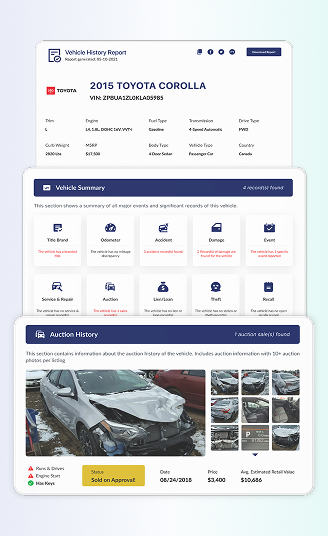
A VIN identifies a particular vehicle, but its history comes from records associated with that vehicle—not from the VIN characters alone. A PremiumVIN Vehicle History Report may include several categories of historical information, depending on the vehicle and available source data.
Accident and damage history
Accident and damage records can provide context that a visual inspection may not reveal. When matching information is available, a report may identify reported accidents, damage events, or related insurance claims.
Pay attention to the reported event date, damage description, and whether the information indicates a specific area of the vehicle. A record does not, by itself, establish the vehicle’s present condition or the quality of any subsequent repair.
For additional due diligence, read our guide to checking accident history by VIN.
Maryland title brands and salvage history
Title history deserves particular attention when researching a used vehicle in Maryland. A title brand can affect how a vehicle may be registered, insured, resold, or evaluated.
A history report may contain available title-brand information, such as salvage or rebuilt status. These terms should not be treated as interchangeable:
- Salvage: A vehicle has been classified as salvage under the applicable title process. The underlying reason and classification should be checked against the relevant records.
- Rebuilt: A previously salvaged vehicle has undergone the required repair and inspection process for it to qualify for a rebuilt title.
- Unbranded or clean title record: The available title record does not show a particular brand. This is not proof that the vehicle has never been damaged.
Maryland’s Motor Vehicle Administration explains that a salvage vehicle must be rebuilt, inspected, and approved before it can be titled and registered. A Maryland Salvage Inspection is separate from a standard safety inspection. A rebuilt title also does not erase the vehicle’s previous salvage history.
If a vehicle has a salvage or rebuilt history, review the details rather than relying on the current title description alone. Our explanations of salvage title checks, rebuilt title checks, and buying a salvaged and repaired car provide additional context.
Odometer and mileage records
Mileage entries can help you assess whether the vehicle’s displayed odometer reading is consistent with its recorded history.
Where available, compare readings from different dates and look for:
- A later reading that is lower than an earlier recorded reading.
- Long gaps between mileage records.
- Unexpected changes in mileage progression.
- Differences between the current odometer and the most recent available record.
A gap in mileage data does not automatically indicate odometer fraud. It means there is not enough information in the available records to establish the vehicle’s mileage progression for that period. Learn more about how to identify possible odometer rollback.
Liens and loan-related records
A vehicle may have financing or lien-related information associated with its history. This matters because a buyer should understand whether an outstanding financial interest could affect the transfer of ownership.
If a report contains a lien or loan-related record, verify its current status with the appropriate source before completing the transaction. A historical entry should not automatically be interpreted as proof that a lien remains active today.
Theft and other reported events
A report may contain available theft-related or other vehicle-event information. Treat these results as records to investigate, not as a substitute for confirmation through the relevant authorities.
A result with no matching theft record does not establish that a vehicle has never been stolen or that its current status has been independently verified.
Auction history and available photographs
Previous auction activity can provide useful context, particularly when a vehicle was sold after damage or appeared in an insurance or salvage auction.
When matching auction information and images are available, review them alongside the vehicle’s current condition. Compare visible damage, vehicle identity, and the reported sale context with the seller’s description.
Auction photographs are historical evidence from the time they were captured. They do not establish the vehicle’s current condition or confirm that all repairs were completed correctly.
Recalls and manufacturer information
Recall information can help identify safety-related issues associated with a vehicle. A report may contain available recall information, but the vehicle’s current open-recall status should be confirmed using the manufacturer’s resources or the official NHTSA recall lookup.
A VIN-based history report and an official recall search serve related but different purposes. Check the current status before relying on a vehicle’s recall history.
Vehicle specifications and market-value information
Available vehicle specifications can help you compare the vehicle being offered with its expected identity and configuration. Market-value information may also provide context when assessing an asking price or preparing to sell.
Market-value information is an estimate, not a certified appraisal or a guaranteed selling price. Actual value depends on factors such as condition, mileage, equipment, location, demand, and the vehicle’s documented history.
Maryland Vehicle History: Title, Safety, and Emissions Checks
A vehicle’s history report and Maryland’s official inspection processes answer different questions. Understanding the distinction helps prevent a buyer from treating one record as proof of another.
Maryland salvage inspections and rebuilt titles
Maryland has a specific process for titling salvaged vehicles. According to the Maryland MVA, a salvage vehicle must be rebuilt, inspected, and approved before it can be titled and registered. The salvage inspection is intended to check the rebuilt vehicle and verify that stolen parts were not used.
The salvage inspection is not the same as the standard Maryland Safety Inspection. If a seller describes a vehicle as rebuilt, ask for the relevant title documentation and inspection evidence. You can also review the state’s official guidance for titling salvaged vehicles.
A VIN history report can help identify available historical title information, but it does not issue a Maryland title, certify a rebuild, or replace an official inspection.
Maryland safety inspections
Maryland requires a safety inspection certificate for vehicles in circumstances involving sale, titling, or transfer. The inspection checks whether important vehicle components meet the state’s safety requirements.
This is a physical inspection conducted through an authorized inspection station. A vehicle-history report cannot establish that a vehicle currently passes Maryland’s safety inspection.
Before purchasing, ask the seller about the inspection certificate and verify any required documentation with the appropriate Maryland authority. See the Maryland MVA safety inspection guidance.
Maryland Vehicle Emissions Inspection Program (VEIP)
Maryland’s Vehicle Emissions Inspection Program (VEIP) is separate from the state’s safety inspection. It checks vehicle emissions and applies to eligible vehicles according to the MVA’s rules.
The MVA generally schedules emissions inspections every two years for covered vehicles. The testing requirement depends on vehicle eligibility and registration location; the MVA identifies specific Maryland counties where VEIP inspections are required.
A vehicle-history report should not be treated as proof of current VEIP compliance. Check the vehicle’s testing status and due date through the official Maryland VEIP information.
How to Run a Maryland VIN Check with PremiumVIN
You can use a vehicle’s VIN to begin a history search. Follow these steps:

Step 1: Find the VIN
Check the driver-side dashboard near the windshield, the driver-side door area, or the vehicle's title and registration documents.

Step 2: Enter the VIN
Use the VIN input on this page and check the characters carefully before submitting.

Step 3: Review the available report
Examine the vehicle identity and the historical record categories returned for that VIN.
Step 4: Investigate important findings
Pay particular attention to title brands, damage records, mileage entries, lien-related information, and auction history when present.
Step 5: Verify important details independently
Contact the relevant authority or obtain supporting documents when a finding could affect ownership, safety, or the purchase decision.
If you do not have the VIN, you can use the Maryland license plate lookup page to begin with a supported plate-based search.
Where to Find a Vehicle's VIN
The VIN is commonly displayed in more than one location. On many modern passenger vehicles, you can find it:
- On the driver-side dashboard, visible through the windshield.
- On the label or plate in the driver-side door jamb.
- On the vehicle’s title and registration documents.
- In other manufacturer-designated locations, depending on the vehicle.
Compare the VIN on the vehicle with the VIN shown on its documents. If the identifiers do not match, pause the transaction and investigate the discrepancy before proceeding.
For more detail, see where to find a VIN, what a VIN represents, and the VIN number format guide.
What a Maryland VIN Check Cannot Confirm
A vehicle-history report is a research tool, not a complete inspection or legal determination. Its findings depend on the records available for the specific vehicle.
Keep these limitations in mind:
- No record is not proof that an event never happened. An accident, repair, title event, or other incident may not appear in the sources searched.
- A report does not establish present physical condition. A vehicle may have damage that is not documented in the available history.
- A title entry is not a current legal title determination. Verify title status and ownership-transfer requirements through the appropriate authority.
- Mileage records may be incomplete. Gaps do not automatically prove tampering, and a report cannot establish mileage for periods with no supporting records.
- Inspection requirements must be verified separately. A report does not replace Maryland’s safety, salvage, or emissions inspection processes.
- Market-value information is not a certified appraisal. Use it as one input alongside condition, comparable vehicles, and professional advice where needed.
PremiumVIN explains its evidence approach in the report methodology, including how information from different source categories should be interpreted. You can also review data coverage and availability and documentation limitations.
Research a Maryland Vehicle Before You Buy
A vehicle’s appearance and seller description are only part of its story. Reviewing available history records can help you identify issues that deserve further investigation before you commit to a purchase.
Enter the VIN to review the information available for the vehicle, then verify important findings through the appropriate records, documents, and inspections.
Frequently Asked Questions About Maryland VIN Checks
Is a Maryland VIN check free?
You can use the VIN lookup process to begin researching a vehicle. Access to a detailed Vehicle History Report may require payment. Review the current product and pricing information before purchasing.
Can I check a Maryland vehicle using its license plate?
Yes. PremiumVIN provides a separate Maryland license plate lookup page for supported plate-based searches. A plate lookup is an alternative starting point when you do not have the VIN.
Can a VIN check show whether a Maryland vehicle has a salvage or rebuilt title?
A report may contain available title-brand information, including salvage or rebuilt-related records. However, record availability varies. Confirm the current title and any required inspection documentation with the Maryland MVA before buying.
Does a rebuilt title mean the vehicle has never had serious damage?
No. A rebuilt vehicle may have previously been classified as salvage. The rebuilt status relates to the subsequent repair and inspection process; it does not erase the earlier salvage history.
Does a Maryland VIN check confirm that a vehicle passed its safety or emissions inspection?
No. A VIN history report is not an inspection certificate. Maryland safety inspections and VEIP emissions testing are separate state processes. Verify the applicable requirements and current status through the Maryland MVA.
What if the VIN check does not return an accident or title record?
A missing result means the searched sources did not return a matching record for that category. It does not prove that the vehicle has never been involved in an accident or had a title issue. Consider a professional inspection and verify important details through appropriate records.
Should I run a VIN check before buying a used car in Maryland?
A VIN check is a useful part of pre-purchase research because it may reveal historical information that is not obvious during a visual inspection. Combine the report with a physical inspection, a review of the title and sale documents, and verification of any Maryland inspection requirements.