
Connecticut VIN Check – Instant CT Vehicle History Report
Thinking about buying a used car in Connecticut? A Connecticut VIN Check gives you instant access to title records, helps you spot hidden rust problems, and protects you from scams that could cost you thousands.
What Is a Connecticut VIN Check?
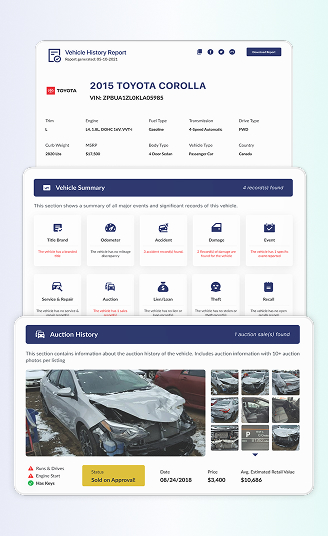
A CT VIN check is a search that uses a vehicle’s 17-character Vehicle Identification Number to pull up its full history. This includes past owners, accident records, title history, mileage readings, and theft reports. Instead of trusting a seller’s word, you get facts pulled from national databases, state DMVs, insurance records, national salvage registries, and auto auctions across the United States.
Hidden Risks of Buying Vehicles in Connecticut
Connecticut’s used car market comes with unique risks. From rising theft and harsh winters to the wear of city and coastal driving, buyers face challenges that others may overlook. A Connecticut VIN lookup helps you spot these issues before making a purchase.
Connecticut's Rising Vehicle Theft Rates
Statewide Theft Trends
Vehicle theft is a serious risk for Connecticut car buyers. According to the National Insurance Crime Bureau (NICB), more than 9,422 cars were reported stolen in 2023, which was a 33 percent increase from the year before. AAA’s Northeast region also reported that in 2024, police data showed nearly 8,725 thefts, with about 40 percent occurring between May and August, the busiest time for used car purchases.
Hot Spot Cities for Stolen Vehicles
Theft is not spread evenly across the state. Some cities have seen sharp spikes:
- New Haven Milford area: Thefts rose 37 percent in one year, reaching over 3,700 reported cases.
- Hartford: Police recorded 1,160 stolen vehicles in 2023, more than double the year before.
- Bridgeport: Reported over 600 vehicle thefts in 2023, continuing a steady rise.
If you are buying a used car anywhere near these cities, a VIN check is one of the simplest ways to confirm the vehicle was never reported stolen.
Road Salt and Rust Damage Across Connecticut
Why Connecticut Is a Salt Belt State
Connecticut sits squarely inside what mechanics call the Salt Belt. State and local crews spread a salt brine mix, roughly 23 percent salt and 77 percent water, on roads before every winter storm. This keeps roads safe, but it is hard on vehicles. Manufacturers such as Hyundai have even issued service campaigns specifically for vehicles registered in Salt Belt states, including Connecticut, due to underbody corrosion.
Hidden Corrosion Buyers Can't See
Salt damage builds up underneath a vehicle, hidden during a normal test drive. Over time, it can weaken brake lines, suspension components, frame and structural parts, and exhaust systems. The National Highway Traffic Safety Administration advises owners of vehicles more than seven years old to have the undercarriage inspected regularly for this reason. A vehicle history report will not show rust directly, but it can reveal accident records, prior repairs, and title brands that often signal years of neglect. Combining a VIN check with a physical undercarriage inspection is the safest approach for any used car purchase in Connecticut.
Odometer Fraud and Title Washing Risks
Out-of-State Title Laundering
Connecticut sits close to New York, New Jersey, and Massachusetts, three states with their own histories of flood damage and storm losses. Some sellers try to clean a damaged vehicle’s history by retitling it in a new state, a practice known as title washing. A CT VIN lookup cross-references records from multiple states, so a rebuilt or salvage title from somewhere else still shows up here.
DMV Emissions and VIN Verification Rules
Connecticut has its own registration quirks that make VIN accuracy especially important. Vehicles that are model year four years old or older generally need to pass an emissions test before registration. Vehicles exempt from emissions testing instead require a VIN verification. Connecticut also does not require a title for vehicles more than 20 model years old, which means older cars rely even more heavily on a clean, verifiable VIN record. Confirming the VIN matches the paperwork protects you from registration delays and DMV rejections down the road.
What Information Can Be Found in a Connecticut VIN Report?
Our comprehensive reports compile data from thousands of public and private sources to give you a complete picture of any vehicle.
Vehicle Specifications
Original manufacturer specifications such as make, model, trim, engine size, transmission type, and drivetrain.
Ownership History
Number of previous owners, length of ownership, registration locations, and personal versus commercial use records.
Mileage Records
Odometer readings recorded during state inspections, service visits, and title transfers to flag odometer rollback fraud.
Title Status
Current and historical title brands including clean, salvage, rebuilt, junk, flood, or lemon law buyback status.
Accident and Damage History
Police accident reports, structural frame damage declarations, airbag deployment events, and insurance total loss payouts.
Loan and Lien Records
Active bank liens, outstanding loans, or municipal tax liens that could prevent a smooth title transfer.
Theft History
Active theft reports, recovered stolen vehicle records, and law enforcement registry matches.
Recalls
Open safety recalls issued by the vehicle manufacturer along with pending service campaigns.
Service and Maintenance Records
Documented oil changes, tire rotations, brake replacements, and dealer service records.
Auction History with Images
Historical salvage and dealer auction listings complete with high-resolution photos showing prior condition.
Sales History with Images
Past dealership and online marketplace sales listings with price history and visual documentation.
Market Value
Current estimated retail value, trade-in value, and local market price trends in Connecticut.
Key Benefits of Running a Connecticut VIN Check
Both buyers and sellers gain peace of mind. Buyers can confirm a vehicle’s history before purchase, while sellers build trust by showing transparency.
Buyers
Used vehicle shoppers want complete transparency before making a major financial commitment.
Avoiding hidden problems
Buyers use a CT VIN report to confirm a car’s condition matches what the seller claims, especially with Connecticut’s high rates of winter corrosion and rising theft.
Negotiating a fair price
A clean history report or a report showing prior damage both give buyers leverage to negotiate the final price.
Sellers
Private sellers and dealerships use vehicle reports to speed up transactions and build buyer trust.
Proving Vehicle Value
Sellers who share a VIN report upfront show buyers they have nothing to hide, which can speed up a sale.
Speeding Up the Sale
Sellers can prove superior maintenance history and clean title status to command top market value.
How to Check a VIN in Connecticut in 3 Easy Steps
Checking any vehicle history takes less than two minutes on our platform.

Step 1: Locate The VIN
Find the 17-character VIN on the dashboard near the windshield, on the driver's side door frame, or on the vehicle's title and registration.

Step 2: Enter The VIN
Type the VIN into our search tool. Double-check each character, since one wrong digit will pull the wrong vehicle.

Step 3: Review Your Report
After paying a small fee, you can access your detailed report online immediately or save it as a downloadable PDF for offline viewing.
Real Story: How a VIN Lookup Saved a Buyer in New Haven
Mike, a car buyer from New Haven, Connecticut, found a used 2017 Subaru Legacy listed online. The price looked fair, and the photos seemed clean, but Mike wanted to be sure before making an offer. He decided to run a vehicle history report on premiumvin.com using the car’s VIN.
The report revealed several serious red flags:
- 3 accident records found
- The vehicle has 1 lien or loan record
- The vehicle title has an auction record
- The vehicle title has a salvage brand record
- The vehicle has an insurance loss record
Seeing this troubling history, Mike chose not to purchase the vehicle. Thanks to a simple VIN check, he avoided a costly mistake and protected himself from buying a car with hidden problems.
Free VIN Decoder vs CT Vehicle Report: What's the Difference?
There is a real difference between a free VIN decoder and a full Vehicle History Report.
A Connecticut free VIN decoder simply translates the VIN into basic factory details such as make, model, year, engine type, and assembly plant location. It does not tell you anything about accidents, title problems, theft records, or past owners.
A Connecticut vehicle history report goes much deeper, pulling from insurance claims, salvage auctions, DMV records, and theft databases. It includes records like accidents, title issues, insurance payouts, previous owners, and maintenance history.
| Feature / Data Point | Free VIN Decoder (Basic) | Premium Vehicle History Report (Paid) |
|---|---|---|
| VIN decoding for cars, bikes, trucks, and imports | ✓ Included | ✓ Included |
| Vehicle baseline (year, make, model, trim) | ✓ Included | ✓ Included |
| Factory specs and build details | Limited | ✓ Detailed |
| Current market value estimate | Snapshot | ✓ In-depth |
| Recorded online listings and advertised sales | Current listing snapshot | ✓ |
| Timeline of previous listings and sales | ✗ | ✓ |
| Auction sale records (if available) | Limited | ✓ |
| Auction photos showing vehicle condition | ✗ | ✓ |
| Sales listing records & photos | Limited preview (data hint) | ✓ |
| Market value (VIN decoder with market value) | ✓ Included | ✓ |
| Mileage shown at auctions or sales | ✗ | ✓ |
| Odometer rollback or mileage inconsistency checks | ✗ | ✓ |
| Number of previous owners | ✗ | ✓ |
| Past vehicle use (private, rental, fleet, commercial) | ✗ | ✓ |
| Title branding (salvage, rebuild, flood, lemon, etc.) | ✗ | ✓ |
| Outstanding lien or loan records | ✗ | ✓ |
| Accident and damage reports | ✗ | ✓ |
| Flood, fire, or hail damage indicators | ✗ | ✓ |
| Reported service or repair history | ✗ | ✓ |
| Warranty status and coverage details | ✗ | ✓ |
| Open recalls and safety notices | ✗ | ✓ |
| Downloadable PDF report | ✗ | ✓ |
Connecticut License Plate Search vs VIN Check: Key Difference
A VIN check and a license plate lookup both aim to reveal vehicle history, but they operate differently. A VIN check uses the permanent 17-character identification number stamped into the metal frame of the vehicle. This number never changes throughout the life of the car, ensuring continuous global tracking across all state registries.
A Connecticut license plate lookup converts a plate number into a VIN to pull the same history report. License plates are linked to individual registrations and can change when a vehicle is sold or transferred. Running a lookup by VIN guarantees you pull records tied directly to the vehicle chassis. For anyone buying or selling a used car in Connecticut, the VIN is the more reliable starting point.
Get VIN Lookups in Any City in Connecticut
Connecticut’s used vehicle market spans dense cities, coastal towns, and quiet suburbs, each with its own mix of weather exposure, traffic accidents, and theft risk. Running a vehicle report before you buy protects you no matter where in the state you are shopping.
| Bridgeport | Hartford | Danbury | Greenwich | Milford |
| Stamford | Waterbury | New Britain | Bristol | West Haven |
| New Haven | Norwalk | West Hartford | Meriden | Manchester |
Manufacturers Supported by Our Connecticut VIN Search Tool
Our tool supports VIN checks for all major car brands sold and driven across Connecticut.
We Support ALL Vehicle Types
PremiumVIN provides detailed vehicle history reports for all major vehicle categories, ensuring you get the essential data you need regardless of what you drive.
What Makes PremiumVIN the Top Choice in CT
PremiumVIN provides fast, reliable, and detailed vehicle history reports trusted by thousands of car buyers across Connecticut.
Comprehensive database coverage
We pull records from insurance companies, salvage auctions, state DMVs, and theft databases across the country, not just Connecticut.
Live Chat with VIN Expert
Have a question about your report? Our team is available to walk you through the details.
High Accuracy
Our reports are built from verified data sources, reducing the chance of missing or outdated information.
Regular data updates
Our databases are refreshed continually so recent accidents, title changes, and theft reports show up quickly.
Report Never Expires
Once you purchase a report, you can access it again anytime, with no expiration date.
Downloadable PDF
Save or print your full report as a PDF for your records or to share with a seller, buyer, or mechanic.
Protect Your Purchase With a Connecticut VIN Check
Don’t risk losing thousands of dollars on a used car with hidden problems or unpaid liens. Enter your 17‑character VIN into the Connecticut VIN Check tool and generate your instant report today!
FAQs About Connecticut VIN Check
How do I perform a free Connecticut VIN check before buying a used car?
You can run a free CT VIN lookup by entering the VIN into the PremiumVIN.com search tool. A basic lookup provides factory specifications such as engine details, transmission, and drive type at no cost.
For deeper insights, a full Connecticut vehicle history report reveals prior ownership transfers, accidents, and title records. This requires a small one‑time fee.
Checking the VIN online takes only seconds and helps buyers verify seller claims, avoid hidden issues, and protect their investment when shopping locally.
How much does a Connecticut VIN check cost?
A full Connecticut vehicle history report, which includes accident records, title information, and ownership history, costs $19.99. After payment, you receive instant access to the complete report.
What does a Connecticut vehicle history report show?
A Connecticut vehicle history report shows title records, accident history, odometer readings, and the number of past owners. It also reveals theft records, lien information, service records, and salvage titles. This helps buyers see the full history of a used car before they buy it.
Do I need a VIN check before buying a used car in Connecticut?
Yes, a VIN check is a smart step before buying any used car in Connecticut. It helps you spot hidden problems like flood damage, salvage titles, or odometer fraud. Connecticut has many used car dealers, so checking the VIN protects you from scams. This is especially important since Connecticut Lemon Law does not fully cover used vehicles.
How do I know if a used car has a salvage title in Connecticut?
You can check if a car has a salvage title through the Premiumvin.com Connecticut VIN Check tool. A salvage title means the vehicle was declared a total loss by an insurance company, usually due to major damage from an accident, flood, or fire. Always verify the title status before making a purchase.
Can a VIN check show odometer fraud?
Yes, a VIN check can show signs of odometer fraud by comparing mileage records over time. If the mileage drops or looks inconsistent between records, this is a warning sign of tampering. Odometer fraud is a common scam in the used car market. A Premium VIN report helps you catch this before you pay for the car.