
Louisiana VIN Check: Uncover a Vehicle's Full History
Buying or selling a used car in Louisiana? Run a Louisiana VIN check before you sign anything. Get the full vehicle history report by VIN in seconds.
What Is a Louisiana VIN Check?
A Louisiana VIN check is a search that uses a vehicle’s 17-character Vehicle Identification Number to pull its full history. This includes title records, accident history, ownership changes, and much more. This tool aggregates official records from the Louisiana Office of Motor Vehicles (OMV), national insurance databases, auto auctions, and law enforcement agencies into one organized document.
Every car, truck, motorcycle, and trailer has a unique VIN. Think of it as the vehicle’s fingerprint. When you run a VIN check in Louisiana, you are not just decoding the number. You are pulling real records from multiple databases to see what the vehicle has actually been through. This matters more in Louisiana than in many other states, for reasons we explain below.
Hidden Risks of Buying Used Vehicles in Louisiana
Louisiana’s climate, insurance landscape, and used car market create risks that buyers in drier, less storm-prone states rarely face. Here are the biggest issues to watch for.
Hurricane and Flood Damage Is a Real and Growing Risk
Louisiana sits directly in the path of Atlantic hurricane season, and the numbers back that up. Between 1980 and 2024, Louisiana was hit by 106 separate billion-dollar weather disasters, including 27 tropical cyclones and 10 major flooding events, according to NOAA’s National Centers for Environmental Information. In just the last five years, the state has averaged nearly 7 of these events per year, almost three times the long-term average.
Flood Titles Get Washed Across State Lines
A car flooded in New Orleans or Lake Charles can be retitled in another state with a clean title, then sold right back into the Louisiana market with no flood history showing on the surface. This is called title washing, and it is one of the most common ways buyers get stuck with a ruined vehicle.
Hidden Water Damage Shows Up Months Later
Flood-damaged vehicles often look fine at first. Corroded wiring, rusted brake lines, and mold in the interior tend to surface weeks or months after purchase, once repair costs are the buyer’s problem alone.
Louisiana Has One of the Highest Uninsured Driver Rates in the Country
Roughly 11.7% to 13% of Louisiana drivers carry no auto insurance at all, according to the Insurance Research Council and multiple 2025 to 2026 industry studies. That is close to or above the national average, and it has real consequences for used car buyers.
Accidents Involving Uninsured Drivers Often Go Unreported to Insurers
When an uninsured driver causes a wreck, the damage sometimes gets patched up with cash and never touched by an insurance claim. That means the accident may never show up on a standard insurance-based history report, making an independent VIN history check even more important.
High Premiums Push Owners Toward Minimum or No Coverage
Louisiana drivers pay some of the highest auto insurance premiums in the nation, partly due to litigation costs and the state’s uninsured driver problem. Many owners respond by carrying only minimum coverage, which increases the odds that collision repairs are done cheaply, off the books, or not at all.
Vehicle Theft Remains a Persistent Concern
Louisiana vehicle thefts dropped about 32% in the first half of 2025 compared to the year before, one of the largest declines in the country, according to the National Insurance Crime Bureau. That is good news, but the state still ranked among the higher theft states nationally, and full-size pickup trucks remain a favorite target here due to how many are on Louisiana roads.
Stolen and Recovered Vehicles Can Re-enter the Market Quietly
A recovered stolen vehicle can carry hidden frame damage, stripped parts, or a salvage brand that a casual buyer would never spot without pulling the vehicle’s full record.
Certain Models Are Targeted More Often in Louisiana
Hyundai and Kia models built without engine immobilizers, along with popular Chevrolet Silverado trucks, have topped Louisiana’s most stolen vehicle lists in recent years. If you are shopping for one of these models, a theft history check is not optional.
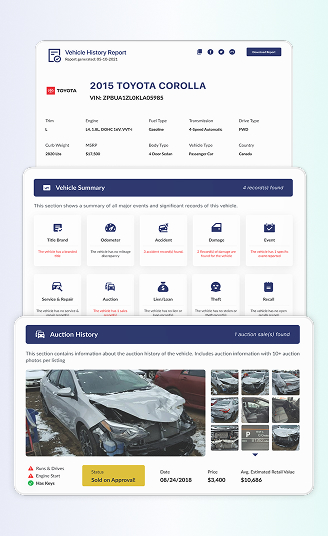
What's Inside Your Louisiana Vehicle History Report
A VIN Check compiles data from title agencies, insurers, auctions, and government sources, giving you the complete picture in one place.
Vehicle Specifications
View original factory specifications, including engine size, fuel type, drivetrain configuration, transmission type, and assembly plant.
Ownership History
Track the number of previous owners, the locations of registration, the history of personal versus commercial use, and the duration spent in each region.
Mileage Records
Review sequential odometer readings captured during state inspections, service visits, title updates, and auto auction sales to spot rollbacks.
Title Status
Examine current and historical title brands, including clean title, salvage title, rebuilt title, junk, or water-damaged designations.
Accident and Damage History
Access reported collisions, airbag deployments, structural frame damage assessments, and severe-weather loss claims.
Loan and Lien Records
Determine whether the vehicle has active financial liens, unpaid bank debts, or repossession orders that prevent a clear transfer of ownership.
Theft History
Cross-check national police databases and law enforcement records to verify the vehicle is not currently reported as stolen or missing.
Recalls
Identify safety recalls issued by manufacturers that remain open and unfixed on the vehicle.
Service and Maintenance Records
Inspect documented oil changes, tire rotations, brake work, structural repairs, and routine maintenance logs.
Auction History with Images
See historical wholesale auction records, including final sale prices, condition grades, and actual auction photos before cosmetic touch-ups.
Sales History with Images
Track past retail listings, historical dealer asking prices, and listing photos to monitor condition changes over time.
Market Value
Compare realistic market price ranges based on local sales data, vehicle age, current condition, and actual mileage.
How a VIN Check Protects Both Buyers and Sellers in Louisiana
Both buyers and sellers run a Louisiana VIN lookup before a deal closes, but for different reasons.
Buyers
Smart auto buyers use historical reports to negotiate fair prices and avoid dangerous financial traps.
Avoiding Flood-Damaged Wrecks
Catch hidden water damage or washed titles before paying top dollar for a vehicle ruined by coastal storms.
Verifying Seller Claims
Smart buyers cross-reference seller claims about low mileage, single-owner history, and accident-free status against official government records.
Sellers
Transparent private sellers use vehicle history checks to build buyer trust and close sales faster.
Justifying Asking Prices
Show buyers verified service records, clean title histories, and accurate odometer readings to back up your sale price.
Speeding Up Sales
Provide prospective buyers with an instant report on the spot to remove doubts and avoid endless back-and-forth negotiations.
How to Check a VIN in Louisiana in 3 Easy Steps
Getting your report takes just a few minutes.

Step 1: Locate The VIN
Find the 17-character VIN on the dashboard, the driver’s side door jamb, the title, or the registration papers.

Step 2: Enter The VIN
Type the VIN into the form above and submit your request.

Step 3: Review Your Report
After making the payment, access your instant report online or save a downloadable PDF copy for negotiations.
Real Story: How a Louisiana VIN Check Saved a Buyer in Baton Rouge Thousands
Marcus, a car buyer in Baton Rouge, found a used 2022 Hyundai Elantra that looked like a great deal. The listing seemed clean, and the seller assured him the car had no issues. Still, Marcus wanted to be careful before making such a big purchase, so he ran a VIN check on premiumvin.com.
The report revealed several important details the seller never mentioned:
- 1 accident record found
- 1 record of damage found for the vehicle
- 2 lien or loan records on the vehicle
- Lease usage records on file
Armed with this information, Marcus went back to the seller and negotiated a much lower price. By checking the vehicle’s history first, he avoided overpaying and saved thousands of dollars on his purchase.
Free VIN Decoder vs Louisiana VIN Report: What's the Difference?
A free Louisiana VIN decoder reveals basic factory details such as the year, make, model, engine specifications, drivetrain, and transmission type. It decodes the VIN itself, not the vehicle’s actual history.
A full LA Vehicle History Report goes much further. It pulls verified records from titles, insurers, auctions, and recovery databases to show accidents, flood titles, theft history, liens, and service records. If you are buying or selling a car in Louisiana, the free decoder is only a starting point and not a substitute for the full report.
| Feature / Data Point | Free VIN Decoder (Basic) | Premium Vehicle History Report (Paid) |
|---|---|---|
| VIN decoding for cars, bikes, trucks, and imports | ✓ Included | ✓ Included |
| Vehicle baseline (year, make, model, trim) | ✓ Included | ✓ Included |
| Factory specs and build details | Limited | ✓ Detailed |
| Current market value estimate | Snapshot | ✓ In-depth |
| Recorded online listings and advertised sales | Current listing snapshot | ✓ |
| Timeline of previous listings and sales | ✗ | ✓ |
| Auction sale records (if available) | Limited | ✓ |
| Auction photos showing vehicle condition | ✗ | ✓ |
| Sales listing records & photos | Limited preview (data hint) | ✓ |
| Market value (VIN decoder with market value) | ✓ Included | ✓ |
| Mileage shown at auctions or sales | ✗ | ✓ |
| Odometer rollback or mileage inconsistency checks | ✗ | ✓ |
| Number of previous owners | ✗ | ✓ |
| Past vehicle use (private, rental, fleet, commercial) | ✗ | ✓ |
| Title branding (salvage, rebuild, flood, lemon, etc.) | ✗ | ✓ |
| Outstanding lien or loan records | ✗ | ✓ |
| Accident and damage reports | ✗ | ✓ |
| Flood, fire, or hail damage indicators | ✗ | ✓ |
| Reported service or repair history | ✗ | ✓ |
| Warranty status and coverage details | ✗ | ✓ |
| Open recalls and safety notices | ✗ | ✓ |
| Downloadable PDF report | ✗ | ✓ |
Louisiana VIN Lookup vs License Plate Search: Key Difference
A VIN check and a license plate lookup are not the same thing, even though people often mix them up.
A VIN check is tied permanently to the vehicle itself. The VIN never changes, so the history report follows the car no matter how many times it is sold or re-registered.
A Louisiana license plate lookup is tied to the current registration, which can change owners, states, and plate numbers over time. For a full and permanent history, the VIN is always the more reliable starting point.
Get VIN Lookups in Any City in Louisiana
Louisiana’s used vehicle market moves fast, and it is shaped heavily by hurricane exposure, high insurance costs, and a large share of high-mileage vehicles. Running a Louisiana VIN report before you buy protects you no matter which parish you are shopping in.
| New Orleans | Metairie | Kenner | Alexandria | New Iberia |
| Baton Rouge | Lafayette | Bossier City | Houma | Central |
| Shreveport | Lake Charles | Monroe | Marrero | Slidell |
Manufacturers Supported by Our Louisiana VIN Search Tool
We support VIN lookups for every major manufacturer sold in Louisiana.
We Support ALL Vehicle Types
PremiumVIN provides detailed vehicle history reports for all major vehicle categories, ensuring you get the essential data you need regardless of what you drive.
What Makes PremiumVIN the Top Choice in Louisiana
Here is what sets our reports apart for Louisiana buyers and sellers.
Comprehensive database coverage
We scan national databases, insurance registries, auction houses, and official state records to bring you complete vehicle histories.
Live Chat with VIN Expert
Have a question about a report? Our support team is ready to assist you in real time.
Data Accuracy
Our data is cross-checked across multiple sources to reduce errors and gaps.
Regular data updates
Records are refreshed continuously so recent accidents, title changes, and recalls show up fast.
Report Never Expires
Once you buy a report, you can access it anytime in the future at no extra cost.
Downloadable PDF
Save your vehicle report as a clean PDF file to share with buyers or present to sellers during price talks.
Protect Your Investment: Run Your Louisiana VIN Check Today
Do not risk your hard-earned money on a used vehicle with a hidden past. Enter your 17-digit VIN into the form to unlock an instant, accurate vehicle history report today!
FAQs About Louisiana VIN Check
How do I check a VIN for free in Louisiana?
You can look up a VIN for free using PremiumVIN.com’s VIN decoder tool. Simply enter the 17‑digit VIN to see basic details such as the make, model, year, engine size, transmission, and drivetrain. For deeper insights, you’ll need to purchase a report to uncover records like accidents, liens, or salvage history.
How much does a Louisiana vehicle history report cost?
A full report costs $19.99 as a one‑time fee. You’ll get instant access to view the report and download it as a PDF. The price is usually worth it when buying a used car because it can uncover hidden problems and save thousands of dollars in repair and legal issues.
Where is the VIN located on my car in Louisiana?
The VIN is usually printed on a small metal plate on the driver’s side dashboard, visible through the windshield from outside the car. It is also stamped inside the driver’s door jamb. In addition, the VIN is listed on the vehicle’s insurance card and title.
How do I check for flood damage on a Louisiana used car?
Louisiana experiences heavy rainfall and frequent storms, so flood damage is common. A PremiumVIN.com vehicle history report will show if an insurance company has branded the car with a flood title. The lookup also flags total-loss records and water-damage claims linked to the vehicle.
How can I tell if a car was in an accident using the VIN?
A vehicle history report will show past accidents associated with the VIN, including the severity of the damage. This info often comes from insurance claims and repair shop records. Running the VIN before you buy helps you spot hidden damage that a seller may not mention.
How do I spot odometer rollback on a used car in Louisiana?
An odometer lookup compares past state inspection records with current mileage. The vehicle history report tracks mileage entries recorded during service visits and title transfers. If the numbers drop over time, the seller tampered with the cluster. This check helps you avoid paying high prices for worn-out cars.