
California VIN Check: Reveal Any Vehicle’s True History
Run a California VIN check to confirm a vehicle’s title, accident history, mileage, and salvage status. A vehicle history report reveals hidden issues that may impact value, safety, and registration.
Understanding the California VIN Check: The Basics
A California VIN check is a specialized vehicle search that pulls detailed history records using a car’s unique 17-character Vehicle Identification Number. This search compiles crucial data from the California Department of Motor Vehicles, insurance companies, auto auctions, and salvage yards.
Running a CA VIN check ensures you are not buying a vehicle with a hidden past. California has specific regulations regarding vehicle emissions, lemons, and titles. This report highlights regional factors that a standard nationwide search might overlook. It gives you peace of mind whether you are navigating private sales in Los Angeles or browsing dealerships in San Francisco.
Why You Can’t Afford to Skip a VIN Search in California
Buying a used car in California carries high financial risk. With steep prices and rising loan rates, a California vehicle history report is your best protection against scams. A VIN check instantly verifies ownership and title status, ensuring legal registration and shielding you from hidden costs.
Hidden Risks of Buying a Used Vehicle in California
Buying a used car in California comes with hidden risks like flood or salvage titles, safety recalls, and odometer fraud. In such a vast market, vigilance is key to avoiding vehicles that lead to costly repairs. A California vehicle history report provides the essential data you need to spot these issues before purchase.
Odometer Fraud
Odometer fraud is California’s top hidden risk, with about 532,200 vehicles showing deceptive readings. Rollback cars lose an average of $3,300 in value, plus long-term costs from unexpected repairs, accelerated maintenance, and safety issues.
Vehicle Theft
California has one of the highest vehicle theft rates in the United States. According to the California Highway Patrol‘s 2024 Vehicle Theft Facts report, 176,230 vehicles worth $1.56 billion were stolen, averaging one every 2.94 minutes. Criminals often alter VINs, forge titles, and sell stolen cars online at low prices. A VIN theft check verifies active or past theft records before purchase.
Rental Fleet Vehicles and High Mileage Commercial Units
California’s airports and tourism hubs feed a steady stream of rental, rideshare, and fleet vehicles into the used market. These cars often show more wear than their odometers suggest. A California vehicle history report reveals fleet use, rental history, and mileage discrepancies.
Title Washing
Title washing hides branded titles like salvage or flood by moving vehicles across states. Unlicensed dealers posing as private sellers flip damaged cars using fake pink slips and erased records. Carfax reports over 114,000 flooded cars back on California roads, many imported from hurricane states and sold with disguised titles.
Stolen Catalytic Converters
California has some of the nation’s highest catalytic converter theft rates due to strict emissions laws and valuable metals. Rogue sellers may install cheap, illegal converters that fail smog checks. Historically, California accounts for up to 30% of all catalytic converter theft insurance claims nationwide, according to State Farm and NICB data.
Inside the Report: What Your California VIN Lookup Reveals
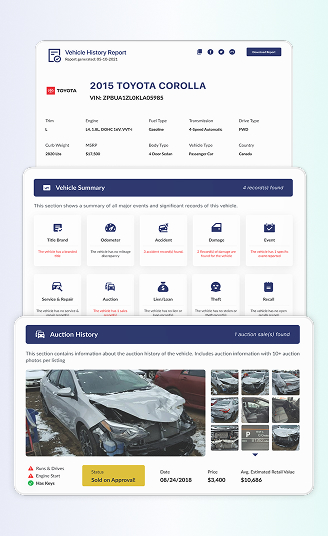
A PremiumVIN California vehicle history report pulls data from hundreds of sources, including government agencies, insurance records, auction houses, and dealer networks. You get one complete, easy-to-read report that covers everything you need to know.
Here is what the report includes:
Vehicle Specifications
This section confirms the precise model year, trim package, engine capacity, and drivetrain. Buyers rely on these specifications to verify that the seller’s listing is accurate and to ensure the price has not been artificially inflated with fake trim upgrades.
Ownership History
The vehicle history report tracks how many people have owned the car, how long each person kept it, and where it was registered. A vehicle that has repeatedly changed hands in a short timeframe is often a warning sign for recurring mechanical issues.
Mileage Records
Odometer tampering is an increasing issue in the California used car market. Our system monitors historical mileage inputs from emissions inspections, repair shops, and DMV registrations, allowing you to cross-reference the current dashboard reading against official historical data to detect rolled-back odometers.
Title Status
This is the single most important check for any used car buyer. It identifies whether the vehicle has a clean title or a branded title, instantly flagging permanent warning signs like salvage, rebuilt, or lemon law buyback statuses that severely reduce the car’s worth.
Accident and Damage History
We compile insurance claims, police accident reports, and repair shop records to trace past collisions. This section details impact severity, airbag deployments, and structural damage, helping you identify vehicles that appear flawless on the surface but conceal hidden structural defects.
Loan and Lien Records
This check identifies any active liens on the vehicle so you can avoid inheriting someone else’s debt. Purchasing a car with an outstanding lien puts you at risk of having the vehicle repossessed by the financial institution.
Theft History
Our system cross-references active law enforcement databases to confirm the vehicle has not been reported stolen. Buying a stolen car risks the loss of both the vehicle and your money if law enforcement reclaims it, and this section provides the necessary legal peace of mind.
Recalls
Unresolved safety recalls pose a direct risk to you and your passengers. This report flags any safety recalls issued by the manufacturer or NHTSA that remain unfixed, giving you the leverage to demand repairs before closing the deal.
Service and Maintenance Records
A vehicle with a documented history of routine maintenance lasts much longer. We compile service logs showing routine oil changes, brake replacements, fluid flushes, and major component repairs. This data proves whether the previous owner truly cared for the vehicle.
Auction History with Images
Many used cars pass through salvage auctions before landing on a dealership lot. We provide past auction records, bidding details, and actual photos from the auction yard, which frequently reveal severe damage that a dealer attempted to fix and conceal.
Sales History with Images
Track how the vehicle was marketed and priced over time by various dealerships and private sellers. This archive features previous listing photos, descriptions, and asking prices, giving you a transparent timeline of how different sellers have positioned the car.
Market Value
We analyze current market conditions, local trends, and recent sales of similar makes and models to calculate a fair price. Each report categorizes the vehicle’s value into private party, trade-in, or dealer retail, based on its condition: outstanding, clean, average, or rough. This gives you powerful leverage during negotiations so you never overpay for your next used vehicle.
Step-by-Step: How to Look Up a California VIN
Running a vehicle history report takes just a few minutes. Here’s how to get started.

Step 1: Enter The VIN
Locate the VIN and type it into the search field at the top of the page. Prefer to search by plate instead? Switch to the "By License Plate" tab, enter the plate number, and choose "CA – California" from the state menu.

Step 2: Search VIN
Click "Search" to check the VIN against government and public databases. You'll immediately see key vehicle details, such as year, make, model, transmission, and country of origin, at no cost.

Step 3: Get Your Report
Choose the package that works best for you, complete your payment, and instantly access the full vehicle history report. You can view it online or download it as a PDF.
Real Story: How a Quick VIN Check Saved a San Jose Car Buyer Thousands
Harry, a car buyer in San Jose, found an online listing for a 2013 Toyota Prius at a very low price. The seller said it was in great shape with low mileage. Before test driving it, Harry ran an online California VIN check just to be safe.
The report told a different story.
- The car had been sold at a salvage auction
- It carried a salvage and rebuilt title.
- It also had 11 unresolved safety recalls.
Because of that check, Harry walked away before spending anything. He avoided a poorly repaired, unsafe car and likely thousands in repair costs. A few minutes of research saved him a costly mistake and kept him safe on the road.
Free VIN Decoder vs. Full VIN Check in California
There is an important difference between a free VIN decoder and a full vehicle report.
A free VIN decoder reads the VIN itself and tells you the vehicle’s basic factory specifications: make, model, year, engine size, body style, and country of manufacture. It does not pull any real-world records.
A Full VIN Check goes far beyond that. It searches actual databases to find what happened to the vehicle after it left the factory. Accidents, title changes, odometer readings, theft records, auction photos, and lien information all come from real reported events, not from the VIN string itself.
| Feature / Data Point | Free VIN Decoder (Basic) | Premium Vehicle History Report (Paid) |
|---|---|---|
| VIN decoding for cars, bikes, trucks, and imports | ✓ Included | ✓ Included |
| Vehicle baseline (year, make, model, trim) | ✓ Included | ✓ Included |
| Factory specs and build details | Limited | ✓ Detailed |
| Current market value estimate | Snapshot | ✓ In-depth |
| Recorded online listings and advertised sales | Current listing snapshot | ✓ |
| Timeline of previous listings and sales | ✗ | ✓ |
| Auction sale records (if available) | Limited | ✓ |
| Auction photos showing vehicle condition | ✗ | ✓ |
| Sales listing records & photos | Limited preview (data hint) | ✓ |
| Market value (VIN decoder with market value) | ✓ Included | ✓ |
| Mileage shown at auctions or sales | ✗ | ✓ |
| Odometer rollback or mileage inconsistency checks | ✗ | ✓ |
| Number of previous owners | ✗ | ✓ |
| Past vehicle use (private, rental, fleet, commercial) | ✗ | ✓ |
| Title branding (salvage, rebuild, flood, lemon, etc.) | ✗ | ✓ |
| Outstanding lien or loan records | ✗ | ✓ |
| Accident and damage reports | ✗ | ✓ |
| Flood, fire, or hail damage indicators | ✗ | ✓ |
| Reported service or repair history | ✗ | ✓ |
| Warranty status and coverage details | ✗ | ✓ |
| Open recalls and safety notices | ✗ | ✓ |
| Downloadable PDF report | ✗ | ✓ |
California VIN Check vs. License Plate Lookup: What’s the Difference?
A California VIN check and a license plate lookup are both useful tools, but they serve different primary purposes.
A California license plate lookup uses a California plate number to find the VIN associated with that plate. It is useful when you do not have the VIN readily available, such as when you spot a car in a parking lot or see a plate on a listing without a VIN. Once the VIN is retrieved from the plate, a full history search can be run.
A California VIN check uses the VIN directly and is the most accurate starting point for a full vehicle history search. The VIN stays with the vehicle permanently.
License plates can be changed or transferred to different vehicles. This means plate-based records may not reflect the vehicle’s complete history across all registrations.
Get VIN Lookups in Any City in California
California’s mild weather keeps cars rust-free and raises resale value. However, heat damage, strict CARB smog rules, flood risks from winter storms, auto theft, and costly catalytic converter replacements reduce prices, particularly in major cities.
Northern California | Central California | Southern California |
Oakland | Bakersfield | Los Angeles |
San Francisco | Sacramento | Long Beach |
San Jose | Fresno | San Diego |
Richmond | Stockton | Riverside |
Vallejo | Modesto | San Bernardino |
Manufacturers Supported by Our California VIN Check Tool
Our California VIN lookup tool supports every vehicle manufacturer sold in the USA, so you can get a full history report no matter what make or model you’re checking.
We Support ALL Vehicle Types
PremiumVIN provides detailed vehicle history reports for all major vehicle categories, ensuring you get the essential data you need regardless of what you drive.
Why Choose PremiumVIN for California VIN Checks
We provide the information you need to shop for used cars with total confidence. Here’s why we stand out:
Most comprehensive database coverage
PremiumVIN aggregates data from NMVTIS, insurance databases, auctions, dealer service networks, and DMV records in all 50 states, providing a fuller picture than single‑source reports.
Live Chat with VIN Expert
Our customer support team is available to help answer questions about your results or guide you through the lookup process.
High Accuracy
Our reports use verified primary sources, not secondhand aggregators. Each record is matched to the VIN, ensuring accurate, vehicle‑specific history.
Regular data updates
Our databases refresh constantly so you never miss recent accident reports, title changes, or active liens.
Report Never Expires
Once you generate a vehicle history report with us, it stays saved in your account for future reference whenever you need it. It is a permanent record for negotiation and proof.
Downloadable PDF
Easily save your full report as a clean, professional PDF document to share with potential buyers or print for your files.
Get Started: Run Your California VIN Lookup Today
Every used car purchase in California carries risk. A full vehicle history report costs far less than hidden problems. Spend a few dollars and minutes now to avoid years of regret. Enter your VIN to get a complete, downloadable report.
FAQs in California Regarding Vehicle Reports and VIN Checks
What is a VIN and where do I find it?
A VIN (Vehicle Identification Number) is a unique code that identifies every car and tracks its history from the date it was manufactured. Much like a Social Security number, it remains the same throughout the vehicle’s lifetime.
You can find the VIN in several places:
- On the dashboard (visible through the windshield on the driver’s side)
- On the driver’s side door frame
- In the engine bay near the front of the engine block
- On registration and insurance documents
How do I check if a car is a "California Lemon"?
California has some of the strongest consumer protection laws in the U.S. If a vehicle was repurchased by the manufacturer due to unfixable defects, it receives a “Lemon Law Buyback” title brand. A Premium VIN vehicle report will flag this under the title history section, alerting you that the car was previously deemed a lemon.
Can I get a vehicle history report using just a California license plate?
Yes. If you’re walking through a parking lot or browsing a used car online and can’t see the VIN, you can run a California license plate lookup using Premium VIN’s tool. Because license plates are directly tied to the VIN in the CA DMV database, this tool can generate the full history report.
What is a California "Salvage Title" and should I buy one?
If a vehicle history report shows a California salvage title, it means an insurance company declared the car a total loss, usually because of a major accident, flood, or fire. Repairs cost more than the car’s value.
Proceed with extreme caution when dealing with a salvage title car. To return it to the road, the vehicle must pass a rigorous safety inspection and VIN verification. Insurance coverage can also be difficult to obtain for salvage vehicles in California.
How do I check for a smog check history?
California is famous for its strict emissions laws. Before you buy a used car, you want to make sure it can actually pass emissions, or you won’t be able to register it. You can do a free CA smog check history lookup on the official Bureau of Automotive Repair (BAR) website just by entering the VIN or CA license plate. If a car has a history of failing, it’s best to walk away.
How to check if a car is stolen in California?
To check if a car is stolen in California, run its 17-character VIN through the free NICB VIN Check database or purchase a comprehensive vehicle history report.
This check is vital, as on average a vehicle is stolen every three minutes in California, totaling over 175,000 thefts annually and costing residents $1.5 billion.